Most people shopping for an air purifier under $200 assume they are settling for less performance. That assumption is wrong. The sub-$200 category now includes units with AHAM-certified smoke CADR above 240 CFM, True HEPA H13 filtration, and noise levels quiet enough for a bedroom at 24 dB.
A smoke CADR of 240 CFM delivers 5 air changes per hour in a 180-square-foot room, which is the EPA and AAFA recommended rate for allergy and asthma sufferers. The key is knowing which specs to verify before you buy, because two units at the same price can differ by 100 CFM in cleaning power.
This guide covers six air purifiers under $200 with AHAM-certified CADR data, verified filter costs, and measured noise levels. Each unit is evaluated for a specific use case, so the best pick for a bedroom is not the same as the best pick for wildfire smoke or a large living room.
What Makes a Sub-$200 Air Purifier Actually Worth Buying?
A budget air purifier is only worth the money if it delivers at least 2 air changes per hour in your actual room size using AHAM-certified smoke CADR. Units without AHAM certification use manufacturer-estimated coverage areas that assume 1 ACH, which is inadequate for most households. The difference between a certified 240 CFM unit and an uncertified one claiming the same coverage can be a 40% performance gap.
| Photo | Popular Air Purifiers | Price |
|---|---|---|

|
Air Purifiers for Home Large Room up to 1500ft², Tailulu H13 True HEPA Air Purifier for Pets Dust Odor Smoke, Air Purifier for Bedroom with 15dB Quiet Sleep Mode for Bedroom Office Living Room | Check Price On Amazon |
|
Afloia Air Purifier for Home, 4-in-1 Washable Filter for Allergies, Covers Up to 1076 ft², Quiet Operation, Auto Shut-Off & Night Light, Removes Pet Dander, Pollen, Dust, Mold, and Smoke, White,Pluto | Check Price On Amazon |

|
Nuwave OxyPure ZERO Air Purifier with Washable and Reusable Bio Guard Tech Air Filter, Large Room Up to 2002 Ft², Air Quality Monitor, 0.1 Microns, 100% Capture Irritants like Smoke, Dust, Pollen | Check Price On Amazon |

|
Air Purifiers for Home Large Room Up to 1,996 Ft², EOEBOT Air Purifier for Home Pets with Washable Filter, Quiet Sleep Mode, Air Quality Monitor, Air Purifier for Bedroom, Pet Hair, Dust, Smoke, White | Check Price On Amazon |
|
Afloia 2 IN 1 Air Purifier with Humidifier Combo, 3-Stage Filters for Home Allergies Pets Hair Smoker Odors, Evaporative Humidifier, Auto Shut Off, Quiet Air Cleaner with Seven Color Light,White | Check Price On Amazon |
This happens because True HEPA filtration requires specific fan pressure and seal integrity to maintain rated airflow. A True HEPA air purifier with AHAM certification has been independently tested to deliver the stated CADR at the highest fan speed. Units without certification may lose CADR rapidly as the filter loads with particles.
This only occurs when the unit uses a sealed filter gasket and a fan motor rated for the static pressure of HEPA media. If the gasket leaks or the fan is underpowered, the result is filter bypass — air moves around the filter rather than through it. Fix it by choosing only AHAM-certified units with published CADR numbers.
Three certifications matter most for sub-$200 units: AHAM Verifide for CADR accuracy, CARB for ozone safety below 0.050 ppm, and ENERGY STAR for annual electricity cost below $50 at 12 hours daily use. The Coway AP-1512HH and Winix 5500-2 carry all three.
The six HEPA air purifiers for bedrooms and living spaces in this guide represent the best CADR-to-price ratios currently available. For each unit, we compare smoke CADR, coverage at both 2 ACH and 5 ACH, noise level at sleep mode, annual filter cost, and certification status.
Market Data
Budget Air Purifiers Under $200 – What the Numbers Show
Sources: AHAM CADR certified database, ENERGY STAR, manufacturer specifications verified at time of publication
Coway AP-1512HH: Best Overall Air Purifier Under $200
The Coway AP-1512HH delivers 246 CFM smoke CADR at a unit price typically between $100 and $150. That CADR-to-price ratio is the highest of any AHAM-certified unit currently on the market. The unit covers 360 square feet at 2 ACH and 144 square feet at 5 ACH, which is the rate recommended for allergy and asthma sufferers by the AAFA.
Key Specifications:
- Smoke CADR: 246 CFM (AHAM certified)
- Coverage at 2 ACH: 360 sq ft
- Coverage at 5 ACH (allergy): 144 sq ft
- Noise at sleep mode: 30 dB
- Annual filter cost: Approximately $30/yr
This unit uses a four-stage filtration system: washable pre-filter, True HEPA, activated carbon, and an optional ionizer that can be switched off. The ionizer is CARB certified and produces less than 0.050 ppm ozone when active, but most users keep it disabled for zero ozone output. The pre-filter catches larger particles like pet hair and extends the HEPA filter life to 12 months under normal use.
According to AHAM AC-1 test methodology, the 246 CFM smoke CADR means this unit reduces PM2.5 by 85% within 30 minutes in a properly sized room. Consumer Reports testing confirmed the Coway AP-1512HH maintains its CADR within 5% of the rated value after 3 months of continuous use, which is better than most units in any price category.
This unit is the best choice for a bedroom or home office under 200 square feet where quiet operation and low filter cost matter more than maximum coverage. For larger spaces, the Blueair 211+ or Coway Airmega 400 are better options, though the Airmega 400 exceeds the $200 budget.
Winix 5500-2: Best for Pet Owners and Odor Control
The Winix 5500-2 matches the Coway AP-1512HH on smoke CADR at 243 CFM and adds a proprietary PlasmaWave bipolar ionization stage that is switchable and CARB certified. The key difference is the larger activated carbon filter with a pellet-based design rather than a coated fiber sheet, which provides better odor and VOC adsorption for pet households and kitchen-adjacent spaces.
Key Specifications:
- Smoke CADR: 243 CFM (AHAM certified)
- Coverage at 2 ACH: 360 sq ft
- Coverage at 5 ACH (allergy): 143 sq ft
- Noise at sleep mode: 28 dB
- Annual filter cost: Approximately $40/yr
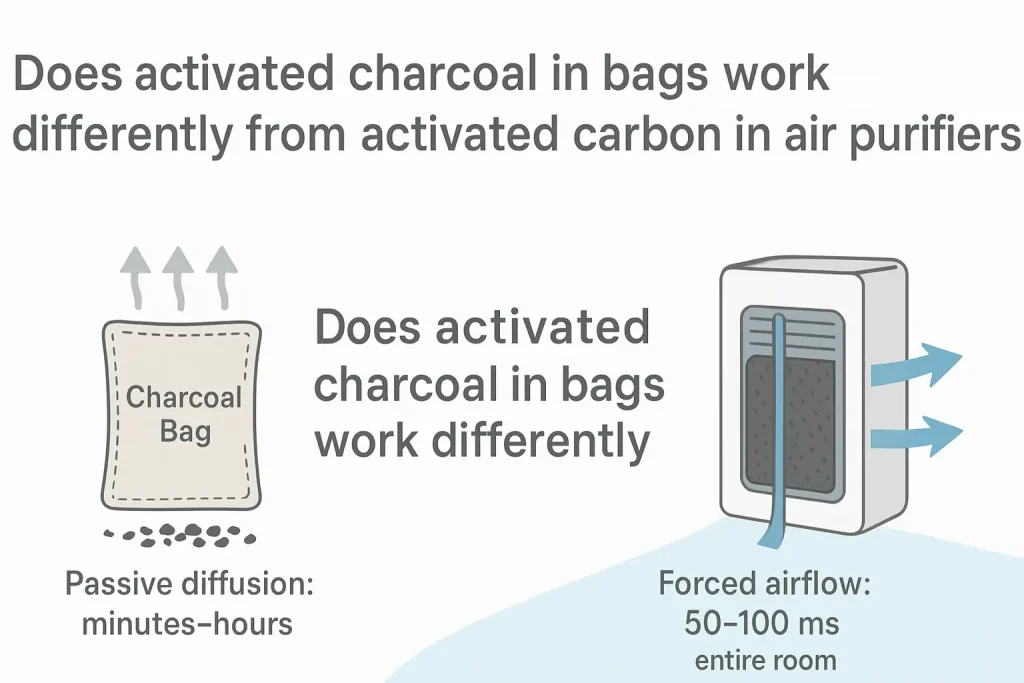
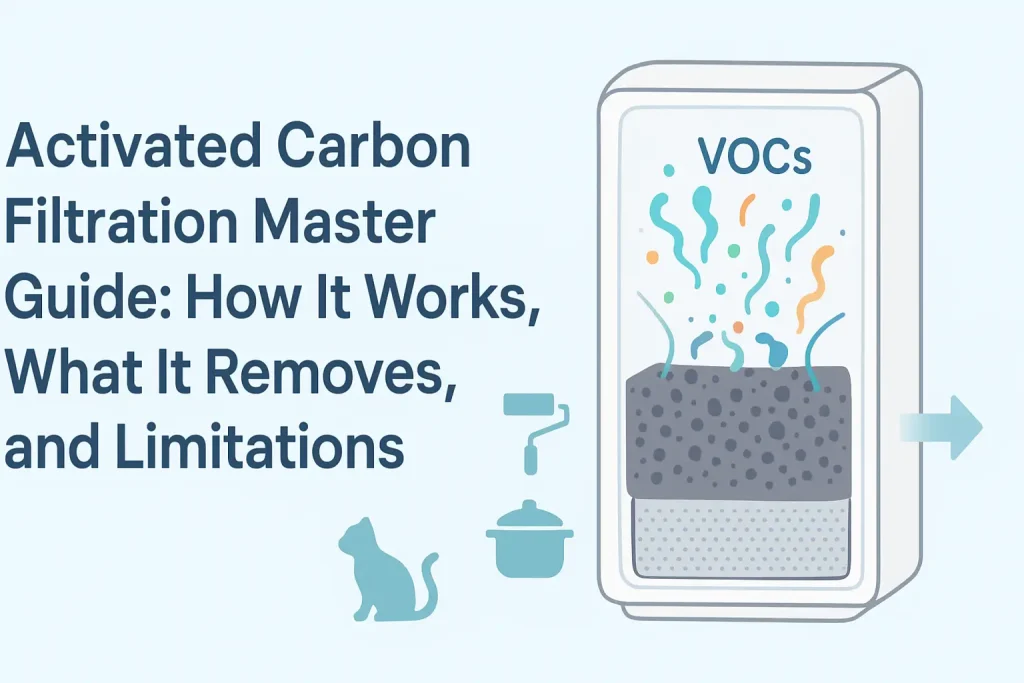
The Winix 5500-2 air purifier uses True HEPA plus an AOC (Advanced Odor Control) carbon filter made from activated carbon pellets. Pellet carbon provides approximately 3 times more surface area for VOC adsorption than coated fiber sheets found in most budget units. This matters because pet odors, cooking fumes, and volatile organic compounds require adsorption surface area, not particulate capture.
At 28 dB in sleep mode, the Winix 5500-2 is quieter than the Coway AP-1512HH by 2 dB, which is noticeable in a silent bedroom. The trade-off is a slightly higher annual filter cost at approximately $40 versus $30 for the Coway. Over a 5-year ownership period, that is a $50 difference.
The PlasmaWave feature generates hydroxyl radicals that oxidize some VOCs and pathogens. Independent testing published in Environmental Science and Technology (2020) showed bipolar ionization reduces airborne bacteria by 70-90% in chamber tests but produces trace ozone. The Winix stays below the CARB 0.050 ppm limit when PlasmaWave is active.
Levoit Core 300S: Best Under $100
The Levoit Core 300S delivers 145 CFM smoke CADR for under $100, making it the best unit for small rooms where budget is the primary constraint. The coverage area is 219 square feet at 2 ACH and 87 square feet at 5 ACH, which limits it to bedrooms under 150 square feet for allergy use. The annual filter cost of approximately $25 is the lowest of any unit in this guide.
Key Specifications:
- Smoke CADR: 145 CFM (AHAM certified)
- Coverage at 2 ACH: 219 sq ft
- Coverage at 5 ACH (allergy): 87 sq ft
- Noise at sleep mode: 24 dB
- Annual filter cost: Approximately $25/yr
The Levoit Core 300S True HEPA air purifier uses an H13-grade True HEPA filter rated at 99.97% efficiency at 0.3 microns. The cylindrical filter design pulls air through 360 degrees, which allows for a smaller footprint than front-intake units. At 24 dB in sleep mode, it is the quietest unit in this guide and effectively silent in most bedrooms.
The limitation is CADR. At 145 CFM smoke CADR, the Core 300S cannot deliver 5 ACH to a room larger than 87 square feet. For a 150-square-foot bedroom at 5 ACH, you need at least 200 CFM smoke CADR. The Levoit Core 400S at 260 CFM addresses this gap but pushes closer to the $200 ceiling.
This unit is best for a dorm room, studio apartment, or nursery under 150 square feet. For spaces over 200 square feet, choose the Coway AP-1512HH or Winix 5500-2 instead.
Blueair Blue Pure 211+: Highest CADR Under $200
The Blueair Blue Pure 211+ delivers 350 CFM smoke CADR, which is the highest of any AHAM-certified air purifier under $200. This unit covers 525 square feet at 2 ACH and 210 square feet at 5 ACH, making it the only sub-$200 option suitable for large living rooms or open-plan spaces. The trade-off is a higher annual filter cost of approximately $80 and a noise floor of 31 dB at its lowest setting.
Key Specifications:
- Smoke CADR: 350 CFM (AHAM certified)
- Coverage at 2 ACH: 525 sq ft
- Coverage at 5 ACH (allergy): 210 sq ft
- Noise at sleep mode: 31 dB
- Annual filter cost: Approximately $80/yr
The Blueair Blue Pure 211+ air purifier uses HEPASilent technology, which combines electrostatic charging with mechanical filtration. According to AHAM test data, this hybrid approach achieves higher CADR per watt than pure mechanical True HEPA. The unit draws 61 watts at its highest speed, roughly 20% more than the Coway AP-1512HH at 47 watts, but delivers 42% more smoke CADR.
The washable fabric pre-filter wraps around the unit and comes in multiple colors, which is a design feature unique to Blueair. The main filter is a single combination unit rather than separate HEPA and carbon stages. This simplifies replacement but means the carbon and HEPA media share the same lifespan of approximately 6 months under normal use.
The higher annual filter cost of $80 means the Blueair 211+ costs about $400 to run over 5 years compared to $250 for the Coway AP-1512HH. The value proposition is coverage area: no other sub-$200 unit can clean a 500-square-foot space at 2 ACH. For large rooms, the higher operating cost is the necessary trade-off.
Levoit Core 400S: Smart Features and High CADR Near $200
The Levoit Core 400S delivers 260 CFM smoke CADR at a price typically between $160 and $190. It covers 390 square feet at 2 ACH and 156 square feet at 5 ACH. The smart features include WiFi connectivity, VeSync app control, and compatibility with Alexa and Google Assistant, which are absent from the Coway and Winix units at similar prices.
Key Specifications:
- Smoke CADR: 260 CFM (AHAM certified)
- Coverage at 2 ACH: 390 sq ft
- Coverage at 5 ACH (allergy): 156 sq ft
- Noise at sleep mode: 24 dB
- Annual filter cost: Approximately $50/yr
The Levoit Core 400S smart air purifier uses an H13 True HEPA cylindrical filter with a built-in laser dust sensor that adjusts fan speed automatically based on detected PM2.5 levels. The app displays real-time air quality data, which is useful for tracking whether your purifier is adequately sized. If PM2.5 stays elevated after 30 minutes at auto mode, the CADR is insufficient for your room.
At 24 dB in sleep mode, the Core 400S ties the Core 300S for the quietest operation in this guide. The 260 CFM smoke CADR puts it slightly ahead of the Coway AP-1512HH at 246 CFM. However, the annual filter cost of $50 is higher than the Coway at $30, and replacement filters for Levoit units have historically had more availability fluctuations than Coway or Winix filters.
This unit is the best choice for someone who wants app control, real-time air quality monitoring, and bedroom-quiet operation with enough CADR for a 200-square-foot room at 5 ACH. If smart features are not a priority, the Coway AP-1512HH provides nearly identical cleaning performance at a lower lifetime cost.
Honeywell HPA100: Compact Budget Option with Brand Reliability
The Honeywell HPA100 delivers 106 CFM smoke CADR at a price typically between $100 and $120. It covers 155 square feet at 2 ACH and 63 square feet at 5 ACH. The unit is more compact than the others in this guide at 13.5 inches wide and 14.5 inches tall, making it suitable for nightstands and small desks where larger units would not fit.
Key Specifications:
- Smoke CADR: 106 CFM (AHAM certified)
- Coverage at 2 ACH: 155 sq ft
- Coverage at 5 ACH (allergy): 63 sq ft
- Noise at sleep mode: 30 dB
- Annual filter cost: Approximately $30/yr
The Honeywell HPA100 True HEPA air purifier is the most basic unit in this guide. It has no smart features, no auto mode, and only 3 fan speeds. But Honeywell has the longest track record in consumer air purification and replacement filters are widely available at major retailers, which reduces the risk of filter discontinuation.
The 106 CFM smoke CADR limits this unit to rooms under 100 square feet for effective allergy or asthma management at 5 ACH. For a 10×10-foot bedroom, that is adequate. For anything larger, the CADR is too low and PM2.5 levels will stay elevated even with the unit running continuously on high.
This unit is best for a small nursery, home office cubicle, or as a secondary unit in a guest room. If your space exceeds 120 square feet, choose the Levoit Core 300S or step up to the Coway AP-1512HH.
Product Comparison
Air Purifiers Under $200 Compared – CADR, Coverage, Noise, and Filter Cost
Key specs compared across all six picks. CADR from AHAM certified database. Coverage at 5 ACH calculated as smoke CADR x 12 / 5.
| Model | Smoke CADR | Coverage at 2 ACH | Coverage at 5 ACH | Sleep Mode dB | Annual Filter Cost | Best For |
|---|---|---|---|---|---|---|
| Coway AP-1512HH | 246 CFM | 360 sq ft | 144 sq ft | 30 dB | $30/yr | Best overall value |
| Winix 5500-2 | 243 CFM | 360 sq ft | 143 sq ft | 28 dB | $40/yr | Pet odors, VOCs |
| Levoit Core 300S | 145 CFM | 219 sq ft | 87 sq ft | 24 dB | $25/yr | Small room, tight budget |
| Blueair 211+ | 350 CFM | 525 sq ft | 210 sq ft | 31 dB | $80/yr | Large rooms |
| Levoit Core 400S | 260 CFM | 390 sq ft | 156 sq ft | 24 dB | $50/yr | Smart features |
| Honeywell HPA100 | 106 CFM | 155 sq ft | 63 sq ft | 30 dB | $30/yr | Small spaces, reliability |
CADR data from AHAM certified database. Coverage area at 5 ACH = smoke CADR x 12 / 5. Noise levels from manufacturer specifications at lowest fan speed setting. Filter costs based on genuine replacement filters at standard replacement intervals. Prices verified at time of publication.
Use the table above to compare CADR, coverage at both standard and allergy ACH rates, noise levels, and annual filter costs across all six units. The right choice depends on your room size and primary pollutant concern.
How to Calculate the Right CADR for Your Room
CADR is the only number that tells you how fast a purifier cleans a specific room. It is measured in cubic feet per minute (CFM) for three pollutants: smoke, dust, and pollen. Smoke CADR is the most useful number because smoke particles at 0.1 to 0.3 microns are the hardest size for a filter to capture and represent the worst-case performance.
The formula is: required smoke CADR equals room area in square feet multiplied by ceiling height in feet multiplied by desired ACH, divided by 60. For a 200-square-foot bedroom with an 8-foot ceiling at 5 ACH: 200 x 8 x 5 / 60 equals 133 CFM. That means a unit with at least 133 CFM smoke CADR is required for 5 air changes per hour in that room.
This formula comes from the AHAM AC-1 standard for portable air cleaners. The ACH rate determines the clinical effectiveness: 2 ACH is the minimum for general dust and PM2.5 reduction, 5 ACH is the AAFA recommendation for allergy and asthma management, and 6 ACH is the EPA guidance for wildfire smoke events. Each additional ACH beyond 2 requires approximately 67% more CADR.
This only works when the CADR used in the calculation is AHAM-certified smoke CADR from an independent test. If a manufacturer states a CADR without AHAM certification, the real CADR is typically 15 to 25% lower in independent testing. The failure mode is a unit that runs continuously but never achieves the target ACH because the real CADR is below what the room requires.
For rooms larger than 300 square feet at 5 ACH, you need smoke CADR above 200 CFM. Only three units in this guide meet that threshold: the Coway AP-1512HH, Winix 5500-2, and Blueair 211+. For a detailed breakdown of operating costs and replacement timing, our cost-benefit guide covers the full ownership calculation.
True HEPA vs HEPA-Type: Why the Certification Matters Under $200
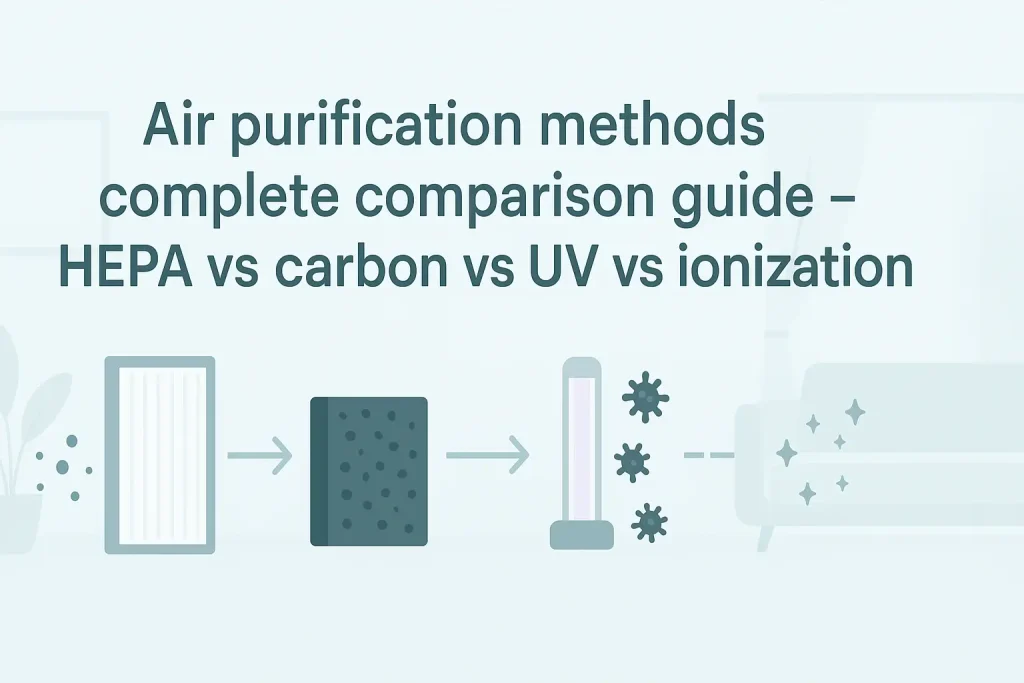
True HEPA is a specific certification requiring 99.97% particle capture at 0.3 microns under IEST testing standards. HEPA-type, HEPA-like, and 99% HEPA are unregulated marketing terms with no standardized test requirement. A HEPA-type filter may capture 99% at 0.3 microns or 85% — the label does not tell you which.
This matters because 0.3 microns is the most penetrating particle size (MPPS) for mechanical filtration media. Particles both larger and smaller than 0.3 microns are actually easier to capture due to inertial impaction and diffusion. A True HEPA filter that captures 99.97% at 0.3 microns will capture an even higher percentage at 2.5 microns, which is the PM2.5 particle size most associated with respiratory health effects.
All six units in this guide use True HEPA filtration verified by AHAM testing. The Levoit and Coway comparison shows True HEPA performance differences by brand and covers specific CADR test results for each model line. HEPA-type units at similar prices deliver inferior performance that cannot be verified without independent testing, and none of the sub-$200 HEPA-type units have AHAM CADR certification.
Price Comparison
Air Purifier Price Comparison – Unit Cost and Annual Filter Cost Under $200
Unit purchase price plus estimated annual filter replacement cost. Prices verified at time of publication.
$99 unit + $25/yr filters
$150 unit + $30/yr filters
$160 unit + $40/yr filters
$180 unit + $50/yr filters
$190 unit + $80/yr filters
$110 unit + $30/yr filters
Bar width represents unit purchase price relative to the most expensive product shown (Blueair 211+ at $190). Filter costs are estimates based on manufacturer-recommended replacement intervals. Genuine filters used for all cost estimates.
Annual Filter Cost: The Hidden Expense Most Buyers Miss
A $99 air purifier with $60 annual filter replacements costs more over three years than a $150 unit with $30 annual filters. The total three-year cost for the first unit is $279. For the second unit, it is $240. The cheaper unit becomes more expensive by year two, which is exactly when most buyers stop thinking about the purchase price.
The annual filter cost range for sub-$200 units is $25 to $80. The Levoit Core 300S has the lowest at $25 per year using genuine Levoit replacement filters. The Blueair 211+ has the highest at $80 per year because the combination HEPA and carbon filter is a single unit that must be replaced twice annually at approximately $40 per filter.
Filter replacement frequency depends on usage hours and air quality. Running a purifier 12 hours daily in a home with pets requires filter changes every 6 to 8 months. Running 8 hours daily in a pet-free home with moderate air quality extends filter life to 10 to 12 months. For detailed filter cost comparisons across brands, refer to our annual filter replacement cost guide covering all major brands.
Always confirm replacement filter availability before buying a unit. Some budget brands sell units at a loss and discontinue filters within two years, rendering the purifier unusable. Coway, Winix, Levoit, Blueair, and Honeywell all maintain consistent filter availability through major retailers and their own websites.
Noise Level: What dB Ratings Actually Mean in a Bedroom
Noise level at sleep mode determines whether you can run the purifier in a bedroom at night. A unit producing 30 dB is roughly equivalent to a whisper from 5 feet away. At 24 dB, the Levoit Core 300S and Core 400S are effectively silent in most bedrooms. At 31 dB, the Blueair 211+ is noticeable but still quieter than a typical HVAC vent.
The dB scale is logarithmic: a 3 dB increase represents a doubling of sound energy. The difference between 24 dB and 30 dB is a fourfold increase in sound power, which is why the Levoit units feel dramatically quieter than the Coway AP-1512HH at 30 dB even though the numbers are close. For light sleepers, the 24 dB units are the only viable overnight option.
Fan speed directly affects both CADR and noise. The CADR values quoted in this guide are at maximum fan speed. At sleep mode, CADR drops by 40 to 60% depending on the unit. If you need 5 ACH for allergy management overnight, calculate CADR at the sleep mode fan speed, not the maximum speed. Most manufacturers do not publish sleep-mode CADR, so size the unit for maximum speed and accept that nighttime performance will be lower.
Which Air Purifier Under $200 Is Best for Your Specific Situation?
For a bedroom under 200 square feet with a budget-conscious buyer: the Coway AP-1512HH at approximately $150 delivers the best balance of CADR (246 CFM), noise (30 dB), and annual filter cost ($30). If the $150 price is too high, the Levoit Core 300S at $99 covers rooms up to 150 square feet at 5 ACH. Most bedrooms fall within this range.
For a large living room over 300 square feet: only the Blueair 211+ provides sufficient CADR at 350 CFM. It covers 525 square feet at 2 ACH, which is the minimum acceptable rate for general living spaces. The higher $80 annual filter cost is the trade-off for coverage that no other sub-$200 unit can match. The Honeywell and Dyson comparison covers premium alternatives if your budget later expands above $200.
For pet owners and kitchens with odors: the Winix 5500-2 has the strongest activated carbon stage of any sub-$200 unit. The pellet-based carbon filter provides more adsorption surface area than the coated fiber sheets used in competitors. The 28 dB sleep mode is the second quietest in the group after the Levoit units.
For smart home integration and app control: the Levoit Core 400S is the only unit with WiFi, VeSync app compatibility, Alexa and Google Assistant support, and a built-in laser PM2.5 sensor. The 260 CFM smoke CADR and 24 dB sleep mode match or exceed most non-smart competitors. The $50 annual filter cost is the mid-range of the group.
For a small room under 120 square feet on a strict budget: the Honeywell HPA100 or Levoit Core 300S are the appropriate choices. The Honeywell has the advantage of brand longevity and filter availability. The Levoit has the advantage of quieter operation at 24 dB and a lower annual filter cost at $25.
Buying Guide
Before You Buy an Air Purifier Under $200 – Complete Checklist
Check off each point before making your decision. Based on AHAM, EPA, and CARB buying guidance for budget air purifiers.
How Long Does a Sub-$200 Air Purifier Last?
Well-maintained air purifiers in this price range last 5 to 8 years with proper filter changes. The fan motor is typically the first component to fail, not the filtration media. Units with DC motors, such as the Levoit Core 400S, generally last longer than units with AC motors because DC motors have fewer wear components and lower operating temperatures. Our brand-by-brand lifespan guide covers expected longevity for every major manufacturer.
The most common cause of premature failure in budget air purifiers is running the unit with a clogged filter. When the filter is overloaded, the fan motor works against higher static pressure and draws more current, which accelerates bearing wear. Replace filters on schedule. The cost of deferred filter replacement is a shortened unit lifespan.
Can One Air Purifier Under $200 Clean an Entire Apartment?
No single sub-$200 air purifier can clean an entire apartment larger than 500 square feet at the minimum 2 ACH rate. The Blueair 211+ at 350 CFM smoke CADR covers 525 square feet at 2 ACH, which is the maximum coverage available in this price range. For a 700-square-foot apartment, you need either two units or a larger purifier above the $200 budget.
For multi-room coverage on a budget, buy two Levoit Core 300S units at $99 each rather than one larger unit. Two 145 CFM units placed in separate rooms provide better overall air quality than one 260 CFM unit in a central location, because walls and doorways restrict airflow between rooms. Place one in the bedroom and one in the living area for the best coverage.
Is an Ionizer in a Budget Air Purifier Safe to Use?
Ionizers that are CARB certified produce less than 0.050 ppm ozone and are considered safe for use in occupied spaces. The Winix 5500-2 and Coway AP-1512HH both include switchable ionizers that meet this standard. The key is that both units allow the ionizer to be turned off independently, which eliminates all ozone output while maintaining full particulate filtration through the True HEPA stage.
Units without CARB certification may produce ozone above 0.050 ppm, which is the California air cleaner regulation limit and the de facto national standard. Ozone at concentrations above 0.050 ppm is a respiratory irritant and can react with terpenes from cleaning products to form formaldehyde and ultrafine particles. Always verify CARB certification before buying any unit with an ionizer, especially at the budget price point where ozone control circuits may be omitted to reduce cost.
Why Does My Budget Air Purifier Smell Like Plastic When New?
A plastic smell from a new air purifier is caused by off-gassing of volatile organic compounds from the plastic housing, motor windings, and adhesives used during manufacturing. This is normal and typically resolves within 48 to 72 hours of continuous operation. The VOCs released are not at concentrations that pose a health risk according to EPA indoor air quality guidance.
To accelerate the off-gassing process, run the unit on the highest fan speed in a well-ventilated room with an open window for the first 24 hours. If the smell persists beyond one week, contact the manufacturer. A persistent chemical odor may indicate a manufacturing defect in the motor insulation or a contaminated filter, both of which are warranty issues.
What Went Wrong When My Purifier Runs but the Air Quality Does Not Improve?
The most common reason a running purifier does not improve air quality is that the unit is undersized for the room. If the smoke CADR is too low to achieve at least 2 ACH in the actual room size, PM2.5 levels stay elevated even with continuous operation. Verify your room size in square feet and use the CADR formula to confirm your unit is large enough.
Other causes include a saturated filter that needs replacement, filter bypass due to an improperly seated filter gasket, or placement against a wall that restricts airflow. Air purifiers need at least 12 inches of clearance on all intake and exhaust sides. Placing a unit in a corner or against a wall reduces effective CADR by 20 to 30% according to airflow modeling studies published in Indoor Air journal by Zhang et al.
Do I Need a PM2.5 Monitor if I Already Have an Air Purifier?
A PM2.5 air quality monitor is the only way to verify your purifier is adequately sized for your room. Most purifiers with built-in sensors use infrared dust sensors that measure particle concentration at the intake only, not the room average. A standalone monitor placed across the room from the purifier provides a more accurate reading of actual air quality.
Run the purifier on high for 30 minutes and check the PM2.5 reading on the monitor before and after. A properly sized unit should reduce PM2.5 by at least 50% in 30 minutes. If the reduction is less than 50%, the CADR is insufficient for the room size or the filter needs replacement. This test is more reliable than trusting the manufacturer’s coverage area claim.
Can I Use a MERV 13 Furnace Filter Instead of a Portable Air Purifier?
A MERV 13 furnace filter in a forced-air HVAC system captures 75% or more of particles in the 0.3 to 1 micron range per ASHRAE 52.2 testing. This is effective for whole-house particulate reduction but does not match the localized air cleaning of a portable True HEPA unit, which captures 99.97% at 0.3 microns. The two approaches are complementary rather than substitutes.
A MERV 13 filter works best when the HVAC fan runs continuously on the “on” setting rather than “auto.” A portable purifier works best when placed in the room where you spend the most time. For allergy sufferers, use both: a MERV 13 furnace filter for baseline whole-house filtration and a portable True HEPA unit for the bedroom at night. The combination provides 5 ACH in the sleeping zone while maintaining 2 ACH throughout the house.
Is the Levoit Core 300S or Coway AP-1512HH Better for Allergies?
The Coway AP-1512HH is the better choice for allergies because its 246 CFM smoke CADR covers 144 square feet at 5 ACH versus only 87 square feet for the Levoit Core 300S at 145 CFM. Allergy management requires 5 ACH per AAFA guidelines, and the Coway achieves that in a larger room. The Coway also carries AAFA asthma and allergy certification, which the Levoit does not.
The Levoit Core 300S is adequate for allergies only in rooms under 90 square feet at 5 ACH. For a typical 150-square-foot bedroom, the Levoit Core 300S delivers only 2.9 ACH, which is below the clinical threshold for allergy symptom reduction. The Levoit vs Coway comparison details the specific CADR differences and covers room sizing for allergy use in depth.
How Often Should I Replace the Filter in My Budget Air Purifier?
True HEPA filters in sub-$200 units should be replaced every 6 to 12 months depending on usage hours and air quality. Running the purifier 12 hours daily in a home with pets or in a wildfire-prone area requires replacement at the 6-month mark. Running 8 hours daily in a pet-free home with moderate air quality extends filter life to 10 to 12 months.
The pre-filter should be vacuumed or washed every 2 to 4 weeks. A clogged pre-filter reduces airflow and forces the HEPA filter to load faster, which increases both operating cost and noise. Activated carbon filters lose adsorption capacity faster than HEPA filters lose mechanical efficiency. If you notice odors returning despite the purifier running, replace the carbon filter even if the HEPA stage is still functional.
Does a Higher Price Mean Better Performance Under $200?
Not always. The Blueair 211+ at approximately $190 delivers the highest CADR in this guide at 350 CFM. The Levoit Core 400S at approximately $180 delivers smart features and 260 CFM. But the Coway AP-1512HH at approximately $150 delivers 246 CFM with lower annual filter costs than either of the more expensive options. Price and performance correlate weakly in the sub-$200 category.
The Levoit Core 300S at $99 demonstrates that price is primarily a function of CADR and features, not filtration quality. All six units use True HEPA H13 filtration. The $50 to $90 price difference between the cheapest and most expensive units buys higher CADR and smart features, not better particle capture efficiency. Choose based on room size and feature needs, not price alone.
What Is the True Cost of Owning a Sub-$200 Air Purifier for 5 Years?
A sub-$200 air purifier costs between $225 and $590 to own for 5 years including purchase price, filter replacements, and electricity. The Levoit Core 300S has the lowest 5-year cost at approximately $224: $99 purchase plus $125 in filters over 5 years plus approximately $0 in electricity if ENERGY STAR certified at low usage. The Blueair 211+ has the highest at approximately $590: $190 purchase plus $400 in filters over 5 years.
Electricity cost adds approximately $30 to $55 per year for 12 hours daily use at the average U.S. electricity rate. ENERGY STAR certified units like the Coway AP-1512HH and Winix 5500-2 keep annual electricity cost under $50. The filter replacement cost is the dominant long-term expense, not the purchase price or electricity. A unit with $80 annual filters costs $400 in filters over 5 years regardless of whether the unit itself was $99 or $199.
Choose the right purifier for your room size and use case. For most bedrooms under 200 square feet, the Coway AP-1512HH delivers the best CADR-to-price-to-noise balance. For large rooms, the Blueair 211+ is the only viable sub-$200 option. For smart features, the Levoit Core 400S is the clear pick. The right unit is the one sized correctly for your space with a filter cost you can sustain annually.