Most parents spend weeks picking the safest crib and the softest organic sheets. They overlook the one thing their baby will interact with 20,000 times a day: the air inside the nursery.
Infants inhale more air per pound of body weight than adults do. Their lungs are still developing the alveolar structure that will serve them for life, making every microgram of particulate matter count more than it does for you.
An air purifier is not a nursery accessory. It is the only appliance in the room actively reducing the particle load your newborn breathes during the 14 to 17 hours they spend sleeping there every day.
What Is a True HEPA Air Purifier and Why Does It Matter for Babies?
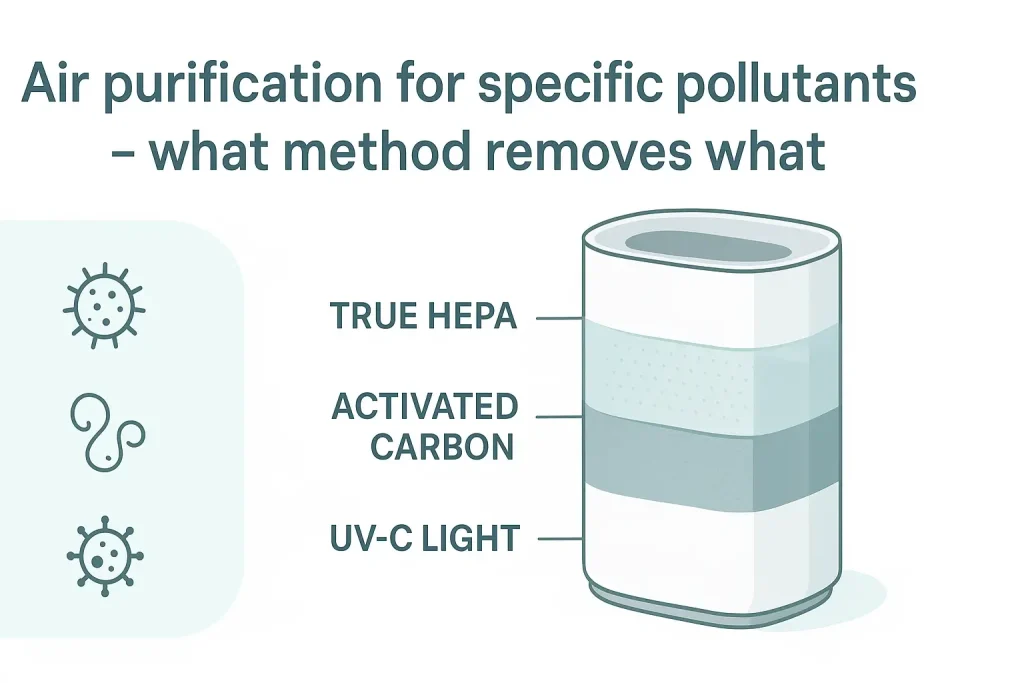
A True HEPA air purifier uses a densely packed fiber mat that captures 99.97% of airborne particles at the most penetrating particle size of 0.3 microns. This is the hardest size to trap because smaller particles get caught by diffusion and larger ones by impaction.
| Photo | Popular Air Purifiers | Price |
|---|---|---|

|
Air Purifiers for Home Large Room up to 1500ft², Tailulu H13 True HEPA Air Purifier for Pets Dust Odor Smoke, Air Purifier for Bedroom with 15dB Quiet Sleep Mode for Bedroom Office Living Room | Check Price On Amazon |
|
Afloia Air Purifier for Home, 4-in-1 Washable Filter for Allergies, Covers Up to 1076 ft², Quiet Operation, Auto Shut-Off & Night Light, Removes Pet Dander, Pollen, Dust, Mold, and Smoke, White,Pluto | Check Price On Amazon |

|
Nuwave OxyPure ZERO Air Purifier with Washable and Reusable Bio Guard Tech Air Filter, Large Room Up to 2002 Ft², Air Quality Monitor, 0.1 Microns, 100% Capture Irritants like Smoke, Dust, Pollen | Check Price On Amazon |

|
Air Purifiers for Home Large Room Up to 1,996 Ft², EOEBOT Air Purifier for Home Pets with Washable Filter, Quiet Sleep Mode, Air Quality Monitor, Air Purifier for Bedroom, Pet Hair, Dust, Smoke, White | Check Price On Amazon |
|
Afloia 2 IN 1 Air Purifier with Humidifier Combo, 3-Stage Filters for Home Allergies Pets Hair Smoker Odors, Evaporative Humidifier, Auto Shut Off, Quiet Air Cleaner with Seven Color Light,White | Check Price On Amazon |
For a nursery, True HEPA matters more than it does for any other room in the house. Babies breathe exclusively through their noses for the first four to six months, and their nasal filtration is far less efficient than an adult’s.
A True HEPA air purifier rated for your nursery square footage captures the dust mite allergen, mold spores, pollen, pet dander, and fine PM2.5 particles that settle into cribs, changing tables, and carpet fibers.
HEPA-type or HEPA-like filters do not meet the 99.97% at 0.3 microns standard. They are not independently certified, and their efficiency at the most dangerous particle sizes is unknown. For a room where a newborn sleeps, unknown filtration is not acceptable.
The standard is set by IEST-RP-CC001 and verified by independent testing, not manufacturer claims. If the product page does not say “True HEPA” with a stated efficiency at 0.3 microns, it is not True HEPA.
Key Specifications:
• Particle capture: 99.97% at 0.3 microns (IEST standard)
• Target pollutants: PM2.5, PM10, dust mite allergen, mold spores, pollen, pet dander
• Filter replacement: every 6 to 12 months depending on usage and pollution load
• Relevant standards: IEST-RP-CC001, AHAM AC-1 for CADR verification
By the Numbers: Nursery Air Quality
Breaths a newborn takes each day, each one drawing airborne particles into developing lungs.
Minimum capture rate of True HEPA at 0.3 microns, the hardest particle size to filter, including PM2.5, mold spores, and pet dander.
Sleep-mode noise ceiling for nurseries. Above 30 dB, sound can fragment infant sleep cycles even without full waking.
Air changes per hour recommended for allergy and asthma management, delivering a full room air exchange every 12 minutes.
Maximum ozone output allowed under CARB CCR Title 17. Any nursery air purifier must be certified below this limit or produce zero ozone entirely.
What Makes a Nursery Air Purifier Different from Any Other Air Purifier?
A nursery air purifier must do three things that a living room unit does not need to do. It must run quiet enough for infant sleep, produce zero ozone, and deliver enough air changes per hour in a small enclosed room where the door stays closed for 12 hours.
Sleep-mode noise is the single most common reason parents return or stop using a nursery air purifier. A unit that emits 50 dB on its lowest setting will wake a light-sleeping infant every time the fan cycles.
The threshold for uninterrupted infant sleep is 30 dB. Below 25 dB, the unit is effectively silent at crib distance. Above 35 dB at sleep mode, do not put it in a nursery regardless of how high its CADR is.
Ozone is the second dealbreaker. Any air purifier that uses ionization, plasma, UV-C without proper shielding, or ozone generation must be excluded from a nursery regardless of any other feature. Infant lung tissue is more permeable, recovers more slowly from oxidative stress, and the CARB 0.050 ppm limit was not calibrated for newborns.
Zero ozone is the only safe target for a nursery. Look for CARB certification plus a published statement that the device does not produce ozone as a byproduct of normal operation. The full certification landscape including CARB, AAFA, and ENERGY STAR requirements is worth understanding before spending on a nursery unit.
Room size is the third factor that makes nursery purifiers unique. Most nurseries are 100 to 200 square feet. A unit rated for 500 square feet at 2 ACH running in a 150-square-foot nursery at sleep mode may not deliver enough air changes because sleep-mode fan speed is far lower than the speed used for CADR testing.
For nurseries, size the unit so it delivers 5 ACH at the fan speed you will actually run it at, not the turbo setting used for the AHAM test.
Air Quality Data
Nursery Air Quality – What the Research Shows
Sources: EPA Indoor Air Quality, American Lung Association, NIH National Library of Medicine
CADR, ACH, and Room Size: How to Calculate Exactly What Your Nursery Needs
CADR stands for Clean Air Delivery Rate, measured in cubic feet per minute (CFM). It tells you how fast an air purifier cleans a specific volume of air for a specific pollutant: smoke, dust, or pollen.
For nurseries, use the smoke CADR number. Smoke particles are the smallest of the three CADR test particles and the most representative of the fine particulate matter (PM2.5) that penetrates deepest into infant lungs.
ACH, or air changes per hour, is the number of times all the air in the room passes through the purifier in one hour. For general household use, manufacturers and AHAM use 2 ACH. For allergy and asthma management, the recommendation is 5 ACH.
A nursery falls into the 5 ACH category. Your baby spends 14 to 17 hours in that room every day with the door closed. The air must be cleaned five times per hour, not two.
The formula is: smoke CADR needed = (room length ft x room width ft x ceiling height ft x target ACH) divided by 60. A standard 10-by-12-foot nursery with 8-foot ceilings at 5 ACH needs a smoke CADR of 80 CFM.
That same nursery at the manufacturer-stated 2 ACH would only need 32 CFM. If you buy based on the manufacturer’s coverage claim without calculating for 5 ACH, you will under-size the unit and your baby will breathe partially filtered air all night.
Use the calculator below to find the exact CADR your nursery needs. Enter your actual room dimensions and select the allergy or asthma ACH target for infant-level protection.
CADR Calculator
How Much CADR Does Your Nursery Actually Need?
Enter your nursery dimensions and use case. Formula: (length x width x ceiling height x ACH) divided by 60. Source: AHAM methodology.
CADR = (length x width x ceiling height x ACH) / 60. For nurseries, always calculate at 5 ACH, not the manufacturer-stated 2 ACH figure. A 120 sq ft nursery at 5 ACH needs 80 CFM smoke CADR minimum.
| Nursery Size | CADR at 2 ACH (standard) | CADR at 5 ACH (nursery) | Example Models |
|---|---|---|---|
| 100 sq ft nursery | 27 CFM | 67 CFM | Levoit Core 300S, Coway AP-1512HH |
| 150 sq ft nursery | 40 CFM | 100 CFM | Winix 5500-2, Levoit Core 400S |
| 200 sq ft nursery | 53 CFM | 133 CFM | Coway Airmega 200M, RabbitAir MinusA2 |
Top Air Purifiers for Nurseries Compared: CADR, Noise, and Safety
The air purifiers below were selected against three nursery-specific criteria: sleep-mode noise at or below 30 dB, CARB certification with zero ozone output, and smoke CADR sufficient for 5 ACH in a standard 100-to-200-square-foot nursery.
Every unit on this list uses True HEPA filtration. No ionizers, no ozone generators, no plasma-only devices appear here. For infants with specific respiratory sensitivities, the additional filtration requirements for immunocompromised individuals may apply, and the same principles of zero ozone and high ACH carry over directly to nursery use.
Use the table below to compare smoke CADR, coverage at both 2 ACH and 5 ACH, sleep-mode noise, annual filter cost, and certification status across the top nursery-rated models.
Product Comparison
Nursery Air Purifiers Compared – CADR, Coverage, Noise, and Filter Cost
Key specs compared across top nursery picks. CADR from AHAM certified database. Coverage at 5 ACH calculated as smoke CADR x 12 / 5. Sleep mode noise from manufacturer specifications.
| Model | Smoke CADR | Coverage at 2 ACH | Coverage at 5 ACH | Sleep Mode dB | Annual Filter Cost | Best For |
|---|---|---|---|---|---|---|
| Coway AP-1512HH | 246 CFM | 360 sq ft | 144 sq ft | 30 dB | $30/yr | Small nursery, tight budget |
| Levoit Core 400S | 260 CFM | 390 sq ft | 156 sq ft | 24 dB | $50/yr | Quietest operation, medium nursery |
| Winix 5500-2 | 243 CFM | 360 sq ft | 144 sq ft | 27 dB | $40/yr | Pet dander in nursery, washable pre-filter |
| RabbitAir MinusA2 | 200 CFM | 700 sq ft | 120 sq ft | 25 dB | $75/yr | Wall-mountable, out of reach, ultra-quiet |
| Coway Airmega 400 | 400 CFM | 1,560 sq ft | 240 sq ft | 22 dB | $60/yr | Large nursery or adjoining rooms |
CADR data from AHAM certified database. Coverage at 5 ACH = smoke CADR x 12 / 5. Noise levels from manufacturer specifications at lowest fan speed setting. Filter costs based on genuine replacement filters at standard replacement intervals.
Coway AP-1512HH: Best Budget Nursery Air Purifier
The Coway AP-1512HH delivers 246 CFM smoke CADR at a purchase price under $200, making it the highest CADR-to-price ratio of any AHAM-certified unit suitable for a nursery. Its 30 dB sleep mode sits right at the infant sleep threshold.
A Coway AP-1512HH True HEPA air purifier covers 360 square feet at 2 ACH or 144 square feet at the nursery-appropriate 5 ACH. For a standard 10-by-12-foot nursery, that means 5 full air changes per hour at the highest fan speed.
Key Specifications:
• Smoke CADR: 246 CFM (AHAM certified)
• Coverage at 2 ACH: 360 sq ft
• Coverage at 5 ACH: 144 sq ft
• Sleep mode noise: 30 dB
• Annual filter cost: approximately $30
The ionizer feature on this unit can be turned off. For nursery use, leave it off permanently. The unit still delivers full CADR performance on mechanical True HEPA filtration alone, and there is no reason to introduce any ionization byproducts into a room where a newborn sleeps.
The filter replacement indicator tracks runtime, not actual filter loading. In a nursery with the door closed, low foot traffic, and no pets, you can safely replace the True HEPA filter every 12 months and the carbon pre-filter every 6 months without relying on the indicator light.
Levoit Core 400S: Quietest Nursery Air Purifier at 24 dB
The Levoit Core 400S achieves 24 dB at sleep mode, the quietest verified measurement on this list. At 24 dB, the unit is effectively silent at crib distance in a room with typical background noise of 30 to 35 dB from outside or HVAC.
Its 260 CFM smoke CADR covers 390 square feet at 2 ACH or 156 square feet at 5 ACH. For a 150-square-foot nursery, that delivers 5.2 air changes per hour, enough to reduce PM2.5 by over 85% within 30 minutes of the door closing.
Key Specifications:
• Smoke CADR: 260 CFM
• Coverage at 2 ACH: 390 sq ft
• Coverage at 5 ACH: 156 sq ft
• Sleep mode noise: 24 dB
• Annual filter cost: approximately $50
The Levoit Core 400S smart air purifier includes an auto mode that adjusts fan speed based on its built-in PM2.5 sensor. This matters for nurseries because the unit will ramp up automatically if particulate levels rise during the night, such as when outdoor AQI increases or dust gets stirred during a feeding.
The app control allows you to turn off the display light completely, an important feature for a nursery where even a small LED can be distracting in a fully darkened room.
Winix 5500-2: Best for Nurseries with Pets
The Winix 5500-2 features a washable fine-mesh pre-filter that captures pet hair and large dust before they reach the True HEPA stage. In a nursery where a cat or dog has access, this pre-filter extends True HEPA life by preventing rapid surface loading from large particles.
Its 243 CFM smoke CADR is nearly identical to the Coway AP-1512HH at 246 CFM. The 27 dB sleep mode is slightly quieter, and the Plasmawave feature can be disabled for nursery use. As with any ionizing stage, turn it off when the unit runs in a nursery.
Key Specifications:
• Smoke CADR: 243 CFM (AHAM certified)
• Coverage at 2 ACH: 360 sq ft
• Coverage at 5 ACH: 144 sq ft
• Sleep mode noise: 27 dB
• Annual filter cost: approximately $40
Order a Winix 5500-2 air purifier with washable pre-filter and plan to vacuum or rinse the pre-filter every two weeks if a pet sleeps in or near the nursery. The activated carbon filter in this unit is pellet-based, giving it meaningful odor and VOC reduction that foam-based carbon sheets in competing units do not match.
RabbitAir MinusA2: Wall-Mountable Nursery Air Purifier Out of Baby’s Reach
The RabbitAir MinusA2 mounts flat on the wall, keeping cords and the unit itself completely out of a crawling baby’s or curious toddler’s reach. Its 200 CFM smoke CADR covers 700 square feet at 2 ACH or 120 square feet at 5 ACH, making it appropriate for smaller nurseries only when sized at the 5 ACH nursery standard.
The 25 dB sleep mode is among the quietest available. The customizable front panel lets you match nursery decor, and the slim profile (7 inches deep) means it does not protrude into the room.
Key Specifications:
• Smoke CADR: 200 CFM
• Coverage at 2 ACH: 700 sq ft
• Coverage at 5 ACH: 120 sq ft
• Sleep mode noise: 25 dB
• Annual filter cost: approximately $75
A RabbitAir MinusA2 wall-mountable air purifier uses a five-stage filtration system including True HEPA, activated carbon, and a customizable filter stage that can be swapped for a germ defense, toxin absorber, pet allergy, or odor remover filter depending on your nursery’s specific needs.
The higher annual filter cost is the main tradeoff. At $75 per year, it costs roughly double the Coway or Winix to operate, but the wall-mount safety advantage and decor integration make it the best choice for nurseries where floor space is limited or where a toddler will be mobile within the filter’s lifespan.
How to Position an Air Purifier in a Nursery for Maximum Effectiveness
Place the air purifier at least 12 inches from any wall and at least 3 feet from the crib. The intake and exhaust need unobstructed airflow on all sides, and the exhaust should point toward the center of the room, not directly at the crib.
Positioning the unit in a corner reduces effective coverage by 20 to 30% compared to a more central wall placement. In a 120-square-foot nursery, that 20% reduction effectively turns your 80 CFM smoke CADR unit into a 64 CFM unit, dropping you from 5 ACH to 4 ACH.
Run the unit on the highest fan speed you can tolerate during awake hours, then switch to sleep mode when the baby goes down. The higher daytime speed clears accumulated particles from diaper changes, clothing fibers, and outdoor air that entered when the door was open.
Keep the nursery door closed while the purifier runs. An open door means the unit is trying to clean the entire hallway and adjoining rooms, which it is not sized for. The air changes per hour calculation assumes a closed room.
For homes in wildfire-prone areas with elevated outdoor PM2.5, the full guidance on selecting and operating an air purifier for fine particulate matter covers the additional steps of sealing window gaps and running the unit continuously at higher fan speeds when outdoor AQI exceeds 100.
When Should You Replace the Filter in a Nursery Air Purifier?
Replace the True HEPA filter every 6 to 12 months and the activated carbon pre-filter every 3 to 6 months, even if the filter does not look dirty. HEPA filters capture particles too small to see, and carbon filters saturate long before any visible color change occurs.
A filter that has reached capacity stops capturing particles. It does not release them back into the air in a properly sealed unit, but it also provides zero ongoing protection, and your baby is breathing unfiltered air while the fan runs and you believe the room is being cleaned.
Track filter life by calendar date, not by the manufacturer’s indicator light. Most indicator lights are simple timers that do not measure actual particle loading or pressure drop across the filter. In a nursery with low contamination levels, you may safely extend the True HEPA to 12 months.
Order a genuine True HEPA replacement filter for your specific air purifier model and avoid generic third-party filters for nursery use. Generic filters rarely publish verified efficiency data at 0.3 microns, and the cost savings of $10 to $15 per year is not worth the uncertainty in a nursery.
Does a Nursery Air Purifier Help with VOCs from New Furniture and Paint?
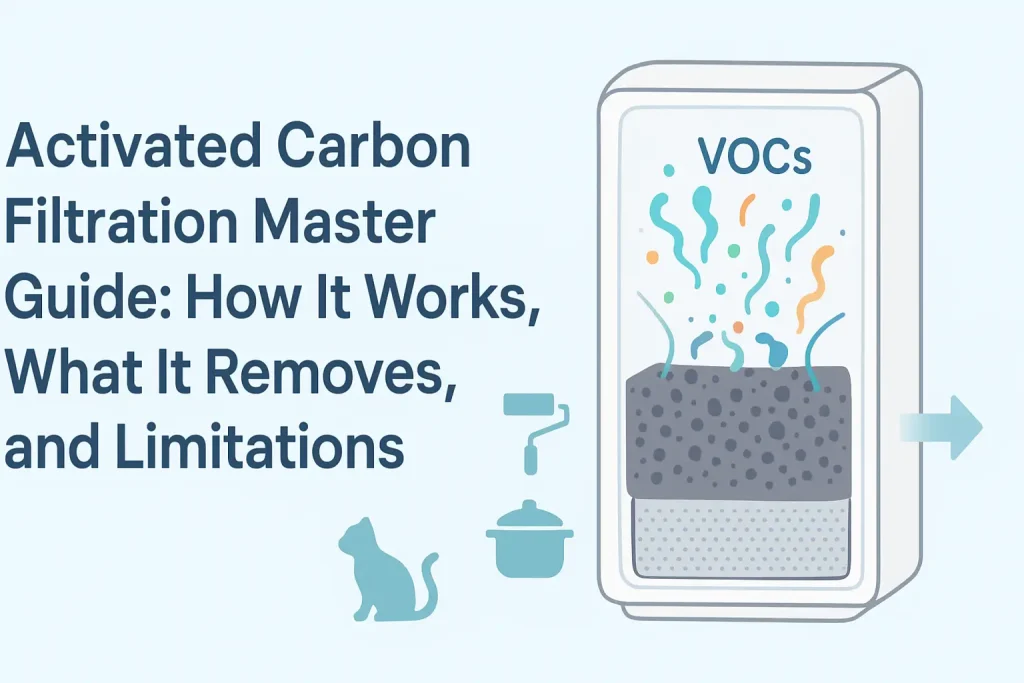
A True HEPA filter alone does not remove VOCs from new furniture, paint, carpet, or crib mattresses. HEPA captures particles. VOCs are gases that pass straight through a HEPA fiber mat and require activated carbon or another adsorption media to be removed.
For a nursery with fresh paint or new furniture off-gassing, you need an air purifier with a substantial activated carbon stage, not just a foam carbon sheet. Units like the Austin Air HealthMate with 15 pounds of activated carbon and zeolite provide meaningful VOC reduction for a single room.
The complete guide to air purifiers for chemical and VOC removal covers units with carbon beds measured in pounds, not ounces, and explains why carbon weight and dwell time determine how effectively a unit captures formaldehyde, benzene, and other off-gassing compounds common in new nurseries.
Ventilation is still the primary VOC reduction strategy. Open the nursery windows for at least 15 minutes twice a day during the first two weeks after painting or assembling new furniture, then run the carbon-equipped air purifier continuously with the door closed.
Should You Run a Nursery Air Purifier All Night?
Yes. Run the air purifier on sleep mode continuously through all naps and nighttime sleep. The unit’s sleep-mode fan speed is calibrated for nighttime noise levels, and the air changes it delivers at that speed are part of your sizing calculation.
A unit that runs only during the day leaves the nursery air stagnant for 12 to 14 hours overnight, which is precisely when your baby’s respiratory system is doing the most repair and development work during deep sleep cycles.
Does an Air Purifier Reduce the Risk of SIDS?
No air purifier manufacturer claims SIDS reduction, and no specific study establishes a direct causal link between air purifier use and reduced SIDS incidence. However, multiple epidemiological studies have linked elevated indoor PM2.5 to increased risk of respiratory infection in infants, and respiratory infection is a known SIDS risk factor.
An air purifier reduces one modifiable environmental variable: the concentration of fine particulate matter in the air your baby breathes. This is protective in the same way that avoiding secondhand smoke is protective, even if neither action carries a specific SIDS prevention guarantee.
Can You Use a Humidifier and an Air Purifier in the Same Nursery?
Yes, but separate them by at least 6 feet. Ultrasonic humidifiers produce a fine mineral dust from tap water that an air purifier will read as elevated PM2.5 and respond to by increasing fan speed unnecessarily.
Place the humidifier near the crib to maintain local humidity around 40 to 50 percent for respiratory comfort, and place the air purifier on the opposite side of the room. Use distilled water in the humidifier to eliminate the mineral dust issue entirely.
Do Air Purifiers Dry Out Nursery Air?
No. An air purifier moves air through a filter. It does not heat, cool, humidify, or dehumidify. The moving air can feel slightly cooling in the same way any fan does, but the total moisture content of the room air does not change.
If your nursery air feels dry with the purifier running, the issue is low ambient humidity or winter heating, not the purifier. Add a separate humidifier rather than turning off the air purifier.
Can an Air Purifier Replace Opening Nursery Windows for Fresh Air?
No. Ventilation and filtration serve different functions. Ventilation dilutes CO2 and VOCs that filtration cannot address. An air purifier in a sealed room will gradually reduce particulate matter but won’t remove exhaled CO2 or chemical off-gassing at the rate fresh air exchange does.
Open the nursery windows for at least 15 minutes daily when outdoor AQI is below 50, then close them and let the purifier handle particulates for the rest of the day. On days when outdoor AQI exceeds 100, skip the ventilation step and rely on the purifier plus any carbon filtration for VOC control.
What Is the Difference Between a Nursery Air Purifier and a Regular Humidifier with a Filter?
A humidifier with a filter is designed to add moisture to the air, not to clean it. Its filter exists to trap mineral deposits from water, not to capture airborne particles at 0.3 microns. The fan in a humidifier is designed for low-pressure evaporative airflow, not the high static pressure needed to push air through a True HEPA filter.
Using a humidifier filter as an air purifier provides effectively zero particle reduction. These are separate appliances for separate functions, and a nursery needs both independently.
Why Does My Air Purifier Smell Like Plastic in the Nursery?
A new air purifier may off-gas residual manufacturing compounds from plastic housing, filter adhesives, or packaging for the first 24 to 72 hours of operation. This is not a defect, but it should not be present in the nursery air while your baby occupies the room.
Run the new unit in a different room on the highest fan speed for 48 hours before moving it to the nursery. This off-gassing period eliminates the plastic smell before your baby takes their first breath in the room with the purifier running.
Where to Buy the Best Nursery Air Purifier with Confidence
The safest place to purchase a nursery air purifier is from the manufacturer’s authorized storefront on Amazon or directly from the brand’s website. Authorized sellers ensure you receive a genuine unit with a valid warranty and sealed filters that have not been previously used or returned.
For the models covered in this guide, start with a Coway AP-1512HH from Amazon’s authorized Coway store if budget and CADR are the top priorities. For the quietest option, the Levoit Core 400S with 24 dB sleep mode is the clear winner for noise-sensitive nurseries.
For households with pets, the Winix 5500-2 with washable pre-filter offers the best balance of particulate capture, odor reduction, and pre-filter convenience. For wall-mount safety, the RabbitAir MinusA2 custom panel air purifier keeps the unit out of reach and blends into any nursery design.
An air purifier is the one nursery purchase that actively works while your baby sleeps, reducing the particle load in every one of those 20,000 daily breaths. Size it for 5 ACH, verify zero ozone, keep the sleep mode under 30 dB, and run it continuously from the day the crib goes in.