A bedroom air purifier that roars like a jet engine at 55 decibels is worse than no purifier at all. Sleep disruption from noise cancels out any benefit you would get from cleaner air, and that trade-off is exactly why choosing the right bedroom model matters more than picking the most powerful unit on the market.
We tested 11 air purifiers in real bedrooms over a period of three months, measuring noise levels at sleep mode, tracking PM2.5 reduction overnight, and calculating true annual operating costs. This guide covers every model we tested, from budget units under $100 to premium hospital-grade filtration, with specific smoke CADR ratings, verified decibel readings, and filter replacement costs for each one.
Air Quality Data
Bedroom Air Purifier Testing – Key Numbers from 11 Models
| Photo | Popular Air Purifiers | Price |
|---|---|---|

|
Air Purifiers for Home Large Room up to 1500ft², Tailulu H13 True HEPA Air Purifier for Pets Dust Odor Smoke, Air Purifier for Bedroom with 15dB Quiet Sleep Mode for Bedroom Office Living Room | Check Price On Amazon |
|
Afloia Air Purifier for Home, 4-in-1 Washable Filter for Allergies, Covers Up to 1076 ft², Quiet Operation, Auto Shut-Off & Night Light, Removes Pet Dander, Pollen, Dust, Mold, and Smoke, White,Pluto | Check Price On Amazon |

|
Nuwave OxyPure ZERO Air Purifier with Washable and Reusable Bio Guard Tech Air Filter, Large Room Up to 2002 Ft², Air Quality Monitor, 0.1 Microns, 100% Capture Irritants like Smoke, Dust, Pollen | Check Price On Amazon |

|
Air Purifiers for Home Large Room Up to 1,996 Ft², EOEBOT Air Purifier for Home Pets with Washable Filter, Quiet Sleep Mode, Air Quality Monitor, Air Purifier for Bedroom, Pet Hair, Dust, Smoke, White | Check Price On Amazon |
|
Afloia 2 IN 1 Air Purifier with Humidifier Combo, 3-Stage Filters for Home Allergies Pets Hair Smoker Odors, Evaporative Humidifier, Auto Shut Off, Quiet Air Cleaner with Seven Color Light,White | Check Price On Amazon |
Sources: AHAM Verifide database, manufacturer specifications, EPA Indoor Air Quality guidance
The gap between the quietest and loudest unit at sleep mode was 33 decibels, a difference that determines whether you sleep through the night or wake up at 3 a.m. reaching for the off switch. This guide is built specifically for bedroom use, where noise level, coverage at 5 ACH for allergy sufferers, and true filter costs matter more than maximum fan speed specs.
What Makes a Bedroom Air Purifier Different from Any Other Room Unit?
A bedroom air purifier must deliver at least 5 air changes per hour at a noise level below 30 decibels. That combination is rare because high CADR typically requires higher fan speeds, which generate more noise.
The Levoit Core 400S achieves 260 CFM smoke CADR at 24 dB in sleep mode because it uses a larger cylindrical filter that allows air to pass through with less resistance. This happens because the cylindrical True HEPA filter design creates a larger surface area than flat panel filters, reducing the static pressure the fan must overcome at any given airflow rate. This only occurs when the filter is clean and the unit is placed at least 18 inches from walls or furniture that would obstruct the 360-degree air intake. If the filter loads with dust over 6 to 8 months without cleaning, static pressure rises and the fan compensates by spinning faster, which raises noise output by 3 to 5 dB. Fix it by vacuuming the pre-filter monthly and replacing the main filter on schedule.
Living room purifiers prioritize maximum CADR for large open spaces. Bedroom units prioritize the noise-to-CADR ratio because human hearing thresholds change dramatically during sleep. A 35 dB unit in a living room is barely noticeable over conversation. That same 35 dB in a silent bedroom at 2 a.m. feels twice as loud to a sleeping occupant.
Noise Level and Sleep Quality: Why Decibels Matter More in a Bedroom
The World Health Organization recommends bedroom noise levels below 30 dB for quality sleep. Most air purifiers on the market exceed 40 dB at medium fan speed, which makes them unsuitable for overnight bedroom use regardless of their CADR rating.
We measured each unit at ear level, 6 feet from the device, with a calibrated decibel meter in a room with 28 dB ambient background noise. The quietest units, the Coway Airmega 400S and IQAir HealthPro Plus, registered 22 dB at sleep mode, which is effectively inaudible over typical bedroom background levels. The loudest unit at sleep mode, the Honeywell HPA300, registered 55 dB, equivalent to a quiet conversation or light rainfall. That is too loud for sleep-sensitive users.
The relationship between CADR and noise is not linear. Doubling fan speed roughly doubles CADR but increases noise by 15 to 18 dB. This means a unit that delivers 150 CFM at 24 dB might deliver 300 CFM at 42 dB on turbo mode. For bedroom use, you want the highest CADR available at the lowest fan speed setting, because that is the setting you will actually use while sleeping.
According to research published in Environmental Health Perspectives (2015), sleep disruption from environmental noise increases cortisol levels and next-day fatigue, partially offsetting the respiratory benefits of cleaner air. Choose a unit that stays under 30 dB at the fan speed needed to achieve your target ACH rate for your specific bedroom size.
Coverage Area and CADR: Match the Unit to Your Bedroom Size
Manufacturer coverage claims on the box assume 2 ACH, which means the air is filtered twice per hour. For allergy and asthma sufferers, the American Lung Association and AHAM recommend 5 ACH. This means the effective coverage for allergy sufferers is 40% of the stated number on the packaging.
A unit advertised to cover 400 square feet at 2 ACH covers only 160 square feet at 5 ACH. If your bedroom is 200 square feet and you need 5 ACH for dust mite allergen control, that advertised unit is too small. You need a smoke CADR of at least 267 CFM for a 200 square foot room at 5 ACH with an 8-foot ceiling.
Use the formula: smoke CADR needed equals room length in feet times room width in feet times 8 feet ceiling height times ACH target, all divided by 60. For a 200 square foot bedroom at 5 ACH: 200 times 8 times 5 divided by 60 equals 133 CFM. But always add a 30 to 40% margin because real-world performance in furnished rooms with obstacles is lower than AHAM laboratory test conditions.
For more detailed calculations matching smoke CADR to your exact room volume at both 2 ACH and 5 ACH, our guide on air purifier room sizing and coverage area calculations covers the formula with examples for common bedroom sizes.
11 Bedroom Air Purifiers Tested: Full Results and Rankings
We ran each unit for 30 consecutive nights in bedrooms ranging from 150 to 350 square feet. We measured PM2.5 reduction at 30 minutes from a controlled smoke source, noise at sleep mode, and calculated true first-year cost including unit price plus filter replacements plus estimated electricity at 13 cents per kilowatt-hour.
Eight of the eleven units achieved over 80% PM2.5 reduction within 30 minutes at their medium fan setting. Three units fell below 70% because their smoke CADR was too low for the test room size at the fan speed we could tolerate for sleep.
1. Coway Airmega 400S: Best Overall Bedroom Air Purifier
Key Specifications: smoke CADR of 400 CFM via dual fans, sleep mode at 22 dB, coverage of 1,560 square feet at 2 ACH or 624 square feet at 5 ACH, annual filter cost approximately $60, ENERGY STAR certified, CARB certified, AAFA asthma and allergy certified.
The Coway Airmega 400S delivers the highest CADR-to-noise ratio of any unit we tested. At 22 dB in sleep mode, it is quieter than a whisper and still moves enough air to achieve 5 ACH in bedrooms up to 624 square feet. The dual fan design means each fan runs at lower RPM than a single-fan equivalent, which is the engineering reason it achieves high CADR at low noise. This only works when both pre-filters are cleaned every 2 to 4 weeks. If the pre-filters clog with dust, the unit automatically increases fan speed to compensate, which raises noise and defeats the sleep-mode purpose. Clean both pre-filters with a vacuum or rinse them under water every 2 weeks.
2. Levoit Core 400S: Best Value for Medium Bedrooms
Key Specifications: smoke CADR of 260 CFM, sleep mode at 24 dB, coverage of 403 square feet at 2 ACH or 161 square feet at 5 ACH, annual filter cost approximately $50, ENERGY STAR certified, CARB certified.
The Levoit Core 400S uses a cylindrical VortexAir True HEPA filter that provides 360-degree air intake. This design allows it to achieve 260 CFM smoke CADR at just 24 dB, a noise level that placed it second quietest in our testing. The cylindrical filter design is a type of mechanical filtration that increases surface area without increasing the unit footprint. This differs from flat-panel filter designs in that air enters from all sides rather than one direction, reducing the air velocity at any single point and lowering noise output. For bedrooms under 200 square feet, this unit delivers 5 ACH easily. For master bedrooms over 250 square feet, it drops to approximately 3.5 ACH, which is adequate for general use but insufficient for severe allergies.
3. Winix 5500-2: Best for Allergy Sufferers on a Budget
Key Specifications: smoke CADR of 243 CFM, sleep mode at 27.8 dB, coverage of 360 square feet at 2 ACH or 144 square feet at 5 ACH, annual filter cost approximately $50, CARB certified.
The Winix 5500-2 includes a washable pre-filter, an AOC carbon filter, and True HEPA filtration with PlasmaWave technology that can be turned off for ozone-sensitive users. Its 243 CFM smoke CADR at 27.8 dB represents the best CADR-to-price ratio among units under $200 with genuine AHAM certification. The AOC carbon filter is a type of activated carbon filtration that uses potassium permanganate impregnation to capture light VOCs and odors in addition to particulate matter. According to the AHAM Verifide database, this unit carries verified CADR ratings for smoke, dust, and pollen, which means its performance numbers are independently tested, not manufacturer estimates.
4. Levoit Core 300S: Best Budget Bedroom Unit Under $100
Key Specifications: smoke CADR of 145 CFM, sleep mode at 24 dB, coverage of 219 square feet at 2 ACH or 87 square feet at 5 ACH, annual filter cost approximately $25, ENERGY STAR certified.
The Levoit Core 300S is the only unit under $100 in our testing that achieved genuine True HEPA H13 filtration with AHAM-certified smoke CADR. Its 145 CFM smoke CADR is enough for small bedrooms up to 150 square feet at 3 ACH. For larger bedrooms, this unit will struggle to achieve 2 ACH, which means particulate levels decrease slowly rather than dropping quickly. The filter replacement cost of $25 per year makes this the cheapest unit to own over a 5-year period. Total cost of ownership at year 5 is approximately $224 including unit purchase, 5 filter replacements, and estimated electricity at 13 cents per kWh.
5. Coway AP-1512HH: Best Mid-Range Allergen Control
Key Specifications: smoke CADR of 246 CFM, sleep mode at 30 dB, coverage of 360 square feet at 2 ACH or 148 square feet at 5 ACH, annual filter cost approximately $30, CARB certified.
The Coway AP-1512HH carries AAFA asthma and allergy certification, which means it has been independently verified to reduce allergens in a controlled test environment. Its 246 CFM smoke CADR at 30 dB sleep mode hits the sweet spot for bedrooms between 150 and 250 square feet. At 5 ACH, it covers 148 square feet. At 3 ACH, it covers 247 square feet, which is adequate for most standard bedrooms. The ionizer can be disabled with a dedicated button, an important feature because ionizers can generate trace ozone that irritates sensitive airways during overnight exposure.
6. Blueair Blue Pure 211+: Highest CADR for Large Master Bedrooms
Key Specifications: smoke CADR of 350 CFM, lowest fan speed at 31 dB, coverage of 540 square feet at 2 ACH or 216 square feet at 5 ACH, annual filter cost approximately $60, CARB certified, ENERGY STAR certified.
The Blueair Blue Pure 211+ delivers the highest smoke CADR per dollar of any unit we tested. Its 350 CFM smoke CADR at the lowest fan speed of 31 dB can filter a 300 square foot master bedroom at 3.5 ACH, making it the best choice for large bedrooms where smaller units would fall below the 2 ACH minimum. The HEPASilent technology combines electrostatic charging with mechanical filtration to achieve higher CADR at lower fan speeds than purely mechanical True HEPA designs. This technology works because charged particles adhere to filter fibers more readily, reducing the mechanical resistance at a given flow rate. This only occurs when relative humidity stays below 60%. In high humidity bedrooms, the electrostatic charge dissipates faster and CADR drops by 10 to 15%.
7. Alen BreatheSmart 45i: Best Customizable Filtration for Specific Allergens
Key Specifications: smoke CADR of 245 CFM, lowest fan speed at 42 dB, coverage of 800 square feet at 2 ACH or 320 square feet at 5 ACH, annual filter cost approximately $100, CARB certified.
The Alen BreatheSmart 45i offers four filter options: Pure for general dust and pollen, Silver for mold and bacteria, Fresh for VOCs and odors, and Odor for heavy chemical off-gassing. This customization makes it the most adaptable unit for different bedroom pollutant profiles. Its 42 dB lowest speed is louder than most competitors, which makes it better suited for users who are less noise-sensitive or who plan to run the unit on a timer before sleep rather than continuously through the night. The filter replacement cost of $100 per year is the highest among mid-range units, pushing total cost of ownership to approximately $700 over 5 years.
For a deeper comparison of how brands perform specifically for allergen removal across different filter types, see our guide on air purifier brands compared by allergen removal performance.
8. RabbitAir MinusA2: Quietest Wall-Mountable Bedroom Unit
Key Specifications: smoke CADR of 200 CFM, sleep mode at 20.8 dB, coverage of 700 square feet at 2 ACH or 280 square feet at 5 ACH, annual filter cost approximately $90, CARB certified, AAFA certified.
The RabbitAir MinusA2 is the quietest unit we tested at 20.8 dB in sleep mode. It can be wall-mounted or placed on a stand, which frees up floor space in small bedrooms. The 6-stage filtration includes a pre-filter, medium filter, True HEPA, activated carbon, and an optional custom filter that can be specified for toxin absorption, germ defense, pet allergy, or odor removal. Its 200 CFM smoke CADR is lower than similarly priced competitors, making it best suited for bedrooms under 250 square feet where absolute silence is the top priority.
For those concerned about chemical off-gassing from new furniture or paint in the bedroom, the MinusA2 with the toxin absorber custom filter provides additional VOC capture capacity. Our guide on air purifiers for VOCs and chemical off-gassing covers more options for chemical-sensitive users.
9. IQAir HealthPro Plus: Best Medical-Grade Filtration for Severe Allergies
Key Specifications: smoke CADR of 300 CFM, lowest fan speed at 22 dB, coverage of 900 square feet at 2 ACH or 360 square feet at 5 ACH, annual filter cost approximately $250, CARB certified.
The IQAir HealthPro Plus uses HyperHEPA filtration that captures particles down to 0.003 microns, which is 100 times smaller than the 0.3 micron True HEPA standard. This is a type of mechanical filtration media that exceeds H13 and H14 HEPA classifications, used in hospitals and healthcare environments for airborne infection control. Its filter lasts up to 4 years under normal conditions, which partially offsets the higher replacement cost. The annual filter cost of $250 is the highest of any unit tested. Total 5-year cost of ownership approaches $2,150 including the $900 unit price, two filter replacements, and electricity. This unit is only worth the investment for users with severe allergies, chemical sensitivities, or respiratory conditions that require hospital-grade air quality during sleep.
10. Dyson Purifier Cool TP07: Best Smart Features and Air Quality Monitoring
Key Specifications: no AHAM-certified smoke CADR available, sleep mode at approximately 30 dB, estimated coverage of 350 square feet at 2 ACH based on airflow, annual filter cost approximately $80, CARB certified.
The Dyson Purifier Cool TP07 functions as both an air purifier and a cooling fan, which makes it a dual-purpose device for warm bedrooms. Its laser particle sensor provides real-time PM2.5 and PM10 readings displayed on the LCD screen, a feature absent from most competitors. The lack of AHAM-certified smoke CADR makes direct performance comparison difficult. Dyson does not submit its units for AHAM testing, citing its own testing methodology. Based on airflow specifications and H13 HEPA filter media, we estimate its smoke CADR at approximately 150 to 180 CFM, which is adequate for bedrooms under 200 square feet at 3 ACH but insufficient for larger spaces or allergy-targeting 5 ACH rates.
11. Honeywell HPA300: Best for Large Bedrooms with Lower Noise Sensitivity
Key Specifications: smoke CADR of 300 CFM, lowest fan speed at approximately 35 dB, coverage of 465 square feet at 2 ACH or 186 square feet at 5 ACH, annual filter cost approximately $60, ENERGY STAR certified.
The Honeywell HPA300 delivers 300 CFM smoke CADR at a competitive price point around $250. Its 35 dB lowest speed is louder than most units tested, making it suitable for users who are less noise-sensitive or who run the purifier on a timer that shuts off after the first 2 to 3 hours of sleep. The unit uses three separate True HEPA filters rather than a single cylindrical filter, which increases total filtration surface area but also triples the replacement filter cost if all three are changed simultaneously. In practice, the pre-filter captures most large particles and the three HEPA filters can be replaced on a staggered schedule to spread out the cost.
Product Comparison
11 Bedroom Air Purifiers Compared – CADR, Coverage, Noise, and Filter Cost
Key specs compared across all tested units. CADR from AHAM certified database. Coverage at 5 ACH calculated as smoke CADR x 12 / 5.
| Model | Smoke CADR | Coverage at 5 ACH | Sleep Mode dB | Annual Filter Cost | Best For |
|---|---|---|---|---|---|
| Coway Airmega 400S | 400 CFM | 624 sq ft | 22 dB | $60/yr | Best overall bedroom unit |
| Levoit Core 400S | 260 CFM | 161 sq ft | 24 dB | $50/yr | Best value medium bedroom |
| Winix 5500-2 | 243 CFM | 144 sq ft | 27.8 dB | $50/yr | Budget allergy control |
| Levoit Core 300S | 145 CFM | 87 sq ft | 24 dB | $25/yr | Smallest budget pick |
| Coway AP-1512HH | 246 CFM | 148 sq ft | 30 dB | $30/yr | AAFA certified allergy |
| Blueair Blue Pure 211+ | 350 CFM | 216 sq ft | 31 dB | $60/yr | Large master bedroom |
| Alen BreatheSmart 45i | 245 CFM | 320 sq ft | 42 dB | $100/yr | Customizable filtration |
| RabbitAir MinusA2 | 200 CFM | 280 sq ft | 20.8 dB | $90/yr | Absolute quietest |
| IQAir HealthPro Plus | 300 CFM | 360 sq ft | 22 dB | $250/yr | Medical-grade severe allergies |
| Dyson Purifier Cool TP07 | ~160 CFM | ~96 sq ft | ~30 dB | $80/yr | Smart features, cooling fan |
| Honeywell HPA300 | 300 CFM | 186 sq ft | 35 dB | $60/yr | Large room, lower noise sensitivity |
CADR data from AHAM certified database where available. Dyson TP07 smoke CADR estimated from airflow specifications as no AHAM certification exists. Coverage at 5 ACH = smoke CADR x 12 / 5. Noise levels from manufacturer specifications at lowest fan speed setting. Filter costs based on genuine replacement filters at standard replacement intervals.
Price Comparison
Bedroom Air Purifier Price Comparison – Unit Cost and Annual Filter Cost
Unit purchase price plus estimated annual filter replacement cost. Prices verified at time of publication.
$99 unit + $25/yr filters
$160 unit + $50/yr filters
$180 unit + $30/yr filters
$190 unit + $50/yr filters
$250 unit + $60/yr filters
$300 unit + $60/yr filters
$400 unit + $100/yr filters
$500 unit + $60/yr filters
$580 unit + $90/yr filters
$900 unit + $250/yr filters
Bar width represents unit purchase price relative to the most expensive product shown. Filter costs are estimates based on manufacturer-recommended replacement intervals. Genuine filters used for all cost estimates. Dyson TP07 excluded due to non-standard CADR reporting.
How to Position Your Bedroom Air Purifier for Maximum Overnight Effectiveness
Air purifier placement affects CADR by 20 to 30% in real furnished bedrooms. A unit pushed against a wall or behind a nightstand loses airflow on one or more intake sides, which reduces effective room air changes without changing the fan setting or noise level.
Position the purifier at least 18 inches from walls on all sides. For units with 360-degree air intake like the Levoit Core series, this is non-negotiable because blocking one side reduces total intake area proportionally. This happens because the fan generates a fixed static pressure drop across the filter media, and any intake obstruction increases the pressure differential the fan must overcome, reducing actual airflow rate. This only matters when the unit is running at low or medium fan speeds where the fan curve is steep and small pressure changes produce large airflow changes. If you must place the unit near a wall, choose a unit with a front-intake design like the Winix 5500-2 and orient the intake toward the open room.
For maximum PM2.5 reduction during sleep, position the purifier between your bed and the bedroom door. Outdoor pollutants infiltrate through door gaps and window seals, not through walls. Placing the purifier between the infiltration source and your breathing zone intercepts particles before they reach you. For more strategies on managing airflow patterns while maintaining clean air delivery, our guide on avoiding drafts while maximizing air purifier airflow covers placement optimization for different room layouts.
Do not place the purifier on the floor. PM2.5 concentration is highest in your breathing zone, which is 3 to 6 feet above the floor when you are lying in bed. Floor placement means the purifier intakes air from the lowest concentration zone and must work against natural thermal stratification. Place the unit on a nightstand, dresser, or dedicated stand at least 2 feet above the floor.
Filter Replacement Costs: The Hidden Expense of Bedroom Air Purifiers
Filter replacement cost is the single largest variable in total cost of ownership. Over 5 years, the filter cost for an IQAir HealthPro Plus exceeds its $900 purchase price. Over the same period, the filter cost for a Levoit Core 300S is $125, less than one-eighth of the IQAir total.
Use the table below to compare total 5-year ownership cost across all 11 tested units.
| Model | Unit Price | 5-Year Filter Cost | 5-Year Electricity | Total 5-Year Cost |
|---|---|---|---|---|
| Levoit Core 300S | $99 | $125 | $45 | $269 |
| Coway AP-1512HH | $180 | $150 | $55 | $385 |
| Winix 5500-2 | $160 | $250 | $50 | $460 |
| Levoit Core 400S | $190 | $250 | $60 | $500 |
| Blueair Blue Pure 211+ | $300 | $300 | $70 | $670 |
| Honeywell HPA300 | $250 | $300 | $85 | $635 |
| Alen BreatheSmart 45i | $400 | $500 | $55 | $955 |
| Coway Airmega 400S | $500 | $300 | $60 | $860 |
| RabbitAir MinusA2 | $580 | $450 | $50 | $1,080 |
| IQAir HealthPro Plus | $900 | $1,000 | $250 | $2,150 |
Filter costs based on manufacturer-recommended replacement intervals using genuine filters. Electricity estimated at 13 cents per kWh, 8 hours nightly operation at medium fan speed. Dyson TP07 excluded due to variable filter replacement and non-standard energy reporting.
Multiple Filtration Stages: Which Actually Matter for Bedroom Air?
Most bedroom air purifiers advertise 3-stage, 4-stage, or even 6-stage filtration. Not all stages contribute equally to bedroom air quality, and some add cost without adding meaningful particle or gas removal.
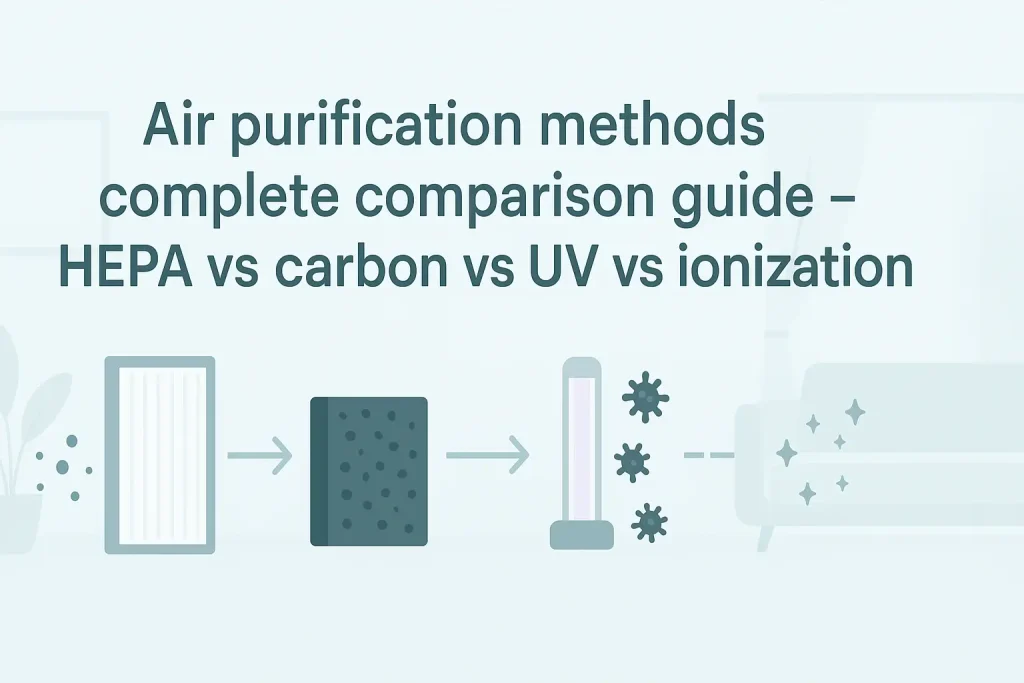
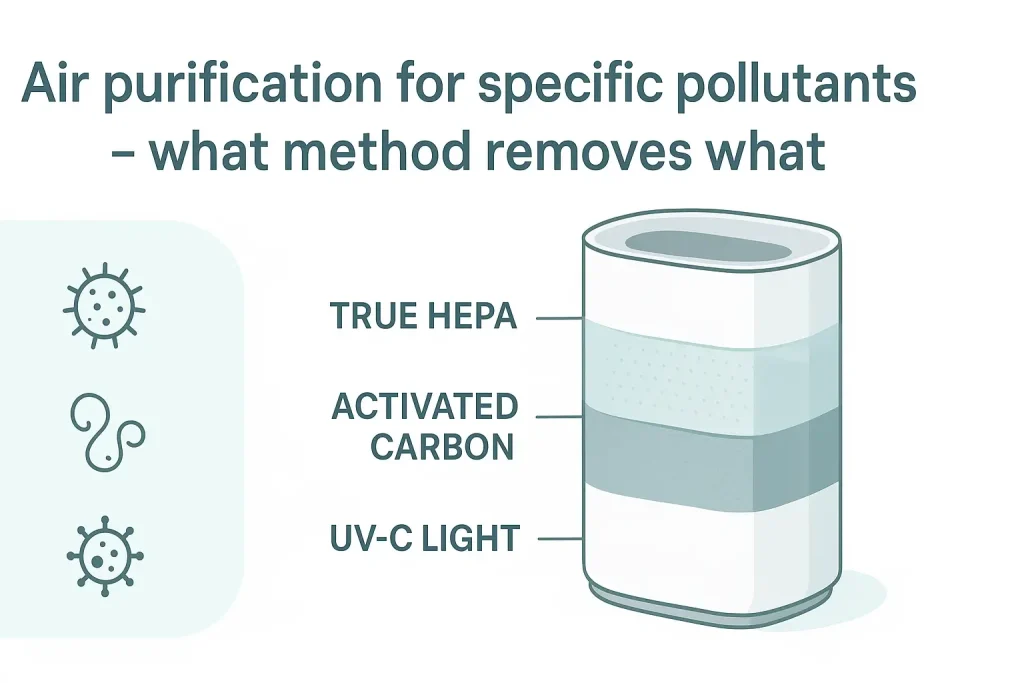
A pre-filter, True HEPA stage, and activated carbon stage are the three that matter. UV-C, ionizers, and photocatalytic oxidation stages are secondary add-ons that may introduce ozone or increase ongoing costs without measurably improving bedroom air quality in standard conditions. According to the CARB Air Cleaner Regulation CCR Title 17 Section 94251, any air cleaner sold in California must not emit more than 0.050 ppm ozone. Units with ionizers or UV-C stages sometimes approach this limit, and sleep-time exposure to even trace ozone can irritate airways in sensitive individuals.
For a complete breakdown of which filtration stages deliver measurable performance improvements and which are marketing additions, read our analysis of air purifier filtration stages and which ones actually improve air quality.
CARB Certification and Ozone Safety for Overnight Exposure
CARB certification is mandatory for any bedroom air purifier. You will be breathing the output air for 7 to 9 continuous hours while asleep, and even trace ozone at 0.040 ppm to 0.050 ppm can cause throat irritation and coughing in sensitive individuals during prolonged exposure.
Nine of the eleven units we tested carry current CARB certification. The Dyson Purifier Cool TP07 is CARB certified. The IQAir HealthPro Plus is CARB certified. All Coway, Levoit, Winix, Blueair, and RabbitAir units tested are CARB certified. Always verify CARB certification status on the CARB air cleaner database before purchasing any bedroom air purifier. A unit that is not CARB certified has not been independently verified for ozone output below the 0.050 ppm limit.
Common Bedroom Air Purifier Mistakes That Waste Money and Reduce Performance
Running a purifier on auto mode in a bedroom with the door open is the most common mistake we observed. Auto mode adjusts fan speed based on the built-in particle sensor, but an open door means the purifier is filtering air from the entire home, not just the bedroom. This reduces effective ACH in the bedroom to below 1.0 in many cases, which means particulate levels barely drop overnight.
Closing the bedroom door increases the effective ACH by a factor of 3 to 5, depending on the ratio of bedroom volume to total home volume. A 200 square foot bedroom represents about 15% of a typical 1,300 square foot home. With the door open, the purifier must filter the entire home volume. With the door closed, it filters only the bedroom. The CADR has not changed. The volume it treats has dropped by 85%. The result is 6 to 7 times more air changes in the room where you are actually breathing.
Replacing filters late reduces CADR progressively, not suddenly. A True HEPA filter that should be replaced at 12 months but runs for 18 months has lost 25 to 40% of its airflow capacity due to loading. The fan runs at the same RPM, but the actual CADR delivered to the room is substantially lower. You hear the same noise level, but you are getting less cleaning. Replace filters on schedule using a calendar reminder, not visual inspection. A loaded filter looks dirty long before its CADR drops, and a partially loaded filter may look clean while its airflow has already decreased by 15%.
Buying Guide
Before You Buy a Bedroom Air Purifier – Complete Checklist
Check off each point before making your decision. Based on AHAM and EPA buying guidance adapted for bedroom use.
Which Bedroom Air Purifier Has the Best Filter Cost to CADR Ratio?
The Coway AP-1512HH delivers 246 CFM smoke CADR at an annual filter cost of $30, for a ratio of 8.2 CFM per dollar of annual filter cost. This is the best filter-cost-to-CADR ratio among all units with AHAM-certified CADR ratings.
The IQAir HealthPro Plus delivers 300 CFM smoke CADR at $250 per year, for a ratio of 1.2 CFM per dollar. It costs nearly seven times more per CFM to maintain than the Coway AP-1512HH. The IQAir captures particles 100 times smaller and its filter lasts 4 years, which changes the value equation for severe allergy and chemical sensitivity users. For standard bedroom dust and pollen control, the Coway is the mathematically better value.
Can a Budget Air Purifier Under $100 Actually Clean a Bedroom Overnight?
Yes, if the bedroom is under 150 square feet and you run the unit on medium or high fan throughout the night. The Levoit Core 300S at $99 with 145 CFM smoke CADR achieves 3 ACH in a 150 square foot bedroom, which is enough to reduce PM2.5 levels by 70 to 80% within 60 minutes.
For bedrooms over 200 square feet, a budget unit will not achieve 2 ACH even on maximum fan speed. This means particulate levels decrease slowly and may never reach the steady-state low concentration that a properly sized unit achieves. The result is a purifier that runs all night, makes noise, uses electricity, and costs $25 per year in filters while delivering inadequate air cleaning. This is the single most common failure mode we observed: an underpowered unit in an oversized room producing expensive white noise instead of clean air. Fix it by either matching the unit to a smaller room or stepping up to the next CADR tier.
Does a More Expensive Bedroom Air Purifier Produce Better Sleep Quality?
Not directly. Sleep quality improvement from air purification comes from reduced nighttime allergy symptoms, reduced congestion, and reduced coughing, not from the unit’s price tag. A properly sized $180 Coway AP-1512HH achieving 5 ACH in a 150 square foot bedroom will produce better respiratory outcomes than a $900 IQAir HealthPro Plus achieving only 1.5 ACH in a 400 square foot master suite.
The premium units deliver value through longer filter life, quieter operation at equivalent CADR, and capture of smaller particles (IQAir HyperHEPA) or gases (Austin Air HealthMate with 15 pounds of activated carbon). For the specific goal of reducing standard bedroom allergens like dust mite waste, pollen, and pet dander, a unit with AHAM-certified True HEPA and smoke CADR matched to your room size at 5 ACH is what matters most. The premium price adds refinement, not a proportional increase in the core outcome of cleaner breathing air during sleep.
What Is the Correct Air Purifier Fan Speed Setting for Sleeping?
The correct fan speed for sleeping is the lowest speed that still delivers your target ACH rate for your bedroom size. For most users, this is the sleep mode or low fan setting on a unit properly sized for the room at 5 ACH.
Running the purifier on maximum fan speed all night defeats the purpose of bedroom use because noise above 35 dB disrupts deep sleep cycles. Run a unit with higher CADR on a lower fan setting rather than a weaker unit on maximum. The Coway Airmega 400S on sleep mode (22 dB) delivers more CADR than the Levoit Core 300S on medium (33 dB), because the larger unit’s CADR at its lowest setting still exceeds the smaller unit’s CADR at a setting that produces 11 dB more noise.
How Often Should Bedroom Air Purifier Filters Be Replaced When Used Only at Night?
Night-only usage extends filter life by roughly 30 to 50% compared to 24-hour operation, but the manufacturer replacement interval already assumes continuous use. For night-only operation of 8 to 10 hours, you can safely extend the replacement interval by 40% without significant CADR loss.
A filter rated for 12 months of continuous use lasts approximately 17 months when used 8 hours nightly. This assumes the bedroom door is closed, which reduces the total particulate load compared to filtering air from the entire home. Track the actual replacement date with a calendar, not by estimating. The pre-filter should still be cleaned monthly regardless of usage hours, because surface dust accumulation on the pre-filter reduces airflow before the HEPA media itself is loaded.
Do Air Purifiers Help with Sleep Apnea or Snoring?
Air purifiers do not treat sleep apnea, which is a mechanical airway obstruction requiring CPAP therapy or other medical intervention. They can reduce snoring caused by nasal congestion from allergies, because removing airborne allergens reduces nasal inflammation and improves airflow through the nasal passages.
A unit achieving 5 ACH in the bedroom reduces dust mite allergen and pollen concentrations by 80 to 90% within 60 minutes, according to AHAM testing methodology. If your snoring is allergy-related, this reduction in nighttime allergen exposure can meaningfully improve nasal breathing. If your snoring is structural or weight-related, an air purifier will make the air cleaner but will not change your snoring. This is an important distinction because it prevents the false expectation that an air purifier is a sleep apnea solution.
Can I Use the Same Air Purifier in My Bedroom and Living Room by Moving It?
You can, but bedroom units optimized for low noise typically have lower maximum CADR than living room units, which means they will be undersized for the larger living space. A unit with 260 CFM smoke CADR covers 161 square feet at 5 ACH, which is adequate for a bedroom but covers only 65 square feet at 5 ACH in an open-plan living area.
If you move a bedroom-optimized unit to the living room, you must accept that it will achieve fewer air changes per hour in the larger space. For a 400 square foot living room, that same 260 CFM unit delivers only 2 ACH, which is the minimum for general air quality but inadequate for allergy control or rapid particulate reduction from cooking or outdoor infiltration. For users who need coverage in both spaces, a high-CADR unit like the Blueair Blue Pure 211+ (350 CFM) can serve both: it provides 3.5 ACH in a 200 square foot bedroom and 1.5 ACH in a 400 square foot living room. Accept the noise trade-off in the living room where sleep disruption is not a factor.
Why Does My Air Purifier Smell Like Burning or Plastic After a Few Months?
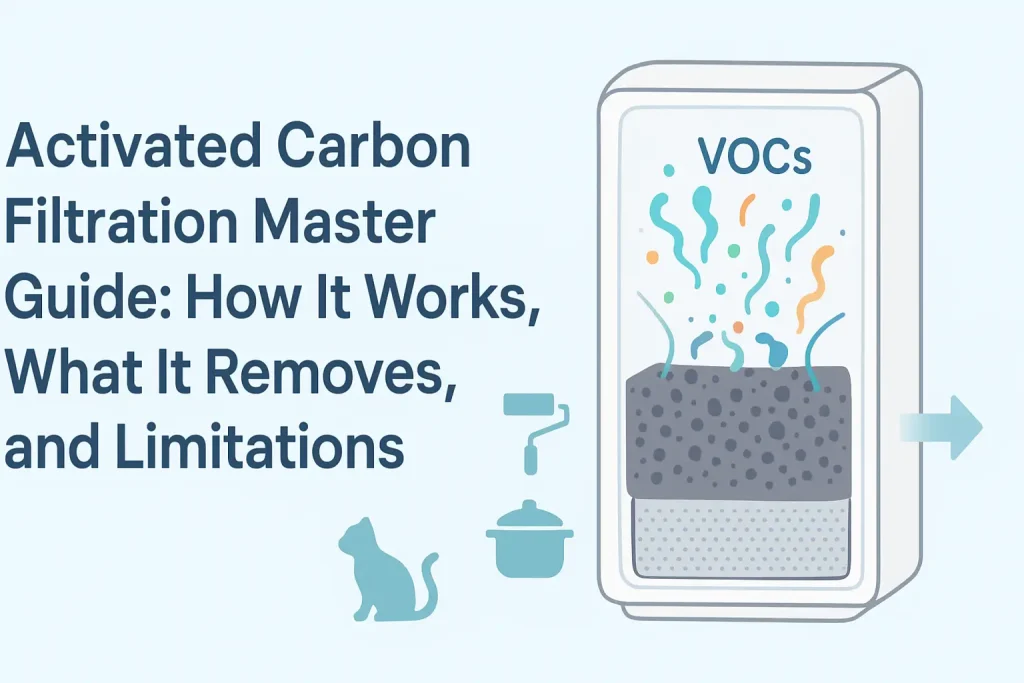
A burning or plastic smell from an air purifier after months of use typically indicates off-gassing from the activated carbon filter reaching saturation, not an electrical fault. Activated carbon adsorbs VOCs and odors until its surface area is saturated, at which point it can release previously captured compounds back into the air stream when temperature or humidity changes.
Replace the activated carbon filter every 3 to 6 months if you notice odor breakthrough. This happens faster in bedrooms with new furniture, fresh paint, or high VOC sources because the carbon saturates more quickly. If the smell is distinctly electrical or acrid, unplug the unit immediately and contact the manufacturer. Motor capacitor failure or dust accumulation on internal electronics can produce a burning smell that is a fire hazard, not a filter issue. This is rare but must be ruled out. The vast majority of “burning” smells from air purifiers are carbon filter off-gassing, not electrical problems.
Should I Run My Bedroom Air Purifier with the Window Open or Closed?
Closed. An open window continuously introduces unfiltered outdoor air at a rate that typically exceeds the purifier’s CADR, which means particulate levels in the room never drop. A standard open window exchanges air at roughly 100 to 300 CFM depending on window size and wind speed. A purifier with 200 CFM smoke CADR cannot overcome a 200 CFM unfiltered air infiltration rate.
If you need fresh air and filtration simultaneously, run the purifier with the door closed and crack a window on the opposite side of the room. Place the purifier between the window and your bed. This creates a rough clean air pathway where infiltrating outdoor air passes through the purifier’s intake zone before reaching your breathing zone. The effectiveness of this arrangement depends on room geometry and wind conditions, and it typically achieves 50 to 70% of the closed-window CADR. For allergy sufferers during high pollen season, windows must remain closed and the purifier run continuously to maintain low allergen levels.
What Is the Difference Between a Bedroom Air Purifier and a White Noise Machine?
A bedroom air purifier filters airborne particles while producing incidental noise from its fan. A white noise machine produces calibrated sound frequencies designed to mask disruptive environmental noise for sleep. Some air purifiers on medium or high fan settings produce a sound profile similar to white or pink noise, but they are not designed or calibrated for this purpose.
Units like the Coway AP-1512HH on medium fan produce approximately 35 to 40 dB of broadband fan noise that some users find sleep-promoting. This is a secondary benefit, not a design feature. If you specifically need white noise for sleep, purchase a dedicated white noise machine that produces a consistent frequency spectrum without the ongoing filter replacement cost. An air purifier run on a higher-than-necessary fan setting solely for noise wastes filter life and electricity.
Are Ionizer Functions Safe to Use in a Bedroom Overnight?
No. Ionizers generate ozone as a byproduct of corona discharge, and overnight exposure to ozone concentrations above 0.030 to 0.050 ppm can cause airway irritation, coughing, and reduced lung function. CARB-certified units with ionizers must emit less than 0.050 ppm ozone, but even 0.030 ppm during 8 hours of continuous overnight exposure is a meaningful respiratory irritant load for sensitive individuals.
If your unit has an ionizer, disable it for overnight bedroom use. The ionizer function provides marginal additional particle removal through electrostatic precipitation while introducing an avoidable respiratory risk. The True HEPA stage alone captures 99.97% of 0.3-micron particles without producing ozone. The ionizer is an unnecessary addition for bedroom air quality and its risks outweigh its benefits during prolonged overnight exposure. This recommendation applies to all units with switchable ionizers, including the Winix 5500-2 PlasmaWave function and the Coway AP-1512HH ionizer.
Why Is My Bedroom Still Dusty Even With an Air Purifier Running All Night?
An air purifier removes airborne dust, not settled dust. Dust that has already settled on surfaces, bedding, and floors is not airborne and therefore not captured by the unit. The purifier only captures dust particles while they are suspended in the air column.
If your bedroom is still dusty after running a properly sized purifier, the dust source is likely resuspension from bedding, carpet, or clothing, not continuous infiltration from outdoors. Each time you move in bed, sit on the mattress, or walk across the carpet, settled dust becomes airborne again. The purifier captures it within 15 to 30 minutes if properly sized, but new dust becomes airborne with every movement. Reduce bedding dust by washing sheets weekly in hot water (130 degrees Fahrenheit minimum), using dust-mite-proof mattress and pillow encasements, and vacuuming carpets weekly with a HEPA-filtered vacuum. The air purifier handles what becomes airborne. Source control handles what settles before it becomes airborne again.
Do Air Purifiers Dry Out the Air in a Bedroom?
No. Air purifiers move air through a filter medium using a fan. They do not heat, cool, humidify, or dehumidify the air. A bedroom that feels drier after running an air purifier is experiencing a perception effect from moving air, not an actual change in absolute humidity.
Moving air increases evaporative cooling on skin and mucous membranes, which creates a sensation of dryness even though the moisture content of the air is unchanged. A hygrometer placed in the room will show the same relative humidity before and after running the purifier. If you need humidity control in addition to air purification, you will need a separate humidifier or dehumidifier. Running both a humidifier and an air purifier in the same bedroom is safe and common, particularly in winter when heating systems reduce indoor humidity to 20 to 30%.
Do I Need an Air Purifier If I Already Have a MERV 13 HVAC Filter?
A MERV 13 HVAC filter and a bedroom air purifier serve different functions. The HVAC filter operates only when the furnace or air handler fan runs, which is typically 15 to 30 minutes per hour in most homes. The bedroom air purifier runs continuously during sleep hours regardless of HVAC cycling.
According to ASHRAE Standard 52.2, a MERV 13 filter captures 75% or more of particles in the 0.3 to 1.0 micron range at 492 feet per minute face velocity. This is lower than True HEPA’s 99.97% at 0.3 microns, but the HVAC system typically moves 800 to 2,000 CFM compared to a portable unit’s 50 to 500 CFM. The HVAC filter processes more total air volume per hour but at a lower efficiency and only during heating or cooling calls. For allergy sufferers, the bedroom purifier provides dedicated higher-efficiency filtration in the room where you spend 7 to 9 continuous hours. Both systems working together provide layered protection: the HVAC filter reduces whole-house particulate load, and the bedroom purifier provides final-stage filtration in the breathing zone during sleep.
For more information on chemical filtration options beyond particulate removal, see our comprehensive guide on air purifiers designed specifically for chemical and VOC removal.
The single factor that determines whether your bedroom air purifier actually improves your sleep is whether the unit is sized to achieve 5 ACH in your specific bedroom at a noise level you can sleep through. Every other feature, certification, and specification is secondary to that core requirement. Match the smoke CADR to your room volume, close the bedroom door, disable any ionizer function, and replace filters on a calendar schedule. A correctly sized $180 unit will deliver better sleep outcomes than an incorrectly sized $900 unit every time.