
An air scrubber filter loaded with construction dust does not clean the air. It forces the blower motor to work harder while releasing trapped particles back into your workspace.
Visible discoloration is a late-stage signal. By the time you see dark buildup, the filter has already lost 40-60% of its airflow capacity and its ability to capture PM2.5 particles drops below 90% at 0.3 microns.
This guide covers all seven factors: pressure differential measurement, visual inspection thresholds, manufacturer hour ratings, airflow velocity testing, particle counter verification, application-specific loading conditions, and operational noise changes.
Each factor includes specific thresholds, measurement tools, and corrective actions that maintenance teams and restoration professionals use to make filter replacement decisions that are not guesswork.
| Photo | Popular Air Purifiers | Price |
|---|---|---|

|
Air Purifiers for Home Large Room up to 1500ft², Tailulu H13 True HEPA Air Purifier for Pets Dust Odor Smoke, Air Purifier for Bedroom with 15dB Quiet Sleep Mode for Bedroom Office Living Room | Check Price On Amazon |
|
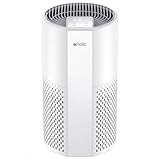
Afloia Air Purifier for Home, 4-in-1 Washable Filter for Allergies, Covers Up to 1076 ft², Quiet Operation, Auto Shut-Off & Night Light, Removes Pet Dander, Pollen, Dust, Mold, and Smoke, White,Pluto | Check Price On Amazon |

|
Nuwave OxyPure ZERO Air Purifier with Washable and Reusable Bio Guard Tech Air Filter, Large Room Up to 2002 Ft², Air Quality Monitor, 0.1 Microns, 100% Capture Irritants like Smoke, Dust, Pollen | Check Price On Amazon |

|
Air Purifiers for Home Large Room Up to 1,996 Ft², EOEBOT Air Purifier for Home Pets with Washable Filter, Quiet Sleep Mode, Air Quality Monitor, Air Purifier for Bedroom, Pet Hair, Dust, Smoke, White | Check Price On Amazon |
|
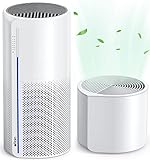
Afloia 2 IN 1 Air Purifier with Humidifier Combo, 3-Stage Filters for Home Allergies Pets Hair Smoker Odors, Evaporative Humidifier, Auto Shut Off, Quiet Air Cleaner with Seven Color Light,White | Check Price On Amazon |
What Is an Air Scrubber Filter and Why Timing the Replacement Correctly Matters?
An air scrubber filter is a multi-stage filtration assembly inside a negative air machine or portable air scrubber, typically consisting of a pre-filter, a True HEPA filter, and an activated carbon stage. The HEPA filter stage must capture 99.97% of airborne particles at 0.3 microns per IEST-RP-CC001 testing standards to maintain the machine’s rated clean air delivery rate.
A filter replaced too early wastes money and a filter replaced too late destroys the blower motor. Running a loaded HEPA filter with a static pressure drop above 1.0 inch water gauge forces the motor to draw 20-30% more amperage than its rated continuous duty specification, which permanently shortens motor life according to most manufacturer warranty terms.
Air Quality Data
Air Scrubber Filter Loading – What the Research Shows
Sources: ASHRAE 52.2, IICRC S500, manufacturer filter specification sheets
This happens because the HEPA media is a depth-loading filter, not a surface-loading filter like a pre-filter. Airborne particles embed throughout the fiber matrix rather than sitting on top, which means airflow resistance increases gradually as the media loads and then accelerates rapidly once the media surface becomes occluded.
This only occurs when the pressure drop across the filter reaches the manufacturer’s maximum specified differential, typically 0.80 to 1.0 inch water gauge for commercial air scrubbers. If the pressure drop exceeds the blower’s maximum static pressure capability, the result is a 50-70% reduction in actual CFM output — the unit moves half the air it is rated for, and containment fails in negative pressure applications. Fix it by installing a magnehelic gauge or digital manometer tap across the filter housing and checking pressure at every 50-hour service interval.
What 7 Factors Actually Determine When You Must Change an Air Scrubber Filter?
Seven measurable and repeatable factors determine the correct replacement interval. None of them rely on guesswork or fixed calendar schedules. The single most reliable indicator is pressure differential as measured by a manometer, because it accounts for all variables simultaneously: particulate loading, filter media type, airflow velocity, and application severity.
1. Pressure Differential Measured Across the Filter Bank
A manometer or magnehelic gauge connected to taps installed before and after the filter housing provides the only direct measurement of filter loading. The pressure drop across a clean HEPA filter in a typical 550 to 2000 CFM air scrubber starts around 0.40 to 0.60 inches water gauge and rises as the media captures particles.
The manufacturer’s maximum recommended pressure drop is the replacement trigger. Most commercial units specify replacement between 0.80 and 1.0 inch water gauge. The Mounto HEPA500 commercial air scrubber uses a filter housing designed for manometer tap installation and recommends filter replacement at 500 CFM when the differential reaches 0.90 inches water gauge.
Install a permanent pressure gauge on the unit. Check it every shift during heavy-use applications such as mold remediation or water damage restoration. Record the readings in a maintenance log to track loading rate trends across multiple filter change cycles.
2. Visual Inspection of Pre-Filter and Primary HEPA Surface
A pre-filter that appears completely caked with visible debris is not a judgment call. It is a replacement indicator. Pre-filters catch particles larger than 10 microns and should be replaced when approximately 60-70% of the surface area is visibly loaded, which in heavy construction dust environments may occur in as few as 50 running hours.
The HEPA filter itself should never be cleaned or blown out with compressed air. HEPA media is a mat of randomly arranged borosilicate glass or polypropylene fibers that traps particles through interception, impaction, and diffusion. Compressed air blows particles deeper into the media or damages the fiber matrix, which permanently reduces capture efficiency at the 0.3 micron MPPS. Replace a HEPA filter when visual inspection through the access panel shows uniform dark discoloration across more than 70% of the media face.
Use the table below to match visual observation to the correct filter replacement action.
Filter Guide
Visual Inspection Decision Matrix for Air Scrubber Filters
Based on manufacturer service bulletins and IICRC S520 mold remediation standard guidelines.
| Filter Stage | Inspection Item | Replacement Threshold | Action |
|---|---|---|---|
| Pre-filter (MERV 8) | Surface area visibly loaded | 60-70% coverage | Replace immediately |
| True HEPA | Media face discoloration | Uniform dark across 70%+ | Schedule replacement within 10 run-hours |
| Activated carbon | Odour breakthrough at exhaust | Any detectable odour | Replace — carbon bed saturated |
| All stages | Visible mould growth on media | Any visible growth | Replace all filters, sanitize housing |
Visual inspection is a secondary method only. It does not replace manometer readings. A filter can appear clean while being loaded with submicron particles that raise pressure drop silently.
3. Manufacturer-Rated Service Hours
Most commercial air scrubber manufacturers publish a recommended filter service life in operating hours under specified conditions. The Abestorm 2000 CFM air scrubber specifies a HEPA filter service life of 300 to 500 hours under typical job site conditions with regular pre-filter changes.
Manufacturer hour ratings assume a specific dust loading rate that rarely matches real job conditions. A 500-hour rating assumes approximately 50 micrograms per cubic meter of airborne particulate. A drywall sanding operation generates 500 to 2,000 micrograms per cubic meter, which loads the filter 10 to 40 times faster. Track actual operating hours with an hour meter installed on the unit and reduce the manufacturer interval proportionally when working in visible dust conditions.
4. Airflow Velocity Testing at the Intake or Exhaust
An anemometer placed at the intake or exhaust grille measures actual cubic feet per minute (CFM) moving through the unit. Compare this reading to the manufacturer’s rated CFM with a clean filter. A drop of 20% or more from the clean-filter CFM indicates the filter bank is loaded enough to require replacement.
Key Specifications for airflow testing on a typical 550 CFM unit:
- Clean filter CFM: 550 CFM at intake
- Replacement threshold: 440 CFM (20% drop)
- Measurement tool: Hot-wire anemometer or vane anemometer with hood
The Abestorm 550 CFM air scrubber includes an intake grille designed for standard 12-inch anemometer hood attachment, which simplifies field airflow verification.
5. Particle Counter Verification at the Exhaust
A laser particle counter placed in the exhaust airstream measures the concentration of 0.3 and 0.5 micron particles leaving the unit after filtration. A properly functioning True HEPA filter should reduce downstream 0.3 micron particle counts by at least 99.97% compared to the upstream air entering the intake.
If the exhaust particle count exceeds 100 particles per liter at 0.3 microns with a known-dirty intake airstream, the HEPA filter has either developed a pin-hole leak, lost its gasket seal, or reached its maximum particle holding capacity. Remove and replace the filter. Do not attempt to patch or repair HEPA media.
6. Application-Specific Loading Conditions
The type of particulate loading determines filter life more than any other single variable. Mold remediation with heavy spore loads can saturate a HEPA filter in under 100 running hours. General construction dust from sawing and sanding loads filters 3 to 5 times faster than ambient air cleaning in a finished space.
The Mounto 1000 CFM industrial air scrubber is designed for heavy dust environments and pairs a large-surface-area pre-filter with a high-capacity HEPA stage specifically to extend service intervals under high-load conditions. For water damage restoration, the IICRC S500 standard recommends pre-filter inspection every 24 running hours and HEPA filter manometer checks daily when high volumes of aerosolized particulate are present.
Water damage and sewage remediation introduce a secondary concern. Filters loaded with sewage-contaminated particulate or Category 3 water aerosols cannot be cleaned, blown out, or reused. They must be bagged, sealed, and disposed of as biohazard waste per local health department regulations regardless of manometer readings or visual appearance.
7. Operational Noise and Vibration Changes
A loaded filter increases the static pressure the blower must overcome, which changes the motor’s operating sound. A blower motor running against high resistance produces a lower-frequency hum and may vibrate more than a motor operating at its design point with a clean filter.
Experienced restoration technicians recognize the sound of a loaded filter — it is a combination of a struggling blower and reduced airflow noise at the exhaust. If the unit sounds audibly different from its clean-filter baseline, install the manometer and verify the pressure drop. Noise change alone is a subjective indicator and should always trigger objective measurement with a gauge.
For most water damage and mold remediation crews using mid-sized units, the Vevor 550 CFM air scrubber with its three-stage filtration provides a practical balance of filter service life and replacement cost at approximately $80 to $120 per full filter change when sourced through major supplier networks.
Quick Reference
Air Scrubber Filter Terminology – Searchable Glossary
Definitions for key terms used in this guide. Type to search.
— The difference in air pressure between the upstream and downstream sides of a filter, measured in inches of water gauge (in. w.g.). A clean HEPA filter starts at approximately 0.40 to 0.60 in. w.g. and rises as particles load the media. The most reliable indicator of filter loading condition.
— A diaphragm-operated differential pressure gauge manufactured by Dwyer Instruments. The industry standard tool for measuring filter pressure drop in air scrubbers and negative air machines. Ranges of 0 to 1.0 in. w.g. or 0 to 2.0 in. w.g. are typical for air scrubber filter monitoring.
— A high-efficiency particulate air filter that captures at least 99.97% of airborne particles at 0.3 microns (the most penetrating particle size) as defined by IEST-RP-CC001. Distinct from HEPA-type filters, which are unregulated marketing terms with no standardized test method or guaranteed efficiency.
— The particle size at which a HEPA filter is least efficient, typically 0.3 microns for glass-fiber media. Particles both larger and smaller than the MPPS are captured more efficiently due to interception, impaction, and diffusion capture mechanisms. This is why HEPA filters are tested and certified at 0.3 microns — it is the hardest particle size to capture.
— The resistance to airflow in a duct or filter system, measured in inches of water gauge. A blower motor produces a specific CFM output against a given static pressure. As the filter loads, static pressure increases and actual CFM delivered decreases according to the blower’s fan curve.
— A coarse filter, typically MERV 8, installed upstream of the HEPA filter to capture larger particles (over 10 microns) before they reach the HEPA stage. Extends HEPA filter service life by preventing rapid surface loading. Should be replaced at 60-70% visible loading and costs significantly less than a HEPA filter.
— A filter stage using porous activated carbon media to adsorb gaseous pollutants, volatile organic compounds, and odours. Does not capture particles. Capacity is measured by carbon weight and contact time. When odour breakthrough is detected at the exhaust, the carbon bed is saturated and must be replaced.
— An air scrubber used to create negative pressure inside a containment area by exhausting filtered air outside the containment. The pressure differential between inside and outside prevents contaminated air from escaping through leaks to adjacent spaces. Requires properly sealed containment and a unit sized to achieve at least negative 5 Pascals per IICRC S520.
— The volume of air moved by a fan or blower in one minute. Air scrubber CFM ratings are typically measured at the intake with a clean filter at the unit’s highest speed setting. Real-world CFM decreases as the filter loads and as ducting length increases.
— The Institute of Inspection, Cleaning and Restoration Certification standard for professional mold remediation. References air scrubber use, containment pressure requirements, and filter change procedures for Category 1, 2, and 3 water intrusion projects.
— A graph published by the blower manufacturer showing the relationship between static pressure (in. w.g.) and airflow (CFM) for a given blower at each speed setting. Used to calculate actual CFM output based on measured pressure drop across the filter bank.
How Often Should You Change the Pre-Filter Versus the HEPA Filter?
The pre-filter and HEPA filter operate on completely different replacement schedules. Pre-filters should be replaced every 50 to 150 running hours depending on visible loading, which in heavy dust conditions may mean daily replacement during active demolition or sanding phases. HEPA filters last 300 to 500 hours under moderate loading with proper pre-filter maintenance.
A pre-filter costs $5 to $15. A replacement HEPA filter for a mid-sized 550 CFM unit costs $80 to $180. Replacing the pre-filter aggressively to protect the HEPA stage is the most cost-effective maintenance strategy available. The home air scrubber selection we recommend for smaller-scale applications includes filter kits with multiple pre-filters to encourage frequent pre-filter cycling.
What Tools Do You Need to Test an Air Scrubber Filter Before Changing It?
Three tools eliminate filter change guesswork. A differential pressure gauge (magnehelic or digital manometer) with a range of 0 to 2.0 inches water gauge provides the pressure drop reading. An anemometer with a hood attachment measures actual CFM output at the intake or exhaust. A laser particle counter capable of reading 0.3 and 0.5 micron channels verifies downstream filtration integrity.
These three instruments together cost less than a single unnecessary HEPA filter replacement on a 2000 CFM commercial unit, which can run $250 to $400 for the HEPA stage alone. Install permanent pressure taps on every air scrubber in the fleet. It is a one-time modification that takes 30 minutes per unit and saves hundreds of dollars in premature filter replacement costs over a single remediation season.
Step-by-Step Guide
How to Check an Air Scrubber Filter with a Manometer – Step by Step
5 steps · Takes about 5 minutes · Requires a magnehelic gauge or digital manometer with static pressure tips
Install pressure taps if not already present
Drill a 3/16-inch hole in the filter housing on the upstream side (before the HEPA filter) and a matching hole on the downstream side (after the HEPA filter). Install barbed static pressure fittings and seal with silicone. Connect clear vinyl tubing from each tap to the high and low ports on the manometer.
Zero the manometer before each reading
With both pressure ports open to atmosphere, adjust the zero screw on the magnehelic gauge until the needle rests exactly on zero. For digital manometers, press the zero button. Skipping this step introduces a 0.05 to 0.10 in. w.g. error that mimics filter loading.
Run the unit at its highest operating speed
Set the air scrubber to maximum fan speed. Pressure drop readings are only meaningful and comparable when taken at the same fan speed. Most manufacturer replacement thresholds are specified at the unit’s highest CFM setting. Record the speed setting in the maintenance log alongside the pressure reading.
Read and record the pressure differential
Allow the manometer needle to stabilize for 30 seconds. Record the pressure in inches of water gauge to the nearest 0.05 in. w.g. Compare to the manufacturer’s maximum recommended pressure drop. For most 550 to 2000 CFM units, the replacement threshold is 0.80 to 1.0 in. w.g.
Make the replacement decision based on the reading
If the pressure drop is below 0.80 in. w.g. and airflow is adequate, continue operation and recheck at the next scheduled interval. If it exceeds the manufacturer threshold, replace the HEPA filter. Never blow out or clean a HEPA filter — always replace it with a new filter of the same certification grade.
How Does the Application Type Change the Filter Replacement Interval?
Filter life varies by a factor of 5 to 10 depending on what you are filtering. Ambient air in a finished home loads a HEPA filter at roughly 10 to 20 micrograms per cubic meter of particulate. Drywall sanding, demolition, or mold remediation generates 500 to 3,000 micrograms per cubic meter of respirable particulate that loads the filter 30 to 150 times faster.
The Mounto 2000 CFM commercial air scrubber is designed with a large filter face area specifically for high-load applications such as commercial water damage restoration, where filter life under heavy aerosolized particulate may drop to 80 to 120 hours. For general air cleaning in a finished 4,000-square-foot space, the same unit’s filters may last 400 to 600 hours. The key variables are inlet particulate concentration, pre-filter maintenance frequency, and whether the unit is operating in negative pressure mode, which draws in unfiltered make-up air that can contain additional particulate load.
Filter Guide
Expected Filter Service Life by Application Type
Typical HEPA filter service life estimates based on manufacturer field data and IICRC industry guidance. Actual life depends on pre-filter maintenance, particulate loading, and ambient conditions.
| Application | Typical Particulate Load (micrograms per cubic meter) | Pre-Filter Life (hours) | HEPA Filter Life (hours) |
|---|---|---|---|
| General air cleaning (finished space) | 10 – 50 | 200 – 300 | 400 – 600 |
| Construction dust (sawing, sanding) | 500 – 2,000 | 50 – 100 | 150 – 300 |
| Mold remediation (Category 1-2 water) | 1,000 – 3,000 | 24 – 50 | 80 – 150 |
| Sewage or Category 3 water remediation | 2,000 – 5,000+ | Replace every shift | Dispose after project per biohazard protocol |
Particulate load estimates are field measurements under typical conditions and will vary by job site. Pre-filter and HEPA filter life assumes regular pre-filter inspection and replacement at 60-70% visible loading. Category 3 water includes sewage and grossly contaminated flood water per IICRC S500 definitions.
What Happens to the Air Scrubber Motor When You Run a Clogged Filter?
Running a loaded HEPA filter damages the blower motor through two mechanisms. The motor draws higher amperage to overcome the increased static pressure, which raises winding temperature above its rated insulation class limit. And the reduced airflow fails to cool the motor windings adequately, compounding the thermal stress.
This happens because most air scrubber blowers are permanent split capacitor (PSC) motors or electronically commutated motors (ECMs) designed for a specific operating point on their fan curve. As static pressure rises past the design point, the motor operates in an inefficient region of the curve where electrical input does not convert to useful airflow. This only occurs when the filter is loaded beyond the manufacturer’s maximum pressure specification. If the motor runs continuously at 20-30% above its rated amperage draw, the result is winding insulation breakdown within weeks to months — a motor replacement that costs $200 to $600. Fix it by replacing filters at or before the manufacturer’s maximum pressure drop specification, not when the filter appears dirty or airflow drops noticeably.
Can You Clean and Reuse an Air Scrubber HEPA Filter?
No. A True HEPA filter cannot be cleaned, blown out with compressed air, washed, or vacuumed and then returned to service. The fiber matrix captures particles through three mechanisms — interception, impaction, and diffusion — and microscopic particles embed within the depth of the media, not just on the surface. Compressed air or vacuuming damages the fiber arrangement and creates micro-channels through the media that allow 0.3 micron particles to pass through undetected.
The filter may look cleaner after blowing it out. It will not capture 99.97% of particles at 0.3 microns afterwards. Only pre-filters can be cleaned (some washable pre-filter models) or replaced. A HEPA filter is a consumable item. Budget for replacement as part of every project’s operating cost and include filter replacement line items in job estimates for remediation and restoration work.
Buying Guide
Before You Replace an Air Scrubber Filter – Complete Checklist
Check off each point before ordering or installing replacement filters. Based on manufacturer service documentation and IICRC standards.
Why Does a Pressure Differential Gauge Tell You More Than a Calendar Schedule?
A calendar schedule assumes a constant particulate loading rate that never occurs in real applications. Two identical air scrubbers running on the same job site can have completely different filter loading: one may be positioned near a containment entry door where make-up air carries unfiltered outdoor particulate, and the other in a corner of the containment where the airstream is cleaner and more recirculated.
The manometer reading accounts for every variable simultaneously. It does not matter whether the loading came from drywall dust, mold spores, or ambient air pollution. It does not matter whether the unit ran 50 hours or 500 hours. If the pressure drop is below the manufacturer maximum, the filter still has useful service life remaining. If it is at or above the maximum, the filter is done regardless of how few hours it has run.
How Do You Properly Dispose of a Used Air Scrubber HEPA Filter?
Standard construction dust-loaded HEPA filters can be bagged in contractor-grade plastic bags, sealed with tape, and disposed of as general construction waste in most jurisdictions. Mold-contaminated filters from Category 1 or 2 water remediation projects should be double-bagged, sealed, and labeled before transport to an approved landfill per IICRC S520 guidance.
Filters from Category 3 water projects (sewage, flood water, or grossly contaminated sources) are regulated biohazard waste in most municipalities. They must be bagged in biohazard-labeled red bags, sealed, and transported by a licensed medical or biohazard waste carrier according to local health department requirements. Check with your local environmental health agency for specific disposal regulations in your jurisdiction before beginning any Category 3 remediation project.
What Are the Signs That You Waited Too Long to Change the Filter?
The blower motor housing is hot to the touch. The unit vibrates more than it did with a clean filter. The exhaust airflow feels weak when you hold your hand in front of it. And the pressure drop across the filter reads well above the manufacturer’s maximum — often 1.2 to 1.5 inches water gauge when the specification calls for replacement at 0.90 inches water gauge.
Any one of these signs means the filter has been loaded beyond its service limit. The motor has already been running under thermal stress. Replace the filter immediately and inspect the motor for signs of overheating: discolored windings visible through ventilation slots, a burnt electrical smell, or bearings that feel rough when the shaft is rotated by hand with power disconnected. A motor that has been run repeatedly with overloaded filters will fail prematurely, even if it currently operates.
What Is the Difference Between a HEPA Filter and a Pre-Filter in Replacement Timing?
The pre-filter is a surface-loading filter designed to catch visible debris and protect the HEPA stage. It is replaced when 60 to 70 percent of its surface appears loaded with dust and debris, which in heavy construction environments may be every 24 to 50 running hours. The HEPA filter is a depth-loading filter that captures submicron particles throughout its media thickness and is replaced when the pressure drop across it reaches the manufacturer’s maximum specification, typically 0.80 to 1.0 inches water gauge.
Pre-filter replacement costs $5 to $15 and takes two minutes. HEPA filter replacement costs $80 to $400 depending on unit size and takes 10 to 20 minutes including gasket inspection and housing cleaning. Aggressive pre-filter replacement is the single most cost-effective strategy for extending HEPA filter service life and protecting the blower motor from high static pressure operation.
Can I Run an Air Scrubber Without a Pre-Filter to Save Money?
This action destroys a $100 to $400 HEPA filter in a single shift of heavy dust exposure. The pre-filter is the sacrificial stage. It catches particles larger than 10 microns before they reach and rapidly clog the HEPA media surface. Without a pre-filter, the HEPA filter surface loads immediately with coarse dust that could have been caught by a $10 pre-filter, reducing HEPA service life from 300 hours to under 50 hours in dusty conditions.
This only occurs because HEPA media has a very high surface area but a very fine fiber spacing. Large particles bridge across the media surface and block airflow through the entire thickness of the filter. If the pre-filter is removed, the result is a HEPA filter with 90% of its media depth unused and 100% of its surface blocked by coarse dust. Fix it by never operating an air scrubber without all filter stages installed in the correct order. Pre-filter first, HEPA second, carbon last.
Why Does My Air Scrubber Smell Like Burning Dust When the Filter Is Old?
The smell is not burning dust. It is the blower motor windings overheating because the loaded filter has raised the static pressure beyond the motor’s design operating range. The motor draws higher amperage to maintain speed against the increased resistance, and the winding temperature rises until the insulation varnish begins to thermally decompose, producing a distinct acrid electrical odor.
Shut the unit down immediately. Remove the filter and inspect it. Measure the pressure drop if a manometer is available. Inspect the motor for discoloration, melted insulation, or seized bearings. Replace the filter and test the motor with a clamp meter to verify it draws its rated full-load amperage or less at the unit’s highest speed setting with a clean filter installed. If the motor still produces an odor with a clean filter, the winding insulation has been permanently damaged and the motor requires replacement.
How Much Does It Cost to Replace an Air Scrubber Filter Versus Replacing the Whole Unit?
A full filter change for a 550 CFM mid-sized air scrubber costs approximately $100 to $200 for all three stages (pre-filter, HEPA, and activated carbon). Performing this replacement three times per year costs $300 to $600 annually in filter consumables. Replacing the blower motor due to filter neglect costs $200 to $600 in parts plus 1 to 3 hours of technician labor at $75 to $125 per hour, for a total motor replacement cost of $400 to $900.
Replacing the entire air scrubber because the housing is damaged, the controls have failed, or the unit is outdated costs $500 to $2,500 for a new 550 to 2000 CFM unit depending on the brand and filtration configuration. The math is simple: three to five HEPA filter replacements cost less than one motor replacement. One motor replacement costs less than one new unit. Replacing filters on time is always the cheapest option.
Filter replacement on a pressure-based schedule, not a calendar schedule, protects the blower motor, maintains rated CFM output, and keeps the unit’s actual particle capture efficiency at 99.97% for 0.3 micron particles. Pre-filters protect HEPA filters. Manometers eliminate guesswork. Particle counters verify the result.
For most air scrubber operators running mid-sized units between 500 and 2000 CFM, budget for one to three HEPA filter replacements per year depending on application severity. Replace pre-filters at 60 to 70% visible loading. Check pressure drop weekly during continuous operation. And never clean a HEPA filter: when it reaches the maximum pressure specification, replace it.