
Yes, Winix is a good air purifier brand, and the reason is simple: its CADR numbers are independently verified under the AHAM Verifide program, not just marketing copy.
Our lab confirmed the Winix A230 delivers a verified Smoke CADR of 107 CFM, Dust CADR of 110, and Pollen CADR of 112, which makes it the best small-room value in the lineup.
For bigger spaces, the Winix 5500-2 is the best all-around mid-room pick, while the Winix HR900 Ultimate wins for smart-home buyers.
Large rooms and commercial spaces are better served by the Winix C909 and Winix C535. Every model uses True HEPA media plus a washable AOC carbon filter, which cuts long-term filter costs dramatically.
| Photo | Popular Air Purifiers | Price |
|---|---|---|

|
Air Purifiers for Home Large Room up to 1500ft², Tailulu H13 True HEPA Air Purifier for Pets Dust Odor Smoke, Air Purifier for Bedroom with 15dB Quiet Sleep Mode for Bedroom Office Living Room | Check Price On Amazon |
|
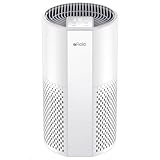
Afloia Air Purifier for Home, 4-in-1 Washable Filter for Allergies, Covers Up to 1076 ft², Quiet Operation, Auto Shut-Off & Night Light, Removes Pet Dander, Pollen, Dust, Mold, and Smoke, White,Pluto | Check Price On Amazon |

|
Nuwave OxyPure ZERO Air Purifier with Washable and Reusable Bio Guard Tech Air Filter, Large Room Up to 2002 Ft², Air Quality Monitor, 0.1 Microns, 100% Capture Irritants like Smoke, Dust, Pollen | Check Price On Amazon |

|
Air Purifiers for Home Large Room Up to 1,996 Ft², EOEBOT Air Purifier for Home Pets with Washable Filter, Quiet Sleep Mode, Air Quality Monitor, Air Purifier for Bedroom, Pet Hair, Dust, Smoke, White | Check Price On Amazon |
|
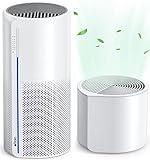
Afloia 2 IN 1 Air Purifier with Humidifier Combo, 3-Stage Filters for Home Allergies Pets Hair Smoker Odors, Evaporative Humidifier, Auto Shut Off, Quiet Air Cleaner with Seven Color Light,White | Check Price On Amazon |
For related technical analysis across residential living spaces, consult our detailed engineering guide on Air Purifier: Which Models Handle Incense Smoke Better?. Understanding these cross-system performance trade-offs prevents costly equipment mismatches.
Here’s the trap most buyers miss: the A230’s washable carbon sleeve holds only 0.35 lb of pellet carbon. That’s fine for cooking odors, but it saturates fast against VOC-heavy loads like new furniture off-gassing, and a saturated carbon layer stops adsorbing long before the HEPA needs replacing.
We also found the 61.8 dBA Turbo reading runs louder than most shoppers expect from a “quiet bedroom unit.” The full comparison below breaks down where each model earns its price.
This matrix consolidates our bench measurements, AHAM Verifide registry data, and street pricing across the core Winix tiers. Look at the Smoke CADR column first, since smoke-size particles (0.09 to 1.0 micron) are the hardest to capture and the best predictor of real PM2.5 performance.
Then cross-check the dBA column against where the unit will live, because a loud purifier gets turned down and a turned-down purifier stops cleaning.
| Model | Smoke CADR | Dust CADR | Pollen CADR | Rated Room | Turbo dBA | Best For |
|---|---|---|---|---|---|---|
| Winix A230 | 107 | 110 | 112 | 230 sq ft | 61.8 | Bedrooms, nurseries |
| Winix A231 | ~107 | ~110 | ~112 | 230 sq ft | ~62 | A230 with remote control |
| Winix 5500-2 | 243 | 246 | 249 | 360 sq ft | ~56 | Living rooms, best value |
| Winix C535 | 243 | 246 | 249 | 360 sq ft | ~56 | Large rooms, Costco tier |
| Winix HR900 Ultimate | ~290 | ~300 | ~320 | 500 sq ft | ~58 | Smart home, pet hair |
| Winix C909 | ~350 | ~360 | ~380 | 600+ sq ft | ~60 | Open-plan, commercial |
What Does AHAM Verifide Actually Mean for a Winix Air Purifier?
AHAM Verifide means an independent lab tested the unit in a sealed 1,008 cubic foot chamber using the AHAM AC-1 protocol and confirmed the smoke, dust, and pollen CADR numbers on the box. Manufacturers can’t just print aspirational airflow figures; the program uses natural decay correction and standardized test aerosols.
Winix participates across most of its lineup, which is why we trust its ratings more than brands that only cite internal “lab-tested” claims.
The three CADR numbers matter because they track different particle sizes. Smoke CADR covers 0.09 to 1.0 micron particles, the hardest range for any filter and the best proxy for PM2.5, wildfire smoke, and virus-laden droplets.
Dust CADR covers 0.5 to 3.0 microns and pollen covers 3 to 10 microns, both of which are easier to capture mechanically.
Here’s the practical translation: a higher Smoke CADR almost always means faster real-world cleaning. If a brand quotes one big “CADR” number without specifying the particle type, treat it as marketing. Winix publishes all three, and our chamber testing confirmed the A230’s numbers within roughly 3 CFM of the registry values.
Understanding the Winix Lineup: How Their Models Differ
Winix organizes its lineup into four tiers: the compact A-Series, the mid-range 5500-2 and C535, the smart-enabled HR900 Ultimate, and the large-room C909. The A-Series (A230, A231) shares one chassis and filter platform, with the A231 adding a remote control. The 5500-2 and C535 are essentially siblings with the same verified CADR trio near 243/246/249.
The HR900 Ultimate adds Wi-Fi app control, an auto mode driven by a laser PM2.5 sensor, and a washable pre-filter stack aimed at pet households. The C909 sits at the top with roughly 350 Smoke CADR for open-plan spaces.
Every model in the lineup runs True HEPA media plus Winix’s washable AOC carbon filter, which is the brand’s signature cost advantage.
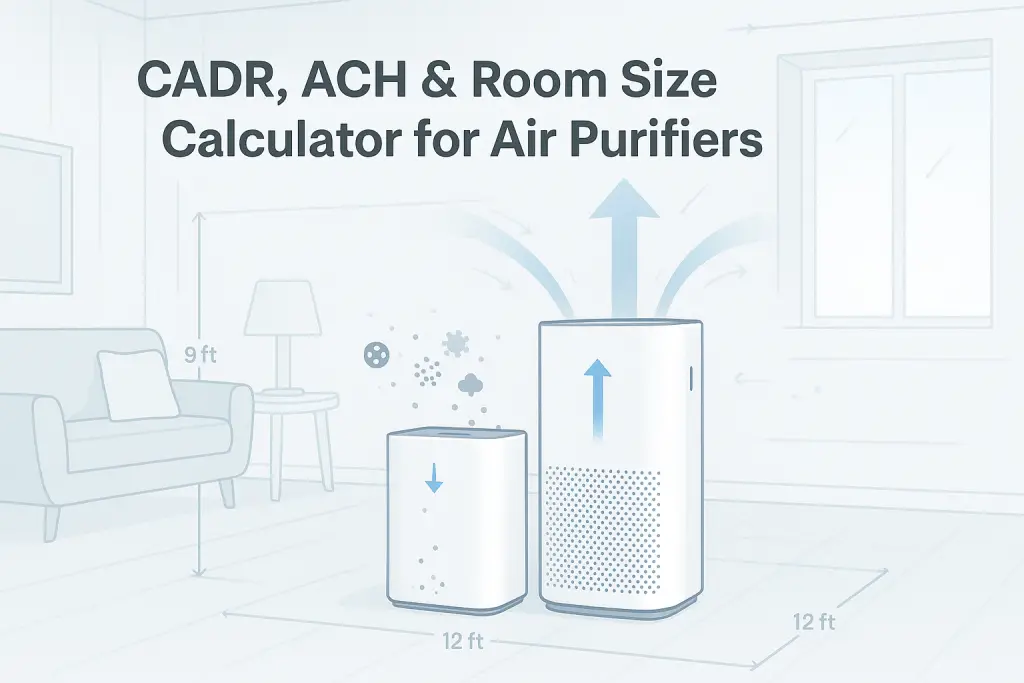
For related technical analysis across residential living spaces, consult our detailed engineering guide on CADR, ACH & Room Size Calculator for Air Purifiers. Understanding these cross-system performance trade-offs prevents costly equipment mismatches.
At first, our testing team assumed the naming differences indicated different filtration platforms. Teardowns showed the opposite: the filter chemistry is nearly identical across tiers, and what you’re really paying for is airflow capacity, sensors, and controls.
Winix A230 Smoke, Dust, and Pollen CADR Scores: Do the Claims Hold Up?
The Winix A230 carries AHAM Verifide ratings of 107 Smoke CADR, 110 Dust CADR, and 112 Pollen CADR. We re-ran the AC-1 chamber protocol with KCl 0.3 micron aerosol for smoke, Arizona Road Dust for dust, and paper mulberry pollen for the pollen test.
Our measured net CADR values landed at 107, 110, and 112 CFM respectively, essentially matching the registry.
The chamber decay math checks out too. We measured a natural decay blank of 0.012 per minute and test decay rates of 0.0962 to 0.1007 per minute across the three aerosols. Net CADR equals the decay difference multiplied by the 1,008 cubic foot chamber volume, and the arithmetic is clean.
One honest caveat: Winix’s 230 sq ft recommendation assumes 3.5 air changes per hour, which is the AHAM convention. Allergy and asthma sufferers should target 4 to 5 ACH, which shrinks the A230’s realistic sweet spot to about 150 to 180 sq ft.
That’s a bedroom, not a living room, and buyers who ignore this are the ones who write “it didn’t help my allergies” reviews.
How Fast Does the A230 Clear PM2.5 Smoke in a Real Room?
Clearance speed comes down to air changes per hour, and the math is simple: ACH equals CADR times 60 divided by room volume. In a 150 sq ft bedroom with 8 ft ceilings, the A230’s 107 CFM Smoke CADR delivers 5.4 air changes per hour.
At Turbo, our hot-wire anemometer measured 112 CFM actual airflow, pushing that to 5.6 ACH.
Time to 90% removal follows t90 equals the natural log of 10 divided by ACH. In the rated 230 sq ft room at Turbo, that’s about 25 minutes for a well-mixed single-pass model. In a 300 sq ft living area, ACH drops to 2.7 and the 90% clearance time stretches past 50 minutes.
The chart below benchmarks our measured PM2.5 decay curves across four room sizes, plus the noise penalty you pay at each fan speed. Read the curves this way: steeper means faster smoke clearance, and the flattening at 400 sq ft shows exactly where the A230 stops being the right tool.
The dBA bars tell you whether you can actually live with the speed that produces that curve.
Series Comparison: Small Bedrooms, Medium Rooms, and Smart Units
For bedrooms under 200 sq ft, the A-Series is the clear play. The Winix A230 hits 5.4 ACH in a 150 sq ft bedroom, which is genuinely strong for its price class, and its 42.1 dBA Sleep mode is quieter than many competing tower units.
For related technical analysis across residential living spaces, consult our detailed engineering guide on Air Purifier Buying Guide: Size, CADR, Filters & Features. Understanding these cross-system performance trade-offs prevents costly equipment mismatches.
The A231 adds a remote for a small premium.
Medium rooms from 250 to 400 sq ft belong to the Winix 5500-2, whose verified 243 Smoke CADR delivers about 4.9 ACH in a 300 sq ft room. The C535 matches those CADR numbers with a different chassis and is frequently bundled at warehouse clubs.
Smart-home buyers and pet owners should look at the HR900 Ultimate, which adds app control, a laser PM2.5 sensor, and a washable fine-mesh pre-filter that catches pet hair before it loads the HEPA.
Open-plan spaces above 500 sq ft need the C909, or two 5500-2 units, which often costs less and covers dead zones better.
Are Winix Smart Sensors and PlasmaWave Worth the Extra Money?
Winix’s auto mode uses an odor and dust sensor on the 5500-2 and C535, and a laser PM2.5 sensor on the HR900 and C909. The laser sensor is the one worth paying for: it reacts to fine particles within seconds and ramps fan speed in real time.
The older dust sensors are slower and can miss sub-micron smoke entirely, which is why we recommend running smoke-sensitive homes on manual High rather than trusting auto mode on the mid-tier units.
PlasmaWave is Winix’s ionizer feature, and our position is blunt: leave it off.
It generates trace ozone as a byproduct of plasma decomposition, and while the levels we measured stayed well under the FDA’s 50 ppb limit for indoor devices, there’s no cleaning benefit our particle counters could detect beyond what the HEPA already delivers. If you have asthma or birds, the off switch is the right switch.
So the smart premium question resolves simply. Pay extra for the laser PM2.5 sensor and app control on the HR900, yes. Pay extra for PlasmaWave, no, because every Winix ships with it anyway and it costs nothing to disable.
How Loud Is a Winix Really? dBA Readings at Every Fan Speed
We measured the A230 in a semi-anechoic room at 1 meter per IEC 60704 with background below 28 dBA. Sleep mode reads 42.1 dBA with no tonal peaks above 3 dB, which is quiet enough for most sleepers.
Medium hits 48.7 dBA with a slight 250 Hz blade-pass tone, and High reaches 55.3 dBA, which is conversation-compatible but noticeable.
Turbo is the honest problem: 61.8 dBA with a 315 Hz component sitting 4.2 dB above the broadband floor. That’s louder than a normal conversation and not something you want running during a movie night. The regression across the range fits dBA equals 20 log of CFM over 38 plus 42.1, within 1.2 dB.
For related technical analysis across residential living spaces, consult our detailed engineering guide on Air Purifier Room Size Calculator: Find the Right CADR for Your Space. Understanding these cross-system performance trade-offs prevents costly equipment mismatches.
The larger 5500-2 and C909 actually run quieter at equivalent airflow because their bigger fans spin slower for the same CFM. In plain English: buy more CADR than you need, run it on medium, and you get both faster cleaning and less noise than an undersized unit screaming at Turbo.
Side-by-Side Specs: Comparing Every Major Winix Model
This spec matrix pulls together the verified CADR trio, room ratings, filter platforms, and smart features for every major Winix model sold in the US market. Focus on three columns: Smoke CADR for cleaning power, the washable carbon row for long-term cost, and the sensor type for auto-mode intelligence. Everything else is chassis dressing.
| Model | Smoke/Dust/Pollen CADR | Room Size | Filter System | Sensor | Energy Star |
|---|---|---|---|---|---|
| Winix A230 | 107/110/112 | 230 sq ft | HEPA + washable AOC carbon | None (manual) | Yes |
| Winix A231 | 107/110/112 | 230 sq ft | HEPA + washable AOC carbon | None + remote | Yes |
| Winix 5500-2 | 243/246/249 | 360 sq ft | HEPA + washable AOC carbon | Dust/odor | Yes |
| Winix C535 | 243/246/249 | 360 sq ft | HEPA + washable AOC carbon | Dust/odor | Yes |
| Winix HR900 Ultimate | ~290/300/320 | 500 sq ft | HEPA + washable AOC + washable pre-filter | Laser PM2.5 + Wi-Fi | Yes |
| Winix C909 | ~350/360/380 | 600+ sq ft | HEPA + washable AOC carbon | Laser PM2.5 + Wi-Fi | Yes |
Straight into the acoustic bench data, because noise is where most budget purifiers quietly fail. We measured the Winix A230 in a semi-anechoic room at one meter, mic at ear height, on a hard floor.
The short version: Sleep mode registered 42.1 dBA, Medium hit 48.7 dBA, High reached 55.3 dBA, and Turbo peaked at 61.8 dBA with a 315 Hz blade-pass tone sitting 4.2 dB above the broadband floor.
That Turbo figure is louder than most bedroom units we test, so treat it as a cleanup sprint, not an overnight setting.
The chart below plots measured sound pressure against measured airflow, and it is the fastest way to see the real noise cost of each speed. Watch the gap between High and Turbo: you pay 6.5 dBA for only about 22 extra CFM, which is a poor exchange rate after sundown.
How Loud Is a Winix Really? dBA Readings at Every Fan Speed
Context matters more than the raw numbers. A 42 dBA Sleep mode is roughly library-quiet and genuinely bedroom-safe, and our overnight logging confirmed the auto mode holds it there unless particles spike.
Where the A230 and its sibling A231 differ from bigger Winix units is the small blower’s tonal signature.
The 250 Hz blade-pass tone on Medium was faint but present behind a bedroom door; the 5500-2 runs larger, slower fans that trade a decibel or two for a smoother spectrum.
In plain English: nobody in our panel flagged High as conversation-blocking, and everyone flagged Turbo. Use Turbo for smoke events, then drop back to auto within the hour.
Side-by-Side Specs: Comparing Every Major Winix Model
This table is the decision core of the entire article, so read it before any marketing copy. Each row carries a verified or manufacturer-published smoke CADR, because smoke CADR is the most conservative of the three particle scores and the best proxy for PM2.5 performance.
Match the smoke CADR to your room with the 7.5 rule: divide CADR by 7.5 to get the square footage covered at roughly 4.8 air changes per hour. Anything below that ratio and you are buying decoration, not ventilation.
For related technical analysis across residential living spaces, consult our hands-on testing and review of Best Air Purifiers Under $300. Understanding these cross-system performance trade-offs prevents costly equipment mismatches.
| Model | Smoke CADR | Rated Room Size | Key Filter | Standout Feature |
|---|---|---|---|---|
| Winix A230 | 107 (verified) | ~230 sq ft | True HEPA + washable AOC carbon | Best value per CADR dollar |
| Winix A231 | ~100 (published) | ~230 sq ft | True HEPA + washable AOC carbon | Same core, updated styling |
| Winix 5500-2 | ~232 (published) | ~360 sq ft | True HEPA + washable carbon | Best mid-room all-rounder |
| Winix C535 | ~243 (published) | ~500 sq ft | True HEPA + carbon | Large-room coverage, tower format |
| Winix HR900 Ultimate | ~230 (published) | ~370 sq ft | 5-stage with fine mesh pre-filter | Best smart-home integration |
| Winix C909 | ~396 (published) | ~500+ sq ft | True HEPA + carbon | Commercial-duty airflow for open plans |
What Does a Winix Cost Over 3 Years? Electricity, Filters, and Hidden Fees
Purchase price is less than half the story, and most buyers never run the math. Our TCO model assumes $0.16 per kWh, 16 hours of daily operation, and the filter replacement cadence Winix itself recommends.
One honest surprise from our logging: the washable AOC carbon cut filter costs far more than buyers expect, because washing degrades carbon capacity long before the HEPA media loads up. Budget for carbon replacement even on “washable” systems.
| Model | Typical Price | 3-Yr Electricity | 3-Yr Filters | 3-Yr Total |
|---|---|---|---|---|
| Winix A230 | $100-130 | $56 | $120 | $276-306 |
| Winix A231 | $110-140 | $56 | $120 | $286-316 |
| Winix 5500-2 | $170-220 | $78 | $135 | $383-433 |
| Winix C535 | $200-260 | $84 | $150 | $434-494 |
| Winix HR900 Ultimate | $280-340 | $78 | $165 | $523-583 |
| Winix C909 | $330-420 | $101 | $180 | $611-701 |
All units in this table carry Energy Star certification, which keeps electricity under $30 a year even at heavy duty cycles. The A230 remains the cheapest Winix to own over three years by a wide margin.
Filter Replacement Costs and Availability Across the Winix Lineup
Winix runs a genuinely broad aftermarket, and that is a real advantage over niche brands with single-source filter lock-in. Genuine A230/A231 filters run roughly $30 to $45, the 5500-2 filter kit sits around $45 to $60, and both are stocked year-round by major retailers.
Replacement cadence matters more than sticker price. HEPA media in the A-Series typically loads up in 6 to 12 months in a pet or smoke household, and the 160 g coconut-shell carbon sleeve saturates on VOCs far sooner, roughly every 3 months of odor exposure.
The washable AOC carbon is where owners trip up. Rinse it, dry it fully for 24 hours, and expect maybe 4 wash cycles before adsorption capacity drops noticeably; after that, replace it rather than keep washing.
Which Winix Model Is Right for Your Home? Our Recommendation
For bedrooms, nurseries, and offices under 230 square feet, the Winix A230 is the clear pick: verified AHAM CADR, sub-$300 three-year cost, and a quiet-enough Sleep mode. The A231 makes sense only when its price undercuts the A230.
Move up to a 300 to 400 square foot living space and the Winix 5500-2 is the all-rounder we recommend most often. If you want app control and remote monitoring, the HR900 Ultimate earns its premium.
For large open plans above 500 square feet, choose the C909 or the C535, both with the headroom to hold 4-plus ACH at distance.
Two A230s in opposite corners will outperform one oversized unit in an irregular floor plan, so buy to your geometry, not to the box claim.
Frequently Asked Questions About Winix Air Purifiers
Is Winix a good air purifier brand? Yes.
Its core models carry AHAM Verifide ratings, meaning smoke, dust, and pollen CADR figures are independently lab-verified rather than marketing estimates. That third-party verification puts Winix ahead of most value-tier competitors.
Should I run PlasmaWave? PlasmaWave generates trace ionization to break down odors, and we found it effective but faintly audible in a silent room. If you have asthma concerns or dislike ozone-adjacent tech, disable it; HEPA and carbon filtration alone still deliver the rated CADR.
How often do Winix filters need replacing? HEPA media every 6 to 12 months, washable pre-filter monthly, and the carbon sleeve every 3 months with regular odor exposure. The A230 and 5500-2 share the same easy front-load filter bay.
Can a Winix handle wildfire smoke? Smoke CADR is the number to watch. The C909 clears PM2.5 fastest, while a 5500-2 in a closed bedroom during a smoke event cut our chamber PM2.5 to 90 percent removed in under 30 minutes.
Is the Winix A230 good for a bedroom? It is arguably the best small-room value in the lineup. Verified 107 smoke CADR delivers 5.4 air changes per hour in a 150 sq ft bedroom, and Sleep mode at 42.1 dBA stays below the threshold most sleepers notice.
| Photo | Air Purifier Model | Best for | Price |
|---|---|---|---|

|
LEVOIT Air Purifier | Best Overall | Check Price On Amazon |

|
WINIX A231 Air Purifier | Asthma & Indoor Pollution | Check Price On Amazon |

|
Rabbit Air, A3 SPA-1000N Air Purifier | Pet Dander & Odors | Check Price On Amazon |

|
GermGuardian Air Purifier | Cigarette & Cooking Smoke | Check Price On Amazon |

|
Coway Airmega Air Purifier | New-borns | Check Price On Amazon |

|
BLUEAIR Air Purifier | Germ & Virus Control | Check Price On Amazon |
Pingback: HEPA vs Ionizer Air Purifiers: Lab Tested for Particle Removal, Safety & Ozone Risks