
You can spend $45 on an air purifier or $1,200. Both will move air through a filter. Only one of them will still be the smart buy in year five. I’ve watched people talk themselves into the $900 unit and out of the $200 one, and I’ve watched the math prove them wrong almost every time. Here’s the whole picture: sticker price, electricity, filters, and the number that actually matters, the five-year total cost of ownership.
How much does an air purifier cost? Expect to pay $50 to $600+ upfront for most home units, with quality True HEPA models averaging $150 to $300. Add $10 to $45 per year in electricity and $30 to $80 per year in filters. Over five years, total cost of ownership typically lands between $300 to $1,200. The formula: Upfront + (Electricity x 5) + (Filters x 5) = 5-Year TCO.
Jump to the five-year math, or keep reading for the full breakdown. If you’re shopping right now, the Levoit Core 300 and the Coway Mighty AP-1512HH are the two units I recommend most often to people who just want clean air without getting fleeced.
The Quick Answer: Air Purifier Cost at a Glance
Here’s the whole market in one table. Prices verified with latest retail rates. Electricity assumes 24/7 operation at the U.S. average of $0.16/kWh. Filter costs assume one to three changes a year depending on tier and room load.
| Photo | Popular Air Purifiers | Price |
|---|---|---|

|
Air Purifiers for Home Large Room up to 1500ft², Tailulu H13 True HEPA Air Purifier for Pets Dust Odor Smoke, Air Purifier for Bedroom with 15dB Quiet Sleep Mode for Bedroom Office Living Room | Check Price On Amazon |
|
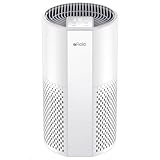
Afloia Air Purifier for Home, 4-in-1 Washable Filter for Allergies, Covers Up to 1076 ft², Quiet Operation, Auto Shut-Off & Night Light, Removes Pet Dander, Pollen, Dust, Mold, and Smoke, White,Pluto | Check Price On Amazon |

|
Nuwave OxyPure ZERO Air Purifier with Washable and Reusable Bio Guard Tech Air Filter, Large Room Up to 2002 Ft², Air Quality Monitor, 0.1 Microns, 100% Capture Irritants like Smoke, Dust, Pollen | Check Price On Amazon |

|
Air Purifiers for Home Large Room Up to 1,996 Ft², EOEBOT Air Purifier for Home Pets with Washable Filter, Quiet Sleep Mode, Air Quality Monitor, Air Purifier for Bedroom, Pet Hair, Dust, Smoke, White | Check Price On Amazon |
|
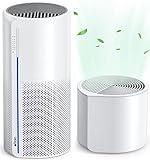
Afloia 2 IN 1 Air Purifier with Humidifier Combo, 3-Stage Filters for Home Allergies Pets Hair Smoker Odors, Evaporative Humidifier, Auto Shut Off, Quiet Air Cleaner with Seven Color Light,White | Check Price On Amazon |
| Cost Tier | Upfront Price | Room Coverage | Annual Filters | Annual Electric (24/7) | 5-Year TCO |
|---|---|---|---|---|---|
| Budget | $40-$100 | 100-200 sq ft | $50-$90 | $25-$40 | $415-$750 |
| Mid-Range | $100-$250 | 200-400 sq ft | $40-$70 | $10-$25 | $350-$725 |
| Premium | $250-$600 | 300-600 sq ft | $60-$120 | $15-$35 | $625-$1,375 |
| High-End / Medical | $600-$1,200+ | 500-1,000+ sq ft | $150-$350 | $30-$60 | $1,500-$3,250 |
| Whole-House HVAC | $1,000-$3,500+ | Entire home | $100-$300 | $50-$150 | $1,750-$5,750 |
Notice something? The mid-range tier has the lowest five-year cost of any category. That’s not a coincidence, and it’s not a marketing trick. It’s what happens when a unit is correctly sized and doesn’t have to run at maximum fan speed to keep up.
Upfront Cost: What You’ll Pay by Category
Budget Units ($40-$100): What You Sacrifice
You plug in a $45 no-name air purifier. On low, it barely moves a candle flame. On high, it sounds like a vacuum cleaner in your bedroom. That’s the budget tier in one sentence.
Some budget units are genuinely fine; the Levoit Core 300 at around $70 is the exception that proves the rule. It’s properly sized for a small bedroom, uses real True HEPA media, and replacement filters are cheap and easy to find. For a 120 sq ft bedroom, it’s all you need.
The trade-offs you accept at this price: smaller filter surface area (so filters clog faster), no auto mode on many models, louder operation, and a build quality that won’t survive a decade. If you’re buying for a dorm room or a small office, fine. If you’re buying for a 400 sq ft living room, you’re about to make the mistake I’ll explain in the undersizing section.
Mid-Range True HEPA ($100-$250): The Sweet Spot
This is where I tell people to shop. The Coway Mighty AP-1512HH and the Winix 5500-2 are the two units that keep showing up in my recommendations because they do the job without drama. Both run on low or auto at 8 to 15 watts. Both have reasonably priced filters. Both are sized for a real living room.
What you get for the extra $100 over budget: bigger filter surface area (longer filter life), a quiet auto mode that actually responds to air quality, and a motor that doesn’t have to scream to move air. The HEPA filtration guide explains why filter surface area matters more than the marketing claims on the box.
Premium ($250-$600): When Paying More Makes Sense
The Blueair Blue Pure 211+ and the Dyson Purifier Cool live here. So does the question: is the extra money buying cleaner air, or just nicer design?
Honest answer: mostly design, app polish, and aesthetics. A $400 Blueair moves more air than a $200 Coway, but it doesn’t move twice as much. The performance curve flattens hard above $250. You’re paying for a quieter motor, a nicer housing, and a brand name. That’s a legitimate purchase if you care about those things. It’s a bad purchase if you think the extra $200 is buying proportionally cleaner air.
One thing to check before you buy premium: the filter cost. Premium units often have proprietary filters that cost more than the mid-range equivalents. Expensive to buy and expensive to feed is a bad combination.
High-End / Medical ($600-$1,200+): Who Actually Needs It
The IQAir HealthPro Plus is the unit people point to when they say “medical-grade.” It’s a serious machine. Massive filter surface area, high CADR, and a filter replacement schedule that costs $200-$350 a year.
Who actually needs this? People with documented severe allergies or asthma, people in wildfire zones who need maximum particulate removal during smoke events, and people with immune-compromised household members. For everyone else, the IQAir is a $900 solution to a problem a $200 Coway already solves. I’m not saying don’t buy it. I’m saying know why you’re buying it.
Whole-House HVAC ($1,000-$3,500+): In-Duct vs Portable
A whole-house system uses your existing HVAC ductwork to filter air across the entire home. Upfront cost runs $1,000-$3,500+ installed, depending on whether you’re adding a media cabinet, a UV stage, or a dedicated bypass unit. The cheapest version is just upgrading to a MERV 13 furnace filter, around $20-$40 per filter, changed every 2-3 months.
Whole-house makes sense if you have forced-air HVAC and want filtration in every room without a portable unit in each one. It doesn’t make sense if you’re renting, if your HVAC is old and can’t handle the added static pressure of a high-MERV filter, or if you only need clean air in one bedroom.
Electricity Running Costs: The Exact Math
Here’s the number that surprises people: electricity is the smallest line item in the whole budget. I’ve had clients agonize over whether an air purifier will spike their power bill. It won’t. Here’s the math.
The formula: watts x hours x rate / 1,000 = cost. At $0.16/kWh (U.S. average), running a unit 24/7 for a year:
| Fan Speed | Wattage | Annual kWh (24/7) | Annual Cost | Monthly Cost |
|---|---|---|---|---|
| Low / Auto | 8W | 70 | $11 | $0.92 |
| Medium | 25W | 219 | $35 | $2.92 |
| High | 65W | 569 | $91 | $7.58 |
| Turbo / Max | 90W | 788 | $126 | $10.50 |
So the entire spread between the most efficient operating mode and the least is roughly $80-$115 a year. That’s a rounding error on a household budget. If you’re optimizing for electricity, you’re optimizing the smallest slice of the pie.
Want to verify your own unit’s draw? Plug it into a smart plug with energy monitoring for a week. You’ll get a real number instead of a guess.
The Real Money Sink: Replacement Filters
Filters are where 70% of your five-year budget actually goes. This is the number nobody puts on the box. The sticker price is the entry fee; the filter subscription is the rent.
A replacement True HEPA filter runs $20-$80 depending on the unit. A replacement activated carbon filter runs $10-$40. The activated carbon guide explains why carbon filters need replacing more often than HEPA in homes with odors or VOCs.
Here’s the heuristic I give people: budget 15-30% of the unit’s purchase price annually for filters. A $200 unit costs $30-$60 a year to feed. A $900 unit costs $135-$270. That’s a memorable number, and it’s the one that should be on the box.
OEM vs generic filters: generic filters are cheaper, but the quality varies wildly. Some generic HEPA media is genuinely equivalent. Some is a thin sheet of polyester pretending to be HEPA. If you go generic, check that the filter is rated True HEPA (99.97% at 0.3 microns) and not “HEPA-type” or “HEPA-style.”
The 5-Year Total Cost of Ownership (With Worked Examples)
This is the section that changes people’s minds. Two units, same 350 sq ft living room, both running continuously.
Unit A: $60 budget unit. Undersized for 350 sq ft, so it lives on high 24/7, drawing 65W. Electricity: 65W x 8,760 hrs = 569 kWh x $0.16 ~ $91/yr. Filters: burns through three $25 generic filters a year = $75/yr. Annual operating cost: $166/yr. Five-year TCO: $60 + (5 x $166) = $890.
Unit B: $200 Coway. Properly sized, runs on low/auto, drawing 8W. Electricity: 8W x 8,760 = 70 kWh x $0.16 ~ $11/yr. Filters: one $50 filter per year = $50/yr. Annual operating cost: $61/yr. Five-year TCO: $200 + (5 x $61) = $505.
The $200 unit is $385 cheaper over five years than the $60 unit, and it delivers better, more consistent clean air the whole time because it isn’t fighting an undersized motor and a clogging filter. The budget unit’s “savings” evaporate by month 18.
Now the luxury comparison. A $900 unit with a 1.3x CADR advantage over the Coway, running at 25W average, with $150/year in proprietary filters. Five-year TCO: $900 + (5 x $150) + (5 x $35) = $1,825. That’s 3.6x the Coway’s five-year cost for roughly 30% more clean air delivery. The performance curve flattens hard above $250, and the filter cost curve goes the other direction.
The takeaway: the $200 unit can cost less to own and clean your air as well as the $900 unit. That’s not a knock on luxury units, it’s a statement about where the money actually goes.
The Undersizing Trap: Why Buying Too Small Costs More
This is the mistake I see most often, and it’s the one that quietly doubles your filter bill. People buy a unit rated for 200 sq ft and put it in a 350 sq ft room. The unit then runs on high 24/7 to keep up. Higher fan speed means more watts, faster filter loading, and shorter filter life. The “cheap” unit becomes the expensive one.
What “rated room size” actually means: the manufacturer’s number assumes a certain air changes per hour (ACH), usually 4 to 5 ACH, which is the minimum for decent air quality. If you have pets, smoke, or allergies, you want 6-8 ACH, which means buying a unit rated for a larger room than you actually have.
| Photo | Air Purifier Model | Best for | Price |
|---|---|---|---|

|
LEVOIT Air Purifier | Best Overall | Check Price On Amazon |

|
WINIX A231 Air Purifier | Asthma & Indoor Pollution | Check Price On Amazon |

|
Rabbit Air, A3 SPA-1000N Air Purifier | Pet Dander & Odors | Check Price On Amazon |

|
GermGuardian Air Purifier | Cigarette & Cooking Smoke | Check Price On Amazon |

|
Coway Airmega Air Purifier | New-borns | Check Price On Amazon |

|
BLUEAIR Air Purifier | Germ & Virus Control | Check Price On Amazon |


Pingback: Best Air Purifiers for Home Office: Tested for Remote Workers
Pingback: Best Air Purifiers Under $500: Tested for Large Spaces & Open Concepts
Pingback: HEPA vs Carbon Filter: What They Remove, Key Differences, and When You Need Both
Pingback: Best Air Purifiers for Cooking Odors & Kitchen Smoke: Tested for Chefs