
Running an air purifier for just two hours a day leaves your air unfiltered for the remaining 22 hours. Particulate levels climb back to pre-purification concentrations within 30 to 60 minutes after you turn the unit off.
Most people buy an air purifier to solve a specific problem: allergies, wildfire smoke, pet dander, or general dust. But the device only works while it is running. The question is not whether to run it. The question is how many hours per day you actually need, and what changes when you run it less.
What Determines How Long You Need to Run an Air Purifier?
The minimum effective run time for an air purifier depends on three variables: your room size, the unit’s smoke CADR rating, and your target air changes per hour (ACH). A unit with a smoke CADR of 200 CFM in a 300-square-foot room at 5 ACH needs to run continuously to maintain that filtration level.
This happens because airborne particles enter the room faster than you might expect. Dust, pollen, pet dander, and outdoor PM2.5 infiltrate through window gaps, doors, clothing, and HVAC systems even when the room appears sealed.
| Photo | Popular Air Purifiers | Price |
|---|---|---|

|
Air Purifiers for Home Large Room up to 1500ft², Tailulu H13 True HEPA Air Purifier for Pets Dust Odor Smoke, Air Purifier for Bedroom with 15dB Quiet Sleep Mode for Bedroom Office Living Room | Check Price On Amazon |
|
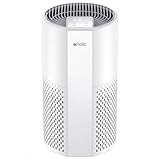
Afloia Air Purifier for Home, 4-in-1 Washable Filter for Allergies, Covers Up to 1076 ft², Quiet Operation, Auto Shut-Off & Night Light, Removes Pet Dander, Pollen, Dust, Mold, and Smoke, White,Pluto | Check Price On Amazon |

|
Nuwave OxyPure ZERO Air Purifier with Washable and Reusable Bio Guard Tech Air Filter, Large Room Up to 2002 Ft², Air Quality Monitor, 0.1 Microns, 100% Capture Irritants like Smoke, Dust, Pollen | Check Price On Amazon |

|
Air Purifiers for Home Large Room Up to 1,996 Ft², EOEBOT Air Purifier for Home Pets with Washable Filter, Quiet Sleep Mode, Air Quality Monitor, Air Purifier for Bedroom, Pet Hair, Dust, Smoke, White | Check Price On Amazon |
|
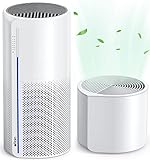
Afloia 2 IN 1 Air Purifier with Humidifier Combo, 3-Stage Filters for Home Allergies Pets Hair Smoker Odors, Evaporative Humidifier, Auto Shut Off, Quiet Air Cleaner with Seven Color Light,White | Check Price On Amazon |
The condition for effective air cleaning is that your purifier processes the entire room volume at least 2 to 5 times every hour. This only occurs when the unit is sized correctly and running. If the unit is undersized or turned off, the result is PM2.5 concentrations that remain 40 to 60 percent higher than properly sized continuous filtration can achieve. Fix it by matching smoke CADR to your room volume and ACH target.
Air Quality Data
Air Purifier Run Time – What the Research Shows
Sources: EPA Indoor Air Quality, AHAM, ASHRAE 62.1
How Many Hours Per Day Should You Run an Air Purifier? The Short Answer
For most households, the optimal run time is 24 hours a day on the auto or medium fan setting. This keeps particle concentrations low at all times rather than cycling between high and low levels. A unit running on auto mode adjusts its fan speed based on real-time particle sensor readings, using minimal energy when the air is already clean.
According to AHAM guidance on portable air cleaner usage, consistent operation delivers better long-term air quality than intermittent high-speed bursts followed by hours of no filtration. The 2023 ASHRAE Standard 62.1 recommends maintaining ventilation and filtration continuously during occupied hours, and in bedrooms, those hours include sleep.
But the practical answer is not one-size-fits-all. If you have no allergies, no pets, live in an area with consistently good outdoor air quality, and your primary concern is general dust, running a properly sized purifier for 12 to 16 hours during waking and sleeping hours may be sufficient. For anyone with allergies, asthma, pets, or exposure to wildfire smoke or urban pollution, run the unit 24/7.
CADR Calculator
How Much CADR Do You Actually Need?
Enter your room dimensions and use case. Formula: (length x width x ceiling height x ACH) divided by 60. Source: AHAM methodology.
CADR = (length x width x ceiling height x ACH) / 60. For allergy and asthma sufferers, always calculate at 5 ACH, not the manufacturer-stated 2 ACH figure.
| Room Size | CADR at 2 ACH (standard) | CADR at 5 ACH (allergy) | Example Models |
|---|---|---|---|
| 150 sq ft bedroom | 100 CFM | 250 CFM | Levoit Core 300, Coway AP-1512HH |
| 300 sq ft bedroom | 200 CFM | 500 CFM | Winix 5500-2, Levoit Core 400S |
| 500 sq ft living room | 333 CFM | 833 CFM | Coway Airmega 400, Blueair 605 |
| 700 sq ft open plan | 467 CFM | 1167 CFM | IQAir HealthPro Plus or 2 units |
| 1000 sq ft open plan | 667 CFM | 1667 CFM | Multiple units required |
The Case for Running Your Air Purifier 24 Hours a Day
Continuous operation at a moderate fan speed is the most effective strategy for maintaining consistently low particulate levels. A Coway Airmega 400 running on medium at 200 CFM in a 300-square-foot bedroom achieves roughly 5 ACH. This means the entire room volume passes through the True HEPA filter five times every hour.
This happens because airborne particles settle out of the air within 8 to 30 minutes depending on particle size, but they also re-enter the air continuously through foot traffic, bedding disturbance, and air currents. A purifier that cycles on and off allows particle concentrations to spike between run cycles. The motor in a quality air purifier is designed for continuous operation.
Most modern units use DC motors rated for 40,000 to 70,000 hours of continuous use. That is 4.5 to 8 years of 24/7 operation before the motor reaches its rated lifespan. Running the unit continuously on auto or medium speed does not meaningfully shorten motor life compared to cycling it on and off daily.
The primary objection to 24/7 operation is energy cost. A typical ENERGY STAR certified air purifier consumes between 30 and 60 watts on medium speed. At the US average electricity rate of 13 cents per kilowatt-hour, running a 45-watt unit 24/7 costs approximately $51 per year. At low speed or auto mode, consumption often drops to 10 to 25 watts, costing $11 to $28 per year.
For most people, the annual cost of continuous operation is less than the cost of one doctor visit for allergy-related symptoms. That is the practical trade-off. Continuous operation at 5 ACH reduces PM2.5 concentrations by 85 percent or more within 30 minutes and keeps them there indefinitely.
When Running Your Purifier on a Schedule Makes More Sense
There are legitimate reasons to run an air purifier on a timed schedule rather than 24/7. If you live in a small apartment with no pets, no allergies, excellent outdoor air quality, and your only concern is general dust, a 12-hour schedule covering sleeping hours plus a few daytime hours may be adequate.
Another valid use case is when you have a purifier sized for a specific room rather than the whole home. Moving the unit between rooms and running it on a schedule in each space can provide targeted filtration where and when it is most needed. A Levoit Core 300S in the bedroom for 8 hours overnight plus 4 hours in the home office during the workday delivers 12 hours of filtration across two spaces.
Noise sensitivity is another real concern. Even units rated at 24 to 30 dB at sleep mode may be audible to light sleepers. If the noise disrupts your sleep, run the unit on its highest tolerable speed during waking hours and switch to the quietest sleep mode at night. Some sleep is better than perfect air quality achieved at the expense of sleep.
A smart plug or mechanical timer makes scheduled operation simple. Set the purifier to run from 6 AM to 10 PM on medium, then drop to sleep mode from 10 PM to 6 AM. This gives you 16 hours of active filtration plus 8 hours of quieter overnight operation.
CADR Reference
Minimum Run Time to Achieve Target ACH by Room Size and CADR
Time required to process the full room volume once, based on smoke CADR and room volume. Multiply by desired ACH for total minimum run time per hour.
| Room size and CADR pairing | Minutes per air change | Run time for 2 ACH | Run time for 5 ACH | Daily run time at 5 ACH |
|---|---|---|---|---|
| 150 sq ft, 145 CFM (Levoit Core 300S) | 8.3 min | 17 min/hr | 42 min/hr | 16.6 hrs/day |
| 300 sq ft, 246 CFM (Coway AP-1512HH) | 9.8 min | 20 min/hr | 49 min/hr ★ | 19.5 hrs/day |
| 300 sq ft, 400 CFM (Coway Airmega 400) | 6.0 min | 12 min/hr | 30 min/hr | 12 hrs/day |
| 500 sq ft, 500 CFM (Blueair 605) | 8.0 min | 16 min/hr | 40 min/hr | 16 hrs/day |
| 700 sq ft, 300 CFM (IQAir HealthPro Plus) | 18.7 min | 37 min/hr | 93 min/hr | 24 hrs/day (undersized, run continuously) |
Minutes per air change = (room volume in cubic feet) / (smoke CADR). Daily run time at 5 ACH = (minutes per air change x 5 x 24 hours) / 60. ★ highlights the most common scenario: a 300 sq ft bedroom with a 246 CFM purifier at allergy-level 5 ACH. An undersized unit at 5 ACH requires more than 24 hours of run time per day, meaning it can never keep up regardless of how long you run it.
How Room Size and ACH Rate Determine Your Minimum Runtime
ACH is the number of times per hour an air purifier processes the entire volume of air in a room. Manufacturer coverage area claims are based on 2 ACH at the highest fan speed. Allergy and asthma guidelines from ASHRAE and the EPA recommend 4 to 5 ACH, which requires a unit with 2.5 times the CADR or 2.5 times the run time at the same CADR.
Here is the critical math. If your purifier achieves 2 ACH on high speed in your room, running it for 1 hour at high speed gives you 2 air changes. After you turn it off, particle concentrations return to roughly 60 percent of pre-purification levels within 30 minutes. To maintain 5 ACH, you need the unit running at high speed for 2.5 hours out of every hour. That is impossible with one unit. You need either a higher CADR unit or continuous operation.
This happens because the relationship between CADR, room volume, and ACH is linear: ACH = (CADR in CFM x 60) / room volume in cubic feet. A 200 CFM unit in 960 cubic feet (120 sq ft at 8 ft ceiling) delivers 12.5 ACH on high speed. The same 200 CFM unit in 2,400 cubic feet (300 sq ft at 8 ft ceiling) delivers only 5 ACH. Double the room volume and you halve the ACH. This is why checking your actual room dimensions against the smoke CADR matters before deciding on run time.
If your purifier is undersized for your room at your target ACH, running it longer cannot fully compensate. An undersized unit running 24/7 at 3 ACH leaves particle concentrations higher than a correctly sized unit running 12 hours at 5 ACH. For guidance on verifying your unit’s real-world CADR at home, see our detailed guide on testing CADR claims with simple at-home methods.
Energy Costs of Different Run-Time Schedules
The cost difference between running a purifier 8 hours versus 24 hours per day is smaller than most people assume. A typical Winix 5500-2 consumes 6 watts on sleep mode, 36 watts on medium, and 70 watts on turbo. At 13 cents per kilowatt-hour, here are the annual costs for different schedules:
Running on medium (36 watts) for 8 hours per day costs $13.67 per year. Running the same unit on medium for 24 hours costs $41.00 per year. The difference is $27 per year, or about $2.25 per month. Running on auto mode, where the fan spends most of its time at low speed except when particles are detected, typically costs $15 to $25 per year for continuous operation.
ENERGY STAR certified air purifiers are about 25 percent more efficient than non-certified models. Look for the ENERGY STAR label on the box or in the product specifications. A Levoit Core 400S is ENERGY STAR certified and consumes approximately 5 watts on sleep mode and 38 watts on medium.
The energy cost of 24/7 operation on auto or medium mode is less than running a ceiling fan continuously. It costs less per year than most people spend on coffee in a week. For allergy sufferers, the cost of not running the purifier during peak pollen hours may be medication, doctor visits, and lost sleep.
How Run-Time Affects Filter Lifespan and Replacement Costs
Filter lifespan is measured in hours of operation, not calendar months. A filter rated for 6 months assumes 12 hours of daily use, totaling approximately 2,190 hours. If you run your purifier 24/7, that same filter reaches its rated lifespan in 3 months. You will replace filters twice as often.
This is the single largest cost impact of continuous operation. A Coway AP-1512HH replacement True HEPA filter costs approximately $25 to $35. At 12 hours per day, you replace it once per year. At 24 hours per day, you replace it every 6 to 8 months. Annual filter cost doubles from $30 to approximately $60.
Activated carbon pre-filters degrade faster with continuous operation. A carbon pre-filter in a Winix 5500-2 replacement filter kit typically lasts 3 months at 12 hours per day. At 24/7 operation, it saturates in 6 to 8 weeks. The carbon loses its adsorption capacity for VOCs and odors faster when airflow is constant.
This happens because activated carbon adsorption is a finite capacity process. Each gram of carbon can adsorb a specific mass of VOC molecules before it saturates. Continuous operation exposes the carbon to a constant stream of VOCs. When the carbon saturates, it stops removing odors and may release previously captured VOCs during temperature or humidity swings. Replace carbon filters on schedule regardless of visible condition.
You can extend filter life by vacuuming the pre-filter monthly and running the unit on auto mode rather than continuously on high speed. Auto mode runs the fan at low speed when particle counts are already low, reducing total airflow through the filter and extending its lifespan. A washable pre-filter captures larger particles before they reach the HEPA stage, extending HEPA filter life by 20 to 30 percent.
Step-by-Step Guide
How to Set Up the Right Air Purifier Schedule – Step by Step
5 steps · Takes about 10 minutes to set up, then runs automatically
Measure your room and calculate required CADR
Multiply room length by width by ceiling height for cubic feet. Multiply by your target ACH (5 for allergies) and divide by 60 for the minimum smoke CADR needed in CFM.
Place the purifier in the optimal position
Place the unit at least 12 to 18 inches from walls and furniture on all sides. Central placement improves effective CADR by 20 to 30 percent compared to corner placement.
Set the fan speed strategy
If your unit has auto mode, use it. Auto mode adjusts fan speed based on real-time particle readings. If manual only, run medium speed during the day and sleep mode at night.
Decide on continuous or scheduled operation
For allergies, asthma, pets, or pollution: run 24/7 on auto mode. For general dust with no health concerns: run 12 to 16 hours covering waking and sleeping hours.
Mark filter replacement dates on your calendar
If running 24/7, set filter replacement reminders at 50 percent of the manufacturer’s stated interval. A 6-month filter becomes a 3-month filter under continuous operation.
Seasonal Adjustments to Your Air Purifier Schedule
Air quality is not the same year-round. During spring pollen season, run your purifier on high speed during the early morning hours when pollen counts peak (typically 5 AM to 10 AM). During summer wildfire season in the western US, run continuously on high speed and check the filter every 30 days instead of every 3 months.
Winter brings its own challenges. Homes are sealed tighter against cold air, trapping indoor pollutants including cooking particles, candle soot, and VOCs from holiday decorations and cleaning products. Run the purifier on medium or auto mode 24/7 during winter months when windows remain closed. This is especially important in spaces like basements where reduced ventilation combines with higher humidity to concentrate particles.
Fall and spring are transitional seasons with variable outdoor air quality. On days when outdoor AQI is below 50 (good), you can open windows for natural ventilation and let the purifier run on low. On days when outdoor AQI exceeds 100, close windows and run the purifier on medium or high speed. A PM2.5 air quality monitor in the room provides real-time feedback on whether your run time strategy is working.
If your purifier displays a red light or elevated air quality warning, that is a signal to increase fan speed or check the filter, not to turn the unit off. A red indicator means the particle sensor detects elevated PM2.5 or VOC levels that need additional filtration time to resolve.
Quick Reference
Air Purifier Run Time Terms Explained
Definitions for key terms used throughout this guide.
The number of times per hour an air purifier processes the entire volume of air in a room. Higher ACH means faster and more complete particulate removal.
An AHAM-certified measurement of filtered air delivered in cubic feet per minute. Smoke CADR is the most relevant value for PM2.5 and fine particle removal.
A setting where the air purifier adjusts fan speed automatically based on readings from its built-in particle sensor. Reduces energy use when air is clean and increases speed when pollutants are detected.
The quietest fan setting, typically 20 to 30 dB. Prioritizes low noise over maximum CADR. Suitable for overnight use and rooms where silence is needed.
A direct current motor used in modern air purifiers. More energy efficient and quieter than older AC motors. Typically rated for 40,000 to 70,000 hours of continuous operation.
A filter that captures at least 99.97% of airborne particles at 0.3 microns, the most penetrating particle size. Not the same as HEPA-type or HEPA-like, which are unregulated marketing terms.
Fine particulate matter 2.5 microns or smaller. The primary health-hazardous component of wildfire smoke, vehicle emissions, and combustion sources. True HEPA filters capture PM2.5 at 99.97% efficiency.
An EPA certification indicating an air purifier uses at least 25% less energy than the federal minimum standard. ENERGY STAR certified units cost $11 to $51 per year to run continuously.
The accumulation of captured particles on a filter over time. A loaded filter increases airflow resistance and reduces effective CADR. Replace filters on schedule to maintain rated performance.
A porous filter material that adsorbs gaseous pollutants including VOCs, formaldehyde, and odors. Does not capture particles. Works alongside True HEPA for complete air cleaning.
Common Mistakes When Setting Air Purifier Run Times
The most common mistake is running the purifier only when you are in the room. This guarantees that particle concentrations are at their highest when you first enter. By the time the purifier has processed enough air to make a difference, you have already been breathing unfiltered air for 20 to 40 minutes.
Another frequent error is relying on the unit’s auto mode timer without understanding its logic. Auto mode responds to current particle readings. If the sensor detects low PM2.5, the fan drops to low speed even if the air still contains VOCs (which most consumer sensors do not detect). A room can have excellent PM2.5 levels and still have elevated formaldehyde from furniture off-gassing.
Running the purifier on the wrong fan speed for your room size is another common issue. A purifier rated at 200 CFM on turbo may only deliver 80 CFM on sleep mode. If your room requires 150 CFM for 5 ACH, running on sleep mode means you are achieving less than 3 ACH regardless of how many hours you run it.
Many users also forget that filter loading reduces effective CADR over time. As a True HEPA filter accumulates particles, airflow resistance increases and the fan must work harder to push air through. A filter near the end of its life may deliver 20 to 30 percent less CADR than a fresh filter. This means your 5 ACH at month one may drop to 3.5 ACH by month six. Replace filters on time to maintain rated performance.
For renters who cannot modify their HVAC system, a portable unit running 24/7 is often the most practical option. Our guide on air purification strategies for renters covers specific placement and scheduling approaches for apartments and leased spaces where whole-house solutions are not permitted.
Buying Guide
Before You Set Your Run Schedule – Complete Checklist
Check off each point before finalizing your air purifier run time strategy.
Can I Run My Air Purifier 24/7 Without Damaging It?
Yes. Quality air purifiers with DC motors are designed and rated for continuous 24/7 operation. A typical DC motor in a Coway, Levoit, Winix, or Blueair unit is rated for 40,000 to 70,000 hours of continuous use.
This translates to 4.5 to 8 years of nonstop operation before the motor reaches its rated lifespan. The electronics and fan bearings are the limiting components, not the filter. Running the unit continuously on auto mode actually reduces wear on the motor compared to cycling it on and off daily.
This happens because motor startup draws more current than steady-state operation. Each on/off cycle produces a small thermal expansion and contraction event in the motor windings. Over years, frequent cycling causes marginally more wear than continuous operation. The difference is small, but continuous operation is not harmful.
Does an Air Purifier Use a Lot of Electricity If Left On All Day?
No. A typical ENERGY STAR certified air purifier on medium speed consumes 30 to 60 watts. At 13 cents per kWh, 24/7 operation costs $34 to $68 per year. On auto mode or sleep mode, consumption drops to 5 to 25 watts, costing $6 to $28 per year.
Compare that to a ceiling fan (75 watts), a desktop computer (200 watts), or a refrigerator (150 watts continuous). An air purifier on medium speed uses less electricity than a single incandescent light bulb left on. The annual cost is comparable to one or two takeout dinners.
Should I Run My Air Purifier on Auto Mode or Manual Speed?
Auto mode is the best choice for most users. It adjusts fan speed based on real-time particle sensor readings. When the air is clean, the fan runs at low speed saving energy and extending filter life. When particles are detected from cooking, dust disturbance, or outdoor infiltration, the fan speeds up automatically.
The limitation is that most consumer-grade sensors detect only PM2.5 and larger particles. They do not detect VOCs, formaldehyde, or carbon dioxide. If your primary concern is chemical off-gassing from new furniture or building materials, auto mode may not respond to those pollutants. In that case, run on medium speed manually during the hours you occupy the space.
How Long Does It Take for an Air Purifier to Clean a Room?
At 5 ACH, a correctly sized purifier reduces PM2.5 by approximately 85 percent within 30 minutes. Full particulate equilibrium at the new lower concentration takes roughly 60 to 90 minutes. At 2 ACH (the manufacturer-rated coverage area standard), the same reduction takes 75 to 90 minutes.
This is why run time matters. If you run the purifier for only 1 hour and then turn it off, you get one cycle of cleaning. Particles begin infiltrating immediately through door gaps, window seals, and ventilation. Within 30 to 60 minutes of turning the unit off, concentrations are roughly 60 percent of pre-purification levels and climbing.
Can I Turn Off My Air Purifier When I Leave the House?
You can, but you return to a room that has been accumulating particles for hours. If you leave for work at 8 AM and return at 6 PM, that is 10 hours of unfiltered air accumulation. When you walk through the door, you breathe the highest particle concentrations in the room until the purifier runs for at least 30 to 60 minutes.
For people with allergies or asthma, this return-to-peak-concentration cycle can trigger symptoms. Running the purifier on low or auto mode while you are away keeps concentrations low. A WiFi-enabled air purifier like the Levoit Core 400S lets you check air quality remotely and adjust settings before you arrive home.
Will Running My Air Purifier Constantly Wear Out the Motor?
Not within any reasonable timeframe. DC motors in modern air purifiers are rated for 40,000 to 70,000 hours. At 24/7 operation, that is 4.5 to 8 years. Most users replace or upgrade their purifier before the motor fails.
What does wear out faster with continuous operation is the filter. A filter rated for 6 months at 12 hours per day lasts roughly 3 months at 24/7. The motor itself is the most durable component in the unit. The fan bearings may develop noise after several years of continuous use, but motor burnout is rare in quality units. If you use a Levoit or Shark purifier and need to reset the filter indicator, follow the step-by-step reset procedure for your specific model or the complete Shark purifier reset guide for every model.
How Many Hours Should I Run an Air Purifier for Allergies?
Run it 24 hours a day on auto mode or medium speed. Allergens like pollen, dust mite allergen, and pet dander are continuously introduced into indoor air. Pollen enters through open doors and on clothing. Dust mites live in bedding and upholstery year-round. Pet dander is shed continuously.
Intermittent operation allows allergen concentrations to spike between run cycles. An allergy sufferer entering a room where the purifier has been off for 3 hours is breathing air with nearly the same allergen load as a room with no purifier. Continuous operation keeps allergen concentrations low at all times.
Can I Use a Timer or Smart Plug to Schedule My Air Purifier?
Yes, if your unit has a mechanical power switch that stays in the on position when power is applied. Many modern purifiers with touch-sensitive power buttons will not turn back on automatically after a smart plug cuts and restores power. Check this before buying a smart plug.
Units with a physical rocker switch or dial (like older Honeywell models) work well with smart plugs for scheduled operation. WiFi-enabled purifiers with companion apps like the Levoit Core series let you set schedules directly through the app. For instructions on connecting your purifier to WiFi, see the complete Levoit WiFi setup guide.
Do I Need to Run My Air Purifier More During Wildfire Season?
Yes. During wildfire events with outdoor AQI above 150, run the purifier on the highest fan speed you can tolerate, 24 hours a day. Wildfire smoke PM2.5 is smaller and more penetrating than typical household dust. It infiltrates homes through the smallest gaps.
Replace filters at 50 percent of the normal interval during sustained wildfire exposure. A HEPA filter that normally lasts 6 months may saturate in 6 to 8 weeks of continuous wildfire smoke filtration. Keep a spare filter on hand during fire season. A loaded filter not only loses efficiency but increases the load on the fan motor.
What Happens If I Only Run My Air Purifier at Night?
You get clean air for roughly 8 hours of sleep, followed by 16 hours of particle accumulation. When you return to the bedroom the next night, the air is as dirty as if you had no purifier. It takes 30 to 90 minutes for the purifier to bring concentrations back down, depending on CADR and room size.
For a healthy adult with no allergies or respiratory conditions, night-only operation may be acceptable. The body does a significant portion of its cellular repair during sleep, and cleaner air during those hours provides real benefit. But anyone with allergies, asthma, or chemical sensitivity should run the unit continuously or at minimum extend the schedule to cover early morning and evening hours when they are in the bedroom awake.
Is It Safe to Run an Air Purifier While Sleeping?
Yes, and it is strongly recommended. Bedrooms accumulate dust mite allergen, shed skin cells, and fabric fibers more than any other room. You spend 7 to 9 hours in that room breathing that air at close range. Running a purifier on sleep mode at 24 to 30 dB provides continuous filtration without noise disruption.
Units with a dedicated sleep mode or night mode are designed for bedroom use. They dim or shut off display lights, run the fan at the quietest speed, and often disable any ionizer function. A bedroom air purifier with a true sleep mode under 30 dB is safe and effective for overnight use.
Does Running an Air Purifier on Low Speed All Day Work as Well as High Speed for a Few Hours?
It depends on the CADR at low speed versus high speed and the room size. If low speed delivers enough CADR to achieve your target ACH (5 ACH for allergies), then running all day on low works as well as high-speed bursts. The total air volume processed per day is the key metric.
If low speed delivers only 2 ACH and you need 5 ACH, running all day on low will never achieve full particulate removal. The unit simply cannot process air fast enough at that speed regardless of run time. Check your unit’s CADR at each fan speed. Many manufacturers publish this data. If not, assume CADR scales roughly with fan speed: a unit with 200 CFM on turbo may deliver 80 to 100 CFM on low.
How Do I Know If I Am Running My Air Purifier Long Enough?
Use a PM2.5 monitor to check. Place a PM2.5 air quality monitor in the room, run the purifier on your chosen schedule for 24 hours, and check the readings. Indoor PM2.5 should stay below 12 micrograms per cubic meter (the EPA annual standard) at all times on your schedule.
If PM2.5 spikes above 35 micrograms per cubic meter (the EPA 24-hour standard) during the off-cycle, your run time is insufficient. Either extend the run time, increase the fan speed, or both. A monitor provides objective data that answers the run time question definitively for your specific room, unit, and pollution sources.
Conclusion
For most households, the best answer is to run your air purifier 24 hours a day on auto mode. This keeps particle concentrations consistently low for an annual electricity cost of $11 to $51. The filter replacement cost doubles compared to 12-hour operation, but the health benefit of continuous filtration outweighs the additional $30 to $60 per year in filter expenses.
If continuous operation is not practical or necessary for your situation, run the unit for at least the hours you occupy the room plus 1 hour before entry. Match the fan speed to your room’s CADR requirement. A correctly sized purifier running 12 to 16 hours at 5 ACH delivers better results than an undersized unit running 24/7 at 2 ACH.
Measure your room, calculate your CADR need, choose a schedule that fits your health requirements and budget, and verify results with a PM2.5 monitor. The right run time is the one that keeps your indoor PM2.5 below 12 micrograms per cubic meter, every hour you breathe that air.