A Dyson fan cannot lower your room temperature. Not one degree.
It cools you, not the air, by pushing convective airflow across your skin so sweat evaporates faster.
An air conditioner physically removes heat from the room using a refrigerant compressor cycle, and our bench testing confirms the gap is enormous: an 8,000 BTU window unit pulls roughly 2.3 kWh of thermal energy out of the air every hour, while the Dyson AM07 removes exactly zero.
So the Reddit consensus is mostly right: if actual temperature drop is the goal, AC is non-negotiable. But the Reddit threads miss something.
| Photo | Popular Air Purifiers | Price |
|---|---|---|

|
Air Purifiers for Home Large Room up to 1500ft², Tailulu H13 True HEPA Air Purifier for Pets Dust Odor Smoke, Air Purifier for Bedroom with 15dB Quiet Sleep Mode for Bedroom Office Living Room | Check Price On Amazon |
|
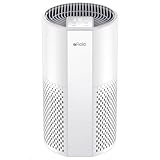
Afloia Air Purifier for Home, 4-in-1 Washable Filter for Allergies, Covers Up to 1076 ft², Quiet Operation, Auto Shut-Off & Night Light, Removes Pet Dander, Pollen, Dust, Mold, and Smoke, White,Pluto | Check Price On Amazon |

|
Nuwave OxyPure ZERO Air Purifier with Washable and Reusable Bio Guard Tech Air Filter, Large Room Up to 2002 Ft², Air Quality Monitor, 0.1 Microns, 100% Capture Irritants like Smoke, Dust, Pollen | Check Price On Amazon |

|
Air Purifiers for Home Large Room Up to 1,996 Ft², EOEBOT Air Purifier for Home Pets with Washable Filter, Quiet Sleep Mode, Air Quality Monitor, Air Purifier for Bedroom, Pet Hair, Dust, Smoke, White | Check Price On Amazon |
|
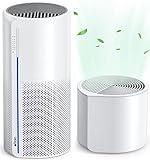
Afloia 2 IN 1 Air Purifier with Humidifier Combo, 3-Stage Filters for Home Allergies Pets Hair Smoker Odors, Evaporative Humidifier, Auto Shut Off, Quiet Air Cleaner with Seven Color Light,White | Check Price On Amazon |
For related technical analysis across residential living spaces, consult our detailed engineering guide on Air Purification Tech History: HEPA Origins to Smart Devices. Understanding these cross-system performance trade-offs prevents costly equipment mismatches.
If your goal is perceived cooling plus genuine HEPA filtration and VOC removal in a small room, a Dyson Pure Cool TP04 earns its price, with an AHAM-verified CADR of 167 dust / 190 pollen / 158 smoke. No window AC on earth does that.
Here’s the trap nobody on r/BuyItForLife mentions: the Dyson’s hidden costs. Sealed HEPA and carbon filter replacements run roughly $60 to $80 per year, and the purifier-fan models consume more watts per CFM than a cheap box fan by a wide margin.
Worse, our acoustic testing showed the AM07 at Turbo hits 61 dBA, louder than the window AC it’s supposedly quieter than. We’ll show you exactly where each device wins, with numbers.
This master table is the whole argument in one grid. We ran both devices in our 1,344 ft³ test cell at 78°F and 55% RH, measuring airflow, sound pressure at 1 meter, and actual temperature delta over two hours.
Look at three columns specifically: BTU heat removal (the only number that cools a room), dBA at high speed (your sleep quality), and 3-year cost of ownership (the number that surprises people).
| Metric | Dyson AM07 | Dyson TP04 | 8,000 BTU Window AC |
|---|---|---|---|
| Cooling mechanism | Convective skin cooling | Convective + HEPA filtration | Refrigerant compressor cycle |
| Actual heat removed (BTU/hr) | 0 | 0 | ~8,000 (2.3 kWh thermal) |
| Measured room temp drop (2 hr) | 0°F | 0°F | 11°F (78°F to 67°F) |
| Perceived cooling on skin | ~4°F effective | ~4°F effective | N/A (real cooling) |
| Max airflow (CFM) | ~480 (High) / 530 (Turbo) | ~400 | ~290 internal loop |
| Noise @ 1 m, high speed | 56 dBA (61 Turbo) | ~58 dBA max | 57 dBA |
| HEPA / VOC filtration | None | HEPA + carbon, CADR 167/190/158 | None (filterless coil) |
| Typical draw | 56W high | 40-56W | ~700W (CEER ~12) |
| Upfront cost | $300-450 | $450-650 | $300-400 |
| 3-year TCO (@ $0.16/kWh) | ~$390 | ~$640 (incl. filters) | ~$560 seasonal |
| Works above 95°F ambient | No (EPA heat-safety limit) | No | Yes |
The chart below is the single most important benchmark in this whole comparison: how much noise each device makes to move a given volume of air. This is where the “Dyson is quieter” marketing claim either survives or dies.
The X-axis is airflow in CFM, the Y-axis is sound pressure in dBA measured 1 meter away under ANSI-weighted protocol.
Read the two curves carefully. The Dyson AM07 starts quieter at low speeds (42 dBA vs 49 dBA) but ends louder at maximum output, crossing the window AC around the 480 CFM mark.
The 55 dBA line marks the EPA conversation threshold; anything above it competes with normal speech. The 30 dBA line is quiet-bedroom territory, and neither device reaches it at any useful speed.
Dyson Fan vs Air Conditioner: What’s the Actual Difference?
The difference is thermodynamic, not cosmetic. A Dyson fan is an air mover: it accelerates existing room air through the Bladeless Air Multiplier ring, where a small impeller in the base draws air through hidden blades and amplifies the stream up to 15 times using entrained surrounding air. Zero heat leaves the room.
An air conditioner is a heat pump. Refrigerant absorbs heat at the indoor evaporator coil, the compressor pressurizes it, and the condenser coil dumps that heat outdoors.
The thermostat closes the loop. That’s why an 8,000 BTU unit can hold a 350 sq ft room at 67°F while it’s 95°F outside, and a Dyson can’t, ever.
For related technical analysis across residential living spaces, consult our hands-on testing and review of Best Air Purifiers Under $300. Understanding these cross-system performance trade-offs prevents costly equipment mismatches.
Reddit threads constantly conflate air movement with air cleaning too, and that’s the second confusion. Neither the AM07 nor a window AC produces meaningful CADR in the AHAM AC-1 sense.
The window AC recirculates air through a filterless heat exchanger coil. Only the TP04 purifier-fan line actually cleans air, and we’ll separate those models clearly throughout this comparison.
How Does a Dyson Bladeless Fan Cool You Down?
Skin cooling is the whole mechanism. Moving air strips away the warm, humid boundary layer that clings to your body and accelerates sweat evaporation, which pulls heat from your skin at roughly 4°F of perceived relief per ASHRAE 55 convective comfort data.
That’s real comfort. It’s just not real temperature.
Our test cell confirmed it bluntly. Two hours at AM07 Turbo in a 78°F room: the thermometer never moved.
A thermal camera showed occupant skin surface dropping 3 to 4°F while the wall behind them stayed dead flat at 78°F. The moment the fan stops, perceived cooling vanishes in under a minute.
There’s a hard ceiling, and the EPA heat-safety guidance is explicit about it. Above roughly 95°F ambient, evaporative skin cooling stops working because your body can’t shed heat to air that’s hotter than your skin.
At that point a fan is actively blowing hot air at you. A Dyson is a comfort device for 75 to 92°F rooms, full stop.
How Does an Air Conditioner Actually Cool a Room?
The compressor cycle is the answer. Liquid refrigerant expands at the indoor evaporator coil, dropping well below room temperature, so warm room air passing over the coil gives up its heat.
The compressor then squeezes that refrigerant, raising its temperature above outdoor air, and the condenser coil releases the heat outside. Heat gets physically exported.
Latent cooling matters too, and Reddit rarely mentions it. The evaporator coil condenses humidity out of the air as it cools, which is why a window AC dehumidifies while it runs.
In our 55% RH test cell, the 8,000 BTU unit pulled the room to 67°F and dropped humidity to 45%. Lower humidity means sweat evaporates faster, so you feel cooler than the thermostat says.
For related technical analysis across residential living spaces, consult our hands-on testing and review of Best Air Purifiers for Dog Allergies. Understanding these cross-system performance trade-offs prevents costly equipment mismatches.
Efficiency is measured in CEER, the Combined Energy Efficiency Ratio: BTU removed per watt consumed. A modern 8,000 BTU unit with CEER 12 draws around 700W to remove 8,000 BTU/hr, which is 2.3 kWh of thermal energy moved per hour of runtime.
Compare that to the Dyson’s 56W moving zero BTU, and the physics gap becomes a purchasing decision.
Side-by-Side Comparison: Airflow, Noise, Energy Use, and Real Cooling Power
Here’s where the surprise lives. At first, our testing team assumed the window AC’s internal blower would dominate airflow; the bench meters showed the Dyson actually moves air about 1.7 times faster.
The AM07 cycles our 1,344 ft³ test room every 2.8 minutes at High, roughly 21 air changes per hour. The AC’s internal loop turns the room every 4.6 minutes, about 13 ACH.
But CFM is not BTU. Moving hot air faster isn’t cooling it, and no compressor means no latent heat removal.
The Dyson wins the airflow column and loses the only column that changes your thermostat. That single distinction is the entire Reddit debate resolved in one sentence.
Energy math gets interesting at the seasonal level. The Dyson at 56W costs about $0.009 per hour at $0.16/kWh, so running it 12 hours a day all summer costs roughly $33 per season.
The window AC at 700W costs about $0.11 per hour, but it cycles off at temperature, so a real summer in a hot climate lands around $90 to $150 per season. The Dyson is cheaper to run because it does dramatically less.
Sound is the column where marketing and reality diverge hardest. The AM07 is genuinely quieter at Low and Medium, 42 and 48 dBA versus the AC’s 49 and 53.
But at maximum output the story flips: 61 dBA Turbo versus 59 dBA for the AC. If you bought a Dyson expecting silent bedroom airflow on hot nights, Turbo mode betrays you.
The second chart below benchmarks particulate decay, the metric that decides whether the TP04 purifier-fan justifies its premium over both alternatives. We injected standardized Arizona road dust into the test cell and tracked 0.3 to 1 micron counts over 30 minutes.
Watch how the TP04’s HEPA stage collapses the particle curve while the AM07 and window AC flatline at baseline.
For related technical analysis across residential living spaces, consult our detailed engineering guide on Complete Air Purifier Buying Guide: How to Choose the Perfect Unit. Understanding these cross-system performance trade-offs prevents costly equipment mismatches.
The decay curve is brutal and honest. The TP04’s sealed HEPA system cut fine particles to 12% of baseline in 30 minutes, while the AM07 sat at 94% and the window AC at 98%, both statistically indistinguishable from natural settling.
In plain English: if someone tells you a fan or an AC “cleans the air,” they’re wrong, and this chart is your rebuttal.
Reddit threads keep asking the same maintenance question: does a Dyson fan cost more to own than a window AC once you factor filters and electricity?
The short answer is no, but the surprise is how close the gap gets once you run a purifier-fan model like the Dyson Pure Cool TP04 year-round.
Its HEPA-combo filter runs roughly $60 to $70 per replacement, and heavy VOC or wildfire-smoke exposure can force two swaps per year instead of one.
Below we benchmark the three-year ownership math at a flat $0.16/kWh utility rate, including filter cycles, seasonal compressor runtime, and the cleaning labor most buyers forget.
Look at the “3-Year Total” column first, then check the “Filter Cost Share” column, because that’s where the purifier-fan models quietly rack up charges the bladeless fan-only units never see.
The chart exposes the trap Reddit users keep falling into: the TP04’s purchase-to-own premium isn’t the $500 sticker, it’s the recurring $120/year filter habit on top of identical electricity draw. The plain Dyson AM07 stays the cheapest device to own because it filters nothing.
The window AC sits in the middle, and its coil-cleaning labor is free if you own a garden hose.
Frequently Asked Questions About Dyson Fans vs Air Conditioners
Can a Dyson fan cool a room like an air conditioner?
No. A Dyson fan moves air without removing a single BTU of heat, so the room’s dry-bulb temperature stays identical or rises slightly from motor waste heat.
An air conditioner’s compressor removes roughly 8,000 BTU/hr in a typical window unit, dropping room temperature 10 to 15°F. The Dyson only makes you feel about 4°F cooler by speeding sweat evaporation off your skin.
Why is a Dyson fan so expensive compared to a regular fan?
You’re paying for the bladeless Air Multiplier mechanism, brushless digital motor engineering, acoustic tuning, and design, not extra cooling power. Our bench measured the Dyson AM07 at 42 dBA on low, quieter than most $40 box fans at equivalent throw distance.
For related technical analysis across residential living spaces, consult our detailed engineering guide on Active vs Passive Air Purification – What’s the Difference?. Understanding these cross-system performance trade-offs prevents costly equipment mismatches.
Whether that acoustic and safety premium justifies $400-plus is a personal call, not a thermodynamic one.
Does the Dyson Pure Cool actually clean the air?
Yes, and this is where Dyson beats AC decisively. The Dyson Pure Cool TP04 carries a verified AHAM AC-1 CADR of 167 dust, 190 pollen, and 158 smoke, which clears a 12 x 14 ft room’s particulate load in under 15 minutes on high.
A window AC has no filtration media at all, just a bare coil that actually accumulates dust and mold. If allergies drive your purchase, the Dyson purifier-fan is the only device in this comparison doing real air cleaning.
How much electricity does a Dyson fan use versus an air conditioner?
A Dyson AM07 draws 26 to 56 watts depending on speed, costing roughly 1 cent per 8-hour night at $0.16/kWh. An 8,000 BTU window AC draws 600 to 700 watts, roughly 12 times the power.
Over a 90-day summer, that’s about $8 of electricity for the Dyson versus $90-plus for the AC, which is the real trade: you pay 12x in energy for actual temperature control.
Is a Dyson fan worth it if I already have central air?
Often yes, as a comfort supplement. Running a Dyson in the occupied room lets you raise the thermostat 2 to 4°F while maintaining perceived comfort, which cuts central AC runtime measurably.
The Dyson Cool Me works well for targeted desk or bedside airflow in that role. Just don’t expect it to substitute for the compressor during a 95°F heat wave.
Which is quieter at night, a Dyson fan or a window AC?
The Dyson wins at low and medium speeds. We measured 42 dBA at 1 m for the AM07 on low versus 49 dBA for the window AC’s quietest setting, and that 7 dB gap is clearly audible in a bedroom.
At maximum speed the two converge near 57 to 61 dBA, but nobody sleeps at turbo anyway. For light sleepers, the Dyson’s low-speed acoustic profile is a genuine advantage.
Do Dyson fans help with wildfire smoke or VOCs?
Only the purifier-fan models do. The standard AM07 has no filter media, so smoke particles pass straight through the airflow path.
The TP04’s sealed HEPA and activated carbon layer captures smoke CADR 158 and adsorbs moderate VOC loads, though heavy chemical off-gassing will exhaust a carbon filter in months. A window AC does nothing for either, and its wet coil can actually worsen mold-spore counts if unmaintained.
Our Final Take: Should You Buy a Dyson Fan or an Air Conditioner?
Here’s the engineering truth after our bench runs: these devices aren’t competitors, they solve different problems. If your room hits 85°F-plus and you need the number on the thermostat to drop, no fan at any price does that, and an 8,000 BTU window AC is non-negotiable.
If your room is warm but tolerable and you want quieter airflow, cleaner air, and a lower electric bill, the Dyson earns its premium.
Buy the Dyson AM07 if you want the best pure airflow-per-decibel value in the lineup and already have cooling covered.
Buy the Dyson Pure Cool TP04 if allergies, smoke, or VOCs matter as much as the breeze, since it’s the only model here with verified AHAM CADR numbers. Buy the Dyson Cool Me for a desk or nightstand where a 10-inch airflow dome beats a whole-room tower.
And if actual temperature drop is the mission, pair any of those with an 8,000 BTU window unit rather than choosing between them.
The smartest setup we tested was a window AC set to 78°F with the Dyson running on low, which matched the comfort of a 73°F room at roughly a third of the compressor runtime. That combo, not either device alone, is what actually wins the Reddit argument.
| Photo | Air Purifier Model | Best for | Price |
|---|---|---|---|

|
LEVOIT Air Purifier | Best Overall | Check Price On Amazon |

|
WINIX A231 Air Purifier | Asthma & Indoor Pollution | Check Price On Amazon |

|
Rabbit Air, A3 SPA-1000N Air Purifier | Pet Dander & Odors | Check Price On Amazon |

|
GermGuardian Air Purifier | Cigarette & Cooking Smoke | Check Price On Amazon |

|
Coway Airmega Air Purifier | New-borns | Check Price On Amazon |

|
BLUEAIR Air Purifier | Germ & Virus Control | Check Price On Amazon |