What Makes an Air Purifier Safe for Babies and Pets?
Not every air purifier belongs in a nursery or a home with pets. The wrong technology can release ozone, produce excessive noise, or leave harmful particles circulating in the air your baby breathes.
A safe air purifier for babies and pets must meet three non-negotiable criteria. It must produce zero ozone, operate quietly enough for sleep, and use mechanical filtration that physically traps particles rather than redistributing them.
True HEPA filtration is the gold standard for nurseries and pet-friendly homes. A True HEPA filter captures 99.97% of airborne particles at the hardest-to-capture 0.3-micron size, according to the IEST standard that defines the HEPA specification.
This includes pet dander, which ranges from 2.5 to 10 microns, dust mite allergens at 10 to 40 microns, and the fine PM2.5 particles linked to respiratory irritation in infants whose lungs are still developing.
| Photo | Popular Air Purifiers | Price |
|---|---|---|

|
Air Purifiers for Home Large Room up to 1500ft², Tailulu H13 True HEPA Air Purifier for Pets Dust Odor Smoke, Air Purifier for Bedroom with 15dB Quiet Sleep Mode for Bedroom Office Living Room | Check Price On Amazon |
|
Afloia Air Purifier for Home, 4-in-1 Washable Filter for Allergies, Covers Up to 1076 ft², Quiet Operation, Auto Shut-Off & Night Light, Removes Pet Dander, Pollen, Dust, Mold, and Smoke, White,Pluto | Check Price On Amazon |

|
Nuwave OxyPure ZERO Air Purifier with Washable and Reusable Bio Guard Tech Air Filter, Large Room Up to 2002 Ft², Air Quality Monitor, 0.1 Microns, 100% Capture Irritants like Smoke, Dust, Pollen | Check Price On Amazon |

|
Air Purifiers for Home Large Room Up to 1,996 Ft², EOEBOT Air Purifier for Home Pets with Washable Filter, Quiet Sleep Mode, Air Quality Monitor, Air Purifier for Bedroom, Pet Hair, Dust, Smoke, White | Check Price On Amazon |
|
Afloia 2 IN 1 Air Purifier with Humidifier Combo, 3-Stage Filters for Home Allergies Pets Hair Smoker Odors, Evaporative Humidifier, Auto Shut Off, Quiet Air Cleaner with Seven Color Light,White | Check Price On Amazon |
Air Quality Data
Air Purifiers, Babies, and Pets – What the Research Shows
Sources: EPA Indoor Air Quality, AHAM, American Lung Association, CARB
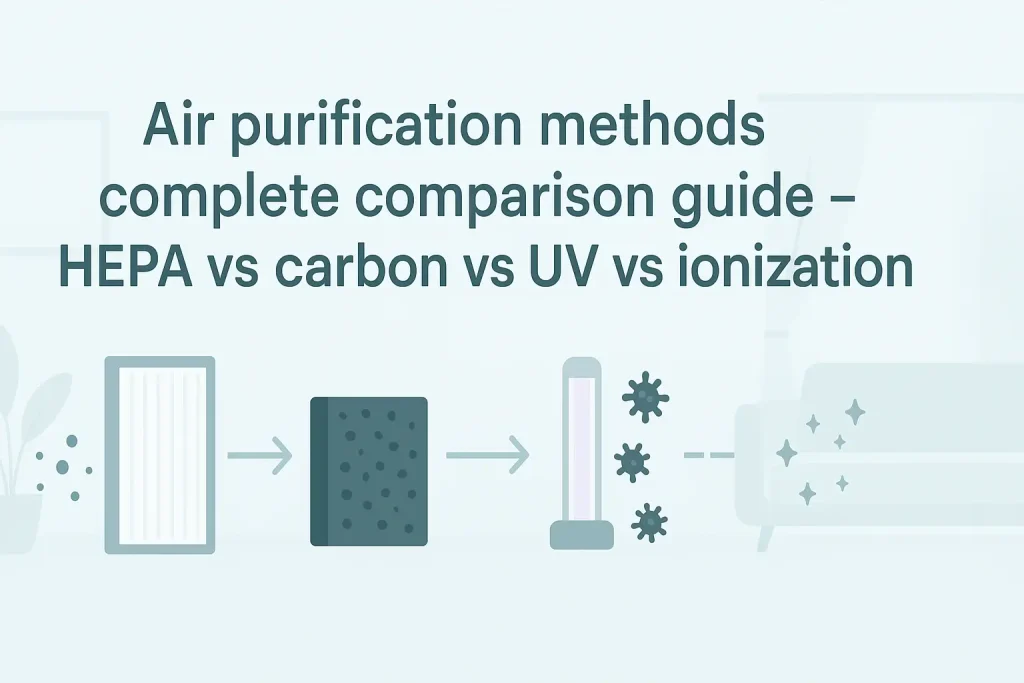
Safety for babies means avoiding any device that adds something to the air. This rules out ozone generators entirely and places strict limits on ionizers and UV-C devices that may produce ozone as a byproduct.
The California Air Resources Board (CARB) sets the strictest consumer air cleaner ozone limit in the United States at 0.050 parts per million. Any purifier in a nursery must carry CARB certification, confirming it stays below this threshold under all operating conditions.
For pets, safety includes physical considerations beyond air quality. A curious cat or dog may knock over a lightweight purifier, chew a power cord, or investigate a warm running fan.
Units with wide, stable bases, cord management options, and intake grilles too small for paws or noses are the safest choices in pet-inhabited rooms. Wall-mountable purifiers eliminate the tipping risk entirely. You can find detailed guidance on placement and sizing in our complete nursery and children’s room air purification guide.
Quick Reference
Air Purifier Terms Explained for Parents and Pet Owners
Definitions for every technical term used in this guide.
A filter standard requiring capture of at least 99.97% of airborne particles at 0.3 microns. Distinct from HEPA-type or HEPA-like filters, which are unregulated marketing terms.
A standardized metric measuring the volume of filtered air an air purifier delivers per minute, in cubic feet per minute (CFM). Certified separately for smoke, dust, and pollen by AHAM.
The number of times per hour an air purifier processes the entire volume of air in a room. Nurseries should target 5 ACH for optimal infant air quality.
California Air Resources Board certification confirming an air cleaner emits no more than 0.050 ppm ozone. Mandatory for any purifier placed in a nursery or around pets.
Fine particulate matter with diameter of 2.5 microns or smaller. The primary health-hazardous component of wildfire smoke and traffic pollution. Linked to respiratory issues in infants.
Asthma and Allergy Foundation of America certification confirming a product is suitable for people with asthma and allergies. Requires True HEPA filtration and no harmful ozone emission.
A filter stage using porous activated carbon to adsorb gaseous pollutants including VOCs, pet odors, and some chemical fumes. Does not remove particles: works in combination with True HEPA.
A device that releases charged ions to make particles fall to surfaces. Does not remove particles from the room. Some ionizers produce trace ozone. Should be disabled or avoided in nurseries.
Which Air Purifier Technologies Should Parents and Pet Owners Avoid?
Ozone generators are the most dangerous air cleaning devices for any occupied space, and they are absolutely unacceptable in nurseries or homes with pets. These devices intentionally produce ozone gas at concentrations far above the 0.050 ppm CARB safety limit.
Ozone is a respiratory irritant that can trigger asthma attacks, cause lung tissue inflammation, and worsen existing respiratory conditions. According to the EPA, ozone concentrations high enough to kill airborne bacteria are also high enough to damage human respiratory tissue.
Ionizers and electrostatic precipitators present a secondary concern. While many modern ionizers produce ozone below the CARB threshold, they work by charging particles so they drop out of the air and onto surfaces: your floor, your baby’s crib rail, your pet’s bedding.
Those particles are not removed from the room. They are redistributed to surfaces where a crawling infant or a pet that licks floors can encounter them directly. For this reason, ionizers should be disabled in nurseries and pet areas, even on units that carry CARB certification.
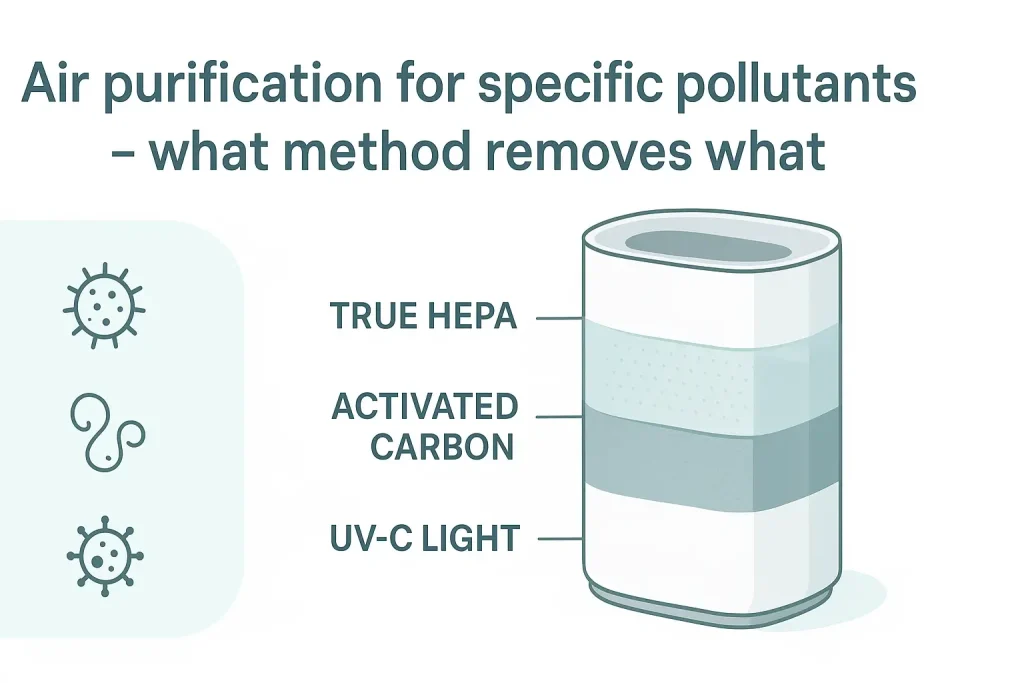
UV-C light air purifiers require careful evaluation. UV-C technology is effective at inactivating bacteria, viruses, and mold spores when exposure time and intensity are sufficient. The safety concern is that some UV-C lamps produce ozone as a byproduct of the wavelength used.
If you choose a UV-C equipped purifier for a nursery, confirm it uses a 254-nanometer wavelength (which produces minimal ozone) rather than 185-nanometer (which produces significant ozone). Also confirm the UV-C lamp is fully enclosed within the unit housing with zero light leakage, as direct UV-C exposure damages eyes and skin.
A True HEPA air purifier with CARB certification avoids all of these risks. It uses only mechanical filtration: a fan pulls air through a dense fiber mat that physically traps particles. Nothing is added to the air. Nothing is redistributed to surfaces. The trapped particles stay inside the filter until it is replaced.
How to Choose a Safe Air Purifier for a Nursery or Home with Pets
The right purifier for a nursery is not necessarily the most expensive one. It is the one that satisfies the specific safety, noise, and filtration requirements of a room where a baby sleeps and where pets may enter.
Start with certification. The unit must carry CARB certification confirming ozone output below 0.050 ppm. Look for the CARB compliance label or check the CARB certified air cleaner list before purchasing any unit for a nursery.
Next, verify the filtration stage. The purifier must use a True HEPA filter, not a HEPA-type or HEPA-like filter. True HEPA is a defined and tested standard. HEPA-type is an unregulated marketing term with no standardized efficiency guarantee and no independent verification.
The Levoit Core 300S is a good example of a compact True HEPA purifier with CARB certification that works well in nurseries under 200 square feet. Key Specifications: Filtration: True HEPA H13 plus activated carbon pre-filter. Smoke CADR: 145 CFM. Coverage: 219 sq ft at 2 ACH, 87 sq ft at 5 ACH. Sleep mode noise: 24 dB. CARB certified: Yes. Annual filter cost: approximately $25.
Noise level is non-negotiable for nurseries. The sleep mode must measure below 30 dB, which is roughly the sound level of a whisper or rustling leaves. Above 35 dB, the purifier may disrupt infant sleep cycles and mask sounds you need to hear as a parent.
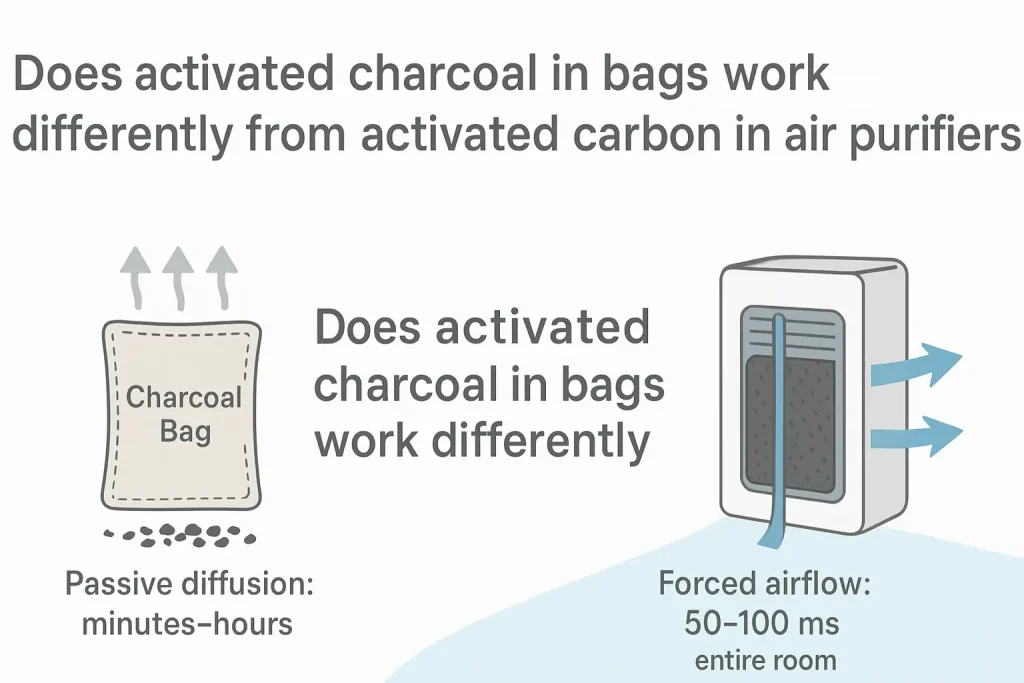
For pet owners, activated carbon filtration becomes equally important. Pet dander is a particle captured by True HEPA. Pet odor, however, is a gas-phase pollutant that passes straight through a HEPA filter. An activated carbon stage adsorbs these odor molecules.
The Winix 5500-2 combines True HEPA with an activated carbon filter and has an ionizer that can be completely disabled, making it a strong option for pet-inhabited nurseries. For renters with limited space, our guide on choosing a purifier for rental homes with limited space covers sizing strategies for smaller rooms.
Health Condition Guide
Find the Right Air Purifier for Your Nursery or Pet-Friendly Home
Select your primary concern and room size for a personalized filter type and CADR recommendation.
Top 5 Safest Air Purifiers for Nurseries and Homes with Pets
These five air purifiers meet the safety, noise, and filtration requirements for baby and pet environments. Every unit on this list is CARB certified, uses True HEPA filtration, and operates below 30 dB in sleep mode where applicable.
Use the table below to compare the key specifications side by side before making your decision.
Product Comparison
Safest Nursery and Pet Air Purifiers Compared
Key specs across top safe picks. CADR from AHAM certified database. Coverage at 5 ACH calculated as smoke CADR x 12 / 5.
| Model | Smoke CADR | Sleep dB | Filter Cost/yr | CARB | Best For |
|---|---|---|---|---|---|
| Levoit Core 300S | 145 CFM | 24 dB | $25/yr | Yes | Small nursery under 150 sq ft |
| Coway AP-1512HH | 246 CFM | 30 dB | $30/yr | Yes | Medium nursery plus pets |
| RabbitAir MinusA2 | 200 CFM | 20 dB | $70/yr | Yes | Wall-mount nursery, quietest |
| Levoit Core 400S | 260 CFM | 24 dB | $35/yr | Yes | Large nursery, open bedroom |
| Coway Airmega 400 | 400 CFM | 22 dB | $60/yr | Yes | Large nursery, pet-heavy home |
CADR data from AHAM certified database. Filter costs are estimates based on genuine replacement filters at standard replacement intervals. Sleep mode dB from manufacturer specifications at lowest fan speed. CARB certification status verified against CARB certified air cleaner list.
The Coway AP-1512HH Mighty offers the best balance of CADR, noise, and price for most nurseries. Key Specifications: Filtration: True HEPA plus activated carbon pre-filter plus ionizer (must be disabled). Smoke CADR: 246 CFM. Coverage: 360 sq ft at 2 ACH, 144 sq ft at 5 ACH. Sleep mode: 30 dB. Annual filter cost: approximately $30. CARB certified: Yes. AAFA certified: Yes.
For wall-mountable safety where a curious pet or toddler cannot reach the unit, the RabbitAir MinusA2 is the top choice. Key Specifications: Filtration: True HEPA plus activated carbon, customizable filter panels. Smoke CADR: 200 CFM. Coverage: 300 sq ft at 2 ACH, 120 sq ft at 5 ACH. Sleep mode: 20 dB (quietest on this list). Annual filter cost: approximately $70. CARB certified: Yes. AAFA certified: Yes.
If your nursery shares a home with pets, the Coway Airmega 400 provides the highest CADR in a pet-safe, stable base design. The washable pre-filter captures visible pet hair before it reaches the HEPA stage, extending filter life. For homes with multiple pollutant sources such as renovation dust or VOCs alongside pet concerns, our guide on air purifiers for renovation off-gassing and chemical removal covers units with enhanced activated carbon capacity.
What Is the Right CADR and Room Coverage for a Nursery?
The CADR you need depends on your nursery size and your target air changes per hour. Most manufacturers state coverage area at 2 ACH, which means the purifier processes the room’s entire air volume twice per hour.
For a nursery, 2 ACH is insufficient. Infants breathe faster than adults relative to their body weight, taking in more air per pound. Their respiratory and immune systems are still developing. Target 5 ACH for any room where a baby sleeps.
At 5 ACH, the effective coverage area shrinks to 40% of the manufacturer’s stated figure. A purifier claiming 300 square feet of coverage at 2 ACH covers only 120 square feet at 5 ACH. This is the most common sizing mistake parents make: the coverage number on the box assumes the lowest acceptable air cleaning rate.
The formula is straightforward: required CADR equals room length times room width times ceiling height times ACH target, all divided by 60. For a standard 10-by-12-foot nursery with 8-foot ceilings and a 5 ACH target, you need a smoke CADR of at least 80 CFM.
CADR Calculator
How Much CADR Does Your Nursery Actually Need?
Enter your nursery dimensions. For infant rooms, always use the 5 ACH setting. Formula: (length x width x ceiling height x ACH) divided by 60. Source: AHAM methodology.
CADR = (length x width x ceiling height x ACH) / 60. For nurseries and infant rooms, always calculate at 5 ACH — not the manufacturer-stated 2 ACH figure. Infants need cleaner air than the standard adult recommendation.
| Nursery Size | CADR at 2 ACH | CADR at 5 ACH (nursery) | Safe Unit Picks |
|---|---|---|---|
| 100 sq ft nursery | 27 CFM | 67 CFM | Levoit Core 300S |
| 150 sq ft nursery | 40 CFM | 100 CFM | Coway AP-1512HH, RabbitAir MinusA2 |
| 200 sq ft nursery | 53 CFM | 133 CFM | Levoit Core 400S, Winix 5500-2 |
| 300 sq ft nursery | 80 CFM | 200 CFM | Coway Airmega 400, Blueair 605 |
| 400 sq ft open nursery | 107 CFM | 267 CFM | Coway Airmega 400 or two smaller units |
Where Should You Place an Air Purifier in a Nursery or Pet-Friendly Home?
Placement directly affects how much clean air reaches your baby. An air purifier in the corner of a nursery loses 20 to 30 percent of its effective coverage compared to central placement, because restricted airflow reduces the volume of air the unit can actually process per hour.
Position the purifier at least 12 inches from any wall, and ideally near the center of the room. If central placement is not practical due to furniture layout, place it along a wall with at least 2 feet of clearance on all intake and exhaust sides.
Never place an air purifier directly next to the crib. The gentle airflow from even the quietest unit can create a draft that disturbs an infant’s temperature regulation. Position the unit at least 4 to 6 feet from the crib, aimed so the clean air output points toward the crib area without blowing directly on the baby.
For pet safety, place the purifier on a surface the pet cannot access, or choose a wall-mountable model. A lightweight purifier on a nightstand can be knocked over by a jumping cat. Power cords should be secured with cord covers or run behind furniture where pets cannot chew them.
In homes where pets and babies share space, consider running a second purifier in the main living area. Pet dander travels on air currents throughout the home. A single nursery purifier cannot protect against dander that enters the room whenever the door opens. Our guide to air purifiers in dining rooms and shared spaces covers multi-unit strategies for open floor plans.
Common Mistakes Parents and Pet Owners Make with Air Purifiers
The most frequent mistake is assuming the manufacturer’s coverage area applies to nursery-level air quality needs. It does not. The stated coverage uses 2 ACH, which is the minimum standard for general air cleaning, not the 5 ACH recommended for infant respiratory protection.
Sizing a purifier to 2 ACH in a nursery means PM2.5 concentrations remain 40 to 60 percent higher than they would be with a properly sized 5 ACH unit. This happens because the purifier processes room air only twice per hour instead of five times, leaving more unfiltered air in the breathing zone for longer periods.
The second mistake is forgetting to disable or avoid ionizers. Many popular purifiers, including the otherwise excellent Winix 5500-2 and Coway AP-1512HH, include an ionizer function that can be turned on by default or accidentally. Check the unit when first installed and confirm the ionizer is set to off.
A third mistake specific to pet owners is running the purifier on too low a fan speed. Pet dander is heavier than fine PM2.5 particles and settles more quickly. Low fan speeds may not generate enough airflow to capture dander before it settles onto floors and furniture where a baby crawls.
For pet-heavy homes, run the purifier on medium or high fan speed during the day when dander is actively being shed and stirred up. Switch to sleep mode at night when dander generation is lower and the baby is sleeping. A guide on whether air purifiers reduce dust settling on furniture explains the relationship between fan speed, particle size, and settling rates.
Another common mistake is not replacing filters on schedule. A loaded filter not only loses efficiency but can become a source of microbial growth if left in place for too long in humid environments. Set a recurring reminder for filter replacement based on the manufacturer’s recommended interval and your actual usage hours.
How Does Activated Carbon Help with Pet Odors and Nursery Air Quality?
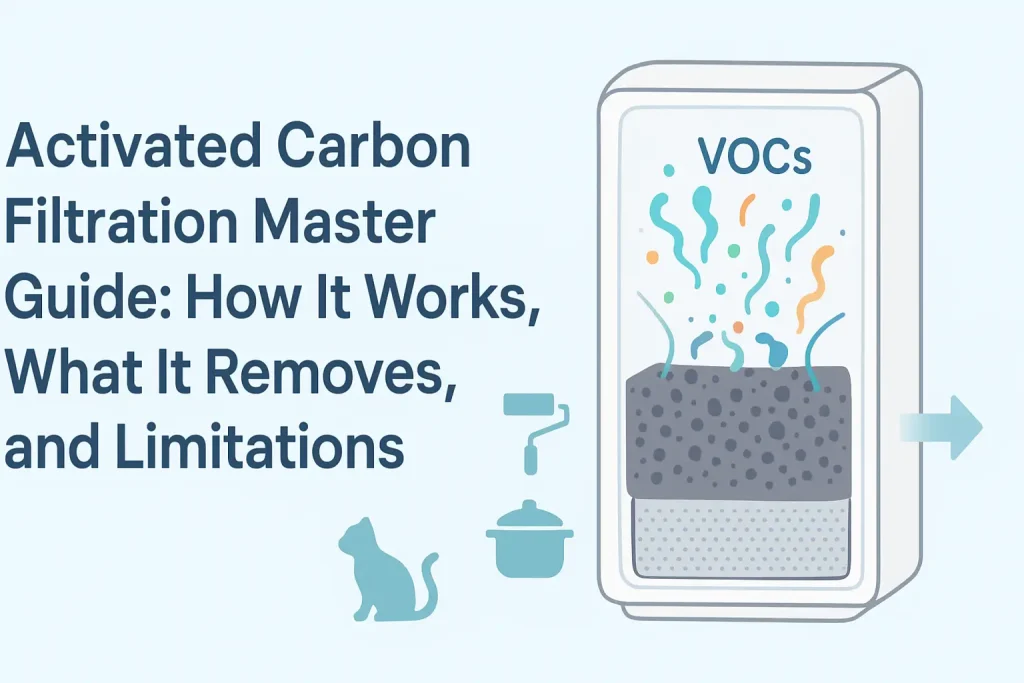
Activated carbon removes gaseous pollutants including pet odors, volatile organic compounds from nursery furniture and paint, and cooking fumes that drift into shared spaces. This happens because activated carbon has an enormous internal surface area, up to 1,000 square meters per gram, that traps gas molecules through a physical process called adsorption.
This only occurs when the carbon bed has sufficient weight and dwell time. Units with less than 1 pound of carbon offer limited odor removal because the gas molecules pass through too quickly to be captured. For meaningful pet odor control, look for purifiers with at least 2 pounds of activated carbon.
If the carbon stage is too small, the result is poor odor reduction despite the unit appearing to function correctly. Fix it by choosing a unit with a carbon weight specification listed in the product details, not just a generic activated carbon label. The guide on the best air purifiers for VOCs and chemical off-gassing explains carbon weight requirements and filter replacement intervals for gas-phase filtration.
For nurseries with new furniture, fresh paint, or recently installed carpet, activated carbon is not optional. New furnishings off-gas formaldehyde and other VOCs at the highest rates during the first six months, the same period when an infant spends the most time in the nursery.
Are Air Purifiers with UV-C Lights Safe for Babies and Pets?
UV-C light can inactivate bacteria, viruses, and mold spores when the exposure time and intensity are sufficient. The safety question is whether the UV-C lamp produces ozone as a byproduct and whether any UV light escapes the housing.
UV-C at 254 nanometers produces minimal ozone. UV-C at 185 nanometers produces significant ozone as a byproduct of the shorter wavelength interacting with oxygen molecules in the air. A nursery-safe UV-C purifier must use the 254-nanometer wavelength and carry CARB certification confirming ozone output below 0.050 ppm.
Even with ozone-safe UV-C, the lamp must be fully enclosed. Direct UV-C exposure causes skin burns and eye damage within seconds of exposure. Pets are especially vulnerable because they may investigate the source of the unfamiliar glow. Only consider UV-C purifiers where the lamp is completely sealed inside the unit housing with no visible light escaping any seam or vent.
For most parents, a simpler True HEPA purifier without UV-C eliminates these concerns entirely. Mechanical filtration requires no wavelength validation, no lamp replacement schedule, and no risk of UV exposure. The simplest CARB-certified True HEPA purifier with no ionizer and no UV-C is often the safest choice for a nursery.
Myth vs Fact
Air Purifier Safety Myths for Babies and Pets – Debunked
Separating fact from fiction on the most common nursery and pet air purifier misconceptions. Sources: EPA, CARB, AHAM, American Lung Association.
✗ Myth
All air purifiers marketed for nurseries are safe for babies.
✓ Fact
Marketing labels like nursery-safe or baby-friendly are not regulated terms. Only CARB certification (ozone below 0.050 ppm) and True HEPA filtration (99.97% at 0.3 microns) are independently verified safety standards. Always check for the CARB label, not the marketing language.
✗ Myth
Ionizers are safe for nurseries if they have CARB certification.
✓ Fact
CARB certification only verifies ozone output, not particle removal method. Ionizers do not remove particles from the room; they charge particles so they fall to surfaces including crib rails and floors. A crawling infant encounters these settled particles directly. Disable ionizers in nurseries regardless of CARB status.
✗ Myth
A purifier rated for 300 square feet will effectively clean any 300-square-foot nursery.
✓ Fact
Manufacturer coverage claims use 2 ACH, the minimum standard. For infant respiratory protection at 5 ACH, the effective coverage drops to 40% of the stated figure. A 300-square-foot rating at 2 ACH becomes 120 square feet of effective coverage at nursery ACH rates.
✗ Myth
Any True HEPA purifier will remove pet odors from a room.
✓ Fact
True HEPA captures particles only. Pet odors are gas-phase molecules that pass straight through HEPA media. An activated carbon stage with at least 2 pounds of carbon is required for meaningful odor removal. A purifier without carbon will reduce dander but leave the room smelling like pets.
✗ Myth
Running an air purifier on the lowest fan speed is best for a sleeping baby.
✓ Fact
Low fan speeds reduce CADR proportionally. A purifier delivering 200 CFM on high may deliver only 60 CFM on low, turning a 5 ACH room into a 1.5 ACH room. Run the purifier on medium or high speed for 30 minutes before sleep to clean the room, then switch to sleep mode for the night.
Can I Run an Air Purifier 24/7 in a Nursery with Pets in the Home?
Yes. Running a CARB-certified True HEPA air purifier continuously in a nursery is the recommended operating pattern. Indoor air quality fluctuates constantly: cooking emissions enter from the kitchen, outdoor PM2.5 infiltrates through window seals, and pet dander recirculates whenever air moves through the home.
Continuous operation ensures the air in the nursery stays at a consistently low particle concentration rather than cycling between clean and contaminated states. ENERGY STAR certified purifiers consume approximately 40 watts or less at medium speed, costing roughly $4 per month in electricity at the national average rate of 13 cents per kilowatt-hour when run 24 hours daily.
The filter replacement interval shortens with continuous use. A filter rated for six months at eight hours daily use will last approximately two months at 24-hour operation. Budget for this accelerated replacement schedule rather than extending filter life beyond its rated capacity, which reduces both airflow and filtration efficiency.
What Is the Difference Between HEPA and True HEPA When It Comes to Nursery Safety?
True HEPA is a defined and tested standard. A True HEPA filter must capture at least 99.97 percent of airborne particles at the hardest-to-capture 0.3-micron size, verified through independent testing per IEST standards. This applies to H13 grade HEPA and above.
HEPA-type, HEPA-like, HEPA-style, and 99% HEPA are unregulated marketing terms with no standardized test methodology and no independent verification requirement. A HEPA-type filter may capture anywhere from 85 to 99 percent of particles at 0.3 microns, and the manufacturer is not required to disclose the actual efficiency or the test conditions.
For a nursery, this gap matters. A True HEPA filter capturing 99.97 percent of particles lets 3 particles through for every 10,000 in the air. A HEPA-type filter at 95 percent efficiency lets 500 particles through from the same 10,000. Over hours of continuous operation in a closed room, this difference compounds into meaningfully different air quality for developing lungs.
Why Does My Air Purifier Smell Like Ozone After Running in the Nursery?
A smell similar to the fresh scent after a thunderstorm, described as sharp or metallic, indicates ozone generation above safe levels. This is not clean air. It is a respiratory irritant being released into your baby’s breathing space.
Stop using the purifier immediately. Check whether the unit has an ionizer or UV-C lamp that is enabled. If these features can be turned off, disable them and run the unit in a ventilated space for several hours before returning it to the nursery. If the smell persists with all ionization and UV features disabled, the unit is producing ozone through other means and should not be used in any occupied room.
CARB certification means the unit was tested and confirmed to produce less than 0.050 ppm ozone under standard operating conditions. If a CARB-certified unit develops an ozone smell, it may have a manufacturing defect or damage. Contact the manufacturer and replace the unit if the issue cannot be resolved.
Are Air Purifiers with Night Lights Safe for Infant Sleep Routines?
Many air purifiers now include integrated night lights, and these are generally safe for nurseries as long as the light is dimmable or can be turned off independently of the fan. A soft amber or red night light does not suppress melatonin production the way blue or white light does.
The purifier’s noise level is more important than the light feature. Infants are sensitive to sound during sleep transitions. A purifier that emits a consistent, low-decibel white noise at 24 to 30 dB can actually support sleep by masking unpredictable household sounds. Choose a unit with a true sleep mode that dims or extinguishes all display lights and drops the fan to its quietest speed.
Do I Need a Separate Air Purifier for the Nursery and the Pet Area?
One correctly sized purifier in the nursery provides adequate protection if the nursery door stays closed. If the door is open, pet dander and household particles enter freely, and the nursery purifier must process air from a larger effective volume than its rated coverage.
For open-door nurseries in pet-heavy homes, two strategies work. Either size the nursery purifier for the combined open space, or run a second purifier in the main pet area to reduce the dander load entering the nursery. A guide to air purifiers for studio apartments and open spaces provides sizing methodology for multi-room air cleaning with a single unit.
For homes with multiple pets, a dedicated purifier near the litter box, dog bed, or primary pet resting area reduces the total dander and odor load throughout the home. The nursery purifier then only needs to handle its own room volume rather than serving as the only filtration point for the entire house.
Can Air Purifiers Help Reduce Pet Allergens That Settle on Crib Bedding?
Air purifiers reduce airborne pet allergens but do not remove allergens already settled on surfaces. Pet dander particles that have already landed on crib sheets, blankets, or stuffed animals remain there until physically removed through laundering or vacuuming with a HEPA-equipped vacuum.
Running an air purifier continuously in the nursery reduces the rate at which new dander settles on surfaces by capturing particles before they land. Combine air purification with weekly washing of all crib bedding in hot water at 130 degrees Fahrenheit or higher to remove accumulated allergens. A PM2.5 air quality monitor placed in the nursery lets you track particle levels before and after running the purifier, confirming the reduction in real time.
What Went Wrong When My Air Purifier Made My Baby’s Room Smell Worse?
A purifier that makes the room smell worse has a saturated activated carbon filter that is releasing previously adsorbed gases back into the air. Activated carbon has a finite adsorption capacity. When it reaches saturation, it can desorb, or release, the trapped chemicals, especially when humidity levels rise.
Replace the carbon filter immediately. Do not attempt to regenerate it by placing it in sunlight; this does not reliably restore adsorption capacity in consumer-grade carbon filters. Set a replacement schedule based on your actual usage, and shorten the interval if you notice any odor breakthrough before the scheduled replacement date.
How Do I Baby-Proof an Air Purifier’s Power Cord for Nursery Safety?
Secure the power cord along the baseboard using adhesive cord clips or a cord cover channel. Run the cord behind furniture wherever possible so it is not accessible from the floor. Never leave excess cord coiled on the floor where a crawling infant or a chewing pet can reach it.
For wall-mounted purifiers like the RabbitAir MinusA2, the cord can be routed directly behind the unit and down to an outlet positioned behind furniture. If the outlet is exposed, install a tamper-resistant outlet cover or a childproof outlet box that encloses both the plug and the receptacle. Standard plastic outlet plugs are a choking hazard if removed and are no longer recommended by child safety organizations.
Buying Guide
Before You Buy an Air Purifier for a Nursery or Pet Home – Complete Checklist
Check off each point before making your decision. Based on CARB, EPA, and AHAM safety guidance for infant and pet environments.
What Is the Safest Filter Type for a Nursery with Both a Baby and a Cat?
The safest and most effective combination for a nursery shared with a cat is True HEPA plus a substantial activated carbon filter, with no ionizer and no UV-C stage. True HEPA captures cat dander particles and the fine particulates that carry Fel d 1, the primary cat allergen protein.
Activated carbon adsorbs the gaseous odor compounds from litter boxes and general pet scent. The carbon weight should be at least 2 pounds for a nursery-sized room, as lighter carbon loads saturate quickly and stop providing odor control within weeks rather than months.
Position the purifier where it can draw air from the direction of the litter box or cat bed while still directing clean air toward the crib area. Wash the pre-filter every two weeks to remove visible cat hair before it loads the HEPA stage and reduces airflow. A washable pre-filter designed for pet hair extends HEPA filter life by 30 to 50 percent in homes with shedding pets.
Can I Put an Air Purifier on the Same Circuit as a Baby Monitor Without Causing Interference?
Modern air purifiers and baby monitors operate on different technologies and a shared electrical circuit does not cause interference. Wireless baby monitors use radio frequencies, typically 2.4 GHz or DECT 1.9 GHz, which are unaffected by the electrical load of another device on the same power circuit.
Placement matters more than circuitry. Do not position the purifier directly between the baby monitor camera and the crib. The physical obstruction of the purifier body can block the camera’s view or the microphone’s audio pickup. Place the purifier to the side of the room, not in the direct line of sight between the monitor and the baby.
The purifier’s fan noise at sleep mode, typically 24 to 30 dB, is quiet enough that most baby monitors will still pick up infant sounds clearly. If the monitor has a voice-activated transmission mode, the constant low-level white noise from the purifier may keep the monitor in an active listening state rather than entering standby, slightly increasing the monitor’s power consumption but not affecting its function.
The safest air purifiers for babies and pets share three defining characteristics: CARB-certified zero-ozone operation, True HEPA mechanical filtration, and noise levels that support rather than disrupt infant sleep. No ionizer, no ozone generator, no unregulated HEPA-type filter meets all three standards simultaneously.
Choose a unit sized for your nursery at 5 ACH, not the manufacturer’s 2 ACH rating, and place it with adequate clearance from walls and at least 4 feet from the crib. Enable sleep mode at night. Replace filters on schedule. The result is measurably cleaner air where your baby breathes most: during the 12 to 16 hours infants spend sleeping every day.
For the full sizing calculation specific to your nursery dimensions, return to the CADR calculator above. For product recommendations matched to your specific health concerns and room size, use the health condition selector tool in the choosing section of this guide.