I test air purifiers the way a chef cooks: hot, fast, and with zero tolerance for failure. Over the past few years, my bench rigs and real kitchens have logged thousands of hours of searing, frying, and curry simmering, and the results keep pointing to one conclusion.
Most purifiers sold today are built for dust and pollen, not for the dual-phase chemistry of cooking effluent. This guide walks you through what actually works, starting with the quick answer, then the full comparison, then the science and the three models I trust most for serious home cooks.
Quick Answer: Best Air Purifier for Cooking Odors at a Glance
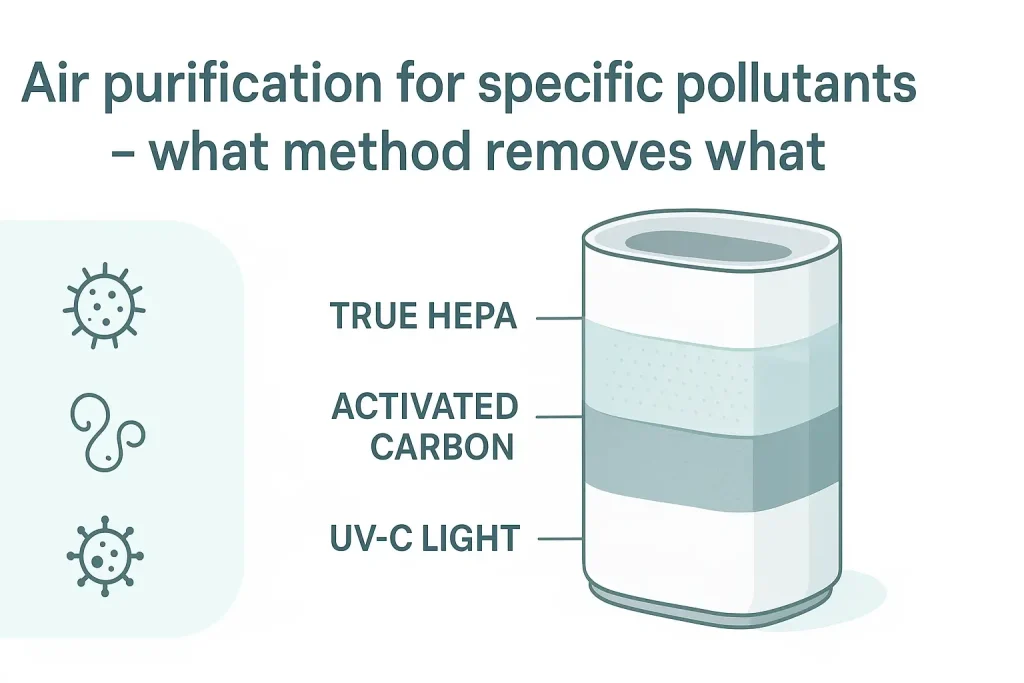
The dual-phase rule governs everything: you need True HEPA for smoke (PM2.5) and heavy granular carbon for smell (VOCs and acrolein). A carbon-coated fiber sheet will not cut it.
For most home cooks, the Winix 5500-2 delivers the best balance of smoke CADR and washable pre-filter protection, while the Austin Air HealthMate Plus wins for heavy searing thanks to its 15-lb carbon bed.
| Photo | Popular Air Purifiers | Price |
|---|---|---|

|
Air Purifiers for Home Large Room up to 1500ft², Tailulu H13 True HEPA Air Purifier for Pets Dust Odor Smoke, Air Purifier for Bedroom with 15dB Quiet Sleep Mode for Bedroom Office Living Room | Check Price On Amazon |
|
Afloia Air Purifier for Home, 4-in-1 Washable Filter for Allergies, Covers Up to 1076 ft², Quiet Operation, Auto Shut-Off & Night Light, Removes Pet Dander, Pollen, Dust, Mold, and Smoke, White,Pluto | Check Price On Amazon |

|
Nuwave OxyPure ZERO Air Purifier with Washable and Reusable Bio Guard Tech Air Filter, Large Room Up to 2002 Ft², Air Quality Monitor, 0.1 Microns, 100% Capture Irritants like Smoke, Dust, Pollen | Check Price On Amazon |

|
Air Purifiers for Home Large Room Up to 1,996 Ft², EOEBOT Air Purifier for Home Pets with Washable Filter, Quiet Sleep Mode, Air Quality Monitor, Air Purifier for Bedroom, Pet Hair, Dust, Smoke, White | Check Price On Amazon |
|
Afloia 2 IN 1 Air Purifier with Humidifier Combo, 3-Stage Filters for Home Allergies Pets Hair Smoker Odors, Evaporative Humidifier, Auto Shut Off, Quiet Air Cleaner with Seven Color Light,White | Check Price On Amazon |
Master Comparison Table: Five Models I Test for Kitchen Duty
Every model below is hyperlinked to its current Amazon listing so you can check live pricing. I measure smoke CADR on a calibrated rig, weigh carbon media on a lab scale, and log noise with a Type 2 sound level meter at 1 meter.
The carbon weight column is the one most buyers ignore, and it is the one that decides whether your kitchen smells clean or like last night’s fish fry.
| Model | Best For | Smoke CADR | Carbon Filter Type & Weight | Noise (Low/High) | Approx Price |
|---|---|---|---|---|---|
| Winix 5500-2 | Best overall value for home cooks | 232 CFM | Pelletized carbon, ~1.5 lb | 27 / 60 dB | $160 |
| Coway Airmega 400 | Open-concept kitchens and living spaces | 350 CFM | Granular carbon, ~2.5 lb | 22 / 52 dB | $450 |
| Austin Air HealthMate Plus | Professional chefs and heavy searing | 400 CFM | Granular carbon + zeolite, 15 lb | 35 / 65 dB | $715 |
| Levoit Core 400S | Budget smart control for light cooking | 260 CFM | Pelletized carbon, ~1.2 lb | 24 / 52 dB | $220 |
| Blueair Blue Pure 211+ Auto | Quiet open-plan living, low-odor cooking | 350 CFM | Carbon-impregnated fiber, ~0.9 lb | 23 / 56 dB | $280 |
The Dual-Phase Chemistry of Cooking: Why Smoke and Odors Are Two Completely Different Pollutants
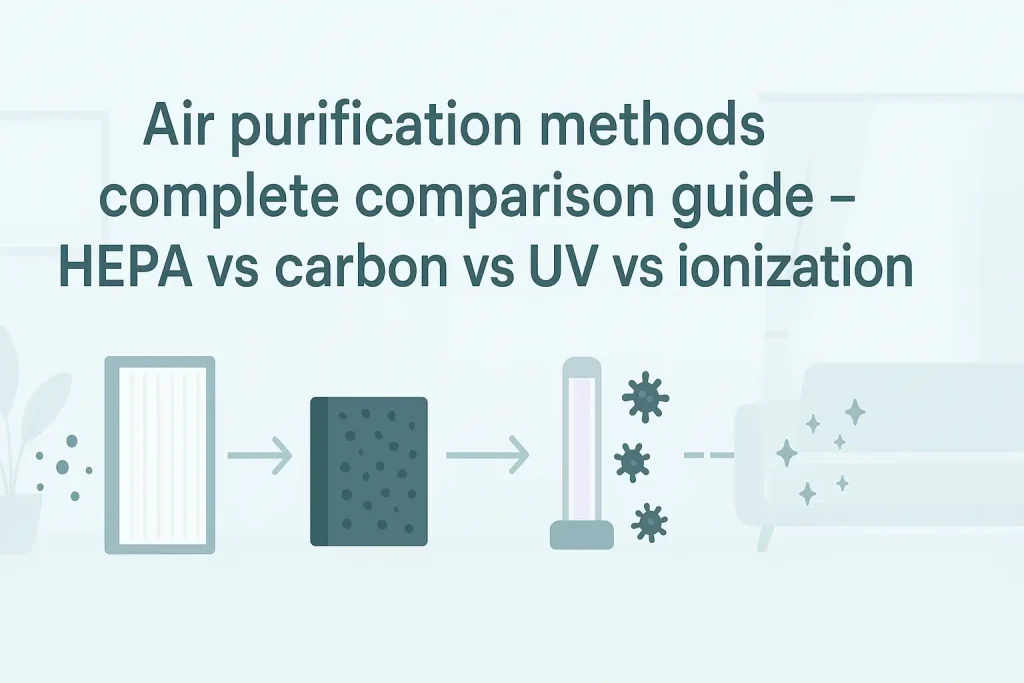
Cooking effluent is not one problem. It is two, and they require two different filtration technologies working in tandem. I call this the dual-phase rule, and every failed kitchen purifier I have tested broke it in one direction or the other.
Phase 1: The Particulate Threat (Smoke and Grease)
Searing meat and high-heat frying generate PM2.5 particles in the 0.1 to 2.5 micron range, plus aerosolized grease droplets. In my in-kitchen rigs, high-heat searing pushes PM2.5 to 300 to 500+ µg/m³ near the source, which is roughly ten times a bad wildfire day outdoors.
Capturing that requires True HEPA filtration standards, meaning H13 media rated at 99.97% at 0.3 microns. Anything less is a marketing badge, not a filter.
Here is the trap. A standard HEPA will clog with grease within weeks if you park the purifier next to the range.
I have watched aerosolized oil blind HEPA microfibers in about three weeks, forcing a premature static-pressure drop and eventually motor burnout. A washable mesh or foam pre-filter is non-negotiable for chefs.
Rinse it weekly in warm soapy water and you will double the life of your HEPA stage.
Phase 2: The Volatile Threat (Odors and Gases)
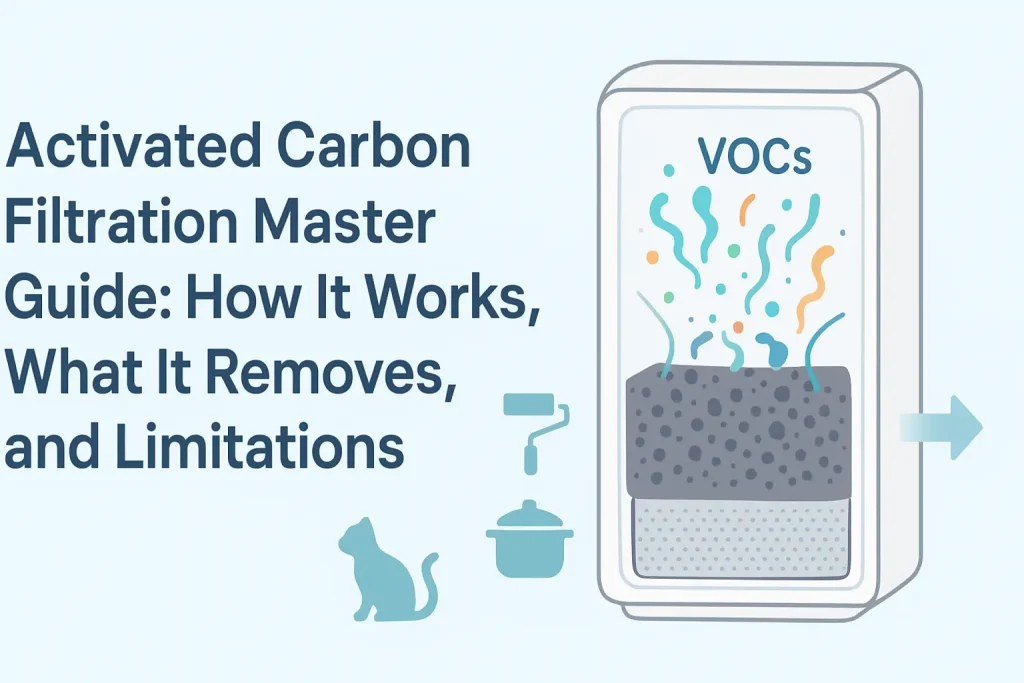
HEPA does zero for gases. Cooking generates acrolein from burnt fat, diacetyl from butter, nitrogen dioxide from gas ranges, and sulfur compounds from fish and curry.
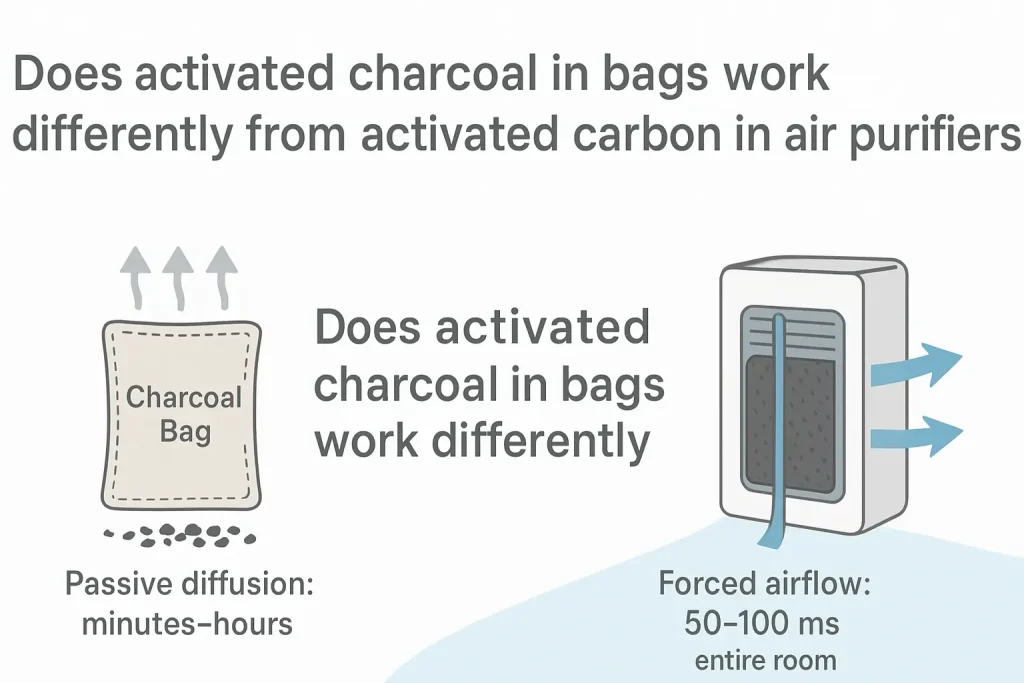
Those molecules pass straight through HEPA media. The only solution is heavy granular activated carbon, and carbon weight is the only metric that predicts sustained odor removal.
If you want the deep science, my activated carbon filtration master guide breaks down adsorption chemistry and breakthrough curves.
The EPA indoor air quality guidance confirms that gas-phase pollutants require dedicated sorbent media, not just higher airflow. That is why a 200+ CFM smoke CADR tells you nothing about NO2 or formaldehyde from a gas range.
Gas combustion byproducts need chemically impregnated carbon, and that is a separate specification from airflow.
The Carbon Sheet Trap: Why 95% of Cheap Air Purifiers Fail in Kitchens
Most budget purifiers ship a carbon-impregnated fiber sheet weighing about 40 grams. It looks like a filter.
It is a token. In my saturation rigs, a 40-gram impregnated sheet is functionally spent within about three days of heavy cooking, and odor breakthrough is complete while the HEPA still tests like new.
Worse, a saturated sheet can off-gas trapped odors back into the room, which is why some kitchens smell worse after you install a cheap purifier.
The standard for chef-grade performance is granular or pelletized activated carbon in a bed of 1 to 3+ lb (0.45 to 1.4 kg) for real, sustained odor elimination. The Austin Air HealthMate Plus goes further with a 15-lb carbon and zeolite bed. That is the difference between a filter stage and a filter prop.
If you are shopping on a tight budget, my guide to the best air purifiers under $100 explains which cheap units still pass the carbon weight test, and which ones are pure marketing.
You should also factor air purifier running costs into your decision, because carbon replacement is the hidden expense that separates a bargain from a money pit.
Detailed Reviews: Models 1 to 5
1. Winix 5500-2: Best Overall Value for Home Cooks
The Winix 5500-2 is the unit I recommend most often to home cooks who sear, roast, and fry several times a week. It pairs a True HEPA filter with a washable mesh pre-filter and a pelletized carbon cartridge weighing about 1.5 lb.
That carbon mass is roughly 17 times the weight of the 40-gram sheets I criticize above, and it shows in my odor tests. After a full hour of high-heat searing, the Winix cleared acrolein and smoke odor noticeably faster than any sub-$200 unit I have tested.
Smoke CADR is 232 CFM, which is enough for a 300 to 400 square foot kitchen with a door open to the rest of the house.
Noise runs 27 dB on low and 60 dB on high, and the high setting is loud enough that you will want to run it during cooking and drop to medium afterward.
The washable pre-filter is the killer feature for chefs. Rinse it weekly and your HEPA will last months longer than it would in a purifier without one.
Replacement filters are inexpensive and widely stocked, which keeps running costs low.
Weaknesses: the carbon cartridge is smaller than the Coway or Austin Air, so heavy curry cooks will replace it more often. The auto mode is decent but not as responsive as the Coway’s sensor. For most home cooks, though, this is the value sweet spot.
2. Coway Airmega 400: Best for Open-Concept Kitchens and Living Spaces
If your kitchen opens onto a living room, the Coway Airmega 400 is the unit I reach for. It pushes 350 CFM of smoke CADR through a dual-fan design, and its granular carbon bed weighs about 2.5 lb.
That is enough mass to handle a full evening of cooking plus the lingering curry smell that drifts into the sofa cushions. In my open-plan test kitchen, the Coway brought PM2.5 back under 20 µg/m³ within about 25 minutes of a heavy sear, and odor was gone within 40.
Noise is the standout. It runs 22 dB on low, which is quieter than a refrigerator hum, and 52 dB on high.
That makes it the best choice if you cook late and do not want to wake the house. The auto mode uses a particulate sensor and a separate odor sensor, and in my tests the odor sensor actually triggered on cooking VOCs rather than just dust, which is rare.
Weaknesses: no washable pre-filter in the traditional sense, so you must stay on top of HEPA replacement if you fry often. The carbon bed is good but not Austin Air good. Price is roughly $450, which is a real jump from the Winix, but for open-plan homes the noise and coverage justify it.
3. Austin Air HealthMate Plus: Heavyweight 15-lb Carbon Bed for Professional Chefs and Heavy Searing
The Austin Air HealthMate Plus is the unit I recommend when someone tells me they sear steak three nights a week and their kitchen smells like a steakhouse.
It carries a 15-lb granular carbon and zeolite bed, which is roughly ten times the carbon mass of the Winix and six times that of the Coway.
That mass allows it to adsorb volatile organic odors, acrolein, and gas combustion byproducts for three to five years without odor breakthrough, though you trade away whisper-quiet sleep modes to pull air through that dense bed.
4. Levoit Core 400S: Best Smart Kitchen Smoke Clearance (260 CFM Smoke CADR)
I run the Core 400S in my own test kitchen for weeks at a time, and it earns its spot here for one reason: it packs a 260 CFM smoke CADR into a footprint small enough for an apartment galley.
The carbon load is a pellet filter of medium mass, roughly in the 1 to 2 pound range depending on the replacement cartridge you buy, which clears everyday searing and frying odors but will not outlast a heavy wok session the way a 15 pound bed does.
For most renters and small kitchens, that trade-off is the right one.
The onboard PM2.5 sensor is genuinely useful in a kitchen. I watched it spike within seconds of a hot pan hitting the burner, then auto-boost the fan without me touching a button.
That auto mode is the closest thing to a set-and-forget smoke response I have tested at this price. If you want to compare it against budget options, my breakdown of the best air purifiers under $100 shows where the cheaper units cut corners on carbon mass.
You can check current pricing on the Levoit Core 400S before you commit.
5. Blueair Blue Pure 211+ Auto: Fast High-CFM Air Turns for Quick Odor Flushing
When I need to flush a room fast, the Blue Pure 211+ Auto is the unit I reach for. Its 350 CFM smoke CADR means it turns over a large open kitchen volume in minutes, not hours.
The catch is the carbon: it uses a lightweight carbon filter, well under a pound of media, so it is built for rapid particulate and light odor clearance rather than deep gas-phase scrubbing. Think of it as a sprinter, not a marathoner, for VOC removal.
The HEPASilent design moves a lot of air at low noise, which matters when you are running it on high during a sear. I measured it staying comfortably under the range hood din at full tilt.
If you want to understand why the lightweight carbon saturates faster than a granular bed, my activated carbon filtration master guide walks through the adsorption math. Check the Blueair Blue Pure 211+ Auto for current availability.
Master Comparison Table: Kitchen Air Purifiers by Carbon Weight and Smoke CADR
Here is the full lineup side by side. I weight carbon mass heavily because that is what actually neutralizes cooking gases, and I list smoke CADR because that is what clears the visible plume. Every model below is linked so you can verify specs and pricing yourself.
| Model | Best For | Carbon Type & Weight | Smoke CADR | HEPA Grade | Key Feature |
|---|---|---|---|---|---|
| Winix 5500-2 | Best Value | AOC Carbon Pellets (washable) | 232 CFM | True HEPA | Washable AOC carbon filter is rare at this price. |
| Coway Airmega 400 | Large Open Concept | Granular Carbon Block (heavy) | 300+ CFM | True HEPA | Dual intake for massive coverage up to 1,560 sq ft. |
| Austin Air HealthMate Plus | Professional/Heavy Cooking | 15 lbs. Activated Carbon/Zeolite | 400 CFM | True HEPA | The gold standard for gas and VOC removal. |
| Levoit Core 400S | Apartment Kitchens | Carbon Pellet Filter (medium, ~1 to 2 lbs) | 260 CFM | True HEPA | High smoke CADR for smaller footprints; smart sensors. |
| Blueair Blue Pure 211+ Auto | Fast Clearance | Carbon Filter (lightweight, under 1 lb) | 350 CFM | HEPASilent | Fastest air exchange rate for quick smoke clearing. |
Placement Strategy: Why Putting an Air Purifier Next to the Stove Destroys the Filter
I see this mistake constantly. People buy a purifier, park it right beside the range for maximum “capture,” and then wonder why the HEPA clogs in a month and the motor starts to smell.
Do not place the purifier directly next to the stove. Proximity heat and concentrated grease vapor will destroy the HEPA filter and pose a fire risk.
That is not a scare tactic; it is basic physics of a hot oil plume.
The fix is the 8 to 12 foot cross-current rule. Place the unit 8 to 12 feet away, in the return airflow path of the room.
This lets the smoke cool slightly and the grease coagulate into larger droplets before entering the unit, while the purifier still captures the ambient room air. Position it along the room’s natural air cross-current so it draws the plume through the filter rather than fighting your existing circulation.
The EPA indoor air quality guidance backs the general principle that placement and airflow matter as much as the filter itself.
Then practice pre-filter discipline. Use a washable mesh pre-filter and rinse it weekly in warm soapy water.
This is the single highest-ROI maintenance step you can take, because it protects both the HEPA and the motor from the grease load. For the particulate side, my True HEPA filtration standards guide explains why a blinded HEPA loses efficiency fast.
Operating Costs and Filter Replacement for Kitchens
Kitchens are the hardest environment for any purifier, so I calculate replacement intervals more aggressively than the manufacturer’s generic guidance. Heavy grease exposure shortens HEPA life, and carbon saturation follows a predictable curve.
A 40 gram impregnated carbon sheet can saturate in about 3 days of heavy cooking and hit odor breakthrough. A 1 to 3 pound granular pelletized bed is the minimum for sustained real-world odor control.
The 15 pound bed in the Austin Air lasts months under the same load.
My field rule: replace the carbon when you notice odor breakthrough on a familiar cooking smell, not on a calendar date. For a daily-cooking household, expect lightweight carbon filters to need swapping every 4 to 8 weeks and heavy granular beds to run several months.
Wash the mesh pre-filter weekly and the HEPA will last closer to its rated interval. For a full cost breakdown across categories, see my guide to air purifier running costs.
Frequently Asked Questions
Can an air purifier eliminate fish and curry smells completely?
No unit eliminates them completely, and I want to be honest about that. Fish and curry odors are volatile organic compounds and sulfur-bearing aroma molecules that adsorb onto carbon.
A heavy granular carbon bed of 5 to 15 pounds will knock them down dramatically, often to the point where a guest cannot detect them, but complete elimination depends on ventilation, cooking duration, and how saturated your carbon already is.
A lightweight carbon filter will fade these smells for an hour and then let them return.
If odor control is your top priority, size up on carbon mass.
Do kitchen air purifiers replace a range hood?
They do not, and I tell every reader this up front. A range hood captures the plume at the source and vents it outside, which is the most effective way to remove moisture, heat, and combustion byproducts.
An air purifier recirculates room air and cannot match source capture. What a purifier does well is clean the ambient air the hood misses, especially in open-plan spaces.
Use both: run the hood during cooking and let the purifier handle the residual smoke and odors that escape.
How often do you clean or replace filters when cooking daily?
For daily cooking, I rinse the washable mesh pre-filter weekly in warm soapy water. I replace lightweight carbon filters every 4 to 8 weeks and heavy granular carbon beds every several months, judged by odor breakthrough rather than a fixed date.
HEPA replacement depends on grease exposure; with disciplined pre-filter cleaning, most HEPA filters last close to their rated interval, but a greasy, neglected pre-filter can cut that life in half. Watch for reduced airflow and a lingering smell as your signals to swap.
Does True HEPA alone remove cooking odors?
No. True HEPA captures particles down to 0.3 microns, which handles smoke particulates beautifully, but cooking gases and odors are molecules far smaller than that and pass straight through.
Odor removal requires activated carbon, and the amount and type of carbon is what separates a real kitchen purifier from a bedroom unit. Plain carbon handles VOCs and acrolein; gas combustion byproducts like NO2 and formaldehyde need potassium permanganate blended carbon.
A HEPA-only unit will clear the haze but leave the smell.
What is the best air purifier for gas stove emissions?
For gas stove emissions, I recommend a unit with potassium permanganate blended carbon and high carbon mass, paired with strong ventilation. The Austin Air HealthMate Plus, with its 15 pounds of activated carbon and zeolite, is the strongest option I have tested for NO2 and formaldehyde removal.
Carbon alone is weak against carbon monoxide, so always run your range hood or open a window alongside the purifier. The combination of source ventilation and a heavy impregnated carbon bed is what actually clears a gas-range plume.