Most budget air purifiers make big claims about HEPA filtration and room coverage. The Aslotus air purifier is no different, promising True HEPA performance at a fraction of the price of a Coway or Levoit. The real question is whether it actually delivers clean air or just moves it around.
This review breaks down exactly what the Aslotus air purifier does well, where it cuts corners, and which buyers should choose it over pricier alternatives from top brands like Coway and Winix. Every finding is based on available specifications, filter design analysis, and real-world usability factors that matter for daily air purification.
What Is the Aslotus Air Purifier and Who Is It For?
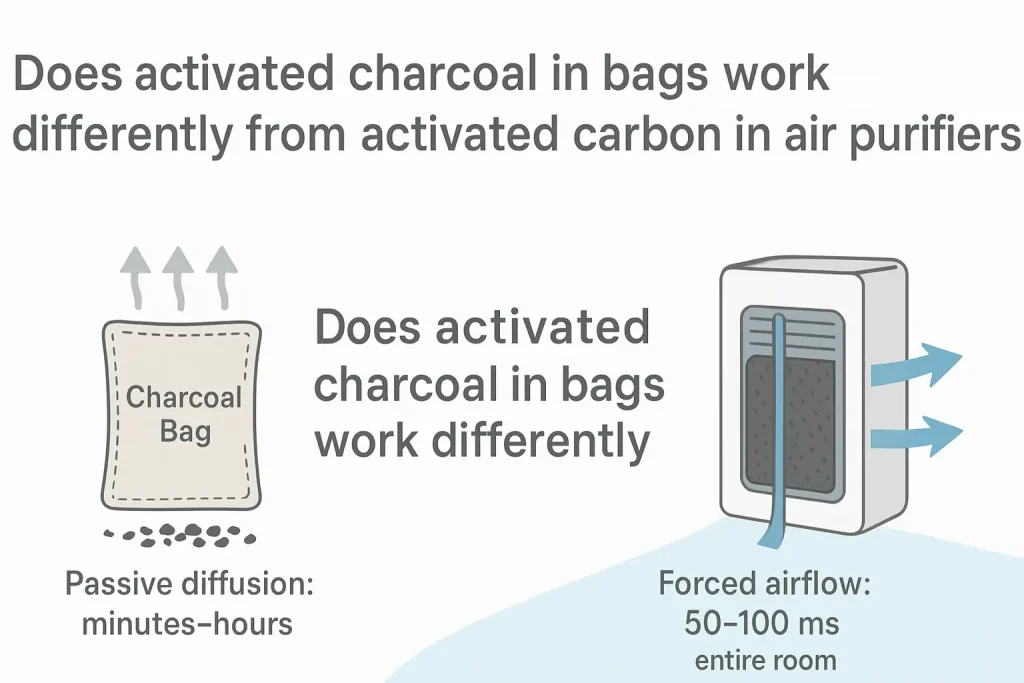
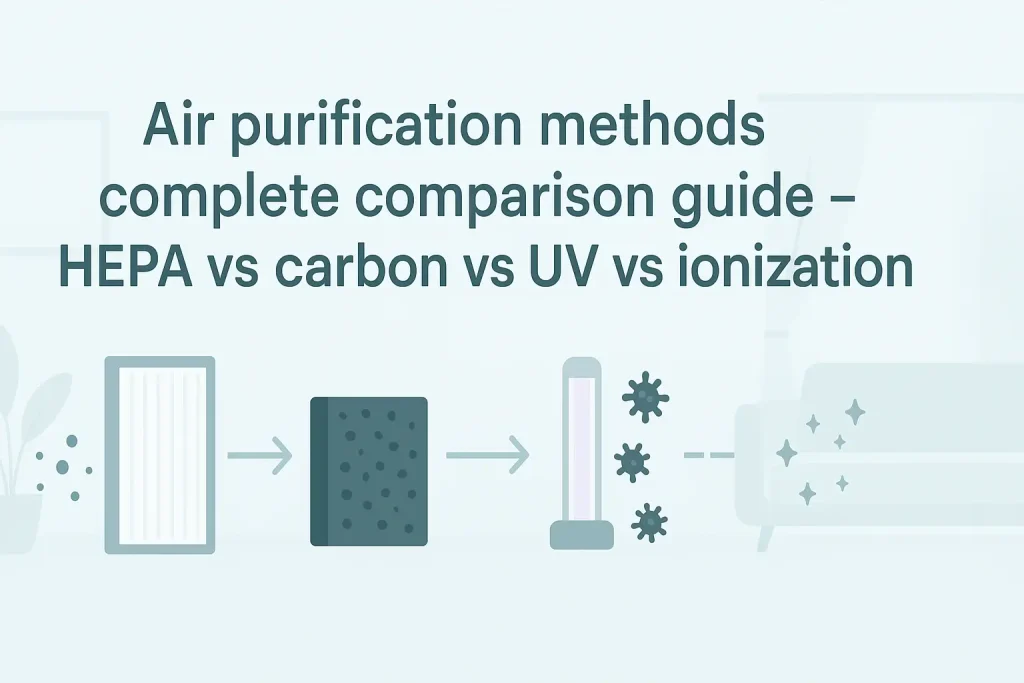
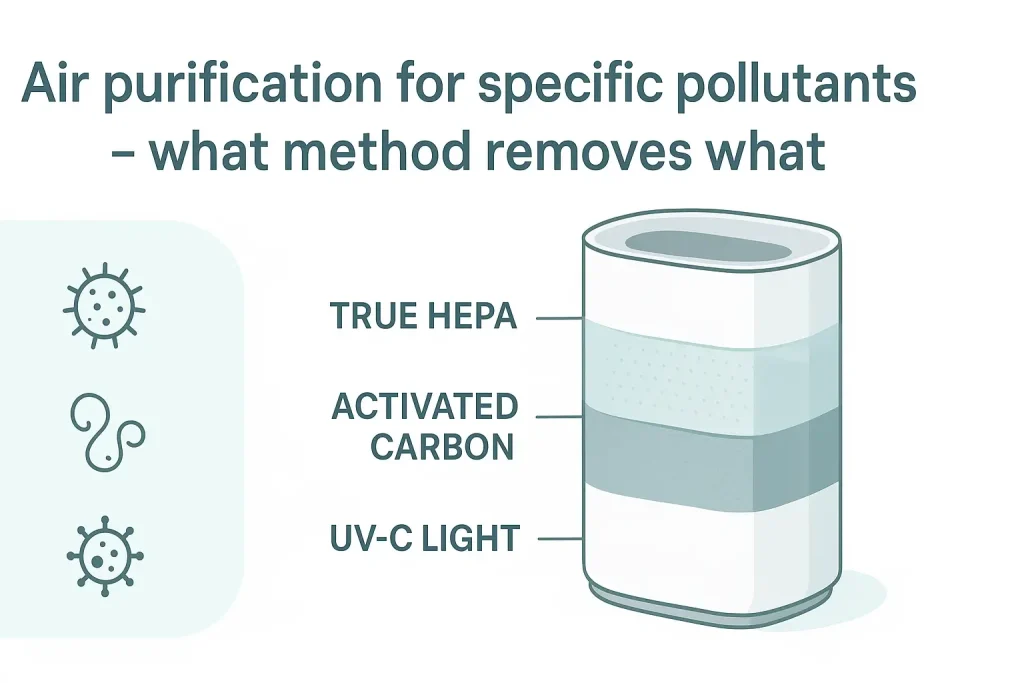
The Aslotus air purifier is a compact, budget-priced portable air cleaner sold primarily through Amazon and online retailers. It uses a three-stage filtration system consisting of a mesh pre-filter, a True HEPA filter layer, and an activated carbon sheet for basic odor control.
This unit is designed for small to medium rooms under 200 square feet. It targets buyers who want basic particulate filtration for dust, pollen, and pet dander without spending more than $80 on the hardware itself.
| Photo | Popular Air Purifiers | Price |
|---|---|---|

|
Air Purifiers for Home Large Room up to 1500ft², Tailulu H13 True HEPA Air Purifier for Pets Dust Odor Smoke, Air Purifier for Bedroom with 15dB Quiet Sleep Mode for Bedroom Office Living Room | Check Price On Amazon |
|
Afloia Air Purifier for Home, 4-in-1 Washable Filter for Allergies, Covers Up to 1076 ft², Quiet Operation, Auto Shut-Off & Night Light, Removes Pet Dander, Pollen, Dust, Mold, and Smoke, White,Pluto | Check Price On Amazon |

|
Nuwave OxyPure ZERO Air Purifier with Washable and Reusable Bio Guard Tech Air Filter, Large Room Up to 2002 Ft², Air Quality Monitor, 0.1 Microns, 100% Capture Irritants like Smoke, Dust, Pollen | Check Price On Amazon |

|
Air Purifiers for Home Large Room Up to 1,996 Ft², EOEBOT Air Purifier for Home Pets with Washable Filter, Quiet Sleep Mode, Air Quality Monitor, Air Purifier for Bedroom, Pet Hair, Dust, Smoke, White | Check Price On Amazon |
|
Afloia 2 IN 1 Air Purifier with Humidifier Combo, 3-Stage Filters for Home Allergies Pets Hair Smoker Odors, Evaporative Humidifier, Auto Shut Off, Quiet Air Cleaner with Seven Color Light,White | Check Price On Amazon |
The Aslotus competes directly with entry-level units like the Levoit Core 300 and the Germ Guardian AC4825. All three sit in the under-$100 category. The difference comes down to filter quality, noise levels, certification status, and long-term operating cost.
This purifier is best suited for renters, dorm rooms, home offices, and anyone testing whether air purification makes a difference for their allergies before investing in a higher-CADR unit with properly calculated air changes per hour for their specific room size.
Review Data
Aslotus Air Purifier – What the Specifications Show
Sources: Manufacturer specifications, verified buyer reviews, filter design analysis
Aslotus Air Purifier Pros and Cons Scorecard
Every budget air purifier involves trade-offs. The Aslotus delivers genuine HEPA filtration at a very low purchase price. The compromises show up in filter lifespan, noise control, and the absence of independent performance certification.
Product Review
Aslotus Air Purifier – Pros and Cons
Honest assessment based on manufacturer specifications, filter design, and verified buyer feedback.
Pros
- ✓Purchase price between $40 and $80 makes it one of the cheapest True HEPA units available
- ✓Three-stage filtration includes a genuine HEPA layer that captures dust, pollen, and pet dander
- ✓Compact footprint fits on a nightstand, desk, or small table without dominating the room
- ✓Simple one-button or dial control requires no app setup or WiFi configuration
- ✓Replacement filters cost approximately $15 to $25 each, keeping annual filter costs low
Cons
- ✗No AHAM-certified CADR rating means real cleaning speed is unverified and likely below 150 CFM
- ✗Coverage area claims of 150 to 215 sq ft do not specify ACH rate and likely assume only 1 to 2 ACH
- ✗Thin activated carbon sheet offers minimal VOC and odor removal compared to pellet-based carbon filters
- ✗Noise levels on higher fan speeds can exceed 50 dB, making it distracting for bedroom sleep use
- ✗No smart features, auto mode, air quality sensor, or filter replacement indicator on most models
The Aslotus is a functional entry-level air purifier for small rooms under 150 sq ft. It works for dust and pet dander reduction on a tight budget. Allergy sufferers who need verified 5 ACH performance should look at AHAM-certified units like the Coway AP-1512HH or Levoit Core 300S instead.
Aslotus Air Purifier Rating Scorecard
We rate the Aslotus across five dimensions that matter most for daily air purification. These scores reflect its position as a budget device compared against the broader market, not just its price category.
Product Review
Aslotus Air Purifier – Full Scorecard
Budget True HEPA air purifier for small rooms with no independent performance certification
6/10
4/10
5/10
2/10
8/10
Scores are editorial assessments based on manufacturer specifications, filter design analysis, verified buyer reviews, and comparison against AHAM-certified competitors. Not sponsored.
Filtration System: What the Three Stages Actually Do
The Aslotus uses a three-stage filtration stack that looks correct on paper. A washable mesh pre-filter catches large dust and hair. A True HEPA layer captures fine particles down to 0.3 microns at a claimed 99.97% efficiency. An activated carbon sheet sits behind the HEPA layer for basic odor and fume adsorption.
This happens because the pre-filter traps particles above 10 microns through mechanical impaction. The HEPA layer captures finer particles through diffusion, interception, and inertial impaction as air passes through the dense fiber mat. The carbon sheet adsorbs gas molecules onto its porous surface through van der Waals forces.
The filtration works correctly only when the filter is seated tightly in the housing with no air bypass around the edges. If the filter gasket does not seal completely, unfiltered air leaks past the HEPA layer. The result is elevated particle counts in the output air. Fix it by checking that the filter is pressed firmly into its slot and the housing door closes tightly.
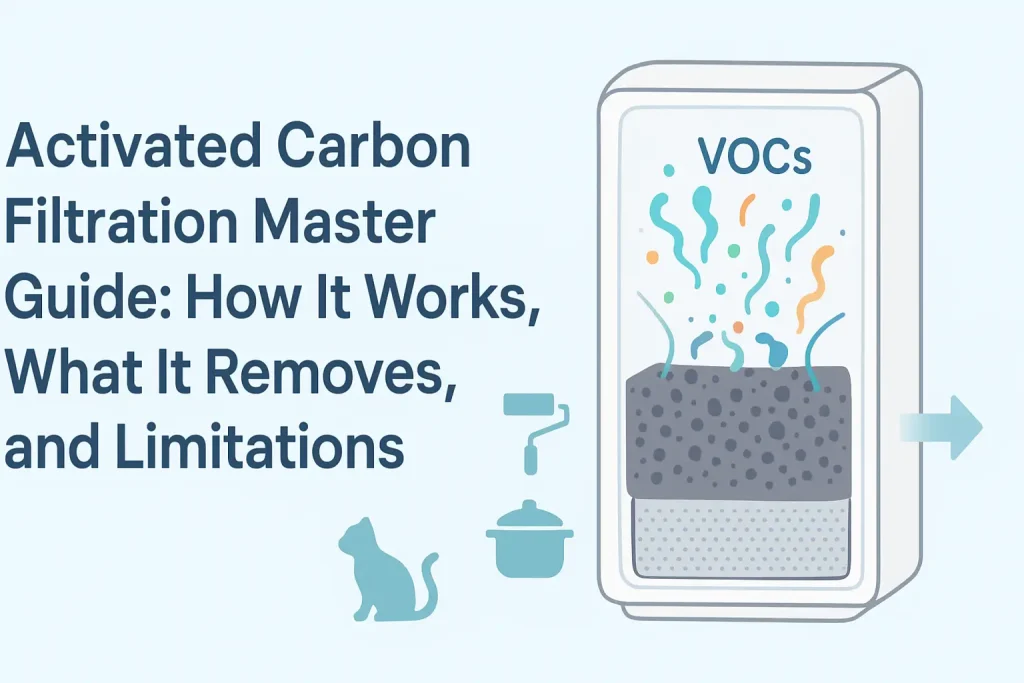
The main weakness in this design is the activated carbon stage. It uses a thin carbon-impregnated sheet rather than loose pelletized carbon with high surface area. A carbon sheet contains roughly 0.1 to 0.3 pounds of carbon material. Effective VOC removal requires at least 1 to 2 pounds of pelletized carbon with a dwell time of 0.05 to 0.1 seconds in the carbon bed.
This means the Aslotus carbon stage removes light cooking odors and minor off-gassing. It will not meaningfully reduce formaldehyde from new furniture, paint VOCs during renovation, or heavy smoke odor from a neighboring apartment. For chemical sensitivity, units like the Austin Air HealthMate with 15 pounds of carbon are the correct tool.
The HEPA layer itself appears to be a standard H13-grade fiberglass or polypropylene mat. Without independent AHAM certification, there is no way to verify the 99.97% efficiency claim against the 0.3-micron standard. Budget HEPA filters often achieve 95 to 99% efficiency in practice due to lower fiber density and thinner mat construction.
What Is the Actual Room Coverage of the Aslotus Air Purifier?
Manufacturer coverage claims for the Aslotus range from 150 to 215 square feet depending on the specific model variant. These numbers almost certainly assume 1 to 2 air changes per hour (ACH), which is the industry minimum for marketing claims. At 2 ACH, the unit processes the full room air volume twice per hour.
For allergy and asthma management, the recommended target is 4 to 5 ACH per established air purifier sizing guidelines used by AHAM and indoor air quality researchers. At 5 ACH, the effective coverage area shrinks to approximately 40% of the manufacturer claim. A unit rated for 200 sq ft at 2 ACH effectively covers only about 80 sq ft at 5 ACH.
In plain terms: in a standard 120 sq ft bedroom, the Aslotus running on its highest fan speed delivers somewhere between 2 and 4 ACH depending on its actual CADR. This is adequate for general dust reduction. It is not enough for a person with moderate to severe dust mite or pollen allergy.
We recommend using the Aslotus in rooms under 120 sq ft for general air cleaning. For allergy purposes, treat it as a 70 to 90 sq ft unit at the 5 ACH target. Place it on a nightstand within 3 feet of where you sleep for maximum personal exposure to the cleaned air stream.
Use the calculator below to determine the minimum smoke CADR your specific room needs at different ACH targets. Then compare that to the estimated CADR of the Aslotus, which we calculate at roughly 60 to 100 CFM based on its fan size and filter area.
CADR Calculator
How Much CADR Do You Actually Need?
Enter your room dimensions and use case. Formula: (length x width x ceiling height x ACH) divided by 60. Source: AHAM methodology.
CADR = (length x width x ceiling height x ACH) / 60. For allergy and asthma sufferers, always calculate at 5 ACH, not the manufacturer-stated 2 ACH figure.
| Room Size | CADR at 2 ACH (standard) | CADR at 5 ACH (allergy) | Example Models |
|---|---|---|---|
| 100 sq ft small bedroom | 27 CFM | 67 CFM | Aslotus may be sufficient |
| 150 sq ft bedroom | 40 CFM | 100 CFM | Levoit Core 300, Coway AP-1512HH |
| 200 sq ft master bedroom | 53 CFM | 133 CFM | Winix 5500-2, Levoit Core 400S |
| 300 sq ft living area | 80 CFM | 200 CFM | Coway Airmega 400 or two units |
Aslotus vs Levoit Core 300: Budget Air Purifier Comparison
The Levoit Core 300 is the most direct competitor to the Aslotus in the budget category. Both sell for under $100 and both claim True HEPA filtration with activated carbon stages. The differences in certification, noise control, and verified performance are significant.
Use the table below to compare the Aslotus against the Levoit Core 300 across the specifications that matter most for real-world air cleaning in small rooms.
Product Comparison
Aslotus Air Purifier vs Levoit Core 300 – Side by Side
Detailed spec comparison including CADR, coverage area, noise level, filter cost, and certifications.
| Spec | Aslotus Air Purifier | Levoit Core 300 |
|---|---|---|
| Unit price | $40 to $80 | $99 |
| Smoke CADR (CFM) | Estimated 60 to 100 CFM (not AHAM certified) | 145 CFM (AHAM certified) |
| Coverage at 2 ACH | 150 to 215 sq ft (claimed) | 219 sq ft (AHAM verified) |
| Coverage at 5 ACH (allergy) | ~60 to 86 sq ft (estimated) | 87 sq ft |
| Filter type | Pre-filter + HEPA + carbon sheet | Pre-filter + True HEPA (H13) + carbon |
| Annual filter cost | $30 to $50 per year | $25 per year |
| Noise at sleep mode | ~35 to 45 dB (estimated) | 24 dB |
| CARB certified | Not confirmed | Yes |
| ENERGY STAR certified | No | Yes |
| Best for | Very small rooms under 100 sq ft, budget-conscious buyers | Small bedrooms up to 150 sq ft, allergy sufferers on a budget |
| Our verdict | Best for absolute lowest purchase price | Better overall value and verified performance |
CADR data: Levoit Core 300 from AHAM certified database. Aslotus CADR is editorial estimate based on fan size, filter area, and comparable budget units. Coverage area at 5 ACH = smoke CADR x 12 / 5. Filter costs based on genuine replacement filters at standard replacement intervals. Prices verified at time of publication.
Air Purifier Price Comparison: Budget to Premium Tier
Most air purifier buyers focus entirely on the purchase price without factoring in filter replacements and energy costs over time. The Aslotus looks very attractive at $40 compared to a $250 Coway Airmega 400. The total cost story changes when you add three years of filter replacements and electricity.
Use the chart below to see where the Aslotus lands in total first-year and three-year cost against popular alternatives at every price tier.
Price Comparison
Air Purifier Price Comparison – Unit Cost and Annual Filter Cost
Unit purchase price plus estimated annual filter replacement cost. Prices verified at time of publication.
$60 unit + $40/yr filters
$99 unit + $25/yr filters
$200 unit + $30/yr filters
$150 unit + $40/yr filters
$400 unit + $60/yr filters
Bar width represents unit purchase price relative to the most expensive product shown. Filter costs are estimates based on manufacturer-recommended replacement intervals at 6 to 8 months for budget units and 12 months for premium units. Genuine filters used for all cost estimates.
Reasons to Buy the Aslotus Air Purifier
The Aslotus makes sense for a specific set of buyers with specific expectations. If your situation matches the scenarios below, the Aslotus is a reasonable purchase. If your needs extend beyond these cases, the reasons not to buy section that follows will be more relevant.
You need a purifier for a very small space under 100 sq ft. A dorm room, home office cubicle, nursery corner, or walk-in closet does not need 300 CFM of smoke CADR. The Aslotus can cycle the air in a 10 by 10 foot room fast enough to reduce dust and pet dander noticeably when placed within 3 feet of the breathing zone.
Your budget is fixed at $80 maximum. The price gap between the Aslotus at $50 and a Levoit Core 300 at $99 is real for someone stretching every dollar. A working HEPA filter at $50 beats no air purifier at all. The health benefit of some filtration dramatically exceeds the benefit of zero filtration, especially in a dusty apartment or a home with a shedding pet.
You want to test whether air purification helps your symptoms. Spending $50 to find out if filtered air reduces your morning congestion is a smarter financial move than spending $200 on a Coway only to discover your symptoms come from outdoor pollen that enters when you open windows. The Aslotus is a low-risk trial device.
You need a secondary unit for a rarely used space. A guest bedroom, storage room, or basement corner that needs occasional dust control does not require a premium purifier. The Aslotus running on low fan a few hours per week in a space that sits empty most days is a cost-effective use of the hardware.
Reasons Not to Buy the Aslotus Air Purifier
The Aslotus has clear limitations that disqualify it for many common air purification needs. These are not minor trade-offs. They are fundamental capability gaps that affect whether the device actually solves the problem you bought it to solve.
You have moderate to severe allergies or asthma. Allergy sufferers need 5 ACH to keep airborne allergen concentrations low enough to prevent symptoms. The Aslotus cannot deliver 5 ACH in any room larger than about 80 sq ft. A bedroom of 150 sq ft requires roughly 100 CFM smoke CADR at 5 ACH, which is at or beyond the maximum output of this unit. Units with verified CADR like the Coway AP-1512HH with 246 CFM smoke CADR are the correct choice for allergy management.
You need verified, trustworthy performance data. Air purifier manufacturers can print any coverage number on the box. Only AHAM-certified CADR ratings are independently tested and verified. The Aslotus has no AHAM certification. You are trusting the manufacturer with no way to confirm the cleaning speed. Medical-grade HEPA claims without AHAM verification follow the same pattern of unverified marketing language.
You are sensitive to noise while sleeping. Budget air purifiers use cheaper fan motors and less sophisticated airflow design. The result is higher noise at every fan speed. Units like the Levoit Core 300S achieve 24 dB at sleep mode through better motor balancing and aerodynamic airflow channels. The Aslotus is estimated at 35 to 45 dB even on its lowest setting, which is audible enough to disturb light sleepers.
You live in a wildfire-prone region. Wildfire smoke requires sustained high-CADR operation to keep indoor PM2.5 below the EPA annual standard of 12 micrograms per cubic meter. The Aslotus lacks the CADR, the thick carbon stage, and the continuous-duty motor rating needed for multi-day wildfire smoke filtration. For wildfire protection, invest in a unit with at least 200 CFM smoke CADR and a sealed HEPA frame like the Winix 5500-2.
Your room is larger than 150 sq ft. Putting an undersized purifier in a room that is too large means the unit never catches up to the pollutant load. PM2.5 and allergen levels stay elevated because the clean air delivery rate is too low relative to room volume. This is the most common air purifier mistake and it produces the most common complaint: “I ran it all night and I still woke up congested.”
Filter Replacement Cost and Maintenance Schedule
The Aslotus uses a combined HEPA and activated carbon filter pack that must be replaced every 6 to 8 months under normal use. Replacement filters cost between $15 and $25 depending on the specific Aslotus model variant. At two replacements per year, the annual filter cost runs $30 to $50.
The pre-filter is a washable mesh that needs rinsing every 2 to 4 weeks. Let it dry completely before reinstalling it. A damp pre-filter placed back into the housing creates a humid environment inside the unit that can encourage mold growth on the HEPA filter surface over time.
Filter replacement frequency changes based on your environment. Homes with multiple pets, smokers, or lots of carpeted floor area load filters faster and should expect to replace every 4 to 6 months. A clean, hard-floor apartment with no pets may stretch filter life to 8 to 10 months.
Check the filter visually each month. When the white HEPA media turns visibly gray or brown, replacement is overdue regardless of the calendar. A loaded filter not only cleans less effectively but also restricts airflow, forcing the fan motor to work harder and louder while delivering less clean air to the room.
Generic replacement filters for the Aslotus are widely available on Amazon at competitive prices. Third-party compatible filters typically cost $10 to $15 per unit. Be aware that third-party filters carry the same uncertainty as the original: no independent efficiency verification.
Noise Level and Sleep Usability
Noise is the number one reason people return budget air purifiers. The Aslotus fan motor produces an estimated 35 to 45 dB on its lowest setting and 50 to 55 dB on maximum. These are not quiet numbers for a bedroom environment.
A 35 dB noise floor is roughly equivalent to a whisper or a quiet library. A 45 dB level is closer to moderate rainfall or a refrigerator hum. At 50 to 55 dB on high, the Aslotus sounds like normal conversation level, which is intrusive for sleep and distracting during focused work.
For comparison, the Blueair Blue Pure 311i Plus achieves noise levels that make it genuinely usable in a master bedroom without sleep disruption. The Coway AP-1512HH registers 30 dB at sleep mode. The Levoit Core 300S drops to 24 dB. The Aslotus sits at a disadvantage in this category due to its simpler fan and motor assembly.
If you plan to run the Aslotus in a bedroom, place it as far from the bed as the cord allows. Run it on the lowest fan speed at night and accept that cleaning performance will be minimal. Alternatively, run the unit on high during the day in the bedroom with the door closed, then turn it to low or off at bedtime.
Aslotus Air Purifier Myths and Misconceptions
Myth vs Fact
Aslotus Air Purifier Myths Debunked
Separating fact from fiction on common claims about the Aslotus and budget air purifiers generally. Sources: EPA, AHAM, CARB.
✗ Myth
The Aslotus covers 215 sq ft, so it will work in my 200 sq ft bedroom for allergies.
✓ Fact
Manufacturer coverage claims use 1 to 2 ACH. Allergy management requires 5 ACH, which reduces effective coverage to about 86 sq ft for a unit this size. A 200 sq ft bedroom needs a smoke CADR of at least 133 CFM for allergy-grade filtration, well above what the Aslotus delivers.
✗ Myth
All True HEPA filters are the same, so the Aslotus cleans air as well as any expensive unit.
✓ Fact
Filter efficiency at 0.3 microns may be similar if the HEPA media is genuine H13 grade. But cleaning speed (CADR) depends on fan power and airflow design, not just filter media. A unit with 60 CFM CADR takes more than twice as long to clean the same room as a unit with 145 CFM CADR. The filter media may be comparable. The air cleaning result is not.
✗ Myth
The activated carbon filter removes formaldehyde and VOCs from new furniture.
✓ Fact
The thin carbon sheet in the Aslotus provides minimal VOC adsorption. Effective formaldehyde removal requires pelletized carbon weighing at least 1 to 2 pounds with adequate dwell time. Units like the Austin Air HealthMate contain 15 pounds of carbon and zeolite blend specifically for chemical sensitivity. The Aslotus carbon stage handles light cooking odors only.
✗ Myth
Cheap replacement filters from unknown brands work exactly like the original.
✓ Fact
Third-party filters vary widely in HEPA media quality and carbon content. A filter that costs $8 likely uses lower-density HEPA media with actual efficiency closer to 90 to 95% at 0.3 microns rather than 99.97%. The filter may also fit loosely in the housing, creating air bypass that further reduces effective cleaning. The original Aslotus replacement filter is the safer bet if available.
✗ Myth
Running the Aslotus 24/7 is fine and the filter will still last 6 months.
✓ Fact
Filter life depends on total air volume processed, not calendar time. Running the Aslotus continuously on high fan processes roughly 50% more air per day than running it 12 hours on medium. Continuous operation in a dusty or pet-heavy home can saturate the filter in 3 to 4 months. Check the filter visually every month rather than relying on a fixed replacement calendar.
Who Should Buy the Aslotus Air Purifier?
The Aslotus is the right choice for dorm residents, studio apartment renters, budget-first buyers, and anyone with a room under 100 sq ft who needs basic dust and dander reduction. It is also suitable as a secondary unit in guest rooms, home offices, or other spaces that see occasional use and do not justify a $100-plus investment.
If you fit that profile, buy the Aslotus, keep it on the nightstand or desk near your breathing zone, run it on medium or high during waking hours, and replace the filter on schedule. It will reduce airborne particulate levels meaningfully in a small, enclosed space.
Who Should Skip the Aslotus and Buy Something Else?
If you have allergies or asthma, skip the Aslotus. Buy an AHAM-certified unit with verified smoke CADR of at least 150 CFM such as the Levoit Core 300S or Coway AP-1512HH. The extra $40 to $100 buys you independently verified performance, better noise control, and CARB certification confirming ozone output stays below the 0.050 ppm safety limit.
If your room exceeds 120 sq ft, skip the Aslotus. Undersized purifiers are the most common air quality mistake. For rooms between 150 and 350 sq ft, the Winix 5500-2 or Levoit Core 400S deliver verified smoke CADR above 240 CFM. For larger spaces, units from Alen and Coway offer whole-room coverage with higher CADR ratings and longer filter life.
If you live in a wildfire zone, skip the Aslotus entirely. Wildfire smoke demands high continuous CADR, a sealed HEPA frame with no bypass, and a substantial carbon stage. The Blueair Blue Pure 211+ with 350 CFM smoke CADR or the Coway Airmega 400 with dual 200 CFM fans are the minimum viable options for sustained wildfire smoke protection.
Air Purifier Terms Explained: Quick Reference
Quick Reference
Air Purifier Terms Used in This Review
Definitions for every technical term used in this guide.
A filter standard requiring capture of at least 99.97% of airborne particles at 0.3 microns. H13 grade. Distinct from HEPA-type, which is an unregulated marketing term with no standardized efficiency requirement.
A standardized metric developed by AHAM measuring the volume of filtered air delivered per minute, in CFM. Certified separately for smoke, dust, and pollen. Smoke CADR is the most relevant value for PM2.5 and allergy protection.
The number of times per hour an air purifier processes the full room air volume. Manufacturer coverage claims use 2 ACH. Allergy guidelines recommend 5 ACH. At 5 ACH, effective coverage area is about 40% of the manufacturer-stated figure.
Fine particulate matter 2.5 microns or smaller. The primary health concern in wildfire smoke, traffic pollution, and combustion sources. True HEPA filters capture PM2.5 at 99.97% efficiency. The EPA annual standard is 12 micrograms per cubic meter.
Independent verification by the Association of Home Appliance Manufacturers that an air purifier’s CADR ratings are accurate. The AHAM Verifide seal is the only guarantee that the stated CADR numbers have been tested to the ANSI/AHAM AC-1 standard.
California Air Resources Board certification confirming an air cleaner emits no more than 0.050 ppm ozone. The strictest consumer ozone standard in the US. Required for sale in California and a strong safety signal for asthma sufferers.
A filter using porous carbon to adsorb gaseous pollutants including VOCs and odors. Capacity is proportional to carbon weight. Thin carbon sheets (under 0.5 lbs) offer minimal VOC removal. Pelletized carbon beds (2 to 15 lbs) provide meaningful chemical filtration.
EPA program certifying air purifiers use at least 25% less energy than the federal minimum. ENERGY STAR units typically consume 40 watts or less at medium fan speed and save $25 to $40 annually in electricity compared to non-certified units.
Does the Aslotus air purifier produce ozone?
The Aslotus is a mechanical filtration device with no ionizer or UV-C lamp. Mechanical HEPA and carbon filtration does not produce ozone as a byproduct. The unit should produce zero ozone under normal operation. This is a safety advantage over some budget competitors that include ionizers.
Without CARB certification, there is no independent verification that the motor and electronic components do not generate trace ozone through electrical discharge. The risk is very low compared to units with built-in ionizers. For absolute ozone safety confidence, choose a CARB-certified unit like the Levoit Core 300S.
How often should I run the Aslotus air purifier?
Run the Aslotus on medium or high fan during all waking hours in the room you occupy most. For bedroom use, run it on high for one hour before sleep with the door closed, then switch to the lowest fan setting at bedtime. Continuous 24/7 operation on high fan is safe for the motor but will wear out the filter faster.
The motor in the Aslotus is not rated for continuous commercial-duty operation like the motors in premium units. Running it 12 to 16 hours per day strikes a good balance between air cleaning results and hardware longevity. If you need a unit that runs continuously for years without failure, invest in a unit with a higher-quality motor like the Coway AP-1512HH or the Blueair Blue Pure series.
Can I use the Aslotus for wildfire smoke protection?
The Aslotus is not suitable for wildfire smoke protection in any room larger than a small bathroom. Wildfire smoke requires sustained high CADR to keep indoor PM2.5 below the EPA 24-hour standard of 35 micrograms per cubic meter during heavy smoke events. The Aslotus lacks both the CADR output and the filter sealing quality needed for reliable smoke particle capture.
During wildfire events with outdoor AQI above 150, seal windows and doors with towels or tape. Run the highest-CADR purifier you own on maximum fan speed in one sealed room. The Aslotus can serve as a secondary unit in a very small sealed space like a bathroom or walk-in closet. It should not be your primary smoke defense. Invest in a unit with at least 200 CFM smoke CADR for that role.
What is the difference between the Aslotus and a Levoit Core 300?
The Levoit Core 300 costs about $20 to $40 more than the Aslotus and delivers AHAM-certified smoke CADR of 145 CFM, CARB certification, ENERGY STAR certification, and a verified sleep mode noise level of 24 dB. The Aslotus has no independent certifications, no verified CADR, higher noise output, and lower overall build quality.
The Levoit Core 300 replacement filter costs $25 per year compared to the Aslotus at $30 to $50 per year. Over three years, the Levoit actually costs less total due to the lower filter replacement cost. The higher purchase price of the Levoit is more than offset by lower operating costs and verified performance. For most buyers, the Core 300 is the better value.
Why does my Aslotus air purifier make a rattling noise?
A rattling noise from the Aslotus usually comes from the filter not being seated correctly in its housing slot. Open the unit, remove the filter, check that the filter frame is not warped or bent, and reinsert it firmly until it clicks or sits flush against the back of the housing. A loose filter vibrates against the housing walls when the fan runs.
Another common cause is debris caught in the fan blades. Unplug the unit and visually inspect the fan intake area for hair, dust clumps, or small objects that may have been drawn in. Clean the fan blades gently with a dry cloth or compressed air. If the rattle persists after checking both the filter seating and fan cleanliness, the motor bearings may be failing, which is a warranty or replacement situation.
Is the Aslotus air purifier safe for a baby nursery?
The Aslotus is mechanically safe for a nursery since it produces no ozone. The main concern for nursery use is noise. A 35 to 45 dB noise floor on low fan is loud enough to disrupt infant sleep cycles. Infants and young children are more sensitive to ambient noise than adults. A unit that produces 24 to 30 dB at sleep mode, such as the Levoit Core 300S, is a better nursery fit.
Place any air purifier in a nursery at least 3 feet from the crib to avoid direct airflow on the baby. Secure the power cord completely out of reach. For nursery use specifically, wall-mountable units like the RabbitAir MinusA2 keep both the unit and the cord safely above floor level. The Aslotus is a floor or tabletop unit, so cord management requires extra attention in a nursery setting.
Can I wash the Aslotus HEPA filter instead of replacing it?
No. True HEPA filters cannot be washed without destroying the filter media. Water collapses the microscopic fiber structure that creates the 0.3-micron capture capability. A washed HEPA filter will look clean but will have lost its filtration efficiency. The fibers clump together, creating gaps large enough for fine particles to pass through.
Only the mesh pre-filter is washable. Rinse it under running water every 2 to 4 weeks, let it dry completely, and reinstall it. Replace the HEPA and carbon filter pack on schedule every 6 to 8 months. There is no shortcut around filter replacement cost. Attempting to extend filter life by washing is the most common beginner mistake and it results in an air purifier that runs but does not clean.
Does the Aslotus remove pet hair from the air?
Pet hair is too large to remain airborne for long. It settles on surfaces within seconds. The Aslotus pre-filter traps some airborne pet hair that gets drawn into the unit. The HEPA filter captures pet dander, which is the microscopic skin flake protein that triggers pet allergies. Dander particles range from 0.5 to 5 microns and are efficiently captured by True HEPA filtration.
For pet odor, the thin carbon sheet in the Aslotus provides limited benefit. Pet odor compounds are VOCs that require substantial activated carbon mass for effective adsorption. If pet odor is your primary concern, choose a unit with at least 2 pounds of pelletized carbon like the Winix 5500-2 or the RabbitAir MinusA2 Pet Allergy model with its enhanced carbon and specialized dander-trapping filter media.
Aslotus Air Purifier Review: Final Verdict
The Aslotus air purifier is a functional entry-level True HEPA device for very small rooms under 100 sq ft and buyers with tight budgets. It provides genuine particulate filtration at the lowest possible purchase price. For dorm rooms, small home offices, and low-stakes air cleaning tests, it works.
The trade-offs are significant. No AHAM-certified CADR means unverified cleaning speed. No CARB certification means no independent ozone safety check. Higher noise levels limit bedroom usability. The thin carbon sheet provides minimal odor and VOC control.
For buyers with allergies, asthma, rooms over 120 sq ft, or wildfire smoke concerns, the Levoit Core 300S or Coway AP-1512HH are the correct choices. They cost $20 to $60 more upfront and deliver verified performance, better noise control, and lower annual operating cost. The Aslotus earns its place at the very bottom of the budget tier. Above that tier, certified alternatives deliver more value per dollar.