
Most people think the HEPA filter came from hospitals. It did not. It was invented to trap radioactive particles inside a nuclear bomb factory.
That single piece of filter media inside your bedroom air purifier traces its lineage back to the Manhattan Project and a desperate need to protect workers from inhaling microscopic, cancer-causing dust. The same 99.97% efficiency at 0.3 microns that captures pet dander and pollen started in the 1940s as a military-grade barrier against weaponized particulate fallout.
This guide covers the full technical history of air purification technology: the origins of HEPA media inside the Manhattan Project, the commercialization of mechanical filtration through the 1960s to 1990s, the rise of activated carbon adsorption for chemical warfare and industrial off-gassing, the development of electronic air cleaning including ionizers and electrostatic precipitators, the standardization of CADR testing by AHAM in the 1980s, the modern integration of smart sensor arrays and auto-mode algorithms since 2015, and the current state of medical-grade portable filtration — with performance benchmarks, certification evolution, and the physics that determines why a 1940s filter design still outperforms most modern alternatives.
What Makes the True HEPA Standard Physically Different From Every Other Filter Media?
The True HEPA standard is not a marketing grade. It is a specific filtration efficiency verified under controlled laboratory conditions at the most penetrating particle size of 0.3 microns.
| Photo | Popular Air Purifiers | Price |
|---|---|---|

|
Air Purifiers for Home Large Room up to 1500ft², Tailulu H13 True HEPA Air Purifier for Pets Dust Odor Smoke, Air Purifier for Bedroom with 15dB Quiet Sleep Mode for Bedroom Office Living Room | Check Price On Amazon |
|
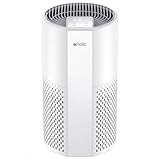
Afloia Air Purifier for Home, 4-in-1 Washable Filter for Allergies, Covers Up to 1076 ft², Quiet Operation, Auto Shut-Off & Night Light, Removes Pet Dander, Pollen, Dust, Mold, and Smoke, White,Pluto | Check Price On Amazon |

|
Nuwave OxyPure ZERO Air Purifier with Washable and Reusable Bio Guard Tech Air Filter, Large Room Up to 2002 Ft², Air Quality Monitor, 0.1 Microns, 100% Capture Irritants like Smoke, Dust, Pollen | Check Price On Amazon |

|
Air Purifiers for Home Large Room Up to 1,996 Ft², EOEBOT Air Purifier for Home Pets with Washable Filter, Quiet Sleep Mode, Air Quality Monitor, Air Purifier for Bedroom, Pet Hair, Dust, Smoke, White | Check Price On Amazon |
|
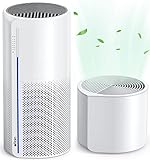
Afloia 2 IN 1 Air Purifier with Humidifier Combo, 3-Stage Filters for Home Allergies Pets Hair Smoker Odors, Evaporative Humidifier, Auto Shut Off, Quiet Air Cleaner with Seven Color Light,White | Check Price On Amazon |
This happens because mechanical filtration uses four distinct capture mechanisms: inertial impaction for larger particles above 1 micron, interception where particles follow streamlines that graze a fiber, Brownian diffusion where sub-0.1-micron particles move randomly and strike fibers, and electrostatic attraction where charged particles adhere to oppositely charged media.
This only occurs when the filter media uses a dense, randomly arranged borosilicate glass fiber mat or melt-blown polypropylene fiber web with controlled fiber diameter, packing density, and thickness specifications defined by IEST RP-CC001 for Type A HEPA filters. A True HEPA filter is a type of mechanical filtration media that captures 99.97% of airborne particles at the hardest-to-capture 0.3-micron size.
If the filter media density is too low or fiber spacing is inconsistent, the result is filter bypass where particles pass through gaps larger than the rated capture diameter. Correct it by verifying the AHAM CADR certification label on the air purifier — AHAM certification confirms the unit contains a genuine HEPA filter that meets the efficiency standard in a working device, not just in a media sample.
According to the IEST Recommended Practice RP-CC001, a True HEPA filter differs from a HEPA-type filter in standardized test methodology and verified minimum efficiency. HEPA-type or HEPA-like filters are unregulated marketing terms with no required test standard — they capture 85% to 99% of particles with no third-party efficiency verification.
Air Quality Data
HEPA Filter Technology – Key Numbers That Define the Standard
Sources: IEST, DOE, ASHRAE, AHAM, EPA Indoor Air Quality guidelines
How Did the HEPA Filter Evolve From Nuclear Weapons Facilities to Living Room Air Purifiers?
The HEPA filter was developed in 1942 by the US Army Chemical Corps working with Arthur D. Little Company to trap radioactive particulate released during plutonium processing for the Manhattan Project. The original designation was the “collective protector filter unit” designed to fit inside gas mask canisters and facility exhaust stacks.
The filter consisted of a pleated mat of borosilicate glass microfibers bonded with a phenolic resin binder, arranged in a deep-fold configuration that maximized surface area inside a compact frame. This pleated mat of borosilicate glass microfibers is the same fundamental structure used in modern residential HEPA air purifier filters.
After World War II, the US Atomic Energy Commission declassified the HEPA filter technology in the 1950s. Commercialization began with the Cambridge Absolute Filter manufactured by Cambridge Filter Corporation in the 1960s, designed for hospital operating rooms and pharmaceutical cleanrooms requiring ISO Class 5 or better air cleanliness per Federal Standard 209.
Residential air purifier adoption expanded through the 1980s and 1990s when the Association of Home Appliance Manufacturers established the CADR testing standard (AHAM AC-1) that gave consumers a verifiable metric for comparing portable air cleaners. The AHAM AC-1 CADR test methodology certifies smoke, dust, and pollen CADR separately in CFM because each particle type has different aerodynamic behavior and capture characteristics inside a test chamber.
From 2010 onward, the integration of low-cost laser particle counters and PM2.5 sensors transformed air purifiers from manually operated appliances into responsive smart devices. A modern Coway Airmega 400S or Levoit Core 400S uses an onboard sensor that samples airborne particle counts every few seconds and adjusts fan speed automatically when PM2.5 concentrations exceed a preset threshold — the same operational logic that evolved from industrial cleanroom monitoring systems.
What Is the Complete Timeline of Air Purification Technology From 1940 to Present?
The development of air purification spans over 80 years through military, industrial, and consumer applications. Each technological phase solved a specific contamination problem that the previous generation could not address.
1942 to 1950s: HEPA Origination Phase
Developed under Manhattan Project contracts by Arthur D. Little and the US Army Chemical Corps. The original filter media used a cellulose-asbestos composite fiber mat that was later replaced with borosilicate glass fibers after asbestos health risks became known. Declassified in the 1950s and published in government technical reports available through the Office of Scientific and Technical Information.
1960s to 1970s: Commercial Cleanroom and Hospital Adoption
Cambridge Absolute Filter, HEPA Corporation, and Flanders Filters began manufacturing HEPA media for laminar flow cleanroom ceilings. Federal Standard 209 established air cleanliness classes still referenced in modern ISO 14644 cleanroom standards. Hospitals adopted portable HEPA filtration units for tuberculosis isolation rooms, operating theaters, and burn units.
1980s: CADR Standardization and Consumer Market Birth
AHAM published the AC-1 standard establishing Clean Air Delivery Rate as the primary portable air cleaner performance metric. The first consumer HEPA air purifiers entered the market from brands including Honeywell and Holmes. CADR testing chambers at Intertek and other AHAM-certified labs began certifying consumer units for smoke, dust, and pollen removal.
2000s: Multi-Stage Filtration and Activated Carbon Integration
Activated carbon filters derived from coconut shell or bituminous coal became standard secondary stages for VOC and odor adsorption. Hybrid units combining True HEPA plus carbon beds exceeding 2 pounds of media entered the premium market. IQAir HealthPro Plus introduced HyperHEPA technology claiming 99.5% efficiency at 0.003 microns — below the standard HEPA test particle size.
2015 to Present: Smart Sensor Integration and Autonomous Operation
Low-cost laser-scattering PM2.5 sensors from Sensirion, Plantower, and Sharp enabled always-on particulate monitoring with accuracy within 10% to 15% of reference-grade instruments. Auto-mode algorithms closed the loop between sensor input and fan speed output. WiFi-connected units including Coway Airmega 400S, Levoit Core 400S, and Dyson Purifier enabled app-based control, filter life tracking, and AQI trend logging.
For most home users evaluating air purifiers in the current market, the combination of a True HEPA filter stage for particles plus an activated carbon bed for gases and odors inside a CARB-certified, AHAM-verified unit with an auto-mode PM2.5 sensor represents the culmination of this 80-year technological evolution.
Quick Reference
Air Purifier Technology Terms – Definitions for Key Concepts
Every technical term used in this guide defined with precision and context.
A filter meeting 99.97% efficiency at 0.3 microns per IEST RP-CC001 — a specific certification, not a marketing term. Equivalent to EN 1822 H13 grade in the European classification system.
AHAM AC-1 test result in CFM for smoke, dust, or pollen. Not a generic performance score. Smoke CADR is the value used for PM2.5 reduction calculations because smoke particles represent the fine particulate fraction most hazardous to health.
The number of times per hour an air cleaner processes the equivalent of the room’s entire air volume. Coverage area only has meaning when paired with ACH rate. 300 sq ft at 2 ACH requires a smoke CADR of 80 CFM. The same 300 sq ft at 5 ACH requires a smoke CADR of 200 CFM.
The particle diameter at which a filter is least efficient — approximately 0.1 to 0.3 microns for mechanical HEPA media. Below this size, Brownian diffusion increases capture. Above it, interception and impaction dominate. HEPA filters are more efficient at capturing both larger and smaller particles than at the MPPS.
The original and still most common HEPA filter media fiber material. Glass fibers have high tensile strength, fire resistance, and chemical stability that polypropylene alternatives do not fully match. Melt-blown polypropylene HEPA media is also common in consumer air purifiers.
ASHRAE 52.2 test standard for HVAC filter efficiency. MERV 13 captures 75%+ of particles 0.3 to 1 micron — the size range matching fine wildfire smoke and most airborne allergens. MERV 16 is equivalent to HEPA efficiency but is rarely compatible with residential HVAC systems without fan motor modification.
California Air Resources Board CCR Title 17 Section 94251 limits ozone output to 0.050 parts per million maximum. CARB certifies ozone output compliance only — it does NOT certify filtration efficiency or CADR performance. An air purifier can be CARB certified and still have poor particle filtration.
A surface phenomenon where gaseous molecules adhere to the internal pore structure of activated carbon. Different from absorption where molecules enter the bulk volume of a material. Carbon capacity is proportional to weight — units with less than 1 pound of activated carbon offer limited VOC and odor removal.
How Did Activated Carbon Filtration Evolve Alongside HEPA Technology?
Activated carbon filtration for air purification originated separately from HEPA development but converged with it in modern multi-stage air purifiers. Activated carbon was first deployed at industrial scale in World War I gas mask canisters to adsorb chlorine, phosgene, and mustard gas — chemical warfare agents that HEPA mechanical filtration cannot capture because they are gaseous molecules, not particulates.
This happens because activated carbon has an internal surface area of 500 to 1,500 square meters per gram — a single gram of high-grade coconut shell activated carbon contains the equivalent internal pore surface area of two tennis courts. VOC molecules diffuse into these micropores and physically bond to the carbon surface via van der Waals forces.
Modern residential air purifiers combine True HEPA mechanical filtration with activated carbon adsorption because the two technologies address different contaminant classes. True HEPA captures particles (PM2.5, allergens, mold spores). Activated carbon adsorbs gases (VOCs, formaldehyde, cooking odors). A room with both wildfire smoke and chemical off-gassing from new furniture needs both stages.
If an activated carbon filter is undersized (less than 2 pounds of carbon media), the result is VOC breakthrough within weeks rather than months. The carbon saturates quickly and re-emits captured VOCs when temperature and humidity rise. Fix it by selecting air purifiers with significant carbon bed weight — the Austin Air HealthMate contains 15 pounds of activated carbon and zeolite blend with a filter lifespan of up to 5 years under normal conditions.
Activated carbon works with True HEPA filtration to address both particulate matter and VOC contamination in the same unit pass. A typical combined air purifier consists of a pre-filter for large particles, a True HEPA filtration stage for fine particles, and an activated carbon stage for gases and odors, plus a fan motor drawing air sequentially through all stages.
What Role Did Electronic Air Cleaning Play in the Technological Timeline?
Electronic air cleaning using electrostatic precipitation and ionization developed as an alternative to mechanical filtration starting in the 1950s. Electrostatic precipitators charge airborne particles with a high-voltage corona wire and then collect them on oppositely charged metal plates — removing particles from the airstream without a physical filter barrier.
This happens because the corona discharge ionizes air molecules, which then attach to passing particles and give them a net electrical charge. The charged particles migrate toward collection plates of opposite polarity and adhere to them via electrostatic attraction. The collection plates require periodic washing to remove accumulated particulate.
Ionizer technology, a simplified version of electrostatic precipitation, releases negative ions into room air without a collection plate. The negatively charged particles cluster together and settle onto room surfaces (walls, floors, furniture) rather than remaining airborne. A standalone ionic air purifier differs from a hybrid device that uses ionization as a secondary stage alongside mechanical HEPA filtration — the latter captures particles on a filter rather than redistributing them to room surfaces.
If an ionizer operates without a collection plate or downstream HEPA filter, the result is surface redistribution of particulate rather than removal from the living space. Particles that were airborne and inhalable become surface deposits that can be resuspended by foot traffic or HVAC airflow. Fix it by selecting air purifiers that use ionization only as a supplementary charging stage upstream of a physical collection filter.
The CARB CCR Title 17 standard limits ozone output from electronic air cleaners to 0.050 ppm. Some ionizers and electrostatic precipitators produce ozone as a byproduct of the corona discharge process. Ozone at concentrations above 0.050 ppm causes respiratory irritation and lung function decrements — particularly in people with asthma. A CARB-certified air purifier confirms ozone output stays below the safety threshold.
How Did AHAM Standardize the Measurement of Air Purifier Performance?
The Association of Home Appliance Manufacturers developed the ANSI/AHAM AC-1 standard in the 1980s to create a single verifiable performance metric for portable air cleaners. Before AHAM AC-1, consumers had no standardized way to compare one air purifier against another — manufacturers used different test methods, different particle types, and different chamber sizes that produced incomparable numbers.
The AHAM AC-1 test methodology places an air purifier in a sealed chamber of known volume (1,008 cubic feet or 28.5 cubic meters). A controlled quantity of test aerosol (cigarette smoke for smoke CADR, fine road dust for dust CADR, paper mulberry pollen for pollen CADR) is introduced. The natural decay rate of the aerosol without the purifier running is measured. Then the decay rate with the purifier operating is measured. The CADR equals the difference in decay rates multiplied by the chamber volume, expressed in cubic feet per minute.
AHAM tests CADR in a specific test chamber at controlled conditions. Real-world performance in furnished rooms with obstacles, open doorways, and internal air currents is typically 15% to 25% lower than the stated CADR because mixing is less complete and dead zones exist where air does not circulate through the purifier.
For a standard bedroom used by a healthy adult, 2 ACH provides meaningful improvement. For elevated air quality needs or sensitive occupants, target 4 to 5 ACH. The formula for required smoke CADR is: (room length ft x room width ft x ceiling height ft x target ACH) / 60. A 200-square-foot bedroom with an 8-foot ceiling at 5 ACH for allergy management requires a smoke CADR of (200 x 8 x 5) / 60 = 133 CFM minimum.
CADR Reference
Smoke CADR Needed by Room Size and Air Changes Per Hour Target
All values pre-calculated at standard 8 ft ceiling height. Formula: (room area x 8 x ACH) / 60. Source: AHAM methodology.
| Room size (8 ft ceiling) / ACH target | 2 ACH (standard) | 5 ACH (allergy) | 6 ACH (wildfire) | Example Models |
|---|---|---|---|---|
| 100 sq ft (small bedroom) | 27 CFM | 67 CFM | 80 CFM | Levoit Core 300S, Coway AP-1512HH |
| 200 sq ft (master bedroom) | 53 CFM | 133 CFM ★ | 160 CFM | Winix 5500-2, Levoit Core 400S |
| 300 sq ft (bedroom or office) | 80 CFM | 200 CFM | 240 CFM | Coway Airmega 400, Blueair Blue Pure 211+ |
| 500 sq ft (living room) | 133 CFM | 333 CFM | 400 CFM | Blueair 605, IQAir HealthPro Plus |
| 700 sq ft (open plan) | 187 CFM | 467 CFM | 560 CFM | Multiple units or IQAir GC MultiGas |
How Did Smart Air Purifier Technology Emerge and What Problem Does It Solve?
Smart air purifiers with integrated PM2.5 sensors and auto-mode algorithms emerged after 2015 when low-cost laser-scattering particulate sensors became commercially viable at consumer electronics price points. Before this integration, air purifiers operated as dumb appliances — the user selected a manual fan speed and had no feedback about whether the air was actually clean.
This happens because a Plantower PMS5003 or Sensirion SPS30 laser particle counter shines a laser beam through a sample airstream and counts individual particles by the light-scattering pulses they generate. The sensor classifies particles by size and outputs real-time PM1.0, PM2.5, and PM10 concentration values in micrograms per cubic meter.
Auto-mode algorithms close the control loop by reading the sensor output every few seconds and adjusting fan speed according to a programmed threshold map. When PM2.5 exceeds 35 micrograms per cubic meter (the EPA 24-hour standard), the fan ramps to maximum speed. When PM2.5 drops below 12 micrograms per cubic meter (the EPA annual standard), the fan drops to sleep mode or the lowest speed. This autonomous operation works with True HEPA filtration to maintain target air quality without manual intervention.
If the sensor aperture becomes contaminated with dust or the laser diode output degrades over 2 to 3 years, the result is sensor drift where reported PM2.5 values no longer match actual concentrations. Some units report clean air when significant particulate remains. Fix it by cleaning the sensor aperture with compressed air every 3 to 6 months and verifying sensor accuracy against a standalone reference monitor such as an IQAir AirVisual Pro or PurpleAir PA-II at least once per year.
For current-generation smart air purifiers, the combination of laser particle sensing and automatic fan control represents the operational endpoint of an 80-year technological evolution that began with a manually operated filter inside a Manhattan Project plutonium processing line. The fundamental filtration physics have not changed. The control logic and sensory feedback that make the filter responsive to real-time air quality conditions are entirely new.
Myth vs Fact
Air Purifier Technology Myths – What the Historical Record Actually Shows
Separating fact from fiction using published research, standards documents, and engineering records. Sources: IEST, DOE, EPA, AHAM.
✗ Myth
HEPA filters were invented for hospital operating rooms to prevent surgical infections.
✓ Fact
HEPA originated in 1942 under Manhattan Project contract to trap radioactive plutonium particles at nuclear weapons facilities. Hospital adoption followed more than a decade later after the technology was declassified and commercialized in the 1950s. The original filter designation was the “collective protector filter unit” designed for gas mask canisters and exhaust stacks handling radioactive particulate.
✗ Myth
Smart air purifier auto-mode sensors are as accurate as professional air quality monitoring instruments.
✓ Fact
Low-cost laser-scattering sensors used in consumer air purifiers have a typical accuracy range of plus or minus 10% to 15% compared to reference-grade beta-attenuation monitors. Sensor drift occurs over 2 to 3 years due to laser diode degradation and aperture contamination. Cleaning the sensor aperture with compressed air every 3 months and cross-checking against an outdoor reference monitor such as a PurpleAir PA-II once per year is recommended by manufacturers including IQAir and Dyson.
✗ Myth
Activated carbon filters were developed at the same time as HEPA for the same military purpose.
✓ Fact
Activated carbon air filtration originates from World War I gas mask development (1915 to 1918), predating HEPA by nearly 25 years. Coconut shell and coal-based activated carbons were deployed in British and German gas mask canisters to adsorb chlorine, phosgene, and mustard gas. HEPA development began in 1942. The two technologies converged in commercial air purifiers only in the 1990s and 2000s when multi-stage units combining both filtration mechanisms entered the consumer market.
✗ Myth
CADR testing reflects real-world air purifier performance in a furnished home.
✓ Fact
AHAM CADR testing is conducted in a 1,008-cubic-foot sealed chamber with controlled aerosol injection and a ceiling mixing fan. Real-world performance in furnished rooms with obstacles, partial walls, and open doorways is typically 15% to 25% lower than the stated CADR. The AHAM AC-1 standard provides a repeatable comparison metric across products, not a guarantee of absolute performance in any specific room.
✗ Myth
A CARB certification means an air purifier has been tested and verified for high filtration efficiency.
✓ Fact
CARB CCR Title 17 Section 94251 certifies only that the device emits no more than 0.050 ppm ozone. It does NOT test or certify filtration efficiency, CADR performance, or particle removal capability. An air purifier can be CARB certified and still have inadequate airflow or a low-quality filter. For filtration efficiency verification, look for the AHAM Verifide CADR certification label, which independently confirms smoke, dust, and pollen CADR values.
What Is the Current State of Air Purification Technology and Where Is It Heading?
The current state of residential air purification technology represents the convergence of three technological lineages: mechanical HEPA filtration developed in 1942, activated carbon adsorption developed in 1915, and laser-based particulate sensing commercialized after 2010. The best-performing units today combine all three into a single appliance that filters particles, adsorbs gases, and adjusts fan speed based on real-time air quality data.
A modern Coway Airmega 400S delivers 400 CFM smoke CADR using dual True HEPA filters, includes an activated carbon stage for odor and VOC reduction, and uses an onboard laser PM2.5 sensor with auto-mode logic that adjusts fan speed based on detected particulate levels. The annual filter replacement cost is approximately $60. Sleep mode noise level is 22 dB. The unit covers 1,560 square feet at 2 ACH and carries CARB, ENERGY STAR, and AHAM certifications.
Key Specifications:
- Smoke CADR: 400 CFM (AHAM certified)
- Coverage at 2 ACH: 1,560 sq ft
- Noise at sleep mode: 22 dB
- Annual filter cost: approximately $60
Medical-grade units including the IQAir HealthPro Plus push particulate capture below the standard 0.3-micron HEPA test particle size. IQAir claims HyperHEPA filtration at 99.5% efficiency down to 0.003 microns — particles 100 times smaller than the standard HEPA test size. The IQAir HealthPro Plus consists of a pre-filter, HyperHEPA particulate stage, and V5-Cell gas filter containing activated carbon and impregnated alumina for specific VOC adsorption.
For most residential users seeking the culmination of this technological evolution, a CARB-certified AHAM-verified True HEPA air purifier with at least 2 pounds of activated carbon, a laser PM2.5 sensor with auto-mode, and sufficient smoke CADR to achieve 5 ACH in the target room represents the current performance frontier. The filter media inside that unit traces its fundamental engineering lineage directly back to borosilicate glass fiber mats developed for the Manhattan Project in 1942.
Can I Run an Air Purifier 24/7 Without Causing Harm or Excessive Filter Wear?
Yes. Running a CARB-certified True HEPA air purifier 24 hours per day, 7 days per week is safe and recommended by the EPA for maintaining indoor air quality. Continuous operation on auto-mode where the fan speed varies based on detected PM2.5 levels maximizes filter lifespan compared to intermittent operation because the filter accumulates particulate at a steady rate rather than in high-load cycles that cause premature surface blinding.
Modern ENERGY STAR certified air purifiers consume 30 to 55 watts at medium fan speed. Running a 45-watt unit 24/7 costs approximately $47 per year at the US average electricity rate of 13 cents per kilowatt-hour. Filter replacement intervals remain unchanged by continuous operation because HEPA filter loading is driven by total particulate mass captured, not by hours of operation. A filter exposed to clean air for 8,760 hours experiences negligible loading. A filter exposed to wildfire smoke for 2 hours may reach half its loading capacity.
What Is the Difference Between HEPA and True HEPA in Air Purifiers?
True HEPA is a specific certification standard requiring 99.97% minimum efficiency at 0.3 microns per IEST RP-CC001 testing methodology. HEPA without the True designation or variations such as HEPA-type or HEPA-like are unregulated marketing terms that carry no legally binding efficiency specification and no requirement for third-party testing verification.
A True HEPA filter undergoes testing with monodisperse or polydisperse aerosol challenge particles at controlled airflow rates in a certified laboratory. The test reports the penetration percentage at the most penetrating particle size. HEPA-type filters typically capture 85% to 99% of particles at 0.3 microns but the exact efficiency varies by manufacturer and is not verified by an independent certification body. When comparing air purifiers, look for AHAM Verifide CADR certification on the label — AHAM certification requires the unit contains a True HEPA filter that meets the standard when tested as a complete device.
Why Does My Air Purifier Smell Like Chemicals or Burning Plastic When New?
A new air purifier smell is caused by off-gassing of volatile organic compounds from the filter media binders, adhesives, and plastic housing components. True HEPA filters using melt-blown polypropylene media have lower initial off-gassing than filters using phenolic resin binders because polypropylene contains fewer volatile compounds.
This smell typically dissipates within 24 to 48 hours of continuous operation at high fan speed. Run the purifier in an unoccupied room with open windows during this break-in period. If the smell persists beyond 72 hours, check whether the unit contains an ionizer or ozone generator — the odor may be ozone rather than filter off-gassing. Ozone has a distinct sharp, metallic smell similar to the air after a thunderstorm. If ozone odor is present and the unit is CARB certified, contact the manufacturer for a replacement. CARB certification limits ozone to 0.050 ppm and a properly functioning CARB-certified unit should not produce a noticeable ozone odor.
When Should I Replace My HEPA Filter Based on Actual Usage Rather Than Calendar Months?
Replace a True HEPA filter when the airflow through the unit noticeably decreases on the highest fan setting, when the filter surface appears visibly gray or loaded when held up to a light source, or when a standalone PM2.5 monitor shows less than 50% PM2.5 reduction within 30 minutes of starting the purifier in the target room at maximum fan speed.
Calendar-based replacement recommendations from manufacturers assume average household particulate loading. Actual filter life varies dramatically based on conditions. A filter in a home with two shedding pets and a wood-burning fireplace may reach capacity in 4 to 6 months. The same filter in a pet-free home with no combustion sources may last 18 to 24 months. Tracking PM2.5 reduction rates with a PM2.5 air quality monitor provides an objective filter condition assessment that the manufacturer’s calendar estimate cannot match.
Do Smart Air Purifiers Actually Clean Better Than Manual Units?
Smart air purifiers with auto-mode sensors do not filter particles more efficiently than manual units with the same CADR rating and filter type. The filtration physics are identical. The advantage of a smart unit is that it adjusts fan speed to match real-time particulate load without user intervention, which means it runs the filter at the appropriate speed for the actual pollution level rather than a fixed manual setting.
A manual purifier left on sleep mode during a cooking event or wildfire smoke infiltration will not clean the air effectively because the CADR at low fan speed is insufficient to achieve meaningful air changes per hour. A smart unit detects the PM2.5 spike within seconds and ramps to maximum CADR, then drops back to quiet operation when the particulate load has been processed. The smart feature produces better real-world air quality outcomes through correct operational timing, not through superior filtration media.
What Happens If I Use a HEPA Filter Past Its Rated Lifespan?
A True HEPA filter used past its rated lifespan continues to capture particles because the filter media does not lose efficiency as it loads. A loaded HEPA filter actually captures particles at higher efficiency than a clean one because the collected particulate on the fiber surfaces creates additional capture sites. The failure mode of an overloaded HEPA filter is not reduced efficiency. It is reduced airflow.
As the filter loads, the pressure drop across the media increases. The fan motor pushes against higher resistance, which reduces the actual airflow rate through the filter. A filter loaded to 150% of its rated capacity may reduce airflow by 30% to 50%, which directly reduces the effective CADR. A smoke CADR of 200 CFM on a clean filter may drop to 120 CFM on an overloaded filter. The unit still filters air that passes through it efficiently. It simply processes less air per minute, which reduces the air changes per hour in the room.
The filter media inside your current or next air purifier solves the same physical problem using the same fiberglass mat technology that protected Manhattan Project workers from plutonium dust in 1942. The addition of activated carbon, laser particulate sensors, and automated fan control represents meaningful progress. The core filtration mechanism has not been meaningfully improved upon in eight decades.
Select a True HEPA air purifier with AHAM-certified smoke CADR rated for 5 ACH in your room size, CARB certification confirming ozone output stays below 0.050 ppm, and enough activated carbon to address any VOC or odor concerns specific to your home. That combination captures particulate with the same physics that worked in 1942 and adds the sensor intelligence and gas-phase filtration that the original Manhattan Project engineers could not have imagined.
For further guidance on matching an air purifier to your specific indoor air quality situation, see our detailed breakdown of what indoor air quality actually measures and why it matters for your long-term health. Understanding the pollutants present in your specific space is the first step before selecting any filtration technology.