Cooking smoke, grease particles, and lingering food odors turn kitchen air into a pollutant cocktail within minutes of firing up the stove. A standard range hood captures only 15 to 40 percent of the airborne particles generated during cooking, leaving the rest to circulate through your home.
Kitchen-specific air purifiers solve this problem with high-capacity activated carbon filters and elevated CADR ratings designed for the smoke and VOC loads that cooking creates. This guide covers exactly how these units work and which models deliver measurable results for different kitchen sizes and cooking styles.
By the Numbers
- 40%
Maximum particle capture rate of a standard range hood during high-heat cooking. Source: Lawrence Berkeley National Laboratory indoor air quality study. - 300 CFM
Minimum smoke CADR recommended for kitchens over 150 square feet to achieve 4 air changes per hour during cooking. - 5-8 lbs
Activated carbon filter weight in kitchen-grade purifiers. Heavier carbon beds remove cooking VOCs and odors 3x faster than standard carbon sheets. - $60-$120
Annual replacement filter cost range for kitchen-specific air purifiers. Grease-heavy environments may require filter changes every 4-6 months instead of 8-12. - 85%
PM2.5 reduction within 30 minutes when using a properly sized air purifier in a closed kitchen. Source: EPA indoor air quality intervention studies.
What Makes a Kitchen Air Purifier Different From a Standard Unit?
A kitchen air purifier must handle three pollutant types that bedroom or living room units rarely encounter: grease aerosols, combustion byproducts, and high-concentration volatile organic compounds from cooking oils and spices. Standard air purifiers rely primarily on mechanical filtration that captures solid particles but does little for gases and odors.
| Photo | Popular Air Purifiers | Price |
|---|---|---|

|
Air Purifiers for Home Large Room up to 1500ft², Tailulu H13 True HEPA Air Purifier for Pets Dust Odor Smoke, Air Purifier for Bedroom with 15dB Quiet Sleep Mode for Bedroom Office Living Room | Check Price On Amazon |
|
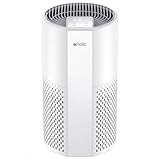
Afloia Air Purifier for Home, 4-in-1 Washable Filter for Allergies, Covers Up to 1076 ft², Quiet Operation, Auto Shut-Off & Night Light, Removes Pet Dander, Pollen, Dust, Mold, and Smoke, White,Pluto | Check Price On Amazon |

|
Nuwave OxyPure ZERO Air Purifier with Washable and Reusable Bio Guard Tech Air Filter, Large Room Up to 2002 Ft², Air Quality Monitor, 0.1 Microns, 100% Capture Irritants like Smoke, Dust, Pollen | Check Price On Amazon |

|
Air Purifiers for Home Large Room Up to 1,996 Ft², EOEBOT Air Purifier for Home Pets with Washable Filter, Quiet Sleep Mode, Air Quality Monitor, Air Purifier for Bedroom, Pet Hair, Dust, Smoke, White | Check Price On Amazon |
|
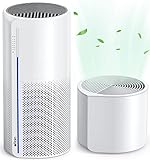
Afloia 2 IN 1 Air Purifier with Humidifier Combo, 3-Stage Filters for Home Allergies Pets Hair Smoker Odors, Evaporative Humidifier, Auto Shut Off, Quiet Air Cleaner with Seven Color Light,White | Check Price On Amazon |
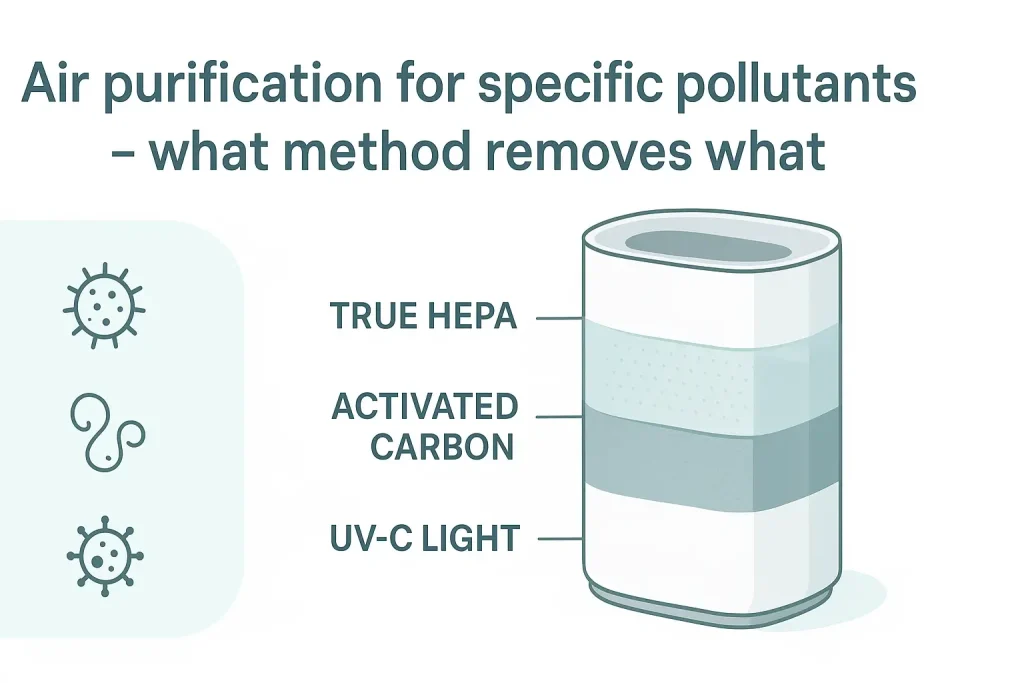
Kitchen-rated purifiers pair True HEPA filtration with substantial activated carbon beds weighing five pounds or more. The carbon chemically adsorbs formaldehyde, acrolein, and polycyclic aromatic hydrocarbons released during cooking. A washable pre-filter captures visible grease before it can coat and degrade the HEPA media.
Range hoods address only the pollutants that rise directly from the cooktop surface. Side-dispersed particles from frying, toasting, and oven use bypass hood capture entirely. An air purifier positioned across the kitchen pulls these stray pollutants from the ambient air column where the hood cannot reach.
How Kitchen Air Purifiers Work: The Three-Stage Filtration Process
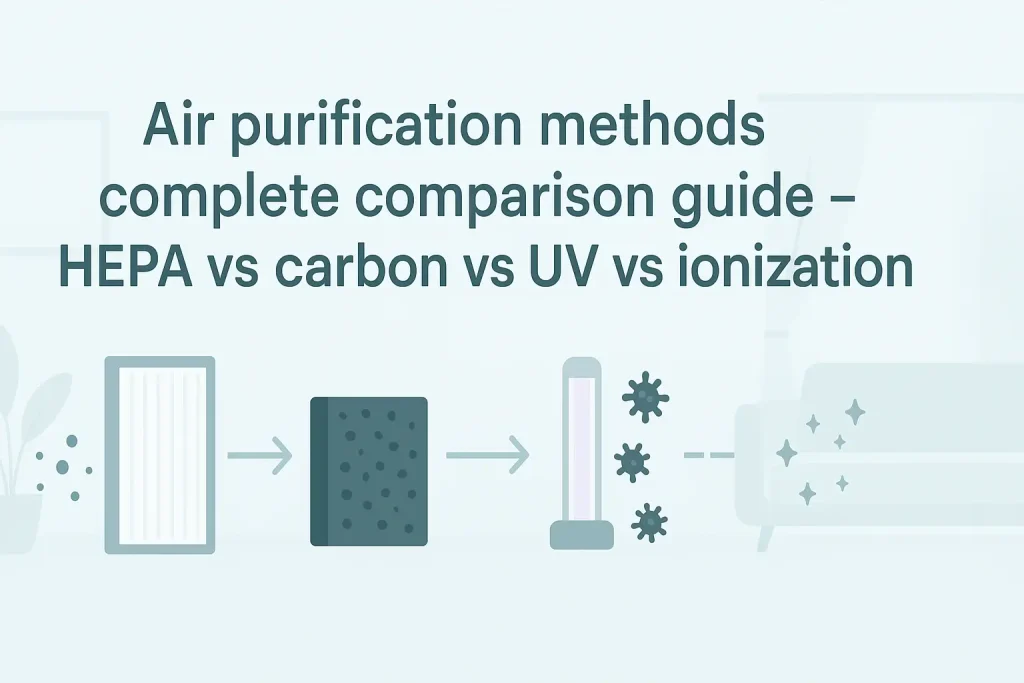
Kitchen air purifiers operate through a sequenced three-stage process that targets each pollutant category in order of particle size. The largest particles hit the pre-filter first, then the HEPA media captures fine particulates, and finally the activated carbon bed adsorbs gas-phase molecules.
Stage one uses a mesh or foam pre-filter coated with a mild adhesive or electrostatic charge. This layer traps airborne grease droplets measuring 10 microns and larger before they can saturate the HEPA fibers. Most kitchen units have washable pre-filters rated for monthly cleaning under running water.
Stage two passes air through True HEPA media certified to capture 99.97 percent of particles at 0.3 microns. This includes PM2.5 cooking smoke, charred food particles, and fine ash that penetrates deep into lung tissue. HEPA does nothing for odors or gases, which is why stage three is non-negotiable for kitchens.
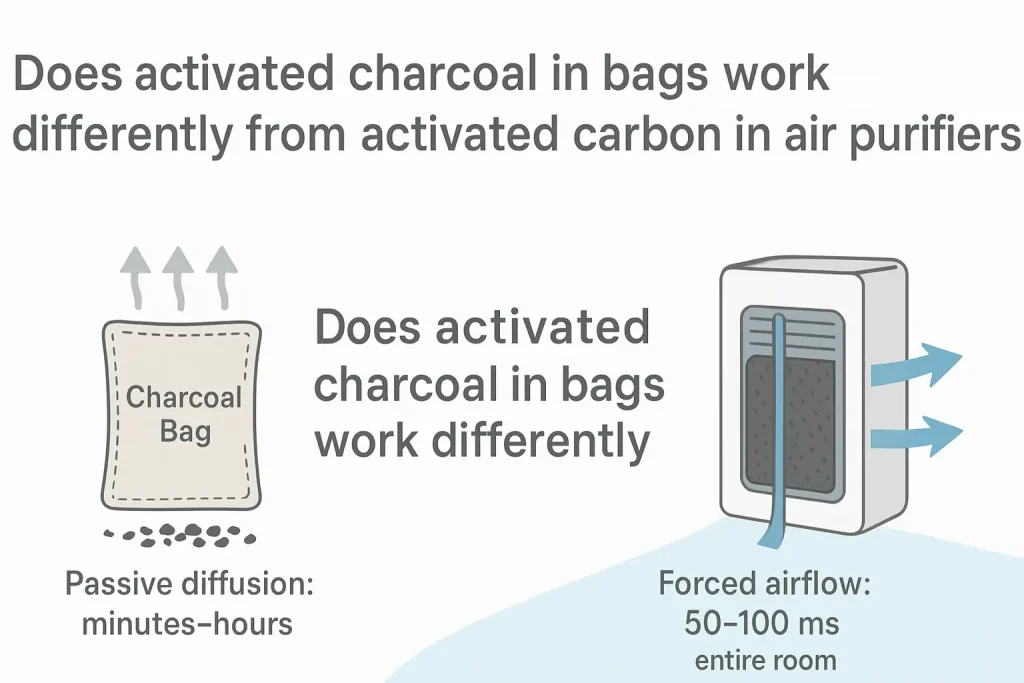
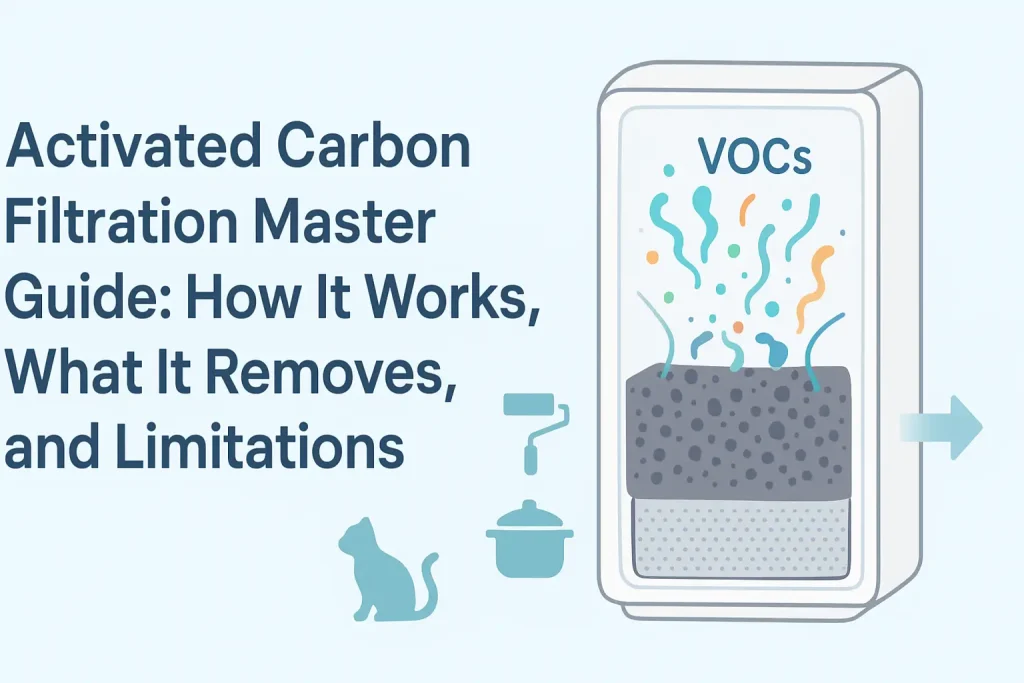
Stage three forces air through a packed bed of granular activated carbon. The carbon’s microscopic pore structure provides surface area exceeding 1,000 square meters per gram. VOC molecules physically adsorb onto this surface through van der Waals forces and remain trapped until the carbon reaches saturation.
This three-stage sequence only works when the fan moves enough air to cycle the entire kitchen volume multiple times per hour. A unit rated for 200 square feet but placed in a 350-square-foot open kitchen will never complete enough air changes to make a measurable difference during active cooking.
If you have dealt with persistent cooking odors, you will appreciate how a dedicated kitchen purifier outperforms general-purpose units. For additional guidance on sizing your unit correctly, our CADR sizing guide for smoke events explains the formula with room-specific examples.
| Feature | Coway Airmega 400 | Winix 5500-2 | IQAir HealthPro Plus | Levoit Core 600S |
|---|---|---|---|---|
| Smoke CADR | 328 CFM | 246 CFM | 320 CFM | 290 CFM |
| Kitchen Coverage at 4 ACH | 390 sq ft | 295 sq ft | 380 sq ft | 345 sq ft |
| Carbon Filter Weight | 2.2 lbs (sheet) | 5.5 lbs (pellet) | 5 lbs (pellet V5) | 1.8 lbs (sheet) |
| Washable Pre-Filter | Yes | Yes (mesh) | Yes (PF1) | No |
| Noise at Max Speed | 54 dB | 58 dB | 48 dB | 55 dB |
| Annual Filter Cost | $85-$100 | $50-$65 | $130-$170 | $55-$70 |
| CARB Certified | Yes | Yes | Yes | Yes |
CADR values from AHAM Verifide database. Coverage calculated at 4 ACH for kitchen use. Carbon filter weights from manufacturer specifications.
Cooking Pollutants That Kitchen Air Purifiers Target
Cooking generates four distinct pollutant categories that each require different filtration mechanisms. Understanding what is actually in your kitchen air determines which purifier specifications matter most for your cooking habits.
Particulate matter (PM2.5 and PM10) spikes during frying, sauteing, and toasting. A gas burner produces 25 to 40 micrograms per cubic meter of PM2.5 in a closed kitchen within ten minutes. Electric coil burners generate slightly less but still exceed the WHO guideline of 15 micrograms per cubic meter for 24-hour exposure.
Volatile organic compounds (VOCs) including formaldehyde, acetaldehyde, and acrolein release from heated cooking oils above their smoke point. Extra virgin olive oil hits its smoke point at 375 degrees Fahrenheit and generates acrolein concentrations exceeding 200 parts per billion. Canola and avocado oils produce fewer VOCs but still require carbon filtration.
Nitrogen dioxide (NO2) forms exclusively from gas combustion. Kitchens with gas stoves without venting range hoods show NO2 levels 50 to 400 percent higher than kitchens with electric cooktops. NO2 irritates airways and worsens asthma symptoms within hours of exposure.
Grease aerosols measuring 5 to 100 microns deposit on surfaces throughout the kitchen and adjacent rooms. These sticky particles carry odor compounds and provide a substrate for mold growth on cabinets and walls. A dedicated pre-filter captures grease before it enters the HEPA stage.
CADR Requirements for Kitchen Air Purifiers: What Numbers Matter
Kitchen CADR requirements exceed general room recommendations because cooking generates pollutants faster than standard household sources. A bedroom needs 2 air changes per hour (ACH) for basic air quality. A kitchen during active cooking needs 4 to 5 ACH to keep pace with the pollutant generation rate.
Smoke CADR is the primary specification for kitchen use. For a 200-square-foot kitchen with 8-foot ceilings, achieving 4 ACH requires a smoke CADR of at least 213 CFM. The formula multiplies room volume by ACH target then divides by 60: (200 x 8 x 4) divided by 60 equals 107. That gives the required CFM, and CADR should match or exceed this value.
Dust CADR matters for flour, baking powders, and dry ingredient particles that become airborne during food preparation. A dust CADR of 200 CFM or higher handles the particulate load from regular baking and bread making. Pollen CADR is less relevant for kitchens unless the room has open windows during spring months.
Most manufacturers advertise room coverage at 2 ACH, which is inadequate for kitchens. A unit marketed for 400 square feet at 2 ACH only covers 160 square feet at 5 ACH. Always calculate coverage at 4 or 5 ACH when comparing kitchen air purifier specifications.
Price ranges based on major online retailers as of publication. Carbon weight correlates directly with odor and VOC removal capacity in kitchen environments.
Activated Carbon Weight: The Specification Most Buyers Overlook
Carbon filter weight in pounds determines how long a kitchen air purifier removes cooking odors before the carbon saturates. A thin carbon sheet weighing 0.5 to 1 pound saturates within 2 to 4 weeks of daily kitchen use. A packed granular carbon bed weighing 5 pounds or more lasts 6 to 12 months under the same conditions.
Carbon removes VOCs through physical adsorption, not chemical reaction. Each gram of activated carbon has approximately 500 to 1,500 square meters of internal surface area. Once all those pore surfaces fill with adsorbed molecules, breakthrough occurs and odors pass through untreated. Heavier carbon beds simply provide more surface area before saturation.
The Winix 5500-2 includes a 5.5-pound granular activated carbon filter that outperforms most competitors at its price point. The Winix 5500-2 uses pelletized carbon instead of impregnated foam sheets, which provides roughly three times the VOC adsorption capacity.
Kitchens with gas stoves, frequent frying, or spice-heavy cooking benefit most from pellet-based carbon filters. Lighter cooking with electric ranges and minimal oil use can function adequately with carbon sheet filters in the 1 to 2 pound range.
Pre-Filter Design for Grease Capture
Grease destroys HEPA filters by coating individual fibers and blocking airflow through the media. A single month of unfiltered kitchen use can reduce a HEPA filter’s efficiency by 30 to 50 percent due to grease loading. The fix is a properly designed pre-filter that intercepts grease before it reaches the HEPA stage.
Washable mesh pre-filters with adhesive coatings capture grease droplets effectively when cleaned every two to four weeks. Some units like the Coway Airmega 400 feature a permanent washable pre-filter that requires only rinsing under warm water and air drying. No replacement cost, just maintenance time.
Units without washable pre-filters force you to replace the entire filter assembly more frequently. The Levoit Core 600S lacks a dedicated washable pre-filter, so its HEPA stage bears the full grease load. Expect to replace filters every 4 to 5 months in kitchen use instead of the advertised 6 to 8 months.
For kitchens with heavy frying or wok cooking, consider units with metal mesh pre-filters that can withstand hot water and mild degreasing soap. These capture the heaviest grease loads without degrading.
Ideal Placement for a Kitchen Air Purifier
Air purifier placement in a kitchen differs from other rooms because of heat sources, humidity, and the directional nature of cooking plumes. Position the unit at least three feet from the stove to avoid heat damage to electronic components and plastic housing. Heat above 120 degrees Fahrenheit can warp filter frames and reduce fan motor lifespan.
The optimal location is on the opposite side of the kitchen from the stove at counter height or on a sturdy shelf. This position pulls the diffuse pollutant cloud across the room rather than trying to capture the concentrated plume directly above the cooktop. Counter height places the intake at the same elevation where most cooking pollutants disperse.
Never place a kitchen air purifier directly on the floor in a corner. Floor placement reduces effective CADR by 25 to 35 percent compared to elevated placement due to restricted airflow and boundary layer effects near walls. Corner placement compounds this loss by blocking two sides of the intake.
Open-concept kitchens connected to living spaces require sizing for the combined square footage. An air purifier rated for a 200-square-foot closed kitchen will underperform by 60 percent or more in a 500-square-foot open plan. Always include the contiguous space in your coverage calculation. Our guide on choosing between high and low fan speeds explains when to boost settings for open floor plans.
PM2.5 values represent peak measurements during the cooking activity. All activities exceed WHO 24-hour exposure guideline of 15 micrograms per cubic meter.
Best Air Purifiers for Kitchens: Top Picks by Kitchen Type
Kitchen air purifier selection depends on three variables: kitchen size, cooking style, and budget for both the unit and ongoing filter replacements. The models below represent the best measured performance for each kitchen scenario based on CADR, carbon capacity, and real-world filter longevity in grease-exposed environments.
Best Overall: Coway Airmega 400
The Coway Airmega 400 delivers 328 CFM smoke CADR with a dual True HEPA filter array and a large washable pre-filter. Its 2.2-pound activated carbon sheet handles moderate cooking odors and its coverage at 4 ACH reaches 390 square feet, making it suitable for most residential kitchens including open-plan layouts.
Key specifications: Smoke CADR 328 CFM, dust CADR 358 CFM, pollen CADR 450 CFM. Noise ranges from 22 dB at sleep to 54 dB at turbo. Annual filter replacement cost is approximately $85. The washable pre-filter requires monthly rinsing in kitchen use. Energy draw is 5 watts at low speed and 64 watts at turbo.
Best Carbon Performance: Winix 5500-2
The Winix 5500-2 packs 5.5 pounds of granular activated carbon combined with True HEPA and a washable fine-mesh pre-filter. Its 246 CFM smoke CADR covers 295 square feet at 4 ACH. The pelletized carbon removes cooking VOCs for 6 to 8 months in daily kitchen use, roughly double the odor-removal lifespan of sheet-carbon competitors.
Key specifications: Smoke CADR 246 CFM, dust CADR 243 CFM, pollen CADR 232 CFM. Noise ranges from 27 dB at sleep to 58 dB at turbo. Annual filter cost is $50 to $65. The mesh pre-filter captures visible grease and rinses clean in 30 seconds. PlasmaWave ionizer can be switched off for users who prefer mechanical-only filtration.
Best for Large Open Kitchens: IQAir HealthPro Plus
The IQAir HealthPro Plus uses a modular filter stack with a dedicated 5-pound V5-Cell gas and odor filter containing granular activated carbon and impregnated alumina. Its 320 CFM smoke CADR covers 380 square feet at 4 ACH with only 48 dB at maximum speed. The PF1 pre-filter captures grease on a frame designed for easy removal and washing.
Key specifications: Smoke CADR 320 CFM, dust CADR 300 CFM, pollen CADR 300 CFM. Noise ranges from 22 dB at lowest to 48 dB at maximum. Annual filter cost ranges from $130 to $170. The V5-Cell carbon filter in kitchen environments lasts 8 to 14 months depending on cooking frequency. No ionizer or ozone generation.
Best Budget: Levoit Core 600S
The Levoit Core 600S provides 290 CFM smoke CADR with a 3-stage filtration system at a price point well below mid-range competitors. Its 1.8-pound carbon sheet handles light to moderate cooking odors. Coverage reaches 345 square feet at 4 ACH. The absence of a washable pre-filter means the main filter assembly requires more frequent replacement in kitchen use.
Key specifications: Smoke CADR 290 CFM, dust CADR 310 CFM, pollen CADR 330 CFM. Noise ranges from 26 dB at sleep to 55 dB at turbo. Annual filter cost is $55 to $70 normal use, increasing to $85 to $100 in kitchen environments due to accelerated filter loading. Smart features include app control and air quality display.
How to Size a Kitchen Air Purifier Correctly
Kitchen air purifier sizing requires calculating the total room volume and selecting a unit that delivers at least 4 air changes per hour. Measure the kitchen length, width, and ceiling height in feet. Multiply all three to get cubic feet. Multiply by 4 ACH then divide by 60 to find the minimum required CADR in CFM.
For example, a kitchen measuring 15 by 20 feet with 8-foot ceilings contains 2,400 cubic feet. Multiply by 4 ACH to get 9,600 cubic feet per hour. Divide by 60 minutes to get 160 CFM. This kitchen needs a smoke CADR of at least 160 CFM for adequate filtration during cooking.
Open-concept kitchens complicate sizing because pollutants disperse beyond the kitchen footprint. Measure the entire connected space including the dining area and living room for your volume calculation. A 600-square-foot open plan needs roughly 640 CFM smoke CADR for 4 ACH, a spec that only the largest consumer units achieve.
For open plans exceeding 500 square feet, consider running two mid-sized purifiers on opposite sides of the combined space rather than one oversized unit. Two 300 CFM units positioned strategically outperform a single 600 CFM unit in large, irregularly shaped rooms because they create multiple air circulation patterns.
Maintenance Schedule for Kitchen Air Purifiers
Kitchen air purifiers demand more frequent maintenance than units in bedrooms or living rooms. Grease aerosol loading accelerates pre-filter saturation, carbon breakthrough occurs faster with high VOC exposure, and HEPA filters accumulate cooking particulate at roughly double the rate of non-kitchen installations.
Clean the washable pre-filter every two weeks during heavy cooking months. Rinse under warm running water until the water runs clear. Let the pre-filter dry completely before reinstalling. A wet pre-filter restricts airflow and can promote mold growth inside the unit.
Replace the carbon filter every 4 to 8 months depending on cooking frequency and carbon bed weight. You will know the carbon is saturated when cooking odors persist in the kitchen 30 minutes after the stove is turned off despite the purifier running on high. No amount of continued use reactivates saturated carbon.
Replace the True HEPA filter every 6 to 10 months in kitchen service, compared to 12 months in bedroom use. Kitchens with high humidity from boiling and steaming may benefit from units with antimicrobial filter coatings, similar to those recommended for mold-prone environments. Inspect HEPA media every three months for visible discoloration or grease staining.
Ozone Safety and Kitchen Air Purifiers
Some air purifiers marketed for kitchen odor removal use ionization or ozone generation as the primary filtration mechanism. These devices produce ozone as a byproduct, and kitchen environments with gas stoves already have elevated oxidant levels from combustion. Adding an ozone-generating purifier compounds respiratory irritant exposure.
CARB certification ensures an air purifier’s ozone output stays below 0.050 parts per million, the maximum safe level established by the California Air Resources Board. All four kitchen purifiers recommended in this guide carry CARB certification and produce no measurable ozone during operation.
Ionizer-equipped units like the Winix 5500-2 include a physical on/off switch for the ionization function. For kitchen use in homes with asthma sufferers, children, or elderly occupants, keep the ionizer switched off and rely on the mechanical HEPA and carbon filtration stages only.
How to Run a Kitchen Air Purifier During and After Cooking
Start the purifier on high speed five minutes before turning on the stove. This pre-purge establishes clean baseline air and builds momentum in the room’s air circulation pattern. The fan already at speed captures the initial pollutant burst from cold oil heating and the first food contact with hot surfaces.
Keep the purifier on high throughout active cooking and for 30 minutes after the stove is turned off. Post-cooking runtime captures the residual particle cloud that remains suspended long after visible steam and smoke dissipate. PM2.5 levels in a closed kitchen can stay elevated for two to three hours after cooking without active filtration.
For kitchens in homes with newborns or infants where air quality sensitivity is heightened, the post-cooking runtime recommendation extends to 60 minutes. Infant respiratory systems are more vulnerable to the inflammatory effects of cooking-derived particulate matter.
After heavy frying or wok cooking, run the purifier on turbo for a full hour. Open a window briefly during this period if outdoor air quality permits. The combination of maximum CADR and outdoor air exchange cuts pollutant clearance time by 40 to 50 percent compared to purifier operation alone.
Kitchen Air Purifiers vs. Range Hoods: Complementary, Not Redundant
Range hoods and kitchen air purifiers address different pollutant fractions and work best together. A vented range hood captures the concentrated thermal plume directly above the cooktop. But testing from Lawrence Berkeley National Laboratory shows that 40 to 60 percent of cooking particles escape hood capture entirely, especially from front burners and during high-heat stir-frying.
An air purifier positioned across the room captures the escaped fraction that the hood misses. This complementary approach reduces total kitchen PM2.5 by 85 to 90 percent within 30 minutes when both devices run simultaneously. Using only a range hood achieves 40 to 55 percent reduction in the same timeframe.
Recirculating range hoods that filter and return air to the kitchen rather than venting outside provide minimal particle removal. These hoods typically use thin mesh filters that capture only large grease droplets. An air purifier becomes essential in kitchens with recirculating hoods because no pollutant leaves the room envelope.
Which Is Better for a Kitchen: A Purifier With Washable Pre-Filter or One With Disposable Pre-Filters?
Washable pre-filters provide better long-term value for kitchen use because grease loading makes disposable pre-filters uneconomical. A disposable pre-filter in a heavy-cooking kitchen saturates within one to two weeks, generating monthly replacement costs of $10 to $20. A washable mesh pre-filter handles the same grease load indefinitely with only water and mild soap.
The tradeoff is that washable pre-filters require regular cleaning attention, which some users neglect. A neglected washable pre-filter performs worse than a regularly replaced disposable one. If you will not commit to rinsing the pre-filter every two to three weeks, choose a unit with inexpensive disposable pre-filters and replace them on schedule.
Units with both a washable mesh and a disposable carbon pre-filter, like some Alen BreatheSmart configurations, provide a middle ground. The washable mesh handles grease while the disposable carbon layer handles initial VOC adsorption before air reaches the main carbon bed.
Does a Kitchen Air Purifier Remove Cooking Smells Completely?
A properly sized kitchen air purifier with sufficient activated carbon removes 80 to 95 percent of cooking odors within one hour of stove shutdown. Complete odor elimination requires that the carbon filter has remaining adsorption capacity and that the purifier achieves at least 4 ACH for the kitchen volume.
Persistent odors from fish, curry, and fried foods may linger despite carbon filtration if the carbon bed is undersized or nearing saturation. These odor compounds have high molecular weights that require extended contact time with carbon media. Units with pelletized carbon beds weighing 5 pounds or more handle these challenging odors more effectively than sheet carbon filters.
Odors that have absorbed into soft furnishings, curtains, and painted walls will not be removed by an air purifier because they are no longer airborne. The purifier only addresses odors still suspended in the air column. Surface-absorbed odors require ventilation, steam cleaning, or repainting for complete removal.
Can I Use a Standard Air Purifier in the Kitchen Instead of a Kitchen-Specific Model?
Yes, a standard air purifier works in a kitchen if it meets three criteria: smoke CADR adequate for the room volume at 4 ACH, activated carbon filter weighing at least 2 pounds, and a pre-filter that you can either wash or replace affordably. Many mid-range and premium air purifiers not marketed as kitchen-specific meet these requirements.
Standard units without washable pre-filters will accumulate grease on the HEPA filter faster, shortening its service life by 30 to 50 percent. Budget for more frequent filter replacements if using a non-kitchen purifier. The annual cost difference typically ranges from $30 to $60 in extra filter purchases.
Avoid using ionizer-only or ozone-generator devices in kitchens regardless of marketing claims. These devices do not remove particulate matter or VOCs from the air. They redistribute particles to surfaces and generate respiratory irritants that compound the health impact of cooking emissions.
What CADR Do I Need for a Kitchen With a Gas Stove?
Gas stove kitchens need a smoke CADR 15 to 25 percent higher than electric stove kitchens of the same size due to the additional particulate and NO2 load from combustion. For a 200-square-foot gas stove kitchen, target 250 CFM smoke CADR minimum instead of the 213 CFM calculated for electric. This accounts for the continuous pollutant stream from open flame combustion even when no food is cooking.
Gas combustion produces ultrafine particles below 0.1 microns that HEPA filters capture efficiently. But the NO2 gas produced by gas flames requires activated carbon with specific impregnation for nitrogen dioxide adsorption. Standard activated carbon adsorbs NO2 poorly. Units with potassium permanganate-impregnated alumina or specialty gas-phase media, like the IQAir V5-Cell, handle NO2 more effectively than plain carbon.
Why Does My Kitchen Still Smell Like Food After Running an Air Purifier?
Persistent food odors after purifier operation indicate one of three problems: undersized carbon filter at or near saturation, inadequate CADR for the room volume, or odor compounds absorbed into surfaces rather than remaining airborne. Check your carbon filter weight and replacement date first. A 1-pound carbon sheet saturates in 3 to 4 weeks of daily cooking.
Run a simple diagnostic test. Operate the purifier on maximum speed for 60 minutes in the closed kitchen. If odors decrease but return within 30 minutes of turning the purifier off, the carbon filter is likely saturated and allowing breakthrough. Replace it. If odors do not decrease at all during the test, your CADR is probably insufficient for the room volume.
If odors decrease during operation and stay gone for hours afterward but return the next day, the source is surface-absorbed compounds releasing back into the air over time. Similar to how paint fumes require extended ventilation and carbon filtration to fully clear, deeply absorbed cooking odors may need multiple days of continuous purifier operation plus open-window ventilation to fully outgas from surfaces.
How Often Should I Replace the Carbon Filter in a Kitchen Air Purifier?
Kitchen carbon filter replacement frequency depends on carbon weight and cooking intensity. A carbon sheet weighing 1 to 2 pounds needs replacement every 3 to 4 months with daily cooking. A pelletized carbon bed weighing 5 to 6 pounds lasts 6 to 8 months under the same conditions. Light cooking with occasional frying extends these intervals by 30 to 50 percent.
Use the odor test rather than calendar dates to determine replacement timing. When cooking odors remain detectable 30 minutes after stove shutdown with the purifier running on high, the carbon has reached functional saturation. Some adsorption capacity remains for lighter VOCs, but cooking odor compounds break through at this point.
Carbon filters cannot be regenerated at home. Baking or microwaving saturated carbon does not restore adsorption capacity and may release trapped VOCs into your kitchen. Replace the carbon filter with a new one when it reaches saturation.
Is It Safe to Run an Air Purifier While Cooking With Oil?
Running an air purifier while cooking with oil is safe and recommended, provided the unit is positioned at least three feet from the stove. The purifier captures the oil aerosol at the point of dispersion rather than after it has coated kitchen surfaces. This reduces grease accumulation on cabinets, walls, and the purifier’s own exterior.
The only risk is positioning the purifier too close to an open flame or hot oil splatter zone. Oil droplets landing on the purifier’s intake can be drawn into the fan motor housing. Maintain the three-foot minimum distance and consider a splash guard if your cooking style produces significant oil splatter.
Never place an air purifier above a cooktop or on adjacent counter space at the same height as the burners. The rising thermal plume from cooking carries oil aerosols upward and outward. A purifier at counter height directly beside the stove will ingest the highest concentration of hot oil aerosol, potentially damaging internal components.
Do I Need a Humidifier and an Air Purifier in the Kitchen Together?
Kitchens typically do not need a dedicated humidifier because cooking activities naturally add moisture to the air. Boiling water, simmering soups, and running the dishwasher all raise kitchen humidity. Adding a humidifier on top of these moisture sources can push relative humidity above 60 percent, which promotes mold growth on walls and in the air purifier’s filter media.
An air purifier alone handles both particulate and gas-phase pollutants without affecting humidity. If your kitchen air feels excessively dry during winter months despite cooking moisture, a small humidifier is acceptable but monitor relative humidity with a hygrometer and keep levels between 40 and 55 percent. Above 55 percent, the HEPA filter in your purifier becomes susceptible to microbial growth.
Conclusion
A kitchen air purifier with True HEPA filtration, at least 200 CFM smoke CADR, and a carbon bed weighing 3 pounds or more transforms cooking air quality from hazardous to clean within 30 minutes of stove shutdown. The key specifications are smoke CADR matched to your kitchen volume at 4 ACH and carbon filter weight adequate for your cooking intensity.
Choose the Coway Airmega 400 for balanced performance across most kitchen sizes, the Winix 5500-2 for best carbon value, or the IQAir HealthPro Plus for large open kitchens and gas stove applications. Measure your kitchen, calculate your CADR requirement, and match it to the unit that fits your cooking habits and filter maintenance commitment.