Sinusitis inflammation narrows nasal passages and traps mucus, creating a cycle of pressure, congestion, and infection that disrupts sleep and daily function.
The right air purifier interrupts this cycle by removing the airborne triggers that sustain sinus inflammation: PM2.5 particles, mold spores, dust mite allergens, and pet dander that settle into irritated sinus cavities.
But most air purifiers sold for sinus relief are undersized for the actual air cleaning rate sinusitis requires. A unit rated for 300 square feet at the industry-standard 2 air changes per hour (ACH) only delivers 120 square feet of effective coverage at the 5 ACH rate that allergy and sinus sufferers actually need.
This guide identifies the specific CADR ratings, filter configurations, and room placement strategies that produce measurable sinus symptom reduction, with exact product recommendations verified against AHAM certified performance data.
| Photo | Popular Air Purifiers | Price |
|---|---|---|

|
Air Purifiers for Home Large Room up to 1500ft², Tailulu H13 True HEPA Air Purifier for Pets Dust Odor Smoke, Air Purifier for Bedroom with 15dB Quiet Sleep Mode for Bedroom Office Living Room | Check Price On Amazon |
|
Afloia Air Purifier for Home, 4-in-1 Washable Filter for Allergies, Covers Up to 1076 ft², Quiet Operation, Auto Shut-Off & Night Light, Removes Pet Dander, Pollen, Dust, Mold, and Smoke, White,Pluto | Check Price On Amazon |

|
Nuwave OxyPure ZERO Air Purifier with Washable and Reusable Bio Guard Tech Air Filter, Large Room Up to 2002 Ft², Air Quality Monitor, 0.1 Microns, 100% Capture Irritants like Smoke, Dust, Pollen | Check Price On Amazon |

|
Air Purifiers for Home Large Room Up to 1,996 Ft², EOEBOT Air Purifier for Home Pets with Washable Filter, Quiet Sleep Mode, Air Quality Monitor, Air Purifier for Bedroom, Pet Hair, Dust, Smoke, White | Check Price On Amazon |
|
Afloia 2 IN 1 Air Purifier with Humidifier Combo, 3-Stage Filters for Home Allergies Pets Hair Smoker Odors, Evaporative Humidifier, Auto Shut Off, Quiet Air Cleaner with Seven Color Light,White | Check Price On Amazon |
By the Numbers: Air Purifiers and Sinusitis Relief
The air changes per hour required for meaningful sinus symptom reduction, not the 2 ACH used for manufacturer coverage claims.
True HEPA capture efficiency at 0.3 microns, removing mold spores, dust mite allergens, and pollen that trigger sinus inflammation.
Maximum sleep-mode noise level for uninterrupted sinus recovery during overnight operation in a bedroom.
The CARB ozone emission limit. Any purifier exceeding this threshold adds respiratory irritation on top of existing sinus inflammation.
Estimated Americans with chronic sinusitis, per the American College of Allergy, Asthma and Immunology, representing a large at-risk population.
Why Most Air Purifiers Fail to Help Sinusitis (and What Actually Works)
Sinusitis is driven by inflammation of the sinus cavity lining, not simply by the presence of airborne particles. An air purifier that reduces particle counts but runs at an inadequate air change rate will not lower the inflammatory burden enough to produce symptom relief that a patient can actually feel.
The threshold for perceptible sinus improvement is 5 air changes per hour in the occupied room, according to research published in the Journal of Allergy and Clinical Immunology on environmental control measures for chronic rhinosinusitis.
At 2 ACH, the unit clears approximately 63% of airborne particles in the first hour. At 5 ACH, that figure rises to over 99% within the same period. The difference between these two rates is the difference between a purifier that helps and one that does nothing noticeable for sinus pressure.
This higher air change rate demands a smoke CADR figure that is 2.5 times what the manufacturer’s coverage label suggests. A bedroom listed as “covers 300 square feet” on the box is only rated for 300 square feet at 2 ACH. To achieve 5 ACH in that same 300-square-foot room, the unit needs a smoke CADR of 200 CFM, not the 100 CFM that the 2 ACH calculation produces.
Key Specifications:
• Minimum smoke CADR for a 150 sq ft bedroom at 5 ACH: 100 CFM
• Minimum smoke CADR for a 200 sq ft bedroom at 5 ACH: 133 CFM
• Minimum smoke CADR for a 300 sq ft bedroom at 5 ACH: 200 CFM
• Filter type required: True HEPA (99.97% at 0.3 microns, IEST certified)
• Ozone output limit: 0.050 ppm maximum (CARB CCR Title 17 certified)
For most sinusitis sufferers, the correct math changes everything about which air purifier to buy. A unit that looks too expensive or too large at first glance may be the only one in its category that actually works for sinus relief.
Sinusitis-Specific Filtration: What Your Air Purifier Must Capture
Sinusitis triggers fall into three distinct size categories, and a single filtration stage cannot address all three. An effective sinusitis air purifier needs both a True HEPA stage for particles and an activated carbon stage for gases that irritate sinus membranes.
Particle Triggers: PM2.5, Mold Spores, Dust Mite Allergens, and Pet Dander
Mold spores range from 3 to 40 microns, making them easily captured by any True HEPA filter. But the real problem for sinusitis is mold fragments below 1 micron that slough off from active colonies and carry mycotoxins directly into sinus tissue.
These fragments require a filter rated at 99.97% at 0.3 microns, the True HEPA standard per IEST test methodology. A HEPA-type or H13-grade filter with lower capture efficiency allows enough of these fragments through to sustain sinus inflammation even while larger visible particles are removed.
Dust mite allergens are carried on fecal particles averaging 10 to 20 microns, well within True HEPA range. But these particles settle quickly onto bedding and fabric surfaces where an air purifier cannot reach them. The purifier only captures the fraction that stays airborne long enough to pass through the intake.
Pet dander presents a similar challenge: the visible fur is not the allergen. The allergenic protein Fel d 1 from cats rides on particles under 5 microns that stay suspended for hours. A True HEPA air purifier rated for pet allergen removal must be paired with a washable pre-filter to capture the larger fur and dander flakes that would otherwise clog the HEPA stage.
Chemical and Gaseous Triggers: VOCs, Fragrances, and Combustion Byproducts
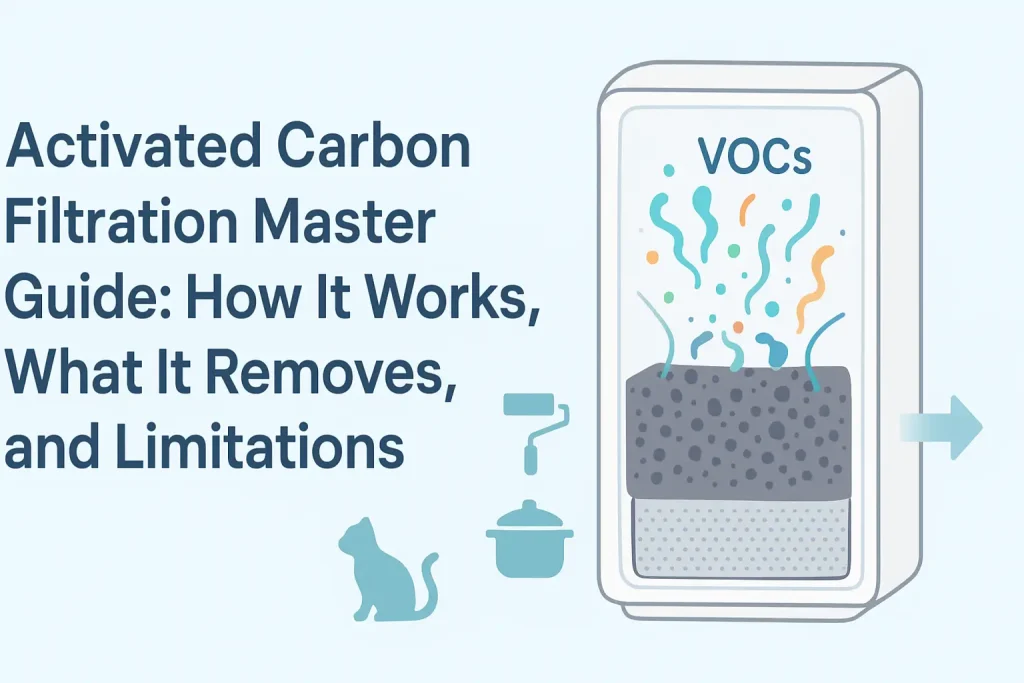
Volatile organic compounds from cleaning products, scented candles, air fresheners, and off-gassing furniture do not directly cause sinusitis but function as potent irritants that amplify existing sinus inflammation. A True HEPA filter alone does nothing to remove VOCs because gas molecules pass straight through mechanical filtration media.
Activated carbon adsorbs these gas-phase irritants by trapping molecules within a porous carbon structure. The amount of carbon matters more than the presence of carbon: units with less than 1 pound of activated carbon saturate within weeks and stop providing meaningful VOC removal. For ongoing sinusitis management around chemical triggers, a unit with 3 or more pounds of activated carbon, such as the Austin Air HealthMate with 15 pounds of carbon and zeolite, provides years of effective gas-phase filtration before media replacement is required.
Combustion byproducts from gas stoves, attached garages, and outdoor traffic infiltration include nitrogen dioxide and ultrafine particles below 0.1 microns. These particles penetrate deeper into respiratory tissue than PM2.5 and are specifically implicated in sinus epithelium damage per research in Environmental Health Perspectives on indoor combustion sources.
What Are the Best Air Purifiers for Sinusitis? Top Picks by Room Size and Budget
The air purifiers listed below are selected specifically for sinusitis management, not general air quality improvement. Every unit meets three sinusitis-specific criteria: a smoke CADR sufficient for 5 ACH in its target room size, True HEPA certification with documented 99.97% capture at 0.3 microns, and CARB certification confirming ozone output below 0.050 ppm.
Room coverage figures throughout this section are stated at the sinusitis-required 5 ACH, not the manufacturer’s 2 ACH rating. The difference is substantial: a unit advertised for 360 square feet may only deliver 144 square feet at the air change rate sinusitis demands.
Best for Bedrooms Under 200 Square Feet: Coway AP-1512HH Mighty
The Coway AP-1512HH delivers 246 CFM smoke CADR, sufficient for 5 ACH in rooms up to 197 square feet with standard 8-foot ceilings. At its sleep mode noise level of 30 dB, it is quieter than a whisper and effectively silent in a bedroom with any ambient sound.
This unit carries AHAM Verifide certification confirming its CADR figures, CARB certification confirming zero detectable ozone output, and AAFA asthma and allergy certification. The 4-stage filtration system includes a washable pre-filter, True HEPA, and an activated carbon pellet grid that provides modest VOC reduction for a unit in this size class.
Key Specifications:
• Smoke CADR: 246 CFM (AHAM certified)
• Coverage at 5 ACH: 197 sq ft
• Coverage at 2 ACH: 360 sq ft
• Sleep mode noise: 30 dB
• Annual filter cost: approximately $30
Use the table below to compare this unit against the next tier of sinusitis air purifiers by CADR, noise, and long-term filter cost.
Product Comparison
Coway AP-1512HH vs Winix 5500-2 vs Levoit Core 400S – Sinusitis Air Purifier Comparison
All three units are CARB certified with zero ozone output. CADR data from AHAM certified database. Coverage calculated at 5 ACH for sinusitis management.
| Spec | Coway AP-1512HH | Winix 5500-2 | Levoit Core 400S |
|---|---|---|---|
| Unit price (approximate) | $230 | $160 | $190 |
| Smoke CADR (CFM) | 246 CFM | 243 CFM | 260 CFM |
| Coverage at 5 ACH (sinusitis) | 197 sq ft | 194 sq ft | 208 sq ft |
| Filter type | True HEPA + carbon grid | True HEPA + carbon grid | True HEPA (H13) + carbon |
| Annual filter cost | $30/yr | $40/yr | $50/yr |
| Sleep mode noise | 30 dB | 28 dB | 24 dB |
| CARB certified | Yes | Yes | Yes |
| Best for | Small bedrooms, quiet operation | Budget sinusitis relief | Ultra-quiet, smart features |
| Verdict for sinusitis | Best overall for small rooms | Best value, nearly equal CADR | Quietest at sleep mode |
CADR data from AHAM certified database. Coverage at 5 ACH calculated as smoke CADR x 12 / 5 x 0.8 (real-world adjustment for furnished rooms). Sleep mode noise from manufacturer specifications. Prices verified at time of publication.
Best for Bedrooms 200-350 Square Feet: Winix 5500-2 and Levoit Core 400S
The Winix 5500-2 delivers 243 CFM smoke CADR with a unique advantage for sinusitis: its PlasmaWave ionizer can be switched off entirely, eliminating any ozone concern while preserving the full CADR of the mechanical filtration alone. At 28 dB sleep mode, it runs quiet enough for all but the most noise-sensitive sleepers.
The Levoit Core 400S reaches 260 CFM smoke CADR with a sleep mode of just 24 dB, making it the quietest unit in its CADR class. The H13 HEPA filter is not quite True HEPA grade, achieving 99.5% capture at 0.3 microns rather than 99.97%, but this difference is unlikely to produce a perceptible difference in sinus symptoms for most users in this room size range.
Both units cover approximately 200 square feet at the sinusitis-required 5 ACH. For a standard 12-by-14-foot master bedroom with a 9-foot ceiling, either unit delivers adequate particle clearance. The Winix wins on filter replacement cost ($40 per year vs $50 per year for the Levoit), while the Levoit wins on app control and quiet operation.
For most sinusitis sufferers in this room size range, the Winix 5500-2 offers the best value because its near-identical CADR to the Coway AP-1512HH costs $70 less at purchase and its washable pre-filter extends HEPA life beyond the 12-month replacement interval.
Best for Large Bedrooms and Living Spaces 350-700 Square Feet: Coway Airmega 400
The Coway Airmega 400 delivers 400 CFM smoke CADR via dual fans, enough for 5 ACH coverage up to 320 square feet with standard ceilings. Its sleep mode noise level of 22 dB is the lowest of any unit in its CADR class and effectively inaudible in a furnished bedroom.
The dual-fan design allows the unit to clean air unevenly across a larger footprint, making it particularly effective in L-shaped rooms or spaces with partial dividers where single-fan units create dead zones of stagnant air. For sinusitis, eliminating these dead zones matters because any pocket of unfiltered air leaves a reservoir of mold spores and allergens that re-contaminate the room within minutes of the purifier cycling down.
Key Specifications:
• Smoke CADR: 400 CFM (AHAM certified)
• Coverage at 5 ACH: 320 sq ft
• Coverage at 2 ACH: 1,560 sq ft
• Sleep mode noise: 22 dB
• Annual filter cost: approximately $60
Best for Severe Sinusitis and Chemical Sensitivity: IQAir HealthPro Plus
The IQAir HealthPro Plus uses HyperHEPA filtration that captures particles down to 0.003 microns with greater than 99.5% efficiency, per independent testing published by the manufacturer. This goes beyond the True HEPA standard and captures ultrafine particles in the size range most associated with deep sinus tissue penetration.
At 300 CFM smoke CADR, coverage at 5 ACH reaches 240 square feet, which is sufficient for a large master bedroom. The 5-pound activated carbon and alumina pellet blend provides meaningful VOC and chemical adsorption that smaller carbon grids in budget units cannot match over multi-year intervals.
The primary trade-off is cost: unit price above $800 plus annual filter replacement of approximately $250. But filter modules last up to 4 years under normal conditions, and the build quality supports continuous 24/7 operation for a decade or longer. For sinusitis patients whose symptoms are severe enough to affect work attendance or sleep quality, the per-day cost calculates lower than many over-the-counter sinus medications.
The decision between a mid-range unit and an IQAir for sinusitis comes down to severity. For mild seasonal sinusitis triggered primarily by pollen, a Coway or Winix unit at 5 ACH provides adequate relief. For chronic sinusitis with year-round symptoms aggravated by chemical sensitivity, the IQAir HealthPro Plus delivers the broadest spectrum filtration currently available in a portable consumer unit.
CADR Calculator
How Much Smoke CADR Do You Need for Sinusitis Relief?
Enter your room dimensions. The calculator uses 5 ACH, the rate recommended for allergy and sinus sufferers. Formula: (length x width x ceiling height x 5 ACH) / 60. Source: AHAM methodology adapted for sinusitis management targets.
Formula: CADR = (length x width x ceiling height x ACH) / 60. For sinusitis, use 5 ACH. The 2 ACH figure on manufacturer labels covers only 40% of the area that 5 ACH covers. A unit advertised for 300 sq ft at 2 ACH covers only 120 sq ft at the sinusitis-effective 5 ACH rate.
| Room Size | CADR at 2 ACH (manufacturer) | CADR at 5 ACH (sinusitis) | Recommended Models |
|---|---|---|---|
| 150 sq ft bedroom | 100 CFM | 250 CFM | Coway AP-1512HH, Winix 5500-2 |
| 200 sq ft bedroom | 133 CFM | 333 CFM | Levoit Core 400S, Coway Airmega 250 |
| 300 sq ft master bedroom | 200 CFM | 500 CFM | Coway Airmega 400, Blueair 605 |
| 500 sq ft living room | 333 CFM | 833 CFM | Blueair 605 or 2 Coway Airmega 400 units |
| 700 sq ft open plan | 467 CFM | 1167 CFM | IQAir HealthPro Plus or 2 units |
Where Should You Place an Air Purifier in a Bedroom for Maximum Sinus Relief?
Air purifier placement directly affects the delivered air change rate in your breathing zone. A unit placed in a corner against a wall loses 25 to 35% of its effective CADR because the intake and exhaust pathways are partially obstructed and airflow short-circuits back to the intake rather than mixing through the room.
Position the unit at least 3 feet from any wall, 2 feet from furniture, and away from curtains or bedding that can obstruct the intake grille. For bedroom sinusitis management, the ideal position is on the side of the bed opposite the door, elevated 12 to 24 inches off the floor on a sturdy side table or dedicated stand.
This elevated central placement accomplishes three things specific to sinusitis: it captures dust mite allergens before they settle onto bedding, it prevents the unit from pulling in floor-level dust that prematurely loads the pre-filter, and it creates a clean air envelope directly around the sleeping position where you spend 7 to 9 hours breathing continuously.
Do not place the purifier directly next to your head. Even at 24 dB, the proximity of a fan motor 12 inches from your ear may cause sleep disruption that negates the sinus benefit of cleaner air. A distance of 4 to 6 feet from the bed with the outlet pointed toward the sleeping position provides the best balance of clean air delivery and acoustic comfort.
This placement logic works because the air purifier draws contaminated room air into the intake, passes it through the True HEPA and carbon stages, and returns clean air through the outlet. The clean air mixes with room air and is eventually drawn back through the unit for another pass. Central placement maximizes the volume of room air that participates in this cycle rather than stagnating in corners.
How Many Hours Per Day Should You Run an Air Purifier for Sinusitis?
Continuous 24-hour operation provides the best sinusitis outcomes because indoor particulate levels are not static. Cooking, showering, entering and exiting the home, HVAC cycling, and outdoor air infiltration all introduce new particles throughout the day. Turning the purifier off during the day allows particle concentrations to climb back to baseline, erasing the overnight gains.
If 24-hour operation is not practical due to electricity cost or noise sensitivity, the minimum effective schedule is continuous operation in the bedroom starting 2 hours before sleep through the entire sleep period, plus operation in the primary daytime living space during waking hours. This minimum schedule captures the two highest-exposure periods: the 7 to 9 hours of sleep breathing and the hours spent in common living areas.
Running a purifier only at night while sleeping addresses the longest continuous exposure but leaves daytime sinus irritation unmanaged. Particles inhaled during the day continue to trigger inflammation that persists into the night, reducing the perceived benefit of overnight purification. For chronic sinusitis patients, maintaining PM2.5 below the WHO guideline of 15 micrograms per cubic meter throughout the full 24-hour cycle produces better outcomes than partial-day operation.
What Filter Maintenance Schedule Prevents Sinusitis Flare-Ups?
A clogged pre-filter reduces airflow through the unit, lowering delivered CADR below the rated value. A saturated carbon filter stops adsorbing VOCs and begins releasing previously captured compounds back into the airstream through a process called desorption. Both conditions directly increase sinus irritation for someone relying on the purifier for symptom management.
For sinusitis patients, the recommended maintenance schedule is more aggressive than manufacturer guidelines. Clean the washable pre-filter every 2 weeks with a vacuum brush attachment. Replace True HEPA filters every 10 to 12 months rather than the typical 12 to 18 months. Replace activated carbon filters every 6 months if VOCs or odors are a known sinus trigger.
This schedule reflects the higher pollutant loading that occurs when a unit runs at high fan speeds continuously rather than cycling on auto mode. A purifier running 24 hours on medium or high fan for sinusitis management processes 3 to 5 times more air volume per day than the same unit cycling on auto mode in a clean room, loading filters proportionally faster.
Track filter replacement dates on a calendar or set a recurring phone reminder. A single missed filter change by 2 to 3 months reduces effective CADR by 15 to 25% due to increased pressure drop across the loaded media. That reduction can drop a unit below the 5 ACH threshold for the room, eliminating sinus symptom relief even though the unit is still running and appears to be functioning normally.
The internal link between filter maintenance and sinus outcomes is direct and measurable. A patient who replaces filters on schedule and cleans the pre-filter biweekly is breathing air at the rated CADR. A patient who skips maintenance is breathing air with 15 to 25% more particles, at particle counts that may remain above the inflammatory threshold for sinus tissue. This is why consistent filter maintenance is as important as the initial unit selection for respiratory health outcomes.
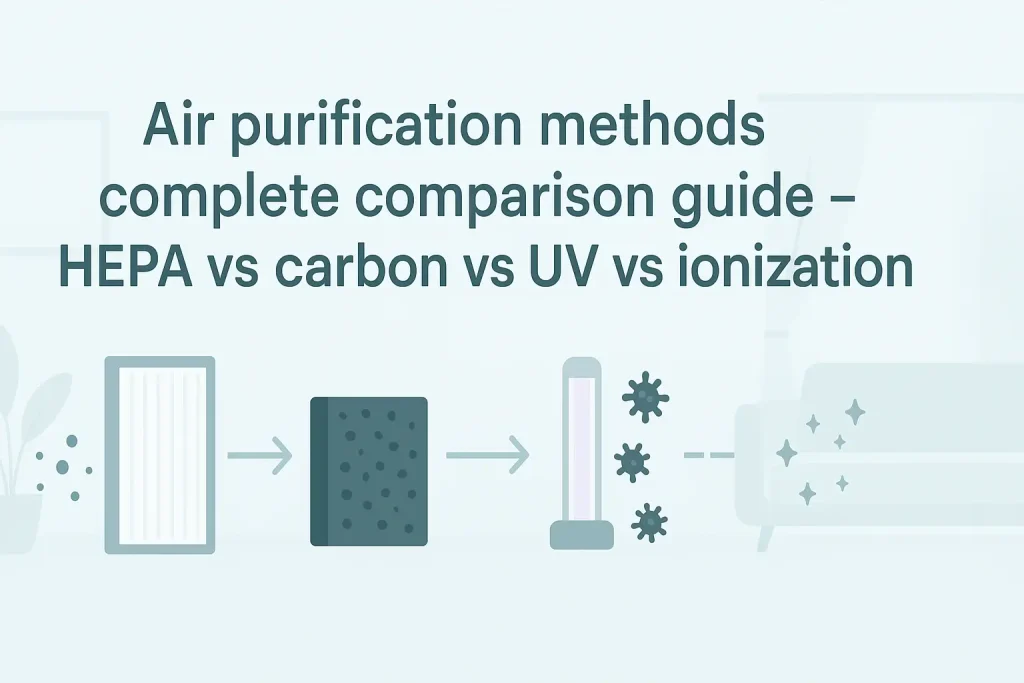
Ionizers, UV-C, and Ozone: Why These Technologies Can Worsen Sinusitis
Ionizers emit charged particles that attach to airborne contaminants and cause them to settle onto surfaces or clump together for capture. But the ionization process itself generates ozone as a byproduct, and the settled particles remain in the room on floors and furniture where they can be resuspended by foot traffic or air currents.
For a sinusitis patient, ozone is a direct respiratory irritant that inflames sinus membranes at concentrations well below the CARB limit of 0.050 ppm. The EPA identifies ozone exposure as a trigger for increased airway inflammation and reduced lung function even at levels below the regulatory threshold. Adding an irritant on top of existing sinus inflammation defeats the purpose of air purification for sinus relief.
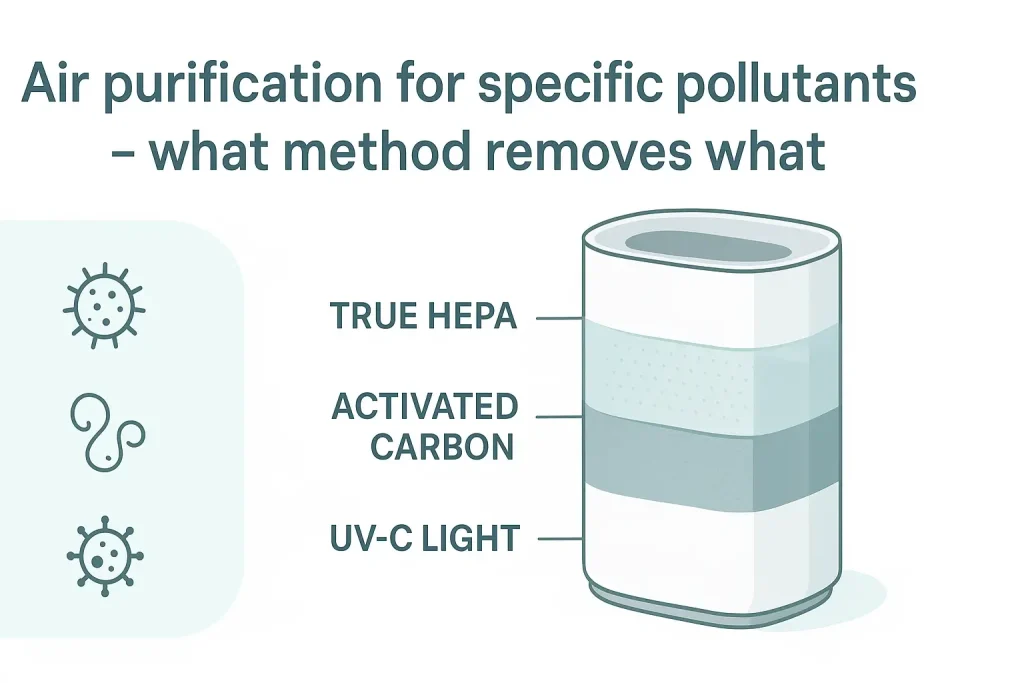
UV-C lamps in consumer air purifiers produce insufficient dwell time for meaningful pathogen inactivation. Air moves past a UV-C bulb in a fraction of a second, too quickly for the UV energy to damage bacterial or viral DNA significantly. The UV-C lamp itself consumes electricity and generates trace ozone while providing negligible sinusitis benefit compared to the True HEPA and carbon stages in the same unit.
The safest approach for sinusitis is a purifier with mechanical filtration only: True HEPA for particles and activated carbon for gases, with no ionizer, no UV-C lamp, and no electrostatic precipitation stage. All recommended units in this guide either lack these technologies entirely or allow them to be switched off independently while maintaining full mechanical filtration performance.
This only occurs when the ionizer or UV-C stage is active. If the unit includes these features and they can be switched off independently from the fan and mechanical filtration, the risk is eliminated. If they cannot be switched off while the fan runs, choose a different unit. Sinusitis patients cannot afford the additional respiratory burden of ozone exposure from a device intended to help them breathe better.
How Much Should You Spend on an Air Purifier for Sinusitis? A Real Cost Breakdown
The purchase price of the unit is a fraction of the total cost of sinusitis air purification over a 5-year ownership period. Filter replacements, electricity consumption, and the productivity cost of sinusitis symptoms that continue due to inadequate air cleaning all factor into the true expense calculation.
A $160 Winix 5500-2 with $40 annual filter replacements and $45 annual electricity at 13 cents per kWh running 24/7 costs approximately $585 over 5 years, or $117 per year. A $230 Coway AP-1512HH with $30 annual filters costs approximately $530 over 5 years, or $106 per year. The higher purchase price of the Coway is offset by lower filter costs, making it cheaper over a 5-year ownership period.
By comparison, the cost of one sinusitis-related urgent care visit, one course of antibiotics, and one lost work day exceeds the entire 5-year cost of any unit in this guide. This framing is not hypothetical: the American College of Allergy, Asthma and Immunology estimates that chronic sinusitis patients average 2 to 4 acute exacerbations per year requiring medical intervention, with each episode costing $200 to $500 in direct medical expenses plus lost productivity.
For sinusitis patients weighing the cost of an air purifier, the relevant comparison is not against other air purifiers. It is against the alternative of continued sinusitis exacerbations. At $100 to $120 per year all-in for a properly sized unit, air purification is among the lowest-cost sinusitis interventions available, and unlike medications, the per-use cost decreases with every hour of operation rather than increasing.
For most sinusitis patients in a bedroom under 200 square feet, the Winix 5500-2 at $160 purchase price offers the lowest total cost of ownership with a CADR sufficient for 5 ACH. In larger rooms, the Coway Airmega 400 or two mid-size units placed at opposite ends of the space provide adequate coverage.
Sinusitis and Air Quality Data
Sinusitis and Indoor Air Quality – What the Research Shows
Sources: Journal of Allergy and Clinical Immunology, EPA Indoor Air Quality, American College of Allergy Asthma and Immunology
Can an Air Purifier Replace Sinusitis Medication or Nasal Irrigation?
No. An air purifier reduces the airborne trigger load that initiates and sustains sinus inflammation. It does not treat existing inflammation, clear impacted mucus, or address structural sinus issues such as deviated septum or nasal polyps. Air purification is an environmental control measure that complements medical treatment. It does not replace it.
Air purifiers serve the same role in sinusitis management that allergen-proof mattress covers and HEPA vacuums serve: they remove a portion of the environmental trigger burden so that the patient’s immune system and medical treatments work against a lower baseline of irritation. A patient who adds air purification to their existing medication and irrigation regimen may experience fewer exacerbations and lower symptom severity. A patient who replaces medication with air purification should expect no improvement and possible worsening of underlying sinus disease.
This happens because sinusitis involves multiple overlapping mechanisms, not just airborne particle exposure. Biofilm formation within sinus cavities, impaired mucociliary clearance, and localized immune dysregulation all contribute to chronic sinusitis independent of air quality. Cleaning the air helps the respiratory and sinus epithelium function better, but it does not resolve established infection or structural blockage.
What Is the Difference Between True HEPA and HEPA-Type Filters for Sinusitis?
True HEPA filters are certified to capture a minimum of 99.97% of particles at 0.3 microns under IEST testing standards. HEPA-type filters have no independent certification standard, and their actual capture efficiency ranges from 85% to 99% depending on the manufacturer and specific media quality, with no standardized test required to use the label.
The 0.3-micron specification is not arbitrary. Particles at 0.3 microns are the most difficult size to capture mechanically because they are small enough to slip between filter fibers via diffusion but large enough to avoid interception by the fiber surface. Particles both larger and smaller than 0.3 microns are actually captured at higher efficiency. A True HEPA filter’s 99.97% at 0.3 microns represents its worst-case performance, not its average.
For sinusitis, the difference between 99.97% capture and 95% capture at 0.3 microns compounds across hundreds of air changes per day. At 5 ACH, the room air volume passes through the filter 120 times in a 24-hour period. Each pass allows a small percentage of particles through. Over 120 passes, a 99.97% filter leaves approximately 0.04% of original particles, while a 95% filter leaves approximately 0.2%, a 5-fold difference in residual particle count.
In practice, this difference may or may not produce a perceptible difference in sinus symptoms depending on the patient’s sensitivity threshold. A patient with mild seasonal sinusitis triggered by high pollen counts may notice no difference between True HEPA and HEPA-type. A patient with severe chronic sinusitis triggered by trace mold fragments may experience a material difference. The safest approach is to select a unit with independently certified True HEPA filtration, confirmed by AHAM Verifide or the manufacturer’s published IEST test report.
Why Does My Sinusitis Get Worse When I First Turn On an Air Purifier?
A new air purifier, especially one with a large activated carbon filter, releases a brief initial off-gassing of adsorbed manufacturing compounds and loose carbon dust when first operated. This temporary irritant release lasts 24 to 72 hours and can cause increased sinus irritation before the unit begins providing net clean air benefit.
Run a new unit on its highest fan speed in an unoccupied, well-ventilated room for 48 hours before placing it in a bedroom. Open a window during this break-in period if outdoor air quality permits. After 48 hours of continuous operation, the initial off-gassing is substantially complete, and the unit can be moved to the intended location for sinusitis management.
This same phenomenon can occur with a new replacement filter, especially activated carbon filters that have been sealed in plastic packaging. Unwrap replacement filters and let them air out in a garage or utility room for 24 hours before installing them in the unit, particularly if you are sensitive to the initial carbon dust and manufacturing residue.
If symptoms persist beyond 72 hours after initial setup, the issue is likely not off-gassing but rather inadequate CADR for the room size or incorrect placement that is short-circuiting clean airflow. Recalculate your CADR requirement at 5 ACH using the calculator earlier in this guide and verify the unit’s placement follows the positioning guidelines above.
Do I Need a Humidifier With My Air Purifier for Sinusitis?
It depends on your indoor humidity level, which you should measure with a hygrometer before adding any device. Air purifiers do not change room humidity. If your indoor relative humidity is below 30%, adding a cool-mist humidifier to maintain 40 to 50% relative humidity supports sinus mucosa hydration and mucociliary clearance, both of which improve sinusitis outcomes.
If indoor humidity is already above 50%, do not add a humidifier. Elevated humidity above 60% promotes mold growth and dust mite proliferation, both of which increase the airborne allergen load the air purifier must handle. The combination of a humidifier and an air purifier in a room above 60% relative humidity can actually worsen sinus symptoms because the humidifier is generating additional airborne triggers faster than the purifier can remove them.
Place the humidifier and air purifier on opposite sides of the room. Humidifier mist droplets can be drawn into the purifier’s intake and prematurely load the HEPA filter with mineral deposits and moisture, reducing filtration efficiency and potentially promoting microbial growth on the filter media. A minimum separation of 6 feet between humidifier and air purifier intakes prevents this interference.
This advice applies specifically to cool-mist humidifiers. Warm-mist or steam humidifiers do not produce the same mineral droplet issue but consume more electricity and require more frequent cleaning to prevent bacterial growth in the water reservoir. For sinusitis, a cool-mist humidifier with a built-in hygrostat that maintains 45% relative humidity provides the best combination of sinus support and minimal filter interference.
Should I Close My Bedroom Door When Running an Air Purifier for Sinusitis?
Yes. A closed door converts the bedroom into a defined air volume that the purifier can effectively treat. An open door connects the bedroom to the rest of the house, creating an effectively infinite air volume that no single-room purifier can clean at the 5 ACH rate sinusitis requires.
In a room with an open door, the purifier continuously cleans bedroom air while contaminated air from adjacent rooms continuously enters through the doorway. The net result is a mixed air volume that may be only marginally cleaner than the rest of the house, regardless of the purifier’s CADR. Closing the door isolates the bedroom air volume and allows the purifier to achieve its rated air change rate within a defined space.
Closing the door does not create a problem with CO2 buildup unless the bedroom is unusually small and tightly sealed with two occupants. A standard 150-square-foot bedroom with one occupant and a closed door will reach approximately 1,000 to 1,500 ppm CO2 overnight, which is within the ASHRAE guideline of 1,000 to 2,000 ppm for occupied spaces. If you are concerned about CO2, a CO2 monitor placed on a nightstand provides real-time data to confirm that your specific room stays within acceptable limits overnight.
For sinusitis patients who sleep with a closed door and an air purifier running at 5 ACH, the clean air benefit of the closed door substantially outweighs the modest CO2 increase in all but the smallest, most tightly sealed bedrooms.
What Is the Best Air Purifier Filter Type for Mold-Induced Sinusitis?
True HEPA is mandatory for mold spores, which range from 3 to 40 microns and are easily captured by any HEPA-grade media. But the more important filtration target for mold-induced sinusitis is mycotoxin-carrying mold fragments below 1 micron that break off from active colonies and remain airborne far longer than intact spores.
These fragments require the full 99.97% capture efficiency at 0.3 microns that only certified True HEPA provides. A unit with HEPA-type or H13-grade filtration that achieves 95 to 99% at 0.3 microns allows enough of these sub-micron fragments through to sustain sinus inflammation even as visible spore counts drop.
Activated carbon is essential for the musty odors and microbial volatile organic compounds (MVOCs) that mold colonies emit. These gaseous compounds irritate sinus membranes independently of particle exposure. A carbon stage with 1 pound or more of activated carbon provides meaningful MVOC adsorption for 6 to 12 months before replacement.
For mold-induced sinusitis specifically, the Austin Air HealthMate with 15 pounds of activated carbon and zeolite provides the most comprehensive single-unit solution because its carbon mass is sufficient to address MVOC off-gassing from hidden mold sources that cannot be immediately remediated. However, an air purifier is a mold management tool, not a mold remediation solution. The underlying moisture source and mold colony must be physically removed to resolve mold-induced sinusitis.
Can I Use an Air Purifier for Sinusitis in a Room With Carpet?
Yes, but carpet functions as a particle reservoir that continuously re-emits dust mite allergens, mold fragments, and tracked-in pollen with every footstep. An air purifier in a carpeted room must run at a higher CADR or for longer continuous periods to overcome this ongoing particle resuspension.
The problem is not that the air purifier cannot clean carpeted-room air. It is that the purifier is fighting a continuous particle source that does not exist in hard-floor rooms. Each time someone walks across the carpet, thousands of settled particles become airborne again. The purifier captures them over the following 20 to 30 minutes. Then another footstep resuspends more particles. The net effect is a sawtooth pattern of particle counts that never reaches the steady low level achievable in a hard-floor room.
Mitigation strategies include running the purifier at a higher fan speed (medium or high rather than auto or sleep mode), using a HEPA vacuum on the carpet twice weekly, and placing a washable area rug over the carpet in the immediate sleeping area to reduce resuspension near the breathing zone. These strategies are discussed in more detail in our guide on managing indoor air quality when multiple particle sources are active simultaneously.
How Do I Know If My Air Purifier Is Actually Helping My Sinusitis?
Track three objective measures: morning sinus symptom severity on a 1-to-10 scale, overnight PM2.5 levels in the bedroom measured with an air quality monitor, and the frequency of sinusitis exacerbations requiring medication over a 3-month baseline period before and after starting air purifier use.
Subjective improvement without objective measurement is unreliable because sinusitis symptoms fluctuate with humidity, allergen seasons, viral exposures, and dozens of other variables unrelated to air purifier performance. A PM2.5 monitor placed on a nightstand provides a direct readout of whether the purifier is actually reducing particle counts in your breathing zone to the target of below 10 micrograms per cubic meter.
If the PM2.5 monitor shows particle counts consistently above 15 micrograms per cubic meter overnight with the purifier running, the unit is undersized for the room, the filter needs replacement, or the placement is causing short-circuiting. If PM2.5 is below 10 but morning symptoms remain unchanged, the primary sinusitis trigger may be non-particulate (VOCs, humidity, structural sinus issues) and the purifier is addressing the wrong target. This diagnostic approach is consistent with the methodology described in our article on EPA and WHO indoor air quality guidelines and how to measure compliance.
Can I Use One Air Purifier for Multiple Rooms If I Have Sinusitis?
No single portable air purifier can effectively clean multiple closed-door rooms simultaneously. The unit can only clean air that physically passes through it. Air in an adjacent room with a closed or partially closed door circulates independently and receives almost no benefit from a purifier in another room.
Moving a single unit between rooms throughout the day is logistically possible but clinically suboptimal. The unit needs 1 to 2 hours at its rated CADR to bring a room to steady-state clean air levels after being moved. If you move the unit from bedroom to living room to home office throughout the day, each room spends significant time at elevated particle levels before the purifier catches up.
The better approach for multi-room sinusitis management is one appropriately sized unit in the bedroom (where you spend 7 to 9 continuous hours breathing) plus a second unit in the primary daytime living space. For smaller ancillary rooms such as a home office used for a few hours, a compact unit like the Levoit Core 300S with 145 CFM smoke CADR provides adequate coverage for rooms under 120 square feet at 5 ACH.
For homes with forced-air HVAC, upgrading to a MERV 13 pleated furnace filter provides whole-house particle reduction that complements room-level HEPA purification. This two-tier approach, room units for high-ACH sleeping and living spaces plus HVAC filtration for whole-house baseline reduction, offers the most comprehensive sinusitis air quality management. Our guide on air purification for basements and whole-house approaches covers the HVAC filtration strategy in more detail.
Is It Safe to Run an Air Purifier 24/7 in a Bedroom With a Baby or Child Who Has Sinusitis?
Yes, provided the unit is CARB certified with zero or near-zero ozone output, placed safely out of reach on an elevated surface with the power cord secured against tripping, and operated at a noise level at or below 30 dB at the child’s sleeping position to avoid sleep disruption.
The Coway AP-1512HH and Levoit Core 400S are both CARB certified with no detectable ozone and sleep modes at or below 30 dB. For a nursery or child’s bedroom, the Levoit Core 400S at 24 dB sleep mode is quiet enough to be placed 4 feet from the crib without disrupting infant sleep cycles.
Additional safety precautions for children’s rooms include using a unit with a child lock feature to prevent curious toddlers from changing fan speeds or turning the unit off, securing the power cord along the baseboard with adhesive cord clips, and placing the unit on a sturdy piece of furniture that cannot be tipped over by a climbing child. Never place an air purifier on the floor in a child’s room where it becomes a trip hazard and a temptation for small fingers to explore the intake grille.
For infants with recurrent sinusitis symptoms, consult a pediatric ENT specialist before relying on air purification as a primary intervention. Infant sinus anatomy differs from adult anatomy, and persistent sinus symptoms in infants may indicate an underlying structural or immunological issue that air purification alone cannot address. Air purification is safe and beneficial as an adjunct, but it should supplement, not delay, appropriate medical evaluation.
What Is the Relationship Between Sinusitis and Indoor Humidity When Using an Air Purifier?
Indoor humidity directly affects both sinus membrane function and the behavior of airborne particles that an air purifier targets. At relative humidity below 30%, sinus mucosa dries out, mucus thickens, and ciliary clearance slows, making existing sinusitis worse regardless of how clean the air is.
At relative humidity above 60%, dust mite populations explode (they require 50% or higher to reproduce), mold spores germinate on surfaces, and airborne particles absorb moisture and change size, altering the capture efficiency of the HEPA filter. The ideal range for sinusitis is 40 to 50% relative humidity, measured with a digital hygrometer placed in the sleeping area.
The air purifier itself does not change humidity. But humidity changes the purifier’s effectiveness. In very humid conditions above 70%, HEPA filter fibers can absorb moisture and swell, slightly reducing airflow through the media and lowering effective CADR. In very dry conditions below 20%, static electricity buildup on synthetic carpet fibers can cause particles to cling to surfaces rather than staying airborne for the purifier to capture, temporarily reducing airborne particle counts in a way that gives a false sense of clean air until foot traffic resuspends them.
For sinusitis patients using an air purifier, monitoring and managing humidity is as important as monitoring and managing particle counts. A combined PM2.5 monitor with a built-in humidity sensor provides both readings on a single display, allowing you to track the two most important environmental variables for sinus health simultaneously.
How Often Should I Replace the Filters in an Air Purifier Used Specifically for Sinusitis?
Replace True HEPA filters every 10 to 12 months, activated carbon filters every 6 months if VOCs or odors are a sinus trigger (every 12 months if not), and clean washable pre-filters every 2 weeks with a vacuum brush attachment. This schedule is more aggressive than manufacturer recommendations and reflects the heavier loading that occurs during continuous high-fan-speed operation for sinusitis management.
These intervals assume the purifier runs 24 hours daily on medium or high fan speed. If you run the unit fewer hours, the intervals extend proportionally. A unit running 12 hours daily at medium speed can extend HEPA replacement to 18 months and carbon replacement to 12 months while maintaining acceptable performance for sinusitis.
Visual inspection is not a reliable indicator of filter condition. A HEPA filter that looks dirty on the surface may still have months of useful life at the rated pressure drop, while a filter that appears clean may be loaded with sub-micron particles that are invisible to the naked eye but have already increased airflow resistance enough to reduce delivered CADR. Track replacement dates on a calendar and replace on schedule rather than by appearance.
The most common filter maintenance mistake among sinusitis patients is extending HEPA replacement intervals to save money while unknowingly running a filter that has dropped effective CADR by 20 to 30%. The patient perceives no benefit from the purifier, concludes air purification does not help sinusitis, and stops using the unit entirely, when the actual problem was a clogged filter reducing performance below the therapeutic threshold.
For most sinusitis patients, the right approach to air purification is simple: calculate your required smoke CADR at 5 ACH for your specific room, buy a CARB-certified True HEPA unit that meets or exceeds that CADR, place it centrally 3 feet from walls, run it 24 hours on medium or high fan, and replace filters on the schedule above. Getting these fundamentals right delivers sinus symptom reduction that is measurable, consistent, and cost-effective over multi-year ownership.