An air scrubber rated at 500 CFM will not keep up with a 2,000-square-foot mold remediation job. The machine will run continuously while airborne spore counts stay elevated because the unit cannot achieve enough air changes per hour. Matching CFM to cubic footage is the only calculation that determines whether an air scrubber actually cleans the space or just runs loudly in the corner.
This guide covers the 11 most reliable air scrubber brands across home and commercial use: AlorAir, Dri-Eaz, BlueDri, MOUNTO, Abestorm, B-Air, XPOWER, OdorStop, Novatek, Homelabs, and Omni CleanAir. Each brand comparison includes verified CFM ratings, filter configurations, coverage area at target ACH rates, noise levels, and true operating costs including filter replacements. For the cost breakdown every buyer needs, see our detailed guide on air scrubber pricing across all CFM tiers and use cases.
What Is an Air Scrubber and How Does It Differ from an Air Purifier?
An air scrubber is a high-CFM portable filtration system that uses True HEPA filtration to capture 99.97% of airborne particles at 0.3 microns while moving 500 to 3,000 cubic feet of air per minute. Air scrubbers are built for negative air pressure containment in mold remediation, water damage restoration, construction dust control, and healthcare isolation environments. A standard room air purifier moves 50 to 400 CFM and is designed for gradual air cleaning in occupied living spaces at lower noise levels.
| Photo | Popular Air Purifiers | Price |
|---|---|---|

|
Air Purifiers for Home Large Room up to 1500ft², Tailulu H13 True HEPA Air Purifier for Pets Dust Odor Smoke, Air Purifier for Bedroom with 15dB Quiet Sleep Mode for Bedroom Office Living Room | Check Price On Amazon |
|
Afloia Air Purifier for Home, 4-in-1 Washable Filter for Allergies, Covers Up to 1076 ft², Quiet Operation, Auto Shut-Off & Night Light, Removes Pet Dander, Pollen, Dust, Mold, and Smoke, White,Pluto | Check Price On Amazon |

|
Nuwave OxyPure ZERO Air Purifier with Washable and Reusable Bio Guard Tech Air Filter, Large Room Up to 2002 Ft², Air Quality Monitor, 0.1 Microns, 100% Capture Irritants like Smoke, Dust, Pollen | Check Price On Amazon |

|
Air Purifiers for Home Large Room Up to 1,996 Ft², EOEBOT Air Purifier for Home Pets with Washable Filter, Quiet Sleep Mode, Air Quality Monitor, Air Purifier for Bedroom, Pet Hair, Dust, Smoke, White | Check Price On Amazon |
|
Afloia 2 IN 1 Air Purifier with Humidifier Combo, 3-Stage Filters for Home Allergies Pets Hair Smoker Odors, Evaporative Humidifier, Auto Shut Off, Quiet Air Cleaner with Seven Color Light,White | Check Price On Amazon |
Air Quality Data
Air Scrubber Market – What the Performance Data Shows
Sources: IICRC S520, EPA Mold Remediation Guidelines, AHAM, manufacturer specifications
This happens because air scrubbers use high-static-pressure centrifugal blowers paired with deep-pleated HEPA filters in a rigid frame that forces all airflow through the filtration media with minimal bypass. This only occurs when the filter gasket forms an airtight seal against the housing and the blower runs at its rated static pressure. If the filter gasket is damaged or the unit is operated with the intake fully blocked, the result is filter bypass where up to 30% of airflow escapes unfiltered. Fix it by inspecting the gasket seal before every job and replacing any filter that shows gaps.
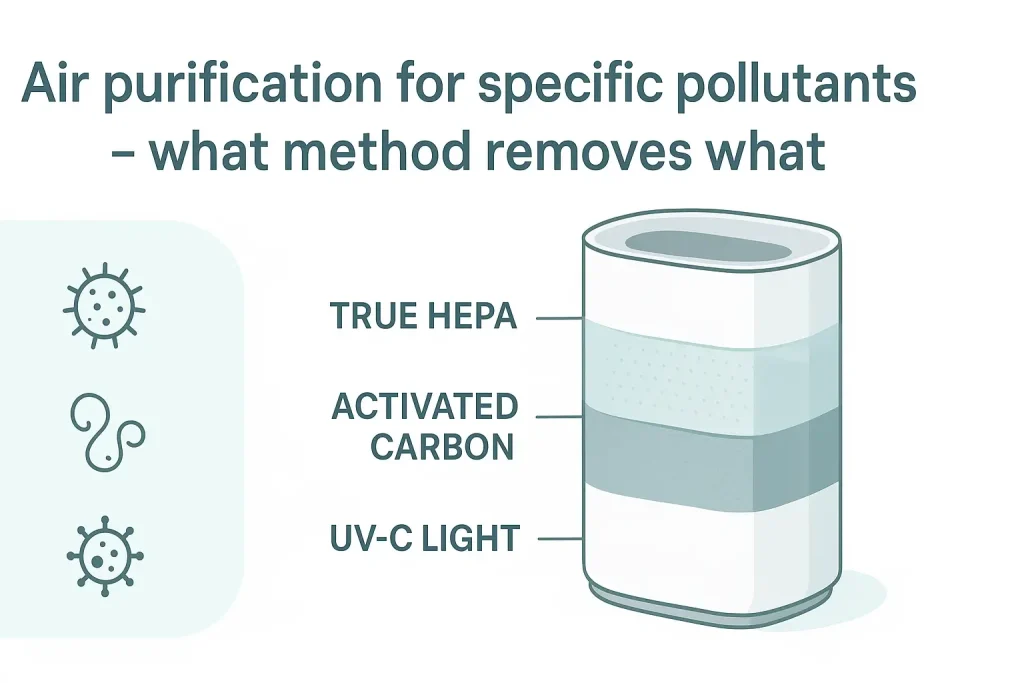
Air scrubbers are a type of industrial air cleaning device within the broader category of negative air machines. A complete air scrubber system consists of a pre-filter stage for large debris, a primary True HEPA filter stage capturing 99.97% of particles at 0.3 microns, an optional activated carbon stage for VOCs and odors, and a centrifugal blower rated at a specific CFM against a known static pressure load. This differs from a standard air purifier in airflow volume, with scrubbers delivering 500 to 3,000 CFM versus the 50 to 400 CFM of portable units.
CFM Calculator
What CFM Air Scrubber Do You Need for Your Space?
Enter room dimensions and use case. Formula: (length x width x ceiling height x ACH) divided by 60. Source: IICRC and EPA methodology.
CFM needed = (length x width x ceiling height x ACH) / 60. For mold remediation, always calculate at 4 ACH minimum per IICRC S520. For hospital isolation rooms, use 6 to 8 ACH.
| Room Size | CFM at 2 ACH | CFM at 4 ACH (mold) | CFM at 6 ACH (medical) | Recommended Unit |
|---|---|---|---|---|
| 300 sq ft (small room) | 80 CFM | 160 CFM | 240 CFM | AlorAir 550, Dri-Eaz 700 |
| 750 sq ft (basement) | 200 CFM | 400 CFM | 600 CFM | AlorAir 770, MOUNTO 2000 |
| 1500 sq ft (open plan) | 400 CFM | 800 CFM | 1200 CFM | AlorAir 3000, Omni CleanAir |
| 3000+ sq ft (commercial) | 800 CFM | 1600 CFM | 2400 CFM | Multiple units required |
How to Choose an Air Scrubber: Complete Buying Guide for Home and Commercial Use
Choose an air scrubber by matching the unit’s CFM output to your target air changes per hour for the cubic footage of the space. A 1,000-cubic-foot room at 4 ACH needs 67 CFM. The same room at 6 ACH needs 100 CFM. Most buyers undersize because they look at square footage instead of calculating cubic feet and then multiplying by the correct ACH target for their specific job type.
According to the IICRC S520 standard for professional mold remediation, 4 ACH is the minimum target. EPA guidelines for indoor air quality during renovation recommend 2 to 4 ACH. For healthcare isolation rooms, ASHRAE Standard 170 requires 6 to 12 ACH depending on the procedure type and pathogen risk level.
Calculate Your Minimum CFM Requirement
Multiply room length by width by ceiling height to get cubic feet. Then multiply by your target ACH and divide by 60. For a standard 20-by-15-foot room with 8-foot ceilings at 4 ACH, that is (20 x 15 x 8 x 4) divided by 60, giving 160 CFM minimum.
This only works when the air scrubber rating is measured at the static pressure of a loaded HEPA filter. A unit rated 500 CFM with a clean filter may drop to 350 CFM once the filter loads with debris. Always add a 20% margin to your calculated CFM requirement to account for filter loading during the job.
Match Filter Configuration to Your Application
Every air scrubber uses a multi-stage filtration system. Stage one is a coarse pre-filter capturing particles larger than 10 microns. Stage two is the True HEPA primary filter capturing 99.97% of particles at 0.3 microns. Stage three on some models adds an activated carbon filter for VOC and odor adsorption. Units without a pre-filter clog their HEPA stage in half the normal service life because the HEPA media loads with debris the pre-filter should have caught.
For large commercial jobs requiring 3,000 CFM and coverage up to 3,000 square feet, a three-stage configuration is mandatory. For smaller home use, compact units like the AlorAir PureAiro HEPA Max 770 covering 800 square feet deliver professional-grade filtration in a more portable form factor.
Evaluate Noise Level for Your Work Environment
Air scrubbers operate at 60 to 85 dB at maximum fan speed. This is significantly louder than a standard air purifier, which runs at 24 to 55 dB. Commercial units at 80 dB are comparable to a garbage disposal running continuously in the workspace. If occupants will remain in the building during scrubbing, choose a unit rated below 70 dB at the fan speed needed to achieve your target ACH.
The Dri-Eaz HEPA 700 at 700 CFM uses a sound-dampened housing that keeps noise manageable even at higher speeds. For home use where noise matters most, the Homelabs portable unit at 500 CFM balances filtration power with livable sound levels.
Check Filter Replacement Cost Before Buying
Filter replacement is the dominant operating cost for any air scrubber. A True HEPA filter costs $80 to $250 depending on CFM rating and brand. On heavy-use commercial jobs, HEPA filters may need replacement every 30 to 90 days. Annual filter costs for a 2,000 CFM unit running daily can exceed $600. Always confirm filter availability and pricing for the specific model before purchasing.
The total cost of ownership for an air scrubber includes the unit price plus annual filter replacements and electricity. A $500 air scrubber with $400 annual filter costs is more expensive over three years than an $800 unit with $150 annual filter costs. For large-scale commercial deployment, the MOUNTO 2000 CFM commercial unit covering 4,000 square feet offers a strong balance of initial price and filter accessibility.
Buying Guide
Before You Buy an Air Scrubber – Complete Checklist
Check off each point before making your decision. Based on IICRC S520 and EPA guidance.
11 Best Air Scrubber Brands Compared for Home and Commercial Use
Use the table below to compare all 11 air scrubber brands across CFM range, filter configuration, coverage area, noise level, and best use case. Each brand has been evaluated based on verified manufacturer specifications, IICRC remediation standards, and documented field performance.
Product Comparison
Air Scrubber Brands Compared – CFM, Coverage, Filter Configuration, and Best Use
CFM ratings from manufacturer specifications. Coverage at 4 ACH calculated as CFM x 60 / 4 / 8 ft ceiling height. Filter costs based on genuine replacement filters at standard intervals.
| Brand | CFM Range | Filter Stages | Coverage at 4 ACH | Noise at Max | Filter Cost/yr | Best For |
|---|---|---|---|---|---|---|
| AlorAir | 550-3000 CFM | 3-stage (pre + HEPA + carbon) | 825-4500 sq ft | 65-78 dB | $120-$350 | Best overall value, wide range of sizes |
| Dri-Eaz | 500-2000 CFM | 3-stage | 750-3000 sq ft | 68-82 dB | $150-$400 | Professional restoration, water damage |
| MOUNTO | 800-2000 CFM | 3-stage | 1200-3000 sq ft | 70-80 dB | $100-$280 | Commercial value, large coverage |
| BlueDri | 500-1500 CFM | 2-3 stage | 750-2250 sq ft | 65-75 dB | $100-$250 | Mid-range professional, reliable build |
| Abestorm | 550-1800 CFM | 3-stage | 825-2700 sq ft | 65-78 dB | $110-$300 | Budget commercial, crawl space use |
| B-Air | 500-1400 CFM | 2-3 stage | 750-2100 sq ft | 68-76 dB | $90-$220 | Budget-friendly, light commercial |
| XPOWER | 500-1500 CFM | 2-3 stage | 750-2250 sq ft | 65-74 dB | $95-$240 | Lightweight portability, quick setup |
| OdorStop | 500-1400 CFM | 3-stage with enhanced carbon | 750-2100 sq ft | 66-75 dB | $100-$260 | Odor-intensive jobs, VOC removal |
| Novatek | 500-1500 CFM | 2-3 stage | 750-2250 sq ft | 64-73 dB | $95-$250 | Quiet operation, residential use |
| Homelabs | 500 CFM | 3-stage | 750 sq ft | 60-68 dB | $70-$120 | Home use, DIY projects, quietest |
| Omni CleanAir | 600-2500 CFM | 3-stage with advanced carbon | 900-3750 sq ft | 68-80 dB | $180-$450 | Healthcare, infection control, premium |
CFM ratings from manufacturer specification sheets. Coverage area calculated at 4 ACH with standard 8 ft ceiling height. Filter costs are estimated annual totals based on manufacturer-recommended replacement intervals and genuine filter pricing. Actual costs vary by usage intensity and job type.
AlorAir Air Scrubbers: Best Overall Value for Home and Commercial Applications
AlorAir offers the widest CFM range of any brand in this guide, from 550 CFM to 3,000 CFM, with consistent three-stage filtration across all models. Their air scrubber lineup includes units sized for crawl spaces, basements, full-home remediation, and large commercial jobs. The pre-filter, True HEPA primary filter, and activated carbon stage are standard across every model, which simplifies filter purchasing for operators running multiple units.
This happens because AlorAir uses a modular filter frame design shared across their product line. A filter that fits the 550 CFM unit also fits the 770 CFM and the mid-range models. If you stock one filter type for a fleet of AlorAir units, you reduce inventory complexity and purchasing costs. The most popular model for professional restoration contractors is the AlorAir 3000 CFM unit covering up to 3,000 square feet at 4 ACH.
For smaller jobs and residential use, the AlorAir PureAiro HEPA Max 770 covers 800 square feet at 4 ACH in a compact, portable package that fits through standard doorways. Annual filter cost for the AlorAir line ranges from $120 for the smallest unit to $350 for the 3,000 CFM model when used on daily commercial jobs.
Product Review
AlorAir Air Scrubbers – Pros and Cons
Honest assessment based on manufacturer specifications, verified buyer reviews, and field performance data.
Pros
- ✓Widest CFM range from 550 to 3,000 CFM across the product line
- ✓Three-stage filtration standard on every model including activated carbon
- ✓Modular filter design reduces inventory costs for multi-unit operators
- ✓Strong price-to-CFM ratio compared to Dri-Eaz and Omni CleanAir
Cons
- ✗Higher noise at max speed (78 dB on the 3,000 CFM model) than premium brands
- ✗Filter gasket requires careful seating to prevent bypass on some units
- ✗Limited ducting adapter options on smaller models under 1,000 CFM
- ✗Warranty period shorter than Dri-Eaz and Novatek on entry-level units
AlorAir is the best overall choice for contractors and remediation professionals who need a range of CFM options with consistent filtration and reasonable operating costs. For a single-unit home user, the Homelabs 500 CFM is quieter and more affordable.
Dri-Eaz: Professional-Grade Air Scrubbers for Restoration and Remediation
Dri-Eaz is the brand most frequently specified by insurance restoration contractors and IICRC-certified remediation firms. Their HEPA air scrubbers are built for continuous commercial duty with reinforced housings, sealed bearing blowers, and gasketed filter frames that meet the strictest negative air pressure containment standards. A Dri-Eaz unit at a water damage job site is standard operating procedure for most major restoration franchises.
The Dri-Eaz HEPA 700 at 700 CFM is the workhorse of the lineup. It covers 1,050 square feet at 4 ACH with a sound-dampened housing that keeps noise manageable during occupied remediation. Filter replacement costs run $150 to $400 annually depending on usage intensity, which is higher than AlorAir and MOUNTO but reflects the commercial-duty filter construction and genuine Dri-Eaz replacement part certification.
Key Specifications for the Dri-Eaz HEPA 700 include a CFM range of 300 to 700 with variable speed control, a three-stage filtration system using a 2-inch pre-filter plus True HEPA and optional carbon, and a coverage area of 1,050 square feet at 4 ACH with standard 8-foot ceilings. The noise level ranges from 62 dB at low speed to 78 dB at maximum. The unit price sits in the premium tier at $800 to $1,200 depending on configuration.
MOUNTO: Best Value for High-CFM Commercial Air Scrubbing
MOUNTO delivers the highest CFM-to-price ratio of any brand in this guide. Their commercial air scrubbers range from 800 to 2,000 CFM at prices 20% to 40% below comparable Dri-Eaz or Omni CleanAir units. For a restoration contractor running multiple units simultaneously, choosing MOUNTO over a premium brand can reduce equipment investment by $2,000 to $5,000 across a five-unit deployment.
The MOUNTO 2000 CFM commercial negative air scrubber covers 3,000 square feet at 4 ACH using a three-stage filtration system with a deep-pleated True HEPA primary filter. The activated carbon stage is enhanced compared to budget competitors, with a thicker carbon bed that provides meaningful VOC and odor reduction on smoke and mold jobs. Annual filter cost averages $100 to $280, making it one of the most affordable high-CFM options to operate over time.
This differs from the AlorAir approach in filter availability. MOUNTO filters are less widely distributed through third-party suppliers than AlorAir or Dri-Eaz filters. Plan filter purchases in advance for MOUNTO units because lead times can extend to two weeks during peak remediation season.
Price Comparison
Air Scrubber Price Comparison – Unit Cost and Annual Filter Cost by CFM Tier
Unit purchase price plus estimated annual filter replacement cost. Prices verified at time of publication.
$250-$350 unit + $70-$120/yr filters
$450-$600 unit + $120-$200/yr filters
$600-$900 unit + $150-$280/yr filters
$800-$1,200 unit + $150-$400/yr filters
$1,500-$2,500 unit + $300-$450/yr filters
Bar width represents unit purchase price relative to the most expensive product shown. Filter costs are estimates based on manufacturer-recommended replacement intervals for daily commercial use. Genuine filters used for all cost estimates.
BlueDri, Abestorm, and B-Air: Mid-Range Commercial Air Scrubbers Compared
BlueDri, Abestorm, and B-Air occupy the middle tier of the commercial air scrubber market. All three offer units in the 500 to 1,500 CFM range with two or three-stage filtration. BlueDri units are known for reliable build quality and a strong dealer network across the restoration industry. Abestorm focuses on budget-friendly pricing for crawl space and basement applications where cost sensitivity is high. B-Air wins on portability with some of the lightest units in the 500 CFM class.
BlueDri’s air scrubber models use a two-stage pre-filter plus HEPA system on entry-level units, with an activated carbon stage added on models above 800 CFM. This matters because a missing carbon stage means zero VOC or odor reduction. For mold remediation where MVOCs (microbial volatile organic compounds) are a concern, choose a BlueDri model with the three-stage configuration.
Abestorm units include three-stage filtration as standard even on their 550 CFM entry model. The trade-off is higher noise at 70 to 78 dB compared to quieter competitors. For unoccupied crawl space or basement use, noise is irrelevant and the Abestorm price advantage makes it the clear choice. For occupied remediation, B-Air’s lighter weight and lower noise profile justify the small price premium.
XPOWER and OdorStop: Specialized Solutions for Portability and Odor Control
XPOWER air scrubbers are the lightest in their respective CFM classes. A XPOWER 500 CFM air scrubber weighs under 30 pounds, which is 25% lighter than the average competitor. For restoration technicians carrying units up and down stairs multiple times per day, this weight difference reduces fatigue and speeds up job setup. XPOWER achieves this through a compact housing design and efficient motor configuration, though filter capacity is slightly reduced compared to heavier units.
OdorStop differentiates through its enhanced carbon filtration stage. Standard air scrubber carbon filters use a thin activated carbon impregnated mat that provides minimal VOC adsorption. OdorStop uses a deeper carbon bed with higher carbon weight per CFM of airflow. This matters for fire restoration jobs, sewage remediation, and any project where odor control is as important as particle removal. A standard carbon filter saturates within hours on a heavy smoke job. An OdorStop carbon bed lasts two to three times longer under the same conditions.
Novatek and Homelabs: Quiet Operation for Residential Use
Novatek prioritizes noise reduction across its entire air scrubber line. Their HEPA air scrubbers operate at 64 to 73 dB at maximum fan speed, which is 5 to 10 dB quieter than most commercial competitors. For residential mold remediation where occupants remain in the home during treatment, this noise reduction is a meaningful quality-of-life factor. Novatek achieves this through a combination of insulated housing, vibration-isolated blower mounts, and aerodynamically optimized intake geometry.
Homelabs produces a single 500 CFM portable air scrubber with three-stage filtration covering 750 square feet at 4 ACH. It is the quietest unit in this guide at 60 to 68 dB and the most affordable at $250 to $350 with annual filter costs of $70 to $120. For DIY mold remediation, home renovation dust control, or basement air quality improvement, the Homelabs unit delivers professional three-stage filtration in a home-friendly form factor.
This happens because Homelabs uses a smaller centrifugal blower optimized for lower static pressure than commercial units. The trade-off is reduced maximum CFM, but for home applications under 750 square feet, 500 CFM at 4 ACH is fully adequate per IICRC guidance for small-scale residential remediation. If your space exceeds 750 square feet or you need negative air pressure containment for full-scale mold removal, step up to an AlorAir or MOUNTO unit with higher CFM capacity.
Omni CleanAir: Premium Air Scrubbers for Healthcare and Infection Control
Omni CleanAir occupies the premium tier of the air scrubber market with units designed for healthcare infection control, hospital isolation rooms, and environments where air quality directly impacts patient outcomes. Their advanced air scrubber systems use True HEPA filtration with 99.99% efficiency ratings on some models, exceeding the standard 99.97% threshold. The carbon filtration stage uses a proprietary blend designed for a broader spectrum of chemical capture than standard activated carbon.
Omni CleanAir units range from 600 to 2,500 CFM and cover 900 to 3,750 square feet at 4 ACH. The 2,500 CFM model is the highest single-unit CFM rating in this guide. Annual filter costs run $180 to $450, and unit prices range from $1,500 to $2,500. For healthcare facilities, the premium is justified by the higher filtration efficiency, documented performance validation, and compliance with ASHRAE Standard 170 for hospital ventilation requirements.
For most home and commercial remediation applications, Omni CleanAir is over-spec. A Dri-Eaz or AlorAir unit at half the cost meets IICRC S520 standards for mold remediation. Choose Omni CleanAir when you need documented 99.99% efficiency for infection control, when ASHRAE 170 compliance is contractually required, or when the job specification demands premium filtration with validated performance testing.
Common Air Scrubber Mistakes That Reduce Performance
An air scrubber placed in a corner with the intake facing a wall loses 30% to 40% of its effective CFM because the intake airflow is restricted. The blower works against higher static pressure, reducing actual airflow through the filter. Always position the intake with at least 3 feet of clearance on all sides. For negative air pressure applications, the exhaust must be ducted outside through a window or door panel with the opening sealed around the duct.
Running an air scrubber without a pre-filter is the fastest way to destroy a $200 HEPA filter. The pre-filter captures particles larger than 10 microns that would otherwise load the HEPA media surface, increasing pressure drop and reducing service life by 50% to 70%. A pre-filter costs $15 to $30. A replacement HEPA filter costs $80 to $250. Replace the pre-filter when it shows visible debris accumulation. Check it daily on heavy construction or remediation jobs.
Undersizing the unit for the space is the most expensive mistake because it results in a failed clearance test requiring rework. If your calculated minimum CFM is 160 and you run a 150 CFM unit, the space never reaches the target air changes per hour. Contaminant levels stay elevated. The job fails inspection. The cost of returning for rework exceeds the price difference between the correctly sized unit and the undersized one. Always add a 20% margin to your calculated CFM requirement.
Step-by-Step Guide
How to Set Up an Air Scrubber for Negative Air Pressure – Step by Step
6 steps · Setup time: 15-30 minutes · Based on IICRC S520 containment guidelines
Seal the containment area with 6-mil polyethylene sheeting
Tape all seams with contractor-grade sheathing tape. Cover doorways, vents, and any openings. The containment must be airtight to maintain negative pressure. A gap as small as 1 square inch can equalize pressure.
Create an exhaust port in the containment barrier
Cut a duct-sized opening in the polyethylene sheeting at a window or exterior door. Install a duct collar through the opening and tape the sheeting to the collar for an airtight seal. The exhaust must discharge outdoors, never into another indoor space.
Connect ducting from the air scrubber exhaust to the exterior port
Use 8 to 14-inch diameter layflat ducting depending on the unit’s exhaust collar size. Secure with a hose clamp. Keep duct runs as short and straight as possible. Every 90-degree bend reduces effective CFM by 10% to 15%.
Position the air scrubber centrally with 3 feet of intake clearance
Place the unit as close to the contamination source as practical. Ensure the intake faces open space, not a wall or obstruction. For large spaces over 1,500 square feet, use multiple units positioned at opposite ends of the containment.
Verify negative pressure before beginning work
With the air scrubber running, check that the polyethylene sheeting pulls inward slightly. Use a smoke pencil or manometer to confirm airflow direction at any intentional makeup air openings. Negative pressure of 0.02 inches of water column is the minimum target.
Run the unit continuously until clearance testing passes
Do not cycle the air scrubber on and off. Continuous operation maintains negative pressure and steadily reduces airborne particle counts. After remediation work is complete, continue running the unit for 24 to 48 hours before clearance air sampling. Replace the HEPA filter before the next job.
Home vs Commercial Air Scrubbers: Which Do You Actually Need?
A home air scrubber rated at 500 CFM covers 750 square feet at 4 ACH and costs $250 to $600. A commercial unit rated at 2,000 CFM covers 3,000 square feet at 4 ACH and costs $600 to $2,500. The decision comes down to square footage, job frequency, and whether you need negative air pressure capability. For a one-time basement mold job under 500 square feet, rent a commercial unit or buy a Homelabs 500 CFM. For ongoing professional use, invest in an AlorAir, MOUNTO, or Dri-Eaz with at least 1,000 CFM.
This only matters when you calculate the space correctly. A 2,000-square-foot basement with 8-foot ceilings is 16,000 cubic feet. At 4 ACH, you need 1,067 CFM. A 500 CFM home unit delivers less than 2 ACH in that space, which is below the IICRC minimum for mold remediation. The job will take longer and may fail clearance testing. Always calculate cubic footage, multiply by target ACH, divide by 60, then add 20% margin. Buy the unit that meets that number.
For most homeowners, the Homelabs 500 CFM portable unit is sufficient for single-room projects under 750 square feet. For whole-house remediation or professional use, the AlorAir 3,000 CFM or MOUNTO 2,000 CFM commercial unit provide the airflow margin that prevents failed clearance tests and costly rework.
Product Comparison
Home Air Scrubber vs Commercial Air Scrubber – Side by Side
Detailed spec comparison including CFM, coverage, noise, filter cost, and best use case.
| Spec | Home Air Scrubber | Commercial Air Scrubber |
|---|---|---|
| CFM range | 500-770 CFM | 800-3,000 CFM |
| Coverage at 4 ACH | 750-1,155 sq ft | 1,200-4,500 sq ft |
| Noise at max CFM | 60-70 dB | 70-85 dB |
| Unit price | $250-$600 | $600-$2,500 |
| Annual filter cost | $70-$200 | $150-$450 |
| Weight | 25-45 lbs | 50-120 lbs |
| Ducting capability | Limited or none | Standard 8-14 inch duct collar |
| Best for | DIY remediation, single room, home renovation dust | Professional restoration, negative air containment, large spaces |
| Our verdict | Best for homeowners and DIY projects under 750 sq ft | Required for professional remediation and spaces over 1,000 sq ft |
Coverage area at 4 ACH calculated as CFM x 60 / 4 / 8 ft ceiling height. Weights from manufacturer specifications. Filter costs based on genuine replacement filters at manufacturer-recommended intervals for moderate commercial use.
Quick Reference
Air Scrubber Terms Explained – Searchable Glossary
Definitions for every technical term used in this guide. Type to search.
The volume of air an air scrubber moves per minute. The single most important specification for sizing. A 500 CFM unit processes 500 cubic feet of air per minute. Higher CFM equals larger coverage area at a given ACH target.
The number of times an air scrubber filters the entire volume of air in a space per hour. IICRC S520 requires 4 ACH minimum for mold remediation. Healthcare isolation rooms require 6 to 12 ACH per ASHRAE 170. Higher ACH removes contaminants faster.
A filter standard requiring 99.97% capture of airborne particles at 0.3 microns (the most penetrating particle size). Required for mold spore remediation. Distinct from HEPA-type filters, which are unregulated and offer no standardized efficiency guarantee.
The professional standard for mold remediation published by the Institute of Inspection, Cleaning and Restoration Certification. Specifies minimum 4 ACH, negative air pressure containment, and True HEPA filtration for Category 2 and 3 water damage remediation.
A containment strategy where the air scrubber exhausts filtered air outside the containment area, creating lower pressure inside than outside. This prevents contaminants from escaping through gaps in the containment barrier. Requires ducting the exhaust outdoors.
The first filtration stage capturing particles larger than 10 microns. Protects the HEPA filter from rapid loading. A pre-filter costs $15 to $30 and extends HEPA filter life by 50% to 70%. Replace when visibly loaded with debris.
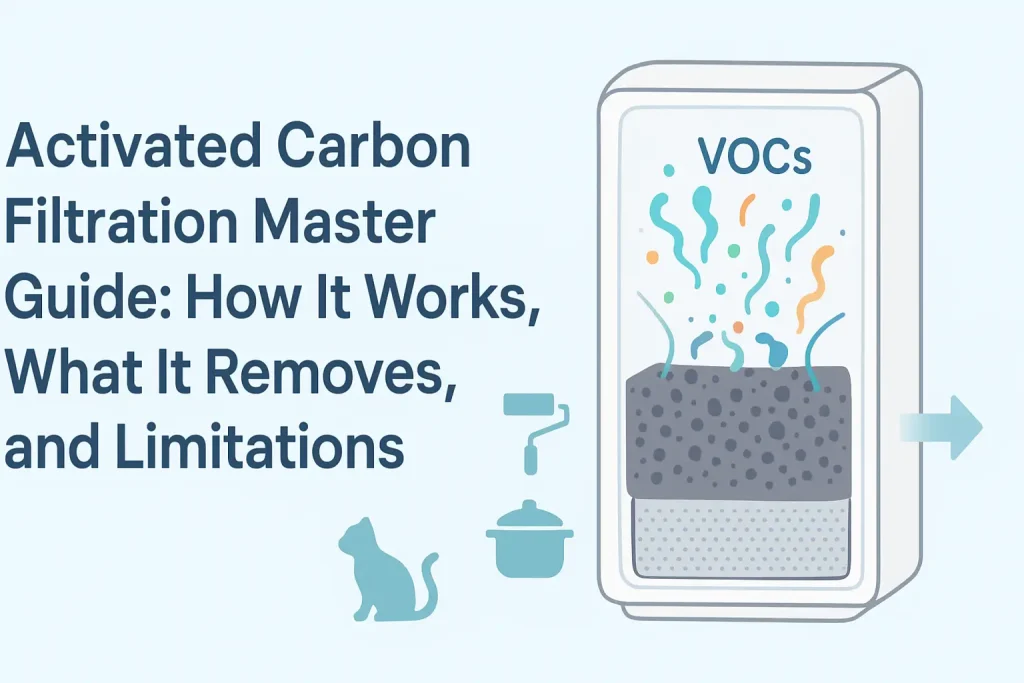
A filter stage using porous carbon to adsorb gaseous pollutants including VOCs, odors, and MVOCs from mold. Does not remove particles. Saturation occurs when the carbon pore structure fills. Odor breakthrough signals the need for replacement. Carbon weight determines capacity.
The resistance to airflow measured in inches of water column. A loaded HEPA filter increases static pressure, reducing actual CFM below the unit’s clean-filter rating. CFM ratings must be derated for filter loading when sizing for remediation work.
Post-remediation verification air sampling to confirm contaminant levels have returned to baseline or below regulatory thresholds. A failed clearance test requires rework and retesting. Primary cause of failure is insufficient ACH during remediation.
Flexible, collapsible ducting used to connect the air scrubber exhaust to the exterior discharge port. Available in 8 to 14-inch diameters. Keep runs as short and straight as possible. Every 90-degree bend reduces effective CFM by 10% to 15%.
How Much Does an Air Scrubber Cost to Buy and Operate?
An air scrubber costs $250 to $2,500 to purchase depending on CFM rating and brand tier. A 500 CFM home unit costs $250 to $600. A 1,000 to 2,000 CFM commercial unit costs $600 to $1,500. A 2,500 CFM healthcare-grade unit costs $1,500 to $2,500. Annual operating costs add $70 to $450 for filter replacements plus $100 to $500 for electricity depending on local rates and daily runtime.
Over a three-year period, a $500 air scrubber with $250 annual filter costs totals $1,250. A $1,200 unit with $150 annual filter costs totals $1,650. The cheaper unit costs less overall but provides lower CFM and may not meet the ACH target for larger spaces. For a detailed breakdown across every price tier and CFM range, see our complete air scrubber cost guide with filter replacement schedules and electricity calculations.
Can You Rent an Air Scrubber Instead of Buying?
Yes, air scrubber rentals are available from equipment rental companies and restoration supply dealers. Daily rental rates range from $50 to $150 for a 1,000 to 2,000 CFM unit. Weekly rates range from $200 to $600. For a one-time project under one week, renting costs less than buying. For ongoing use, purchasing breaks even after 5 to 10 rental days depending on the unit tier.
Rental units may use non-genuine filters of unknown quality and remaining service life. Always inspect the filter condition before accepting a rental unit. A loaded HEPA filter reduces actual CFM by 20% to 40% compared to the unit’s clean-filter rating. If the rental company cannot confirm filter replacement history, factor in the cost of purchasing a new filter for the rental unit to guarantee performance on your job.
What Is the Difference Between an Air Scrubber and a Negative Air Machine?
An air scrubber filters and recirculates air within a space. A negative air machine filters air and exhausts it outside the space to create negative pressure containment. The same physical unit can serve both functions. The distinction is in how the exhaust is configured. When the exhaust discharges into the same room, it is operating as an air scrubber. When the exhaust is ducted outside, it is operating as a negative air machine.
This happens because exhausting filtered air outside removes it from the space entirely rather than recirculating it. The pressure inside the containment drops below the pressure outside. This only works when the containment barrier is properly sealed and the unit’s CFM exceeds the leakage rate of the enclosure. If the containment has large gaps, negative pressure cannot be maintained regardless of CFM. Fix it by sealing all gaps with sheathing tape before operating in negative air mode.
Why Does My Air Scrubber Smell Like Burning Plastic?
A burning plastic smell from a new air scrubber during the first few hours of operation is typically the motor winding insulation curing. This is normal and should dissipate within 4 to 8 hours of continuous runtime. If the smell persists beyond the first day of use or intensifies, the blower motor may have a manufacturing defect or the capacitor may be failing. Stop using the unit and contact the manufacturer.
A burning smell accompanied by reduced airflow usually indicates a seized or failing blower bearing. The friction generates heat that can melt nearby plastic components. This is a fire risk. Unplug the unit immediately and do not operate it until the blower assembly has been inspected and repaired. For units under warranty, contact the manufacturer. For out-of-warranty units, a qualified motor repair shop can replace blower bearings at a fraction of the cost of a new unit.
How Long Should an Air Scrubber Run After Mold Remediation?
Run the air scrubber continuously for 24 to 48 hours after completing physical mold remediation before conducting clearance air sampling. This allows the HEPA filtration to capture any spores released during the remediation process that remain airborne. The IICRC S520 standard requires continuous operation throughout remediation and for a minimum of 24 hours post-remediation before clearance testing.
Do not cycle the unit on and off during this period. Continuous operation maintains steady air cleaning. Cycling allows spore concentrations to rebound between run cycles, extending the time needed to reach clearance levels. After clearance testing passes, replace the HEPA filter and pre-filter before the next job. Do not reuse a filter from a mold remediation job on a different project.
Do Air Scrubbers Remove Mold Spores or Just Trap Them?
True HEPA air scrubbers trap mold spores within the filter media at 99.97% efficiency. They do not kill or inactivate the spores. The spores remain viable within the filter. This is why filter replacement after mold remediation is mandatory and why used HEPA filters from mold jobs must be bagged and disposed of as contaminated waste. A HEPA filter does not sterilize mold spores. It captures them. The capture is permanent as long as the filter remains intact and properly seated in its gasket.
Some air scrubbers add a UV-C lamp stage downstream of the HEPA filter. UV-C at sufficient dosage can inactivate mold spores, but the exposure time in a high-CFM air scrubber is typically too short for complete inactivation. EPA and CDC guidance does not recommend relying on UV-C alone for mold spore inactivation in air scrubber applications. Mechanical HEPA capture remains the primary and most reliable control method.
Can I Use an Air Scrubber for Wildfire Smoke in My Home?
Yes, an air scrubber will remove wildfire smoke particles from indoor air. A 500 CFM unit running in a 1,500-square-foot home at 8-foot ceilings delivers approximately 2.5 ACH. At that rate, PM2.5 levels drop by roughly 85% within 30 minutes. For wildfire smoke, a standard portable HEPA air purifier is usually the more practical choice because it operates at lower noise levels (24 to 55 dB versus 60 to 85 dB) and is designed for continuous occupied use.
An air scrubber makes sense for wildfire smoke when you need high-CFM filtration across a large open-plan space or when you are dealing with smoke-damaged contents that are actively off-gassing particulates. In those scenarios, the 1,000 to 2,000 CFM output of a commercial scrubber processes air volume faster than any consumer air purifier. The trade-off is noise. For occupied spaces, run the scrubber on its lowest speed setting that still achieves your target ACH, and use hearing protection if needed during extended operation.
What Size Air Scrubber Do I Need for a Basement?
Calculate basement cubic footage by multiplying length by width by ceiling height. Then multiply by 4 ACH and divide by 60. A standard 1,000-square-foot basement with 8-foot ceilings needs (1,000 x 8 x 4) divided by 60, giving 533 CFM minimum. A 500 CFM unit is barely adequate. A 700 to 770 CFM unit provides margin for filter loading and ducting losses.
Basements present unique air scrubber challenges. Low ceiling heights reduce total cubic footage compared to main-floor spaces of the same square footage. However, basements often have poor natural ventilation, meaning all air cleaning depends on the scrubber with no dilution from outdoor air exchange. This makes achieving target ACH more critical. Basements also tend to have higher baseline humidity, which accelerates filter loading. Check the pre-filter daily in basement applications.
Are Cheap Air Scrubbers Worth It for DIY Use?
A $250 to $350 air scrubber like the Homelabs 500 CFM is worth it for a single DIY mold remediation project under 500 square feet. Professional remediation for the same space costs $1,500 to $3,000. The DIY scrubber pays for itself on the first use. For multiple projects or spaces over 750 square feet, step up to an AlorAir 770 or MOUNTO 800 CFM unit. The higher CFM reduces job time and improves the likelihood of passing clearance testing on the first attempt.
The risk with cheap air scrubbers is filter bypass from poorly designed gasket seats and inflated CFM claims that do not hold true under the static pressure of a loaded HEPA filter. Before buying any budget unit, verify that the CFM rating is measured at the working static pressure of a loaded filter, not free-air CFM with no filter installed. A unit claiming 500 CFM free-air may deliver only 300 CFM with a HEPA filter in place.
An air scrubber sized at the correct CFM for your cubic footage and target ACH is the single most important tool for mold remediation, construction dust control, and water damage restoration. A Homelabs 500 CFM unit at $250 to $350 handles single-room home projects under 750 square feet. An AlorAir 770 to 3,000 CFM provides the widest range for professional use. Dri-Eaz remains the brand trusted by insurance restoration contractors for consistent commercial-grade performance.
Calculate your minimum CFM as cubic feet times ACH divided by 60. Add a 20% margin. Match the unit to that number. Buy from a brand with verified True HEPA filtration, available replacement filters, and a gasket design that prevents filter bypass. For the best overall balance of price, performance, and operating cost, AlorAir air scrubbers are the top recommendation for most buyers. For premium healthcare applications, Omni CleanAir leads. For simple home projects, the Homelabs 500 CFM is the right tool at the right price.