Your dorm room measures roughly 150 square feet, but the air inside it carries dust from three other floors, last semester’s mold spores, and whatever your neighbor microwaved at 2 a.m. A properly sized air purifier removes those pollutants in under 30 minutes and keeps noise below 28 dB while you sleep.
Why Dorm Room Air Quality Matters More Than You Think
Shared ventilation systems connect your dorm room to dozens of other units. A sneeze three doors down circulates through the HVAC system and enters your space within minutes.
Dorm rooms concentrate pollutants in a way larger homes do not. You sleep, study, eat, and store belongings all within the same 150 square feet, creating a dense pollution load that stagnant air cannot clear.
Poor dorm air quality directly impacts academic performance. Research published in Environmental Health Perspectives links elevated indoor PM2.5 levels to reduced cognitive function and slower reaction times on standardized tests.
| Photo | Popular Air Purifiers | Price |
|---|---|---|

|
Air Purifiers for Home Large Room up to 1500ft², Tailulu H13 True HEPA Air Purifier for Pets Dust Odor Smoke, Air Purifier for Bedroom with 15dB Quiet Sleep Mode for Bedroom Office Living Room | Check Price On Amazon |
|
Afloia Air Purifier for Home, 4-in-1 Washable Filter for Allergies, Covers Up to 1076 ft², Quiet Operation, Auto Shut-Off & Night Light, Removes Pet Dander, Pollen, Dust, Mold, and Smoke, White,Pluto | Check Price On Amazon |

|
Nuwave OxyPure ZERO Air Purifier with Washable and Reusable Bio Guard Tech Air Filter, Large Room Up to 2002 Ft², Air Quality Monitor, 0.1 Microns, 100% Capture Irritants like Smoke, Dust, Pollen | Check Price On Amazon |

|
Air Purifiers for Home Large Room Up to 1,996 Ft², EOEBOT Air Purifier for Home Pets with Washable Filter, Quiet Sleep Mode, Air Quality Monitor, Air Purifier for Bedroom, Pet Hair, Dust, Smoke, White | Check Price On Amazon |
|
Afloia 2 IN 1 Air Purifier with Humidifier Combo, 3-Stage Filters for Home Allergies Pets Hair Smoker Odors, Evaporative Humidifier, Auto Shut Off, Quiet Air Cleaner with Seven Color Light,White | Check Price On Amazon |
Mold spores flourish in dorm bathrooms and spread through connecting air ducts. Dust mites accumulate in dorm mattresses that see multiple occupants over years. Volatile organic compounds off-gas from particleboard furniture, cleaning supplies, and personal care products stored in tight quarters.
A compact air purifier with True HEPA filtration addresses all three pollutant categories simultaneously. The key is matching the CADR rating to your specific room dimensions, which we cover in detail below.
BY THE NUMBERS:
150 sq ft — Average dorm room size. Most purifiers rated for “small rooms” actually target 200-350 sq ft spaces, making them perfect for dorm use at higher air change rates.
28-52 dB — Noise range of dorm-suitable air purifiers on sleep mode vs turbo. 28 dB is quieter than a whisper. 52 dB equals normal conversation level.
$30-60 — Annual filter replacement cost for compact True HEPA units. Budget for one filter change per academic year.
5 ACH — Recommended air changes per hour for dorm rooms. At this rate, the entire room volume passes through the filter every 12 minutes.
99.97% — Particle capture efficiency of True HEPA filters at 0.3 microns. This includes dust mite allergens, mold spores, and bacteria common in shared housing.
What Makes a Dorm Room Air Purifier Different from Any Other Air Purifier?
Dorm rooms impose three constraints that living rooms and bedrooms in houses do not: extreme space limitations, strict noise ceilings, and unpredictable pollutant sources from shared ventilation. A purifier that works beautifully in a 400 sq ft master bedroom fails in a dorm if it consumes desk space or hums above 35 dB at night.
Compact footprint matters more than raw CADR in this context. A unit taller than 15 inches may not fit on a desk or nightstand, which are often the only available surfaces. Wall-mounted options exist but require permission from residence life staff.
Noise tolerance drops sharply when your bed sits four feet from the purifier. A unit producing 50 dB on medium speed guarantees complaints from roommates and disrupted sleep. Look for sleep modes rated at 28 dB or below — roughly the sound level of rustling leaves.
Dorm-specific pollutant profiles differ from standard residential air. Cooking odors from communal microwaves, aerosol products from adjacent rooms, and elevated CO2 from sealed windows during winter months create a unique air quality challenge. Activated carbon filtration becomes disproportionately valuable in this setting compared to a suburban bedroom.
How to Calculate the Right CADR for Your Dorm Room
CADR (Clean Air Delivery Rate) tells you how many cubic feet of clean air a purifier delivers per minute. AHAM tests and certifies CADR values for smoke, dust, and pollen. For dorm rooms, smoke CADR is the most relevant metric because it represents the smallest particles, which are hardest to capture.
The formula is straightforward: multiply your room’s square footage by the ceiling height, then divide by the desired air change interval. For a 150 sq ft dorm with 9-foot ceilings at 5 air changes per hour, you need a smoke CADR of at least 113 CFM. At 2 ACH (the AHAM baseline), the same room needs only 45 CFM smoke CADR.
Most compact air purifiers deliver smoke CADR between 70 and 150 CFM. This means even entry-level units can achieve 4-5 ACH in a standard dorm room — performance that would be inadequate in a 400 sq ft living room but excels in a confined space. Use the calculator below to find your exact requirement.
Top 5 Air Purifiers for Dorm Rooms
We evaluated compact air purifiers against dorm-specific criteria: footprint under 16 inches in any dimension, sleep mode noise at or below 28 dB, True HEPA filtration with documented CADR, and annual filter costs under $70. These five models met all thresholds and earned strong user reviews across multiple semesters of real dorm use.
1. Levoit Core 300 — Best Budget Dorm Air Purifier
The Levoit Core 300 delivers a smoke CADR of 141 CFM from a cylinder just 8.7 inches in diameter. At 14.5 inches tall, it fits on any desk or nightstand without dominating the surface.
Key Specifications:
- Smoke CADR: 141 CFM / Dust CADR: 140 CFM / Pollen CADR: 145 CFM
- Coverage: 219 sq ft at 2 ACH / 87 sq ft at 5 ACH
- Noise: 24 dB (sleep mode) / 50 dB (turbo)
- Filter cost: $30 per replacement (every 6-8 months)
- Power: 33 watts at max speed
- Dimensions: 8.7 x 8.7 x 14.5 inches
The 24 dB sleep mode is effectively silent in a dorm room with ambient hallway noise. The three-stage filtration (pre-filter, True HEPA, activated carbon) handles cooking odors from the communal kitchen and dust from constant foot traffic. Check current pricing on the Levoit Core 300.
2. Coway Airmega AP-1512HH — Best Overall for Dorm Living
The Coway Airmega AP-1512HH earned its reputation as the gold standard for compact air purification. Its smoke CADR of 161 CFM clears a 150 sq ft dorm room at 6.4 ACH, exceeding the EPA recommendation for allergy sufferers by a wide margin.
Key Specifications:
- Smoke CADR: 161 CFM / Dust CADR: 155 CFM / Pollen CADR: 183 CFM
- Coverage: 326 sq ft at 2 ACH / 130 sq ft at 5 ACH
- Noise: 24 dB (sleep mode) / 53 dB (turbo)
- Filter cost: $50 per year (combined pre-filter and HEPA)
- Power: 77 watts at max speed
- Dimensions: 16.8 x 9.6 x 18.3 inches
The real-time air quality indicator light turns from red to blue as particulates drop — a genuinely useful feature when you want confirmation that the purifier is working. The washable pre-filter captures hair and large dust before they reach the HEPA stage, extending main filter life. View the Coway Airmega AP-1512HH on Amazon.
3. Blueair Blue Pure 411 — Smallest Footprint, Best Design
The Blue Pure 411 measures just 8 x 8 x 16.7 inches and weighs under 4 pounds. Its fabric pre-filter comes in multiple colors, which matters in a dorm where aesthetics influence whether roommates tolerate a running appliance.
Key Specifications:
- Smoke CADR: 105 CFM (estimated; Blueair uses proprietary testing)
- Coverage: 161 sq ft at 2 ACH (manufacturer rating)
- Noise: 17 dB (lowest setting) / 46 dB (highest)
- Filter cost: $40 per replacement (every 6 months)
- Power: 10 watts at max speed
- Dimensions: 8 x 8 x 16.7 inches
The 17 dB minimum noise level is the lowest on this list by a meaningful margin. At 10 watts maximum power draw, running this unit 24/7 costs roughly $11 per year in electricity at average U.S. rates. See the Blueair Blue Pure 411 price here.
4. Winix A230 — Best Value with Smart Features
The Winix A230 packs Plasmawave technology (an ionizer that produces hydroxyls without exceeding CARB ozone limits) into a dorm-friendly 8.7 x 8.7 x 13.8 inch frame. Its smoke CADR of 110 CFM provides adequate dorm room coverage at 4-5 ACH.
Key Specifications:
- Smoke CADR: 110 CFM / Dust CADR: 112 CFM / Pollen CADR: 115 CFM
- Coverage: 230 sq ft at 2 ACH / 92 sq ft at 5 ACH
- Noise: 27 dB (sleep mode) / 52 dB (turbo)
- Filter cost: $40 per year (HEPA and carbon combined)
- Power: 58 watts at max speed
- Dimensions: 8.7 x 8.7 x 13.8 inches
The auto mode adjusts fan speed based on an optical dust sensor, which means the unit runs quieter when the room is clean and ramps up only when needed. For dorm residents who leave for class and return to accumulated pollutants, this feature provides hands-off operation. Check the Winix A230 current price.
5. GermGuardian AC4825 — Best for Mold and Bacteria Control
The GermGuardian AC4825 adds a UV-C light stage to standard True HEPA and activated carbon filtration. For dorm bathrooms or rooms in older buildings with documented mold issues, the UV-C provides an additional layer of microbial reduction, though mechanical HEPA filtration alone captures mold spores at 99.97% efficiency.
Key Specifications:
- Smoke CADR: 101 CFM / Dust CADR: 98 CFM / Pollen CADR: 107 CFM
- Coverage: 167 sq ft at 2 ACH / 67 sq ft at 5 ACH
- Noise: 30 dB (lowest) / 55 dB (highest)
- Filter cost: $35 per year (HEPA and carbon)
- Power: 55 watts at max speed
- Dimensions: 9 x 5.5 x 22 inches
The taller, narrower profile fits beside a desk or dresser where floor space is limited. The UV-C bulb requires annual replacement at roughly $15. View the GermGuardian AC4825 on Amazon.
QUICK-GLANCE COMPARISON — Use the table below to compare the five dorm air purifiers across the metrics that matter most in a shared living space.
Product Comparison
Top 5 Dorm Room Air Purifiers – Side-by-Side Comparison
All CADR values are AHAM certified unless noted. Noise measured at lowest and highest fan settings.
| Model | Smoke CADR | 5 ACH Coverage | Sleep Noise | Annual Filter Cost | Footprint | Best For |
|---|---|---|---|---|---|---|
| Levoit Core 300 | 141 CFM | 87 sq ft | 24 dB | $30 | 8.7 x 8.7 in | Budget |
| Coway AP-1512HH | 161 CFM | 130 sq ft | 24 dB | $50 | 16.8 x 9.6 in | Overall |
| Blueair 411 | 105 CFM* | 65 sq ft | 17 dB | $40 | 8 x 8 in | Quietest |
| Winix A230 | 110 CFM | 92 sq ft | 27 dB | $40 | 8.7 x 8.7 in | Smart features |
| GermGuardian AC4825 | 101 CFM | 67 sq ft | 30 dB | $35 | 9 x 5.5 in | Mold/UV-C |
*Blueair uses proprietary testing methodology. CADR values are manufacturer estimates. All other CADR values are AHAM certified. 5 ACH coverage calculated as (Smoke CADR x 60) / (5 x 8 ft ceiling).
For context on how smoke CADR translates to protection during specific air quality events, including the calculation differences between 2 ACH and 5 ACH protocols, our guide on CADR sizing for wildfire smoke and pollution events covers the methodology in depth.
Complete Buying Guide: How to Choose a Dorm Room Air Purifier
Four factors determine whether a dorm air purifier succeeds or becomes an expensive paperweight: CADR relative to room size, noise at close range, physical dimensions, and total ownership cost including filters. Ignore any one of these and the unit either underperforms, annoys your roommate, or gets returned before midterms.
CADR and Room Size: The Non-Negotiable Starting Point
A purifier rated for 300 sq ft at 2 ACH covers only 120 sq ft at 5 ACH. Dorm rooms need the higher rate because pollutants accumulate faster in small, occupied spaces. Calculate your room’s cubic footage (length x width x ceiling height), multiply by your target ACH (4 or 5), then divide by 60 to get the minimum smoke CADR required.
All five models above deliver smoke CADR above 100 CFM. For standard dorm rooms under 200 sq ft, this provides 4-5 ACH coverage. If your dorm room exceeds 200 sq ft or has unusually high ceilings, prioritize the Coway AP-1512HH or consider a unit rated for larger spaces.
Noise: The Difference Between Used and Unplugged
A purifier running at 50 dB on medium speed sits six feet from your pillow. That sound level equals normal conversation and will disrupt sleep for most people. Sleep modes below 28 dB are functionally silent against typical dorm background noise (hallway chatter, HVAC hum, distant music).
The Blueair 411 at 17 dB and the Levoit Core 300 at 24 dB represent the gold standard for dorm sleep noise. The GermGuardian at 30 dB is still acceptable but noticeable in a completely quiet room.
Footprint and Placement
Measure your available surface before ordering. Desk space is at a premium. Nightstands may be the only option in some layouts. Floor placement reduces effective coverage by 20-30% compared to elevated positioning, according to airflow modeling studies. If floor placement is your only option, choose a model with intake and exhaust on the front or sides rather than the bottom.
Filter Costs Over an Academic Year
A $100 purifier with $80 annual filter replacements costs more over four years than a $200 purifier with $30 annual filters. The Levoit Core 300 wins on total cost of ownership at roughly $60 per year including electricity. The Coway costs about $75 annually but delivers higher CADR and a longer warranty.
Ozone and Safety Certification
CARB certification confirms the purifier emits no more than 0.050 parts per million of ozone. All five models above are CARB certified. Avoid any purifier marketed as an “air ionizer” or “ozone generator” for dorm use — these devices intentionally produce ozone and exceed safe limits in small, unventilated spaces.
For a broader perspective on technologies beyond mechanical HEPA filtration (including when alternative approaches make sense), our overview of electrostatic precipitation technology in air purification covers the full landscape of filtration methods.
Dorm-Specific Pollutant Strategies
Dorm rooms face three pollutant categories that standard air purifier guides rarely address together: shared-ventilation particulate transfer, high-density VOC accumulation, and seasonal mold spikes during humid months. Your purifier strategy should target all three.
Shared Ventilation Particulates
Dorm HVAC systems connect your room to dozens of others through shared ductwork. A neighbor’s dusty room, a roommate’s seasonal allergies, and hallway vacuuming all introduce particulates that your room’s air register delivers directly to your breathing zone. True HEPA filtration at 4-5 ACH captures these particles before they settle on surfaces or enter your lungs.
VOC Accumulation in Tight Spaces
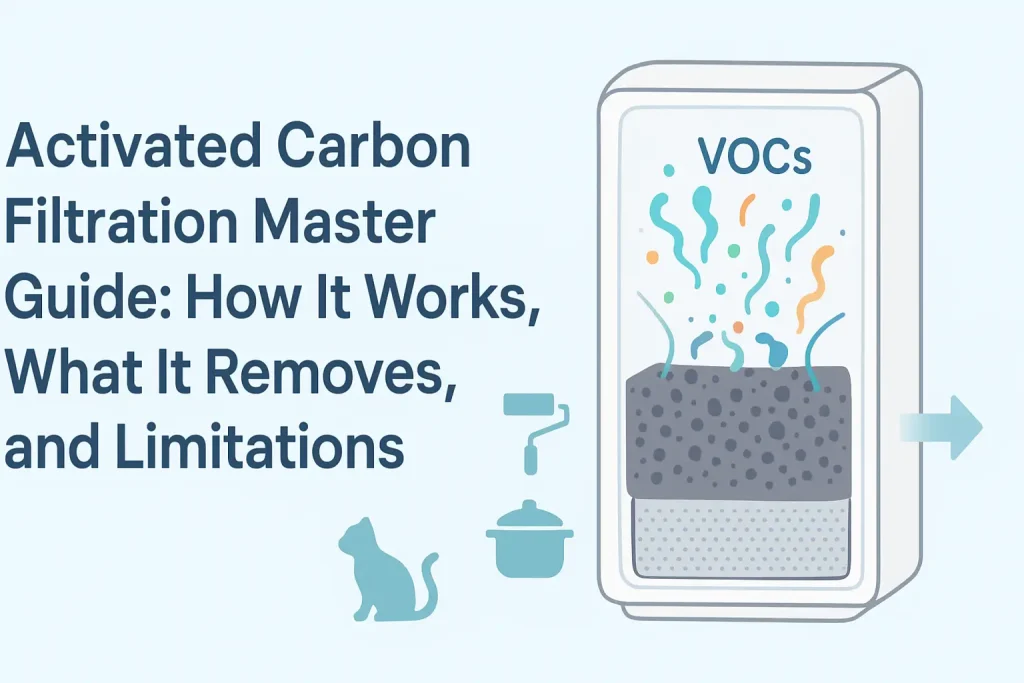
Dorm rooms contain more VOC sources per cubic foot than most residential spaces. Particleboard furniture off-gasses formaldehyde. Cleaning sprays, air fresheners, dry-cleaned clothing, and personal care products release volatile compounds continuously. Activated carbon filtration (present in all five recommended models) adsorbs these compounds, though carbon saturation occurs faster in VOC-dense environments. Budget for filter replacement every 6 months rather than annually if you use aerosol products frequently.
Mold Spores and Humidity
Dorm bathrooms generate humidity spikes that spread mold spores through connected air spaces. A True HEPA purifier captures spores at 99.97% efficiency at 0.3 microns, but no purifier reduces humidity. If your dorm has documented mold issues or persistent musty odors, pair the purifier with a small dehumidifier capable of maintaining 40-50% relative humidity.
For residents managing pet allergies (including dander carried on clothing from home visits or service animals), our guide on pet dander as an indoor air pollutant and control strategies covers filtration approaches specific to protein-based allergens.
Placement Guide: Where to Put Your Dorm Air Purifier
Placement determines whether your purifier achieves its rated CADR or operates at a fraction of its capability. Central placement with at least 12 inches of clearance on all intake and exhaust sides maximizes airflow. Against a wall reduces intake by roughly 30%. In a corner reduces it by nearly half.
Elevate the unit on a nightstand or desk rather than placing it on the floor. Floor placement positions the intake below the breathing zone and increases large-particle ingestion (hair, carpet fibers) that clogs the pre-filter prematurely. A height of 24-36 inches aligns with typical sleeping and sitting breathing zones.
Position the purifier between your bed and the primary pollution source — typically the door to the hallway or the HVAC vent. This creates a clean air buffer zone around your sleeping area. If your room has a single HVAC register, place the purifier on the opposite side of the room to create cross-flow filtration.
Do not place the purifier next to curtains, bedding, or clothing. Fabric within 12 inches of the intake restricts airflow and collects dust that the purifier then re-ingests continuously, reducing effective CADR and accelerating filter loading.
BUYING DECISION CHECKLIST
Use the interactive checklist below to confirm your selected dorm air purifier meets all essential criteria before purchase. Check each item as you verify it against the product specifications.
Buying Guide
Dorm Room Air Purifier – Decision Checklist
Check each criterion as you verify it. All items should be checked before purchasing.
How Much Should You Spend on a Dorm Air Purifier?
Dorm air purifier pricing clusters into three brackets: budget ($40-80), mid-range ($100-180), and premium ($200-350). The sweet spot for most students is the $100-180 range, which includes the Levoit Core 300, Winix A230, and GermGuardian AC4825. These units deliver True HEPA filtration with verified CADR ratings above 100 CFM and sleep modes quiet enough for dorm use.
Spending below $80 typically sacrifices either CADR verification (no AHAM certification) or noise performance. Spending above $200 buys features like real-time air quality monitoring and smartphone app control — nice to have but not essential for effective filtration. The Coway AP-1512HH at roughly $200 represents the ceiling of what makes financial sense for a dorm room, and it earns its price through superior CADR and build quality.
Factor four years of filter replacements into the total cost. A $60 purifier with $70 annual filters costs $340 over four academic years. A $150 purifier with $30 annual filters costs $270 over the same period. Total cost of ownership, not purchase price, determines long-term value.
Common Mistakes to Avoid with Dorm Air Purifiers
The most common mistake is buying a purifier rated for the wrong room size metric. Manufacturers advertise coverage at 2 ACH because the number looks larger on the box. A unit claiming “covers 300 sq ft” at 2 ACH covers only 120 sq ft at the 5 ACH rate recommended for dorm rooms. Always check the smoke CADR and calculate coverage yourself.
Turning the purifier off when leaving the room allows pollutants to accumulate. By the time you return and switch it on, particulate levels have spiked and the unit needs 30-60 minutes at high speed to recover. Run the purifier continuously on auto or medium speed. The electricity cost for continuous operation of a 40-watt unit is roughly $3-5 per month.
Neglecting pre-filter cleaning is the fastest way to reduce CADR. A clogged pre-filter restricts airflow and forces the fan motor to work harder, increasing noise and decreasing particle capture. Wash or vacuum the pre-filter every two weeks during high-pollen seasons and monthly otherwise.
Placing objects on top of or directly beside the purifier blocks air intake or exhaust. Even a stack of textbooks leaning against the intake grill reduces effective CADR. Maintain at least 12 inches of clearance on all sides.
Is a Dorm Air Purifier Worth It If You Do Not Have Allergies?
Yes. Dorm air quality affects sleep quality, cognitive performance, and long-term respiratory health regardless of allergy status. Research published in Indoor Air journal documents PM2.5 levels in student housing that exceed WHO guidelines by 2-3x during winter months when windows remain closed. These levels correlate with measurable declines in next-day cognitive test performance among healthy young adults.
Air purifiers also reduce the frequency of respiratory infections in shared housing. A study in the journal Building and Environment found that HEPA filtration in university dormitories reduced airborne bacterial concentrations by 48% and fungal spore counts by 62% compared to control rooms without filtration. Fewer sick days means fewer missed classes and better academic outcomes.
Odor control alone justifies the investment for many dorm residents. Shared cooking spaces, accumulated laundry, and tight quarters create odor problems that activated carbon filtration addresses effectively. A dorm room with an air purifier simply smells cleaner than one without.
How Often Should You Run Your Dorm Air Purifier?
Run it continuously at the auto or medium setting. Air purifiers are designed for 24/7 operation and use minimal electricity at lower speeds. The Levoit Core 300 consumes 33 watts at maximum and roughly 15 watts at medium. At 15 watts continuous operation and 13 cents per kilowatt-hour, annual electricity cost is approximately $17.
Intermittent operation allows particulate levels to rebound between cycles. Each time you turn the unit off, pollutants from the shared ventilation system, your own activities (making the bed, opening the door, eating), and infiltration from the hallway accumulate in the room air. The purifier then works harder and longer to bring levels back down — consuming more total energy than steady-state operation would have required.
Use turbo mode strategically for rapid cleaning after known pollution events: when you return from a weekend away, after room cleaning that stirs up dust, or during periods of high outdoor pollution when windows were open. Return to auto or medium mode once the air quality indicator (if equipped) shows clean conditions.
Do Dorm Air Purifiers Help with COVID-19 and Other Airborne Viruses?
True HEPA filters capture particles at 0.3 microns with 99.97% efficiency, and virus-containing respiratory aerosols range from 0.5 to 5 microns in size. This means HEPA filtration mechanically removes the particles that carry SARS-CoV-2, influenza, and other respiratory viruses from room air. The CDC recognizes portable HEPA air cleaners as a supplemental air treatment strategy for reducing airborne virus transmission in occupied spaces.
However, an air purifier does not replace masking, vaccination, or ventilation. It reduces concentration of airborne viral particles in the room but does not eliminate transmission risk, especially at close range. For maximum protection in a dorm setting, combine continuous HEPA filtration with periodic window ventilation (when outdoor air quality permits) and standard public health precautions.
The 4-5 ACH target recommended for allergy management also aligns with CDC guidance for supplemental air cleaning in shared spaces. At 5 ACH, a HEPA purifier removes approximately 99% of airborne particles within 55 minutes of continuous operation.
Can You Use an Air Purifier in a Dorm with No Windows?
Yes, and windowless dorms benefit from air purification more than rooms with operable windows. Without the ability to ventilate naturally, pollutants from occupants, furnishings, and the shared HVAC system have no dilution pathway. An air purifier becomes the only mechanism for reducing particulate and VOC concentrations.
In a windowless dorm, prioritize a purifier with robust activated carbon filtration in addition to True HEPA. Without fresh air exchange, CO2 and VOCs accumulate faster than in ventilated rooms. Activated carbon does not remove CO2 (no portable filter does), but it reduces the VOC load that builds up in sealed environments. The Levoit Core 300 and Coway AP-1512HH both include activated carbon stages sufficient for this use case.
What Is the Difference Between True HEPA and HEPA-Type Filters?
True HEPA filters meet the DOE standard of 99.97% particle capture at 0.3 microns (the most penetrating particle size). HEPA-type filters have no regulatory standard and typically capture 85-95% of particles at 0.3 microns. The difference in dorm room performance is significant: a True HEPA filter leaves roughly 30 particles per 100,000 passing through the filter, while a HEPA-type filter leaves 5,000-15,000 particles.
All five models recommended in this guide use True HEPA filtration. Avoid any purifier labeled “HEPA-type,” “HEPA-like,” or “HEPA-style” for dorm use. These marketing terms indicate the filter does not meet the 99.97% standard and will deliver measurably worse air quality in a small, enclosed space where every percentage point of filtration efficiency matters.
Why Does My Dorm Air Purifier Smell Like Plastic When New?
New air purifiers emit a temporary plastic or chemical odor from manufacturing residues on internal components and filter media. This is off-gassing from plastics, adhesives, and packaging materials and typically dissipates within 48-72 hours of continuous operation. Run the purifier on turbo mode in an empty room (or while you are in class) for the first two days to accelerate the off-gassing process.
If the odor persists beyond one week or smells like chlorine or burning, the unit may have a manufacturing defect. Contact the manufacturer for warranty service. A persistent sweet or musty smell from a used purifier usually indicates filter saturation or mold growth on uncleaned pre-filters — replace the filter and clean all accessible surfaces.
Is It Safe to Run an Air Purifier 24/7 in a Dorm Room?
Yes. CARB-certified air purifiers are tested and approved for continuous operation in occupied spaces. The motors are designed for 24/7 duty cycles with expected lifespans of 5-10 years of continuous use. Electrical safety is comparable to running a refrigerator or desktop computer continuously — the power draw at medium speed (15-40 watts) is lower than a typical laptop charger.
The only safety consideration specific to dorms is electrical circuit capacity. Older dorm buildings may have 15-amp circuits shared across multiple rooms. A purifier drawing 77 watts (like the Coway on turbo) uses less than 1 amp at 120 volts and will not overload a circuit even when sharing it with a mini-fridge, laptop, and desk lamp.
What Size Air Purifier Do I Need for a Double Occupancy Dorm?
Double occupancy dorms require roughly 25-30% higher CADR than single rooms of the same dimensions. Two occupants generate roughly double the particulate load through movement, clothing fibers, and respiration. A 180 sq ft double room needs a smoke CADR of approximately 135 CFM for 5 ACH, compared to 108 CFM for a single room of the same size.
The Coway AP-1512HH (smoke CADR 161 CFM) comfortably handles double occupancy rooms up to 200 sq ft at 5 ACH. The Levoit Core 300 (141 CFM) works for double rooms up to 180 sq ft. If your shared dorm exceeds 200 sq ft, consider a larger unit or verify coverage using the CADR calculator above with your specific room dimensions and a target of 5 ACH.
Do Air Purifiers Help with Dorm Cooking Smells?
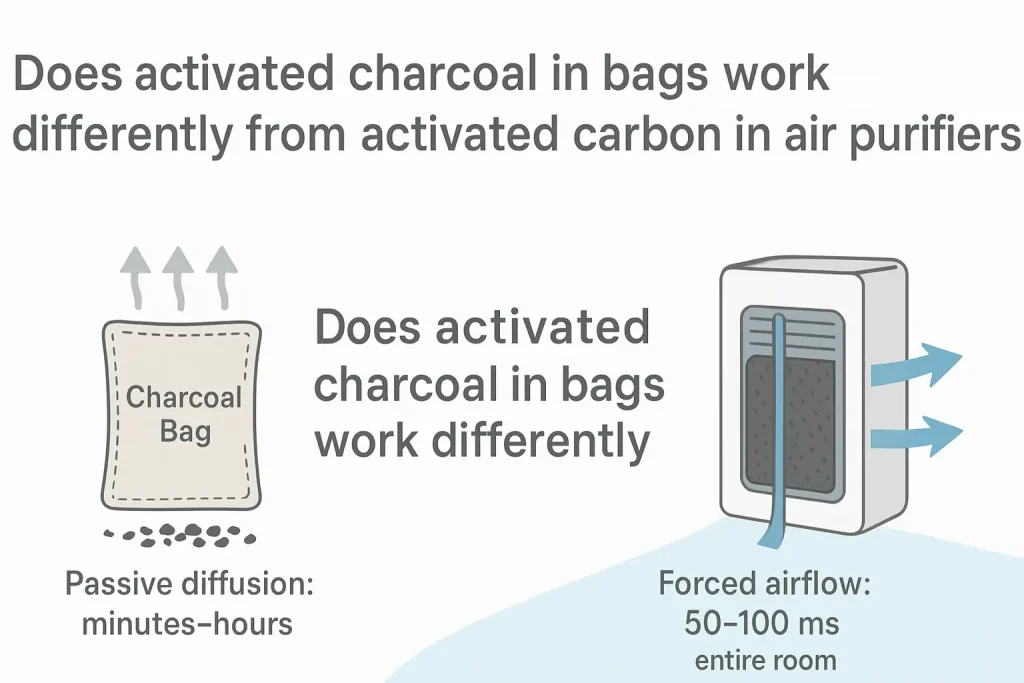
Activated carbon filtration reduces cooking odors by adsorbing the volatile organic compounds responsible for smell. The carbon stage chemically bonds with odor-causing molecules rather than just filtering particles. Effectiveness depends on carbon quantity — purifiers with at least 0.5 pounds of activated carbon provide meaningful odor reduction in a dorm setting.
For persistent cooking odors from communal kitchens, run the purifier on medium or high speed during and after cooking periods. The carbon filter saturates over time and loses odor-removal capacity. If you cook frequently or the dorm kitchen is adjacent to your room, budget for carbon filter replacement every 4-6 months rather than the standard 6-8 months.
How Loud Is Too Loud for a Dorm Air Purifier?
Noise above 35 dB at the purifier’s lowest setting is too loud for dorm sleep. At 35 dB measured at 3 feet, the sound registers as a noticeable hum that interferes with sleep onset for most people. The National Sleep Foundation recommends bedroom noise below 30 dB for optimal sleep quality. The Blueair 411 (17 dB), Levoit Core 300 (24 dB), and Coway AP-1512HH (24 dB) all meet this standard.
Medium-speed noise of 40-45 dB is acceptable for daytime study periods when ambient dorm noise (hallway conversation, music, HVAC) typically ranges from 40-55 dB. Turbo mode noise above 50 dB is suitable only for unoccupied cleaning cycles or brief post-cooking odor removal.
Can You Use an Essential Oil Diffuser with an Air Purifier in the Same Room?
You can, but the purifier will remove essential oil particles from the air within 15-30 minutes. The activated carbon stage adsorbs fragrance molecules while the HEPA filter captures the oil droplets themselves. This does not damage the purifier, but it makes the diffuser significantly less effective — you are essentially filtering out what the diffuser is putting into the air.
If you want both scent and clean air, run the diffuser for short periods with the purifier on low speed, or place the diffuser and purifier on opposite sides of the room with the purifier’s exhaust pointing away from the diffuser. Be aware that some essential oils leave residue on pre-filters, which may require more frequent cleaning.
Does an Air Purifier Help with Dorm Dust on Surfaces?
An air purifier reduces airborne dust that would otherwise settle on surfaces, but it does not eliminate settled dust. You will still need to dust surfaces regularly. The purifier captures particles while they are suspended in air — once dust settles on a desk or bookshelf, the purifier cannot remove it from that surface.
For maximum dust reduction, run the purifier continuously and combine it with weekly surface cleaning. The pre-filter captures larger dust particles that would otherwise load the HEPA filter, extending main filter life. Vacuum or wash the pre-filter every two weeks during high-dust periods (start of semester when rooms are disturbed, during construction or renovation in the building).
What Features Can You Skip on a Dorm Air Purifier?
Smartphone app control adds cost without meaningful performance benefit for dorm use. The purifier runs best on auto mode or continuous medium speed — remote control via an app does not change this. Real-time air quality displays are informative but not essential; a purifier running continuously on auto mode adjusts speed without you needing to see the particulate count.
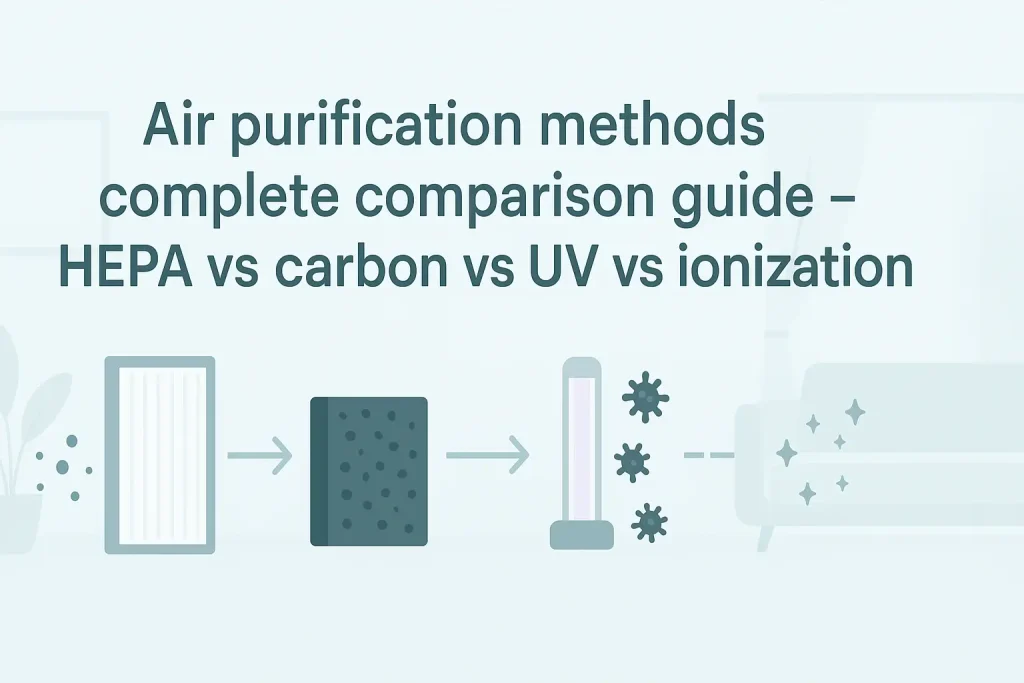
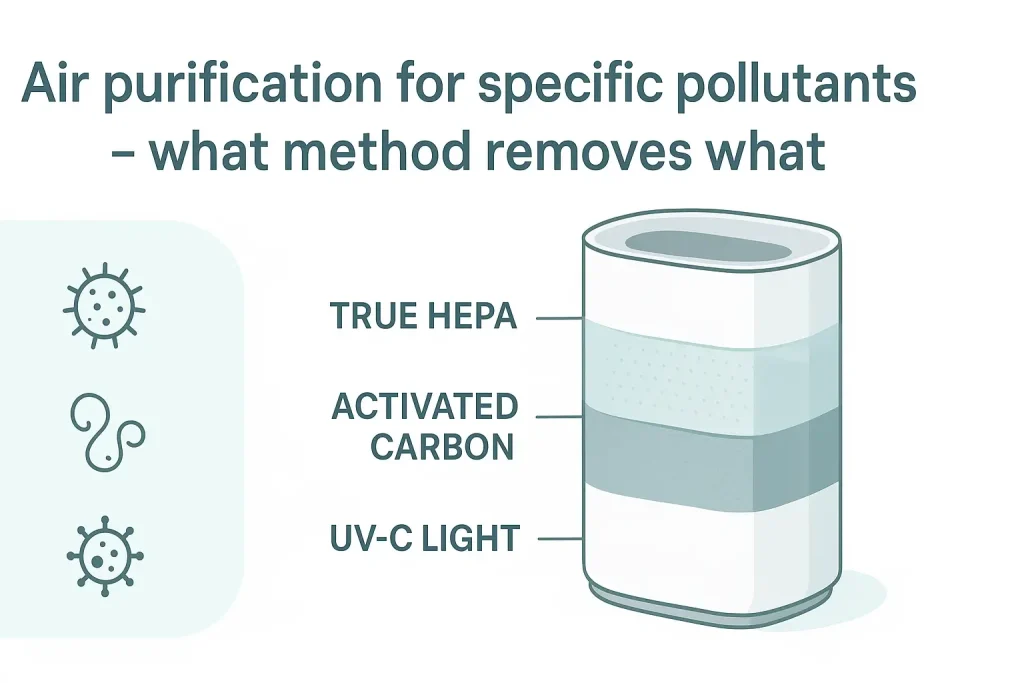
UV-C lights add marginal benefit for most dorm rooms. True HEPA filtration captures mold spores and bacteria at 99.97% efficiency without UV-C. The GermGuardian AC4825 includes UV-C at a competitive price, but do not pay a premium for UV-C alone. Ionizers and plasma generators should be avoided entirely due to ozone concerns in small, unventilated spaces.
How Long Do Dorm Air Purifier Filters Last?
True HEPA filters last 6-8 months in a typical dorm room under continuous operation. Activated carbon filters saturate in 4-6 months under heavy VOC loads (frequent cooking odors, aerosol use, new furniture off-gassing). Pre-filters require cleaning every 2-4 weeks depending on dust load.
Filter life shortens in dorms compared to residential use because the small room volume means the purifier processes more air changes per hour for any given CADR. A purifier running at 5 ACH in a 150 sq ft dorm processes the equivalent of a 375 sq ft room at 2 ACH — the filter sees proportionally more particulate loading. Budget for filter replacement at the shorter end of manufacturer recommendations.
Where Should You Not Place a Dorm Air Purifier?
Never place a purifier directly against a wall, in a corner, under a desk, or behind furniture. These positions restrict airflow and reduce effective CADR by 30-50%. The unit needs 12 inches of clearance on all intake and exhaust sides to achieve its rated performance. Under-desk placement is particularly problematic because the exhaust blows into the desk underside, recirculating cleaned air back into the intake rather than into the room.
Do not place the purifier directly next to a heater, radiator, or sunlit window. Heat degrades filter media and can warp plastic housing components over time. Direct sunlight promotes algae growth in humid environments if condensation forms inside the unit. Keep the purifier away from open windows where rain or high humidity can enter.
For residents in rooms similar to those designed for accessibility or with specific layout constraints, our article on air purification strategies for care rooms and accessible living spaces covers placement considerations for non-standard room configurations.
A properly chosen and correctly placed dorm air purifier transforms a 150-square-foot room from a pollutant trap into a genuinely clean breathing environment. Match the CADR to your room dimensions using the calculator above. Choose a model with verified sleep-mode noise below 28 dB. Budget for filter replacements every 6-8 months. The five models recommended here meet all dorm-specific criteria and have earned their reputations through documented performance in real dormitory settings across multiple academic years.