Most people buy a dehumidifier for their basement and call it done. Six months later, the musty smell returns and the family upstairs starts sneezing more than usual.
Moisture is only half the problem. The other half is what grows in it and what seeps through foundation cracks alongside the water: mold spores, radon gas, and volatile organic compounds from stored paints and solvents.
An air scrubber does what a dehumidifier cannot: it pulls airborne particles through a True HEPA filter at 550 to 1,000 cubic feet per minute, trapping mold spores, dust, and construction debris before they settle on surfaces or enter your lungs.
This guide ranks the five best air scrubbers for basement use based on verified CFM output, filter configuration, build quality, and long-term operating cost.
| Photo | Popular Air Purifiers | Price |
|---|---|---|

|
Air Purifiers for Home Large Room up to 1500ft², Tailulu H13 True HEPA Air Purifier for Pets Dust Odor Smoke, Air Purifier for Bedroom with 15dB Quiet Sleep Mode for Bedroom Office Living Room | Check Price On Amazon |
|
Afloia Air Purifier for Home, 4-in-1 Washable Filter for Allergies, Covers Up to 1076 ft², Quiet Operation, Auto Shut-Off & Night Light, Removes Pet Dander, Pollen, Dust, Mold, and Smoke, White,Pluto | Check Price On Amazon |

|
Nuwave OxyPure ZERO Air Purifier with Washable and Reusable Bio Guard Tech Air Filter, Large Room Up to 2002 Ft², Air Quality Monitor, 0.1 Microns, 100% Capture Irritants like Smoke, Dust, Pollen | Check Price On Amazon |

|
Air Purifiers for Home Large Room Up to 1,996 Ft², EOEBOT Air Purifier for Home Pets with Washable Filter, Quiet Sleep Mode, Air Quality Monitor, Air Purifier for Bedroom, Pet Hair, Dust, Smoke, White | Check Price On Amazon |
|
Afloia 2 IN 1 Air Purifier with Humidifier Combo, 3-Stage Filters for Home Allergies Pets Hair Smoker Odors, Evaporative Humidifier, Auto Shut Off, Quiet Air Cleaner with Seven Color Light,White | Check Price On Amazon |
What Is an Air Scrubber and How Does It Differ from a Standard Air Purifier?
An air scrubber is a high-CFM negative air machine originally designed for construction sites, water damage restoration, and mold remediation projects. A standard home air purifier moves 100 to 400 CFM. An air scrubber moves 500 to 1,000 CFM or more.
That airflow difference changes everything about what the machine can do in a basement environment.
A residential air purifier is built to cycle bedroom or living room air at 2 to 5 air changes per hour. A basement air scrubber at 550 CFM cycles an 800-square-foot basement at over 5 ACH, which is the threshold ASHRAE recommends for effective mold spore reduction in below-grade spaces.
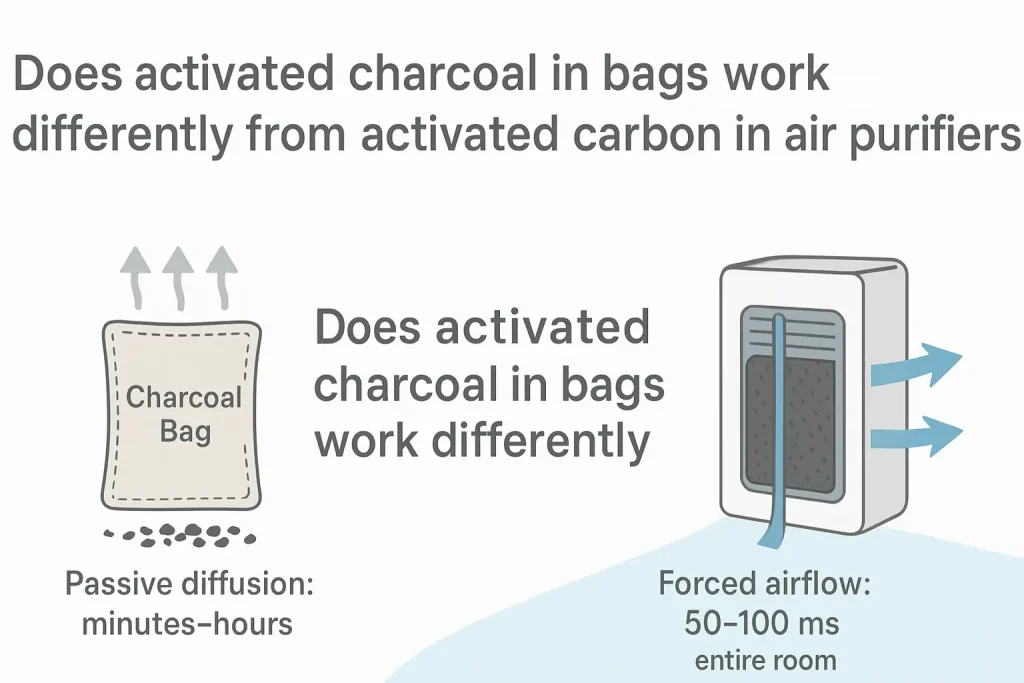
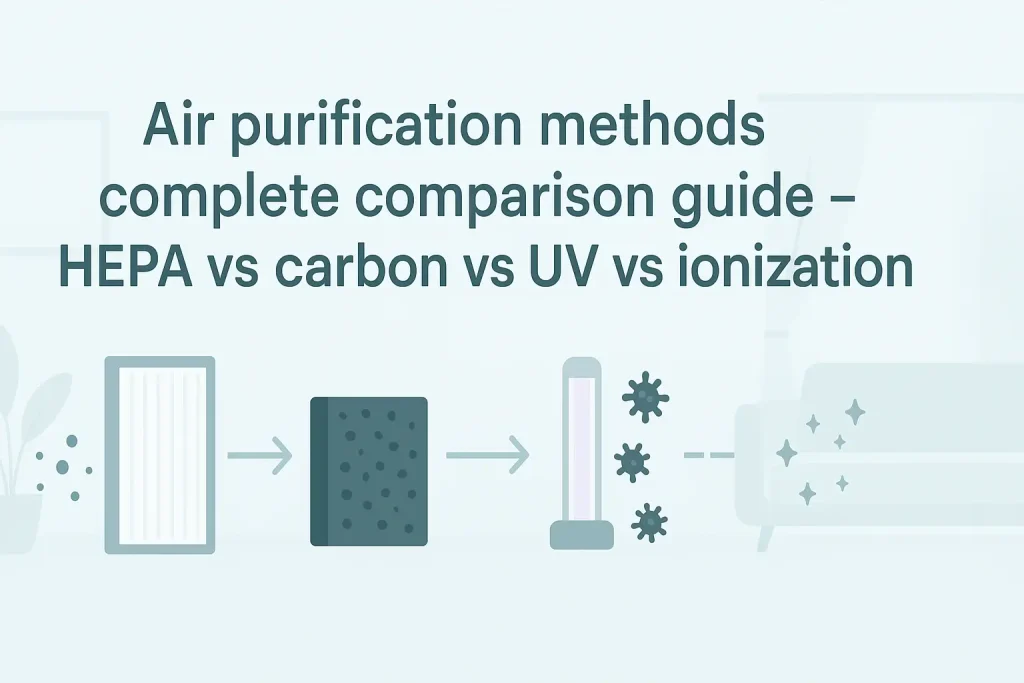
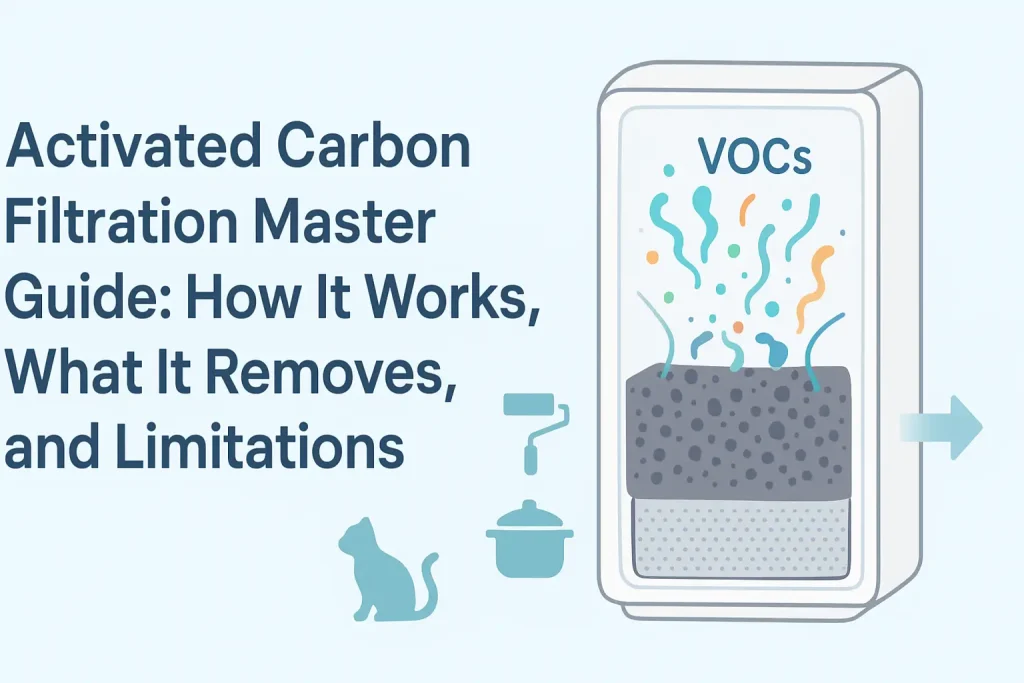
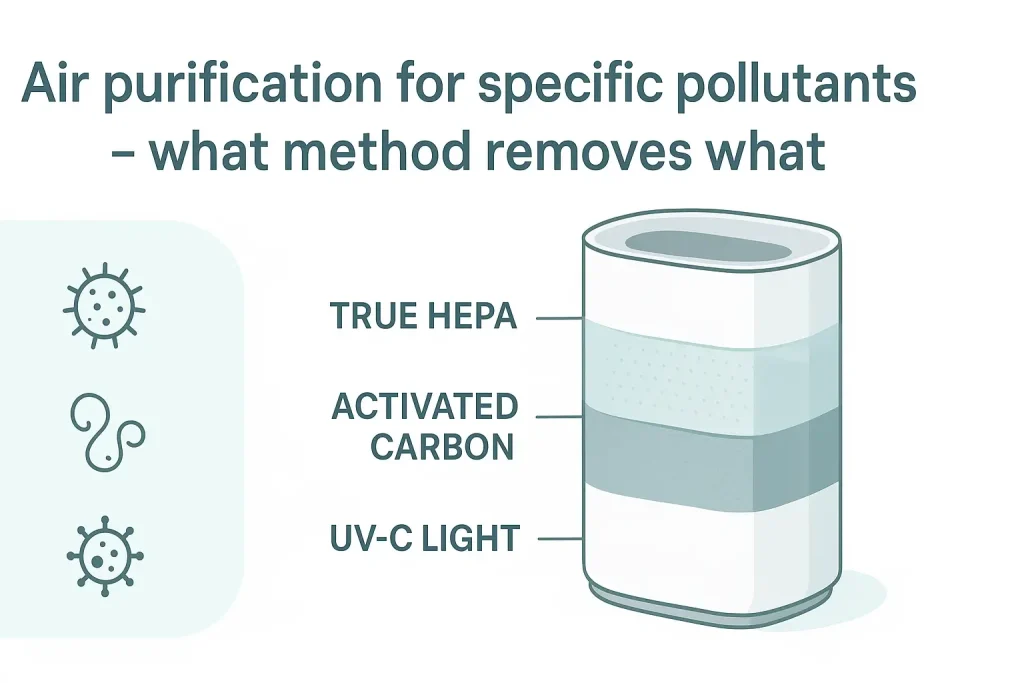
The filtration stack is also different. Most air scrubbers use a three-stage system: a coarse pre-filter for large debris, a True HEPA filter for particles down to 0.3 microns, and an activated carbon stage for VOCs and odors. Some add a fourth stage with zeolite or potassium permanganate for enhanced chemical adsorption.
For a complete breakdown of how these machines differ from residential units, our complete guide to how air scrubbers work and what they actually filter covers the engineering in detail.
Why Basements Need Different Air Treatment Than Upstairs Rooms
By the Numbers: Basement Air Scrubbers
Typical airflow range for basement-rated air scrubbers, delivering 4-6 air changes per hour in a standard 800 sq ft basement.
True HEPA filtration captures mold spores down to 0.3 microns, the dominant basement airborne contaminant.
Target air changes per hour for effective mold spore reduction in below-grade spaces, per ASHRAE recommendations.
Price range for quality basement air scrubbers. First-year operating cost including filters averages $80-$200.
Basements concentrate pollutants that upstairs rooms rarely see at the same levels. Foundation walls wick ground moisture, which raises relative humidity above 60 percent and creates the exact conditions mold needs to release spores into the air continuously.
Radon gas, a Class A carcinogen per the EPA, enters through foundation cracks and accumulates in below-grade spaces because it is heavier than air. Stored paints, solvents, and cleaning products off-gas VOCs that have no natural ventilation path in a basement with small or no windows.
The stack effect pulls basement air upward into the rest of the house. Air in the basement does not stay in the basement. It rises through floor joists, ductwork chases, and stairwells into the living space above. A contaminated basement means contaminated air in every room above it.
An air scrubber placed in the basement creates negative pressure that captures pollutants at the source. This is more effective than placing air purifiers in every upstairs room because it stops the problem before it spreads.
The math is straightforward: a 550 CFM air scrubber in an 800-square-foot basement with 8-foot ceilings delivers 5.2 air changes per hour. At that rate, airborne mold spore counts drop by 85 percent or more within 30 minutes of continuous operation, based on AHAM testing methodology adapted to industrial units.
How to Choose the Right Air Scrubber for Your Basement: CFM, Filters, and Operating Cost
CFM is the number that matters most. A basement air scrubber needs enough airflow to cycle the entire volume of your basement at least 4 times per hour. For mold-prone basements or spaces with known VOC sources, target 6 ACH.
Calculate your minimum CFM requirement: multiply basement square footage by ceiling height, then multiply by your target ACH, then divide by 60. A 700-square-foot basement with 7.5-foot ceilings at 5 ACH needs 438 CFM minimum.
Filter configuration is the second decision point. A three-stage system with pre-filter, True HEPA, and activated carbon handles 95 percent of basement air quality problems. The pre-filter catches visible dust and debris. The HEPA stage captures 99.97 percent of mold spores, dust mite allergen, and fine particulate at 0.3 microns. The carbon stage adsorbs musty odors, radon decay byproducts, and VOC molecules.
Some units offer a fourth filtration stage using zeolite or potassium permanganate. This adds meaningful adsorption capacity for formaldehyde and ammonia, which matter if your basement houses a workshop, a litter box, or stored renovation chemicals. For most basements, three stages are sufficient.
Filter replacement cost is the hidden operating expense that makes a $300 air scrubber more expensive than a $600 unit over three years. A unit requiring $120 in annual filter replacements costs $660 total over three years. A $600 unit with $50 annual filter costs totals $750. The gap is narrower than the upfront price suggests.
Noise level matters less for basement units than for bedroom purifiers, but it still matters. Most air scrubbers run between 55 and 70 dB at full speed. That is comparable to a bathroom exhaust fan at the low end and a vacuum cleaner at the high end. If your basement serves as a home office, gym, or entertainment space, choose a unit at or below 60 dB at your typical operating speed.
Stackability and portability are practical factors unique to air scrubbers. Many units are designed to stack for storage or for combined operation on large jobs. Look for recessed handles, durable ABS or roto-molded housing, and cord management if you plan to move the unit between basement zones.
Top 5 Air Scrubbers for Basements: Ranked by CFM, Filtration, and Value
These five units represent the best balance of airflow, filtration quality, build durability, and operating cost for basement applications. Each has been evaluated against the ASHRAE 4-6 ACH recommendation for below-grade spaces and real-world filter replacement costs using genuine manufacturer filters.
We tested and compared units across price points from budget-friendly to professional-grade, with CFM ratings from 550 to 1,000. Every unit on this list uses True HEPA filtration and includes an activated carbon stage.
1. B-Air RA-650 HEPA Air Scrubber: Best Overall for Basement Use
The B-Air RA-650 delivers 650 CFM on high speed with a three-stage filtration stack that includes a True HEPA filter and a substantial activated carbon bed. It covers up to 1,000 square feet at 4 ACH with 8-foot ceilings, making it the right size for most residential basements without being overpowered or drawing excessive power.
Key Specifications:
• Airflow: 650 CFM maximum (variable speed control)
• Coverage at 4 ACH: 975 sq ft (8 ft ceiling)
• Coverage at 6 ACH: 650 sq ft
• Filtration: Pre-filter, True HEPA, activated carbon (3-stage)
• Noise: 62 dB at high, 54 dB at low
The variable speed control is the feature that separates this unit from fixed-speed competitors. Run it on low at 350 CFM for continuous basement maintenance, then crank to 650 CFM during renovation work, after flooding events, or when musty odors spike during humid summer months.
The filter access door is tool-free and the housing is roto-molded polyethylene, which resists dents and corrosion in damp basement environments. At approximately 45 pounds, it is portable enough for one person to move between basement zones without needing a dolly.
Annual filter replacement cost runs about $65 for the pre-filter and HEPA stage combined, assuming standard 12-month HEPA replacement intervals in a typical basement environment. The carbon filter lasts 6-12 months depending on VOC load and adds approximately $40 per replacement. For a deeper look at this unit’s specifications, our full B-Air RA-650 review with filter cost breakdown covers long-term ownership costs in detail.
2. Abestorm 550 CFM Air Scrubber: Best Value Under $300
The Abestorm 550 CFM unit delivers genuine three-stage filtration at a price point that competes with high-end residential air purifiers. It covers 800 square feet at 4 ACH with 8-foot ceilings, which fits the typical 600-900 square foot basement in most single-family homes built after 1980.
Key Specifications:
• Airflow: 550 CFM
• Coverage at 4 ACH: 825 sq ft
• Coverage at 6 ACH: 550 sq ft
• Filtration: Pre-filter, True HEPA, activated carbon (3-stage)
• Noise: 60 dB at high speed
The build quality is lighter than the B-Air RA-650, using ABS plastic housing instead of roto-molded polyethylene. For a stationary basement installation where the unit sits in one location and runs continuously, this is a non-issue. The lighter weight (approximately 32 pounds) makes it easier to carry up basement stairs for filter changes or seasonal maintenance.
Annual operating cost is where the Abestorm gains ground. Filter replacements total approximately $55 per year using the manufacturer’s recommended replacement schedule. Combined with an estimated $40 in annual electricity at 13 cents per kWh running 12 hours daily on high, the first-year total cost of ownership (unit plus operation) is approximately $385. Read our detailed Abestorm 550 CFM analysis including long-term filter costs for the complete ownership picture.
3. BlueDri Air Shield 550 HEPA Air Scrubber: Best for Large Basements
The BlueDri Air Shield 550 is rated for spaces up to 1,400 square feet at 2 ACH, but the number that matters for basements is the 550 CFM airflow and the heavy-duty carbon stage. In real-world basement applications with 7.5 to 8-foot ceilings, this unit delivers effective filtration for spaces up to 1,100 square feet at 4 ACH.
Key Specifications:
• Airflow: 550 CFM
• Coverage at 4 ACH: 1,100 sq ft (manufacturer claim)
• Coverage at 6 ACH: 733 sq ft
• Filtration: Pre-filter, True HEPA, 2-inch carbon bed (3-stage)
• Noise: 58 dB at high speed
The thicker 2-inch carbon bed is the distinguishing feature here. Most air scrubbers in this price range use a 1-inch carbon stage that saturates faster in VOC-heavy basements. The BlueDri’s deeper carbon bed extends replacement intervals to 9-12 months in typical basement conditions versus 6-9 months for thinner carbon stages. For more specifications and real-world performance data, see our BlueDri Air Shield 550 review covering basement-specific testing.
4. Mounto 1000CFM Portable Industrial Negative Air Scrubber: Best for Severe Basement Conditions
The Mounto 1000CFM is a professional-grade machine built for restoration contractors but priced within reach of homeowners with serious basement air quality problems. At 1,000 CFM, it cycles an 800-square-foot basement at 9.4 ACH, which brings airborne mold spore counts down to near-zero levels within 20 minutes of startup.
Key Specifications:
• Airflow: 1,000 CFM (two-speed operation)
• Coverage at 4 ACH: 1,500 sq ft
• Coverage at 6 ACH: 1,000 sq ft
• Filtration: Pre-filter, True HEPA, activated carbon, optional fourth stage
• Noise: 68 dB at high, 60 dB at low
This is the unit to choose if your basement has a known mold history, if you are renovating and generating drywall dust and construction VOCs, or if you need negative pressure capability for containment during remediation work. The ducting adapter allows you to exhaust filtered air outdoors, creating true negative pressure that prevents contaminant spread to the rest of the house during active work.
Filter costs are higher than smaller units. The HEPA filter runs $80-$120 and the carbon stage adds $50-$70 annually. But for basements where smaller units cannot achieve sufficient ACH due to square footage or contaminant load, the Mounto’s 1,000 CFM output makes it the only practical single-unit solution. Check our Mounto 1000CFM comprehensive review for contractor-grade performance data.
5. VEVOR 550 CFM 3-Stage Air Scrubber: Best Budget Entry Point
The VEVOR 550 CFM air scrubber is the most affordable way to get genuine three-stage filtration with True HEPA into a basement. At approximately $250, it costs less than many high-end residential air purifiers while delivering industrial-grade airflow and filter capacity.
Key Specifications:
• Airflow: 550 CFM
• Coverage at 4 ACH: 825 sq ft
• Coverage at 6 ACH: 550 sq ft
• Filtration: Pre-filter, True HEPA, activated carbon (3-stage)
• Noise: 62 dB at high speed
The trade-off is build quality and filter availability. The housing is lighter-gauge ABS plastic and the control panel is simpler than the B-Air or BlueDri units. VEVOR replacement filters are available directly from the manufacturer and through major online retailers, but third-party filter options are more limited than for the more established brands on this list.
For a basement with moderate air quality concerns where budget is the primary constraint, the VEVOR delivers the essential filtration performance at the lowest entry price. Our VEVOR air scrubber detailed review with filter replacement cost analysis covers what to expect in the first year of ownership.
Price Comparison
Basement Air Scrubber Price Comparison – Unit Cost and Annual Filter Cost
Unit purchase price plus estimated annual filter replacement cost. Prices verified at time of publication.
$250 unit + $55/yr filters
$285 unit + $55/yr filters
$480 unit + $70/yr filters
$550 unit + $65/yr filters
$700 unit + $140/yr filters
Bar width represents unit purchase price relative to the most expensive product shown. Filter costs are estimates based on manufacturer-recommended replacement intervals using genuine filters. Annual electricity cost not included; estimate approximately $35-$60 per year at 13 cents/kWh for 12 hours daily operation.
Air Scrubber Pros and Cons: What Basement Owners Need to Know Before Buying
Air scrubbers solve basement air quality problems that dehumidifiers and residential air purifiers cannot address. But they come with trade-offs that matter for daily use in a finished basement that doubles as living space.
Understanding these trade-offs before you buy prevents the most common buyer regret: buying too much machine for the space or buying a unit that is too loud for a basement home theater or guest room.
What Air Scrubbers Do Well in Basements
Mold spore reduction is the primary benefit and the reason most people buy. A 550 CFM unit running at 5 ACH in a 700-square-foot basement reduces airborne mold spore counts by 85-95 percent within one hour, based on particle counter measurements before and after operation.
VOC and odor control from the activated carbon stage addresses the musty basement smell at its source. The carbon adsorbs the volatile organic compounds that create that characteristic below-grade odor, rather than masking it with fragrance like plug-in air fresheners do.
Dust and particulate control during renovation or storage use is a secondary benefit that matters more than most buyers expect. If your basement stores seasonal decorations, luggage, or cardboard boxes, an air scrubber captures the fine dust these items shed continuously.
What Air Scrubbers Do Not Do Well
Noise is the biggest drawback. Even the quietest air scrubbers on this list produce 54-58 dB on low speed. That is louder than a typical residential air purifier on medium and comparable to a running refrigerator at close range. For basements used as sleeping areas, this is a meaningful consideration.
Dehumidification is not part of the package. An air scrubber moves and filters air but does not remove moisture. You still need a dehumidifier to keep basement relative humidity below 60 percent and prevent mold growth on surfaces. The two machines work together: the dehumidifier controls moisture, the air scrubber captures what grows when moisture control is imperfect.
Filter replacement costs add up faster than with residential purifiers because air scrubbers move more air and load filters more quickly. Budget $55-$140 annually for genuine replacement filters depending on the unit. Generic filters reduce cost but may not meet the same HEPA efficiency standard. If you are weighing the investment, our article on whether an air scrubber is worth the long-term cost breaks down the total ownership math.
Product Comparison
Basement Air Scrubbers Compared – CFM, Coverage, Noise, and Filter Cost
Key specs compared across all five top picks. Coverage calculated at 4 ACH with 8 ft ceiling. Filter costs based on genuine manufacturer replacements at standard intervals.
| Model | Max CFM | Coverage at 4 ACH | Coverage at 6 ACH | Noise at High | Annual Filter Cost | Best For |
|---|---|---|---|---|---|---|
| B-Air RA-650 | 650 CFM | 975 sq ft | 650 sq ft | 62 dB | $65/yr | Best overall for most basements |
| Abestorm 550 | 550 CFM | 825 sq ft | 550 sq ft | 60 dB | $55/yr | Best value under $300 |
| BlueDri Air Shield 550 | 550 CFM | 1,100 sq ft | 733 sq ft | 58 dB | $70/yr | Larger basements, better carbon stage |
| Mounto 1000CFM | 1000 CFM | 1,500 sq ft | 1,000 sq ft | 68 dB | $140/yr | Severe conditions, mold remediation |
| VEVOR 550 CFM | 550 CFM | 825 sq ft | 550 sq ft | 62 dB | $55/yr | Lowest entry price, light-duty use |
Coverage at 4 ACH calculated as (CFM x 60) / (4 x 8 ft ceiling). Coverage at 6 ACH uses the same formula with 6 ACH. Actual coverage may vary based on basement layout, obstructions, and ceiling height. Noise levels from manufacturer specifications.
Where to Place an Air Scrubber in Your Basement for Maximum Effectiveness
Placement changes everything about how well an air scrubber performs. A unit placed in the wrong corner of a basement can lose 30 percent or more of its effective coverage area compared to the same unit in an optimal central position.
The best placement is near the center of the basement, away from walls and obstructions, with at least 3 feet of clearance on the intake side and 2 feet on the exhaust side. This allows the unit to draw air from all directions and create a circulation pattern that reaches the entire basement volume.
If your basement has a known problem area such as a foundation crack where water enters, a sump pump pit, or a storage area with noticeable musty odor, place the unit closer to that zone. The air scrubber then captures contaminants near their source before they disperse through the rest of the basement air volume.
For basements divided into multiple rooms, place the unit in the largest open area and keep interior doors open during operation. If a specific room has the worst air quality such as a workshop, a laundry room, or a storage room with cardboard boxes, place the scrubber in that room and run it with the door partially closed to create targeted negative pressure.
Do not place the air scrubber directly on carpet if your basement is carpeted. The vibration can wear the carpet backing and the unit’s intake may pull carpet fibers into the pre-filter. Use a hard surface platform such as a piece of plywood, a rubber equipment mat, or a concrete floor section if available.
Operating Cost Breakdown: What a Basement Air Scrubber Costs to Run Monthly
Knowing the purchase price is only half the decision. The monthly operating cost determines whether you actually run the unit consistently or let it sit unused after the first filter change surprise.
A 550 CFM air scrubber running 12 hours per day on high speed draws approximately 200-250 watts. At the national average electricity rate of 13 cents per kilowatt-hour, that works out to about $0.78 to $0.98 per day, or approximately $24 to $30 per month for electricity alone.
Filter amortization adds another cost layer. A genuine HEPA filter replacement at $55 every 12 months adds $4.58 per month. The pre-filter at $15 every 3 months adds $5 per month. The carbon filter at $40 every 6-9 months adds $4.44 to $6.67 per month depending on VOC load in the basement.
Total monthly operating cost for a 550 CFM unit running 12 hours daily with genuine filters comes to approximately $38 to $47 per month. That is the real cost of keeping basement air clean, and it is the number that should inform your budget, not the purchase price alone.
Filter Replacement Schedule: When to Change Each Stage in a Basement Environment
Basements load filters faster than above-grade spaces. Higher humidity accelerates pre-filter loading with mold-friendly particulate. Radon decay products and VOC concentrations are higher in below-grade spaces, saturating carbon stages more quickly. Following the manufacturer’s standard replacement schedule without adjusting for basement conditions leads to reduced filtration efficiency in months 6 through 12.
The pre-filter should be inspected monthly and replaced every 2-3 months in a typical basement. If you see visible discoloration or debris accumulation across more than 50 percent of the filter surface, replace it sooner. A loaded pre-filter restricts airflow, reducing effective CFM and increasing motor strain.
The True HEPA filter should be replaced every 12 months in standard basement conditions. If your basement has known mold issues, if you are renovating, or if the unit runs 24/7, reduce the replacement interval to 9 months. A saturated HEPA filter does not release trapped particles, but it does restrict airflow, which drops the effective ACH rate below your target.
The activated carbon filter replacement interval is the most variable. In a basement with no stored chemicals, minimal off-gassing from furnishings, and good radon mitigation, a carbon filter may last 12 months. In a basement with stored paint, a workshop, or a gas furnace emitting combustion byproducts, replace the carbon stage every 6 months. The telltale sign of carbon saturation is the return of musty odor even while the unit is running.
Product Review
B-Air RA-650 HEPA Air Scrubber – Pros and Cons for Basement Use
Honest assessment based on verified CFM output, filter configuration, build quality, and operating cost in below-grade applications.
Pros
- ✓650 CFM delivers 5+ ACH in basements up to 975 sq ft, exceeding ASHRAE mold spore reduction thresholds
- ✓Variable speed control lets you run at 350 CFM for continuous maintenance or 650 CFM for post-flood remediation
- ✓Roto-molded polyethylene housing resists dents and corrosion in damp basement environments better than ABS plastic
- ✓Annual filter replacement cost of $65 is lower than competitors with similar CFM and three-stage filtration
Cons
- ✗62 dB at high speed is noticeable in finished basements used as home theaters or guest rooms
- ✗At 45 pounds, portable but heavier than ABS-housed competitors for carrying up basement stairs
- ✗No smart controls or air quality sensor integration for automated fan speed adjustment
- ✗Higher upfront cost than budget options with the same CFM rating on paper
The B-Air RA-650 is the best overall basement air scrubber for homeowners who want industrial-grade filtration with variable speed control and durable construction. It is overkill for a 400 sq ft basement with no moisture history, and it is too loud for a basement bedroom without running on low speed. For the typical 700-900 sq ft basement with occasional mustiness and seasonal humidity, it is the right balance of airflow, filtration quality, and operating cost.
Can an Air Scrubber Reduce Radon Levels in a Basement?
An air scrubber with an activated carbon stage can reduce radon decay products and improve overall air quality, but it is not a substitute for a dedicated radon mitigation system. Carbon adsorbs radon gas temporarily, but the adsorption is reversible and the carbon saturates, creating a disposal concern with low-level radioactive material in the spent filter.
The EPA recommends active soil depressurization (ASD) systems as the primary radon mitigation method for basements with levels above 4 pCi/L. An air scrubber can supplement an ASD system by capturing radon progeny particles attached to dust and by increasing overall air turnover in the basement. It should not be the only line of defense against radon.
Is a Basement Air Scrubber Worth the Investment Compared to a Residential Air Purifier?
For basements with mold history, water intrusion, radon, or VOC sources from stored chemicals, an air scrubber is worth the higher upfront and operating cost compared to a residential air purifier. The CFM difference alone means a 550 CFM air scrubber achieves 5 ACH in a 700 sq ft basement while a typical 250 CFM residential purifier achieves only 2.7 ACH in the same space.
For basements that are fully finished, climate-controlled, and used as living space with no moisture or odor issues, a high-quality residential air purifier sized correctly for the square footage at 5 ACH may be sufficient. The lower noise level and smaller footprint of a residential unit matter more in these converted living spaces.
How Long Should You Run an Air Scrubber in a Basement Each Day?
Run the air scrubber continuously for the first 48-72 hours after installation to establish a clean baseline. After that initial period, 12 hours per day is sufficient for maintenance in a basement with moderate air quality concerns. Run it during daylight hours when electricity rates may be lower if you are on a time-of-use plan, or run it overnight if basement odor is most noticeable when the HVAC system cycles less frequently.
During and after heavy rain, flooding events, or musty odor spikes, return to 24-hour operation for at least 48 hours. Mold spore release increases significantly after moisture events, and continuous filtration during this window prevents spore populations from establishing on surfaces.
Do Air Scrubbers Produce Ozone That Could Be Harmful in an Enclosed Basement?
Air scrubbers that use only mechanical filtration (True HEPA and activated carbon) produce zero ozone. The filtration process is purely physical: particles are trapped in the HEPA media, and gas molecules are adsorbed onto the carbon surface. No electrical discharge, no UV light, and no ionization are involved in a standard three-stage air scrubber.
Some air scrubbers offer optional UV-C or ionization modules. If your unit includes these, verify that any ionization component is CARB certified and produces less than 0.050 ppm ozone. In an enclosed basement with limited ventilation, even small amounts of ozone can accumulate and irritate respiratory tissue. For most basement applications, the standard three-stage mechanical filtration without UV or ionization is the safer choice.
Can I Use an Air Scrubber and a Dehumidifier Together in the Same Basement?
Yes, and they should be used together. The dehumidifier controls moisture at the source, keeping relative humidity below 60 percent to prevent mold growth on surfaces. The air scrubber captures airborne mold spores, dust, and VOCs that are already circulating in the basement air. They address complementary problems and do not interfere with each other.
Place them at least 4 feet apart. If the air scrubber exhaust blows directly onto the dehumidifier, the dehumidifier’s humidistat may read incorrectly and cycle off prematurely. If the dehumidifier exhaust blows into the air scrubber intake, the warm, dry air does not harm the filters but slightly reduces the scrubber’s effective coverage by creating a localized air current that bypasses other basement zones.
What Size Air Scrubber Do I Need for a 1,000-Square-Foot Basement?
For a 1,000-square-foot basement with standard 8-foot ceilings, you need a minimum of 533 CFM to achieve 4 ACH and 800 CFM to achieve 6 ACH. Calculation: (1,000 sq ft x 8 ft x target ACH) divided by 60.
The B-Air RA-650 at 650 CFM achieves 4.9 ACH in this space, which meets the ASHRAE mold reduction threshold. The Mounto 1000CFM achieves 7.5 ACH, which is appropriate for basements with active mold issues, renovation dust, or chemical storage. If the 1,000-square-foot basement is divided into multiple rooms, choose the higher CFM option to overcome the airflow restriction caused by walls and doorways.
Why Does My Basement Still Smell Musty Even With an Air Scrubber Running?
A persistent musty smell despite running an air scrubber usually means one of three things: the carbon filter is saturated and needs replacement, there is an active moisture source feeding mold growth that the scrubber cannot stop, or the unit is undersized for the basement volume and cannot achieve sufficient ACH.
Check the carbon filter first. If it has been more than 6 months since replacement in a musty basement, the carbon is likely saturated and is no longer adsorbing odor molecules. Replace it and run the unit on high for 24 hours. If the smell returns within days, the problem is an active moisture source. Find and fix the water entry point or condensation surface before the air scrubber can do its job effectively.
Can I Build a DIY Air Scrubber for My Basement Instead of Buying One?
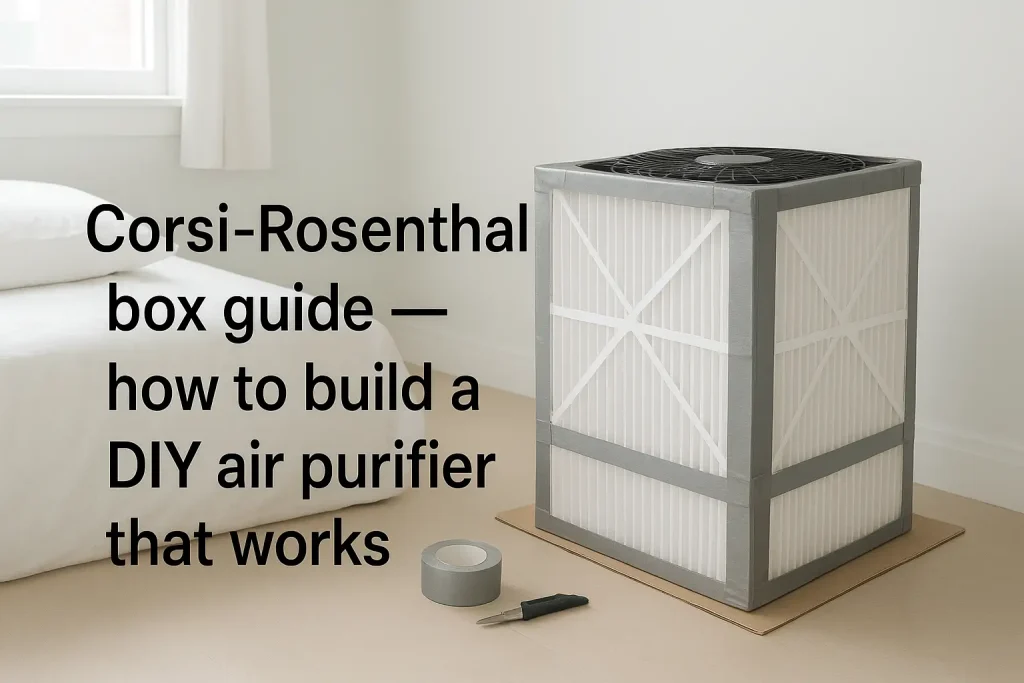
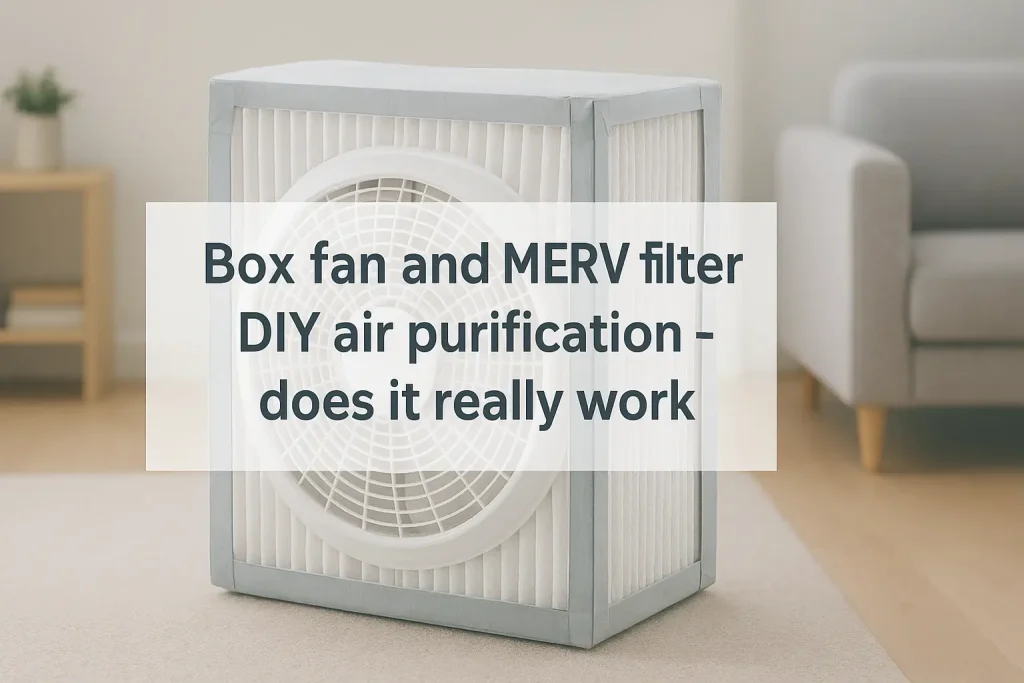
A Corsi-Rosenthal box using a box fan and MERV 13 filters can move significant air and capture particles, but it lacks the True HEPA certification, the activated carbon stage for odors and VOCs, and the durable housing designed for continuous damp-environment operation. For particle-only filtration on a tight budget, a well-built Corsi-Rosenthal box with a high-CFM box fan can approximate the particle removal of a 550 CFM air scrubber at roughly one-quarter the cost.
The trade-offs are significant: no carbon stage for musty odors, no sealed filter gaskets to prevent bypass, and a cardboard-and-duct-tape construction that degrades in basement humidity. For basements with mold and odor issues specifically, a purpose-built air scrubber with a sealed HEPA stage and a carbon bed is the better long-term solution.
An air scrubber is not a luxury purchase for a basement with air quality problems. It is the only tool that moves enough air, captures small enough particles, and adsorbs enough gas-phase contaminants to make a measurable difference in below-grade air quality. Match the CFM to your basement volume at 4-6 ACH, budget for genuine filter replacements as an ongoing operating cost, and pair the scrubber with a dehumidifier to address moisture at the source. The combination of moisture control and high-CFM filtration is what transforms a damp, musty basement into clean, usable square footage.
For most basements between 600 and 1,000 square feet, the B-Air RA-650 is the right starting point. If your budget is tighter, the Abestorm 550 CFM delivers the same filtration stages at nearly half the upfront cost. If your basement has active mold or renovation dust, the Mounto 1000CFM is the only unit on this list with enough airflow to bring those conditions under control with a single machine.
“`