Most people do not need to buy an ozone machine. They need one for 48 hours to clear a smoke-damaged rental unit or a musty car interior, then never touch one again.
Renting costs a fraction of buying and eliminates the storage, maintenance, and safety liability of owning a device that produces a lung-irritating gas regulated by the EPA.
What Is an Ozone Machine and When Does Renting Make Sense?
An ozone machine, also called an ozone generator, is a device that produces ozone gas (O3) by passing oxygen through a high-voltage corona discharge or ultraviolet light source. This gas oxidizes organic compounds on contact.
It breaks down smoke odors, mold spores, bacteria, and volatile organic compounds at the molecular level.
| Photo | Popular Air Purifiers | Price |
|---|---|---|

|
Air Purifiers for Home Large Room up to 1500ft², Tailulu H13 True HEPA Air Purifier for Pets Dust Odor Smoke, Air Purifier for Bedroom with 15dB Quiet Sleep Mode for Bedroom Office Living Room | Check Price On Amazon |
|
Afloia Air Purifier for Home, 4-in-1 Washable Filter for Allergies, Covers Up to 1076 ft², Quiet Operation, Auto Shut-Off & Night Light, Removes Pet Dander, Pollen, Dust, Mold, and Smoke, White,Pluto | Check Price On Amazon |

|
Nuwave OxyPure ZERO Air Purifier with Washable and Reusable Bio Guard Tech Air Filter, Large Room Up to 2002 Ft², Air Quality Monitor, 0.1 Microns, 100% Capture Irritants like Smoke, Dust, Pollen | Check Price On Amazon |

|
Air Purifiers for Home Large Room Up to 1,996 Ft², EOEBOT Air Purifier for Home Pets with Washable Filter, Quiet Sleep Mode, Air Quality Monitor, Air Purifier for Bedroom, Pet Hair, Dust, Smoke, White | Check Price On Amazon |
|
Afloia 2 IN 1 Air Purifier with Humidifier Combo, 3-Stage Filters for Home Allergies Pets Hair Smoker Odors, Evaporative Humidifier, Auto Shut Off, Quiet Air Cleaner with Seven Color Light,White | Check Price On Amazon |
Ozone is a powerful oxidizer and a known lung irritant. The EPA classifies ground-level ozone as a criteria air pollutant under the Clean Air Act.
CARB limits ozone output from air cleaning devices to 0.050 parts per million. Any device exceeding this threshold cannot be legally sold or rented in California.
Renting makes sense when the treatment need is one-time or infrequent. A 48-hour ozone shock treatment in a vacant apartment after a tenant who smoked moves out costs roughly $50-$120 in rental fees.
Buying that same 3,500 mg/hr unit outright costs $250-$500 plus ongoing storage and maintenance. The math favors renting for anyone treating fewer than three spaces per year.
Ozone machines must only be operated in unoccupied spaces. People, pets, and plants must be removed before treatment begins.
After treatment, the space must air out for 2-4 hours before re-entry. Ozone reverts to ordinary oxygen within 30-60 minutes after the machine stops running.
Ozone Machine Rental Costs by Output Level: Small, Medium, Large, and Commercial
By the Numbers: Ozone Machine Rental Costs
Typical daily rental range across all ozone machine sizes, from small 1,000 mg/hr units to commercial 20,000 mg/hr industrial models.
Average discount when renting by the week instead of by the day across major equipment rental providers.
CARB maximum ozone output concentration for any device sold or rented in California. Units exceeding this are illegal for residential use.
Typical pickup and delivery fee charged by rental companies. Local pickup eliminates this cost entirely.
Rental pricing scales almost directly with ozone output measured in milligrams per hour (mg/hr). A 1,000 mg/hr unit produces 1,000 milligrams of ozone every hour.
This output determines the treatment area, the odor severity the machine can handle, and ultimately the daily rental rate.
Small units in the 1,000 to 3,000 mg/hr range rent for $25 to $45 per day. These handle single rooms up to 250 square feet with moderate odors.
A 1,000 mg/hr unit treats a standard 150-square-foot bedroom for smoke odor in roughly 4-6 hours.
Medium units between 3,000 and 7,000 mg/hr rent for $45 to $80 per day. This is the most commonly rented size range.
A 5,000 mg/hr unit handles 500-800 square feet and clears heavy cooking odors, pet urine smells, or moderate smoke damage in a single overnight treatment cycle.
Large units from 7,000 to 10,000 mg/hr rent for $80 to $150 per day. These treat 1,000 to 1,500 square feet and handle severe contamination.
A 10,000 mg/hr unit is the standard choice for fire restoration contractors treating smoke-damaged homes before renovation begins.
Commercial units above 10,000 mg/hr reaching 20,000+ mg/hr rent for $150 to $300 or more per day. These serve industrial applications, hotel remediation, and severe mold abatement.
Most homeowners and renters never need this tier. A 10,000 mg/hr unit already exceeds the treatment needs of a 2,000-square-foot home when run room by room.
How Rental Duration Affects Your Total Cost: Daily, Weekly, and Monthly Rates
Every rental company structures their pricing around duration tiers. The daily rate is the most expensive per day. The weekly rate typically bundles 5-7 days for roughly the cost of 3-4 daily-rate days.
A $50/day unit rents for approximately $175-$200 per week. That drops the effective daily cost from $50 to $25-$29.
Monthly rates drop further. That same unit rents for $400-$600 per month, an effective daily cost of $13-$20.
Most residential ozone treatments need 24-72 hours total. A weekend rental covers the typical use case: set up Friday evening, run overnight, air out Saturday morning.
Price Comparison
Ozone Machine Rental Price Comparison by Output Tier
Daily rental rates plus estimated weekly discount. Prices verified at time of publication from national equipment rental providers.
$25-$45/day + weekly from $100
$45-$80/day + weekly from $175
$80-$150/day + weekly from $300
$150-$300+/day + weekly from $500
Bar width represents the maximum daily rental rate relative to the most expensive tier shown ($300/day commercial). Weekly rates are approximate and vary by provider and location. Most providers offer 5-10% additional discount for monthly rentals.
Use the table below to calculate your estimated total rental cost based on the machine output level you need and how long your treatment will take.
Rental Cost Reference
Estimated Total Ozone Machine Rental Cost by Output Level and Duration
All values are estimated ranges based on national rental market data. Actual rates vary by provider, location, and seasonal demand.
| Machine output (mg/hr) / Rental duration | 1 day | 3 days (weekend) | 1 week | 1 month |
|---|---|---|---|---|
| 1,000-3,000 (small room) | $25-$45 | $60-$100 * | $100-$180 | $300-$500 |
| 3,000-7,000 (medium room) | $45-$80 | $100-$180 | $175-$300 * | $400-$700 |
| 7,000-10,000 (large room) | $80-$150 | $180-$350 | $300-$500 | $700-$1,200 |
| 10,000-20,000+ (commercial) | $150-$300+ | $350-$700+ | $500-$1,000+ | $1,500-$3,000+ |
* Highlights the most common rental scenario for each output tier: weekend rental for small units, weekly rental for medium units. All prices are estimates. Delivery fees ($50-$100) are not included. Sales tax and security deposits vary by state and provider. Always request a written quote before confirming a rental.
Additional Costs Beyond the Base Rental Rate: What Rental Companies Do Not Advertise Up Front
The sticker price on a rental listing rarely reflects your total out-the-door cost. Rental companies generate significant revenue from add-ons and fees.
Knowing these before you book prevents an unpleasant surprise when the invoice arrives.
Delivery and pickup fees run $50 to $100 round trip. Some companies charge each direction separately.
Renting from a local supplier and picking up the unit yourself eliminates this cost entirely.
Security deposits range from $100 to $500 depending on the unit value. These are refundable but tie up your credit card for 5-10 business days after return.
A damaged or missing power cord can result in a partial deposit forfeiture. Photograph the unit at pickup and before return.
Optional accessories add up quickly. An ozone-safe timer outlet rents for $10-$15 per day.
Extension cords rated for outdoor use rent for $5-$10 per day. A box fan for post-treatment ventilation rents for $15-$25 per day.
Sales tax applies to equipment rentals in most states at the standard state and local rate. On a $300 weekly rental at 8% tax, that adds $24.
Late return fees typically equal one additional day at the daily rate for each day past the agreed return date.
How to Rent an Ozone Machine: Step-by-Step Process from Research to Return
Renting an ozone machine takes about 30 minutes of research and paperwork followed by however long your treatment requires. The process is straightforward if you know the steps.
Step-by-Step Guide
How to Rent an Ozone Machine: Research, Reserve, Treat, and Return
6 steps, approximately 30 minutes of active time plus treatment duration
Measure your treatment space and identify the odor source
Calculate the square footage of the largest room you need to treat. Match this to the ozone output recommendation: 1,000 mg/hr per 150 sq ft for smoke, 1,000 mg/hr per 250 sq ft for general odors. Identify whether the odor is surface-level or has penetrated drywall, carpet, or subfloor.
Select your rental provider and reserve the unit
Compare at least three providers: local equipment rental companies, national chains like Sunbelt or United Rentals, and specialty restoration suppliers. Ask for the daily rate, weekly rate, delivery fee, and security deposit in writing. Reserve 3-5 days ahead during spring cleaning season. Ensure the unit is CARB-compliant if you are in California or want the safest available equipment.
Prepare the treatment space before pickup
Remove all people, pets, and plants. Cover or remove exposed food. Close all windows and exterior doors. Seal HVAC vents with plastic sheeting and painter’s tape if the system serves other units. Place the unit on a non-flammable surface at least 3 feet from walls and furniture. Set up a box fan for post-treatment exhaust ventilation.
Pick up the unit and verify everything works
At pickup, test the unit in the rental store parking lot. Confirm the ozone output plate matches what you reserved. Check the power cord for damage. Verify the timer function. Photograph the unit from all angles including the serial number. Review the operating instructions with the rental agent. Confirm the return deadline in writing.
Run the treatment cycle with safety protocols in place
Place a warning sign on every entry door stating that ozone treatment is in progress and no person may enter. Set the timer for the recommended duration: 2-4 hours for moderate odors in a small room, 6-8 hours for heavy smoke damage. Never exceed 12 continuous hours in a residential setting. Stay off the property during treatment. After the cycle completes, wait 2 hours before re-entering. Open all windows and run exhaust fans for 30-60 minutes before occupying the space.
Return the unit clean and on time
Wipe down the exterior with a dry cloth. Do not use water or cleaning chemicals on the unit. Coil the power cord neatly. Return all accessories and manuals. Return before the deadline to avoid late fees. Request a return receipt showing no damage was noted. Keep the receipt until the security deposit clears your account.
Where to Rent an Ozone Machine: Equipment Rental Companies, Hardware Stores, and Specialty Suppliers
National equipment rental chains carry ozone machines at most locations. Sunbelt Rentals and United Rentals stock 3,000-10,000 mg/hr units suitable for residential odor removal.
Their pricing tends to be consistent across locations but rarely the cheapest option for weekend rentals.
Local independent equipment rental stores often beat national chains on price by 10-20% for the same output level. They also tend to be more flexible on return times.
A local shop may waive the Sunday return requirement that chains enforce, effectively giving you an extra day at no charge.
Restoration and janitorial supply companies rent ozone machines as a sideline to their core business. Their units are typically well-maintained because they also use them for their own service jobs.
Pricing runs 15-25% above equipment rental chains but the units are more likely to be properly calibrated and recently serviced.
Some commercial-grade ozone generators are available for purchase at prices that rival a one-week rental. A 10,000 mg/hr unit sells for $80-$150 on Amazon.
If you anticipate even two treatments, buying a budget unit often costs less than renting twice. The tradeoff is unit longevity and lack of local support if the device fails mid-treatment.
How to Save Money on Ozone Machine Rentals: 7 Proven Tactics
Saving on an ozone machine rental is not about finding the lowest daily rate. It is about matching the rental duration to your actual treatment time and avoiding fees.
Rent midweek if your schedule allows. Weekend demand drives higher effective daily pricing at many locations.
A Tuesday-to-Thursday rental often costs the same as a Saturday-only rental because the weekly rate structure is more flexible when demand is lower.
Book the smallest unit that meets your treatment needs. A 3,000 mg/hr unit treating a 500-square-foot apartment costs half as much as a 7,000 mg/hr unit and delivers the same result in the same time frame.
The formula is: multiply your square footage by 6-10 mg/hr per square foot for smoke damage, or 3-5 mg/hr per square foot for general odors.
Pick up the unit yourself. Delivery fees of $50-$100 each way can double the cost of a weekend rental. A 30-minute round trip in your own vehicle saves $100.
Use your own accessories. Do not rent a timer, extension cord, or box fan from the rental company. A heavy-duty grounded timer outlet costs $12-$20 to buy and you keep it for future use.
Negotiate multi-day discounts directly. The rate sheet is a starting point, not a final offer. Ask “is there any flexibility on the weekly rate for a first-time customer?”
This question alone gets 10-15% knocked off roughly half the time at independent rental shops according to documented buyer experiences on restoration forums.
Check if your homeowner’s or renter’s insurance covers ozone treatment as part of smoke or odor remediation. Some policies reimburse equipment rental when the treatment addresses a covered loss like fire damage.
File the claim before renting to confirm coverage. A denied claim after you have already paid means the cost is entirely yours.
Split the rental with a neighbor if you both have odor issues. Two adjacent apartments can be treated sequentially with the same unit over a single weekend rental period.
Run the unit in apartment A on Saturday, then move it to apartment B on Sunday morning. Both parties split the rental fee and the unit never leaves the building.
Safety Requirements: What You Must Know Before Operating a Rented Ozone Machine
Ozone is not safe to breathe. The EPA states that exposure to ozone at concentrations above 0.070 ppm over 8 hours can cause respiratory irritation, reduced lung function, and airway inflammation.
An ozone generator running at full output in a sealed room reaches concentrations far exceeding this threshold within minutes.
This is why every ozone machine rental agreement and every manufacturer instruction sheet states that treatment spaces must be unoccupied. This is not a suggestion. It is the single safety condition that separates effective odor treatment from a health hazard.
Remove all people, pets, and plants before starting the machine. Post warning signs on every entry door. Lock the doors if possible.
Do not re-enter the space to retrieve a forgotten item while the unit is running. Ozone concentrations peak during the active treatment period, not after.
After the treatment cycle finishes, wait a minimum of 2 hours before re-entering. Open windows and run exhaust fans for at least 30 minutes.
The distinct ozone smell should be faint or absent before you occupy the space again. If you can still smell ozone strongly, ventilate for another hour.
Ozone degrades rubber and some plastics with prolonged exposure. Remove or cover electronics, rubber seals on appliances, and any items containing natural rubber latex.
A single 4-hour treatment is unlikely to cause visible damage. Repeated treatments over months in the same space can degrade wiring insulation and rubber gaskets.
The CARB ozone emission limit of 0.050 ppm applies to air cleaning devices sold or rented in California. Units exceeding this threshold cannot legally be rented in the state.
If you rent a unit in California, confirm the CARB EO (Executive Order) number on the unit’s compliance label matches the manufacturer’s CARB certification before accepting the rental.
Ozone Machine Rental vs Buying: Cost Comparison by Treatment Frequency
The breakeven point between renting and buying an ozone machine is approximately two treatments. A budget 5,000 mg/hr ozone generator costs $70-$130 on Amazon.
Buying a 5,000 mg/hr ozone generator for $100 and using it twice costs $50 per treatment. Renting the equivalent unit costs $50-$80 per day.
On the third use, the purchased unit costs $33 per treatment while the rental still costs $50-$80.
But the math shifts when you factor in storage, maintenance, and reliability. A rented unit from a restoration supplier is maintained, calibrated, and guaranteed to work.
A budget ozone generator stored in a humid garage for 18 months between uses may not fire up when you need it for the next tenant turnover.
For most homeowners and renters facing a one-time odor issue, renting is the smarter financial choice. For property managers treating 3-4 units per year, buying a mid-range unit pays for itself within 12 months.
If you do buy, select a unit with a replaceable ozone plate. The corona discharge plate degrades over time and is the primary failure point on budget units.
Common Mistakes That Increase Your Ozone Machine Rental Cost
Renting an oversized unit is the most expensive mistake. A 10,000 mg/hr unit costs roughly double a 5,000 mg/hr unit for the same daily rate period.
Most residential treatments under 1,000 square feet need only 3,000-5,000 mg/hr. Rent by the treatment area formula, not by the “bigger is better” instinct.
Keeping the unit longer than needed because you did not prepare the space before pickup wastes rental days. Have the space cleared, sealed, and ready before you leave to get the machine.
Treatment prep takes 2-4 hours for a full apartment. Do this the day before pickup. Your rental clock should only cover actual machine runtime plus travel time.
Skipping the post-treatment ventilation step means you cannot re-occupy the space and may need to extend the rental or leave the unit idle. Ozone needs active ventilation to clear.
Open opposing windows to create cross-flow. Run exhaust fans in every room. The goal is to exchange the entire air volume of the treatment space 3-5 times before re-entry.
Not photographing the unit at pickup and return leaves you exposed to damage claims. A $200 deposit charge for “power cord damage” you did not cause is impossible to dispute without timestamped photos.
Photograph the cord, the ozone plate, the housing, and the serial number label. Email the photos to yourself to create a timestamped record before leaving the rental counter.
For most home ozone treatments, a 5,000 mg/hr unit rented for a weekend delivers the right balance of output, cost, and treatment time for a single-family odor issue under 1,000 square feet.
Does Ozone Treatment Actually Work for Different Types of Odors?
Ozone is highly effective against organic odors and less effective against inorganic or chemical odors. Understanding which odors ozone can and cannot address prevents wasted rental money.
Smoke odors from cigarettes, wildfires, or small kitchen fires respond well to ozone treatment. The ozone oxidizes the phenolic compounds and aldehydes that give smoke its persistent smell.
A 4-6 hour treatment at 5,000 mg/hr in a sealed 300-square-foot room typically eliminates 90-95% of detectable smoke odor according to restoration industry field data.
Pet urine odors respond to ozone but only if the urine has not saturated the subfloor. Ozone treats airborne molecules and surface-level contamination.
If pet urine has penetrated carpet padding or wood subfloor, ozone alone will not eliminate the odor. The contaminated material must be removed or enzymatically treated first.
Mold odors are reduced by ozone but the underlying mold colonies survive unless physically removed. Ozone kills surface mold spores on contact at high concentrations.
But it does not penetrate drywall, wood, or insulation to kill mold roots. The EPA does not recommend ozone generators as a standalone mold remediation method for this reason.
VOC off-gassing from new furniture, paint, or flooring responds poorly to ozone. The oxidation reaction between ozone and some VOCs can create formaldehyde and other secondary pollutants.
For VOC issues, use activated carbon filtration and increased ventilation instead. Our guide on what VOCs are and how they affect indoor air covers chemical pollutant strategies in detail.
Cooking odors from fish, curry, or fried food respond to ozone treatment effectively and are the most common residential use case. A 2-hour treatment at 3,000 mg/hr clears a standard kitchen.
The ozone oxidizes the volatile organic compounds that carry cooking smells into non-odorous compounds within the first hour of treatment.
How Long Should You Run a Rented Ozone Machine for Your Specific Situation?
Treatment duration depends on three variables: room volume, odor severity, and ozone output. A 5,000 mg/hr unit treats a 500-square-foot room with moderate smoke odor in 4-6 hours.
Light odors from cooking or general mustiness need 2-4 hours at 3,000-5,000 mg/hr for a standard 300-square-foot room. This is the most common residential treatment profile.
The unit produces enough ozone within the first hour to saturate the air volume. The remaining time allows ozone to penetrate porous surfaces like curtains and upholstery.
Moderate smoke damage or long-term pet odors need 6-8 hours at 5,000-7,000 mg/hr. These odors have penetrated deeper into materials and require longer exposure for the ozone to reach and oxidize the odor molecules.
Run the unit on a timer in 4-hour cycles with 1-hour ventilation breaks between cycles for severe cases. This prevents ozone saturation plateaus where additional runtime produces diminishing returns.
Severe contamination from fire damage, decades of smoking, or biohazard situations needs 8-12 hours at 10,000+ mg/hr. This level of treatment is usually performed by professional restoration companies.
DIY treatment at this severity level is not recommended. The health risks increase with both ozone concentration and treatment duration. Hire a professional remediation service instead.
Never run an ozone machine continuously for more than 12 hours in a residential setting. The law of diminishing returns applies. Ozone concentration plateaus when the generation rate equals the natural decay rate plus leakage rate.
Running beyond 12 hours does not increase treatment effectiveness but does increase the risk of material degradation to rubber, plastics, and some fabrics.
Ozone Safety and Health: What EPA and CARB Regulations Mean for Rental Users
The EPA does not certify or approve ozone generators for use in occupied spaces. There is no EPA-approved ozone generator for residential air purification while people are present.
Any marketing claim suggesting otherwise is false. The EPA has published multiple consumer advisories specifically warning against using ozone generators in occupied spaces.
CARB CCR Title 17 Section 94251 establishes the 0.050 ppm maximum ozone emission concentration for any air cleaning device sold or rented in California. This applies regardless of whether the device is marketed for occupied or unoccupied use.
If you rent a unit in California, it must display a CARB EO number. You can verify this number on the CARB website before accepting the rental. Renting a non-compliant unit carries legal liability for both the rental company and potentially the renter in some circumstances.
The American Lung Association recommends against the use of ozone generators for air cleaning under any occupied conditions. Their position is based on decades of peer-reviewed research showing that ozone at concentrations needed for effective air cleaning exceeds safe exposure thresholds.
Even at low concentrations below the EPA 8-hour standard, ozone can trigger asthma attacks, reduce lung function, and increase susceptibility to respiratory infections in sensitive individuals.
Children, elderly adults, and people with asthma or COPD face elevated risk from ozone exposure. These groups should not re-enter a treated space for at least 4 hours after treatment ends and ventilation is complete.
If anyone in the household has a respiratory condition, extend the post-treatment ventilation period to a minimum of 2 hours with active exhaust fans running continuously.
Our article on safe indoor air quality levels according to EPA and WHO guidelines provides the full regulatory framework for all indoor pollutants including ozone.
What Size Ozone Machine Do You Need for Your Room? Output Ratings Explained
Ozone output is measured in milligrams per hour (mg/hr). This number tells you how much ozone the machine produces in one hour of continuous operation at its highest setting.
A 5,000 mg/hr unit produces 5,000 milligrams of ozone every hour, enough to treat roughly 500-800 square feet of residential space depending on ceiling height and odor severity.
The treatment capacity formula for smoke and heavy odors is approximately 10 mg/hr per cubic foot of air volume. A room that is 20 feet by 15 feet with 8-foot ceilings contains 2,400 cubic feet.
At 10 mg/hr per cubic foot, this room needs 24,000 mg/hr of ozone output. A 5,000 mg/hr unit treats this volume in approximately 5 hours of continuous runtime.
For general odors and mustiness, the requirement drops to roughly 5 mg/hr per cubic foot. The same 2,400 cubic foot room needs only 12,000 mg/hr, treatable in 2-3 hours with a 5,000 mg/hr unit.
Always use the smoke-level formula even for lighter odors if the treatment is a one-time rental. The cost difference between a 2-hour and 5-hour treatment on a daily rental is zero.
Ozone output degrades as the corona discharge plate ages. A unit that originally produced 5,000 mg/hr may produce only 3,500 mg/hr after 500 hours of use.
Ask the rental company when the ozone plate was last replaced. A plate older than 1,000 hours of runtime delivers significantly less than its rated output.
Sizing your rental correctly means you pay for the output you need and nothing more. A 3,500 mg/hr unit costs 40-50% less per day than a 10,000 mg/hr unit and handles 90% of residential odor situations.
How to Evaluate Air Purifier and Ozone Machine Marketing Claims Before You Rent
Ozone machine rental listings and product descriptions contain inflated claims as a rule rather than an exception. Phrases like “hospital-grade,” “industrial strength,” and “eliminates all odors instantly” are marketing language with no regulatory definition.
The only number that matters is the mg/hr ozone output rating. A unit advertised as “commercial grade” with no mg/hr specification is likely a consumer-grade unit with cosmetic differences.
Always confirm the mg/hr output rating on the manufacturer’s specification plate, not the rental listing or product description. The plate is legally required to state the actual tested output.
Claims of “no ozone smell” or “safe for occupied use” at effective treatment concentrations are contradicted by basic ozone chemistry. Ozone has a distinct smell detectable by most people at concentrations as low as 0.01 ppm.
If a unit produces enough ozone to treat odors effectively and you cannot smell it, the unit is not producing ozone at the claimed rate. Verify output with an ozone detection meter if you have doubts.
Our detailed breakdown on how to evaluate air purifier and ozone machine marketing claims covers the specific claims to watch for and the regulatory definitions behind terms like CARB-compliant, ozone-free, and industry certifications.
Can You Use an Ozone Machine in an Apartment or Multi-Unit Building?
Ozone treatment in multi-unit buildings carries additional safety requirements. Ozone gas travels through wall penetrations, electrical outlets, plumbing chases, and HVAC ductwork into adjacent units.
Treating your apartment without notifying neighbors exposes them to ozone concentrations they did not consent to and creates a legal liability for you.
Notify adjacent neighbors at least 24 hours before treatment. Tell them what you are doing, how long the treatment will last, and that they should ventilate their own unit during and after your treatment cycle.
If any neighbor has asthma, COPD, or another respiratory condition, reschedule until they can be away from the building during your treatment window.
Seal shared wall penetrations before treatment. Use painter’s tape and plastic sheeting over electrical outlets on shared walls. Cover HVAC vents and returns if the system connects multiple units.
Close the gap under your entry door with a rolled towel. These steps prevent ozone migration into common areas and neighboring units.
Check your lease and building rules before renting. Some apartment buildings and condominium associations prohibit ozone machine use entirely due to the shared air risk.
Violating a building policy on chemical or gas treatments can result in lease termination or fines. Get written permission from the property manager before renting an ozone machine for apartment use.
A small unit under 3,000 mg/hr used with proper sealing presents minimal migration risk. A 10,000 mg/hr unit in an apartment with shared walls is a safety hazard for the building regardless of sealing efforts.
Do Spider Plants and Natural Methods Work as an Alternative to Ozone Treatment?
Spider plants, peace lilies, and other houseplants remove trace amounts of VOCs from indoor air under laboratory conditions. They do not remove smoke odors, pet urine smells, or any odor severe enough to consider ozone treatment.
The often-cited NASA Clean Air Study from 1989 tested plants in sealed one-cubic-meter chambers with injected pollutants. A real 300-square-foot room contains roughly 70 cubic meters of air exchanging with outdoor air and adjacent rooms continuously.
To match even 1 air change per hour of filtration in that room using spider plants alone, you would need approximately 700 mature plants according to a 2019 review published in the Journal of Exposure Science and Environmental Epidemiology.
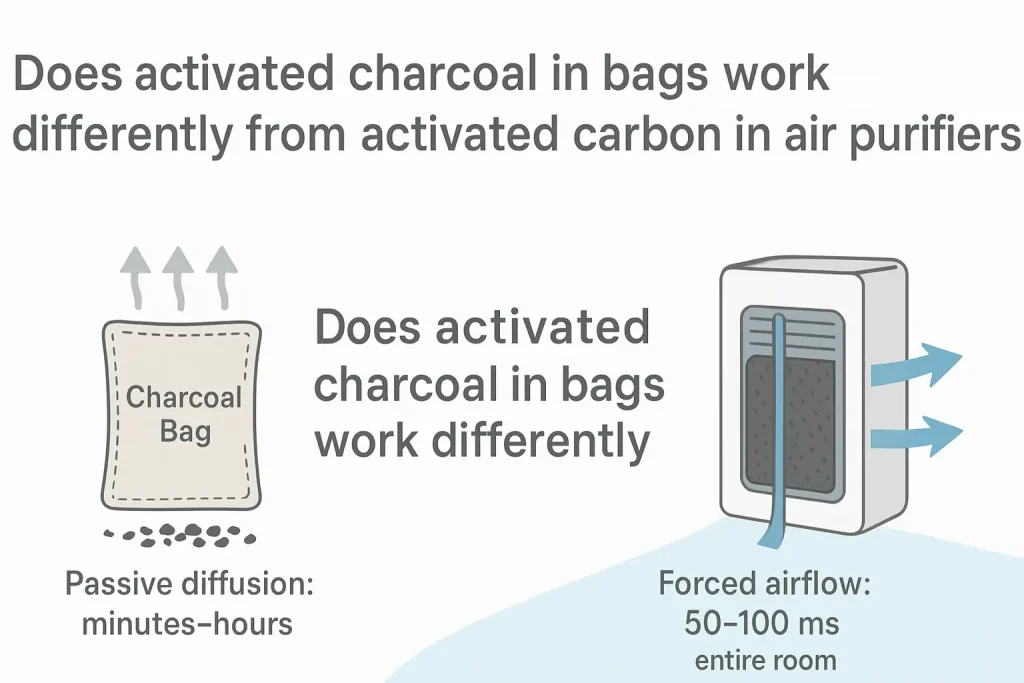
Activated charcoal bags, baking soda, and white vinegar absorb some odor molecules from still air in enclosed spaces like closets. They are ineffective for whole-room odor removal at the scale ozone treatment achieves.
A single 5,000 mg/hr ozone treatment oxidizes more odor molecules in one hour than a pound of activated charcoal absorbs in its entire service life.
Our evidence-based review of whether spider plants actually purify indoor air covers the full scientific literature on plant-based air cleaning including the critical airflow limitation that prevents houseplants from replacing mechanical air treatment.
Can Your Air Conditioner Remove Odors Instead of Using an Ozone Machine?
Standard air conditioners do not remove odors from indoor air. They recirculate indoor air through a cooling coil and a basic filter designed to protect the equipment, not clean the air.
The typical AC filter is a MERV 1-4 fiberglass panel that captures large dust particles and lint. It does not capture odor molecules, smoke particles, or VOCs.
Running your AC on fan-only mode during ozone treatment actually helps distribute ozone throughout the space more evenly. Set the fan to “on” rather than “auto” during the treatment cycle.
Seal the HVAC return and supply vents in the treatment room with plastic sheeting during treatment to prevent ozone from entering the ductwork. Remove the seals before running the system post-treatment to ventilate.
A whole-house MERV 13 or higher filter installed in the HVAC system combined with activated carbon media can reduce odors over time. But it cannot match the speed or intensity of a single ozone shock treatment for severe contamination.
Our detailed analysis of what air conditioners actually remove from indoor air and what they do not explains the limitations of HVAC-based air cleaning in detail.
What Is the Difference Between an Ozone Generator and an Air Purifier?
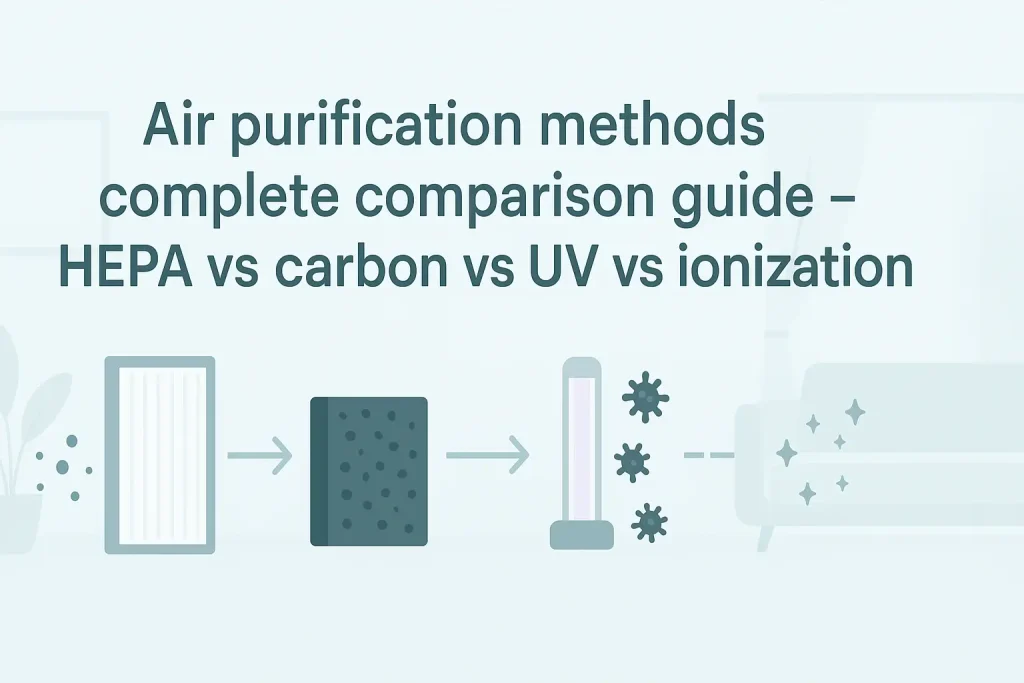
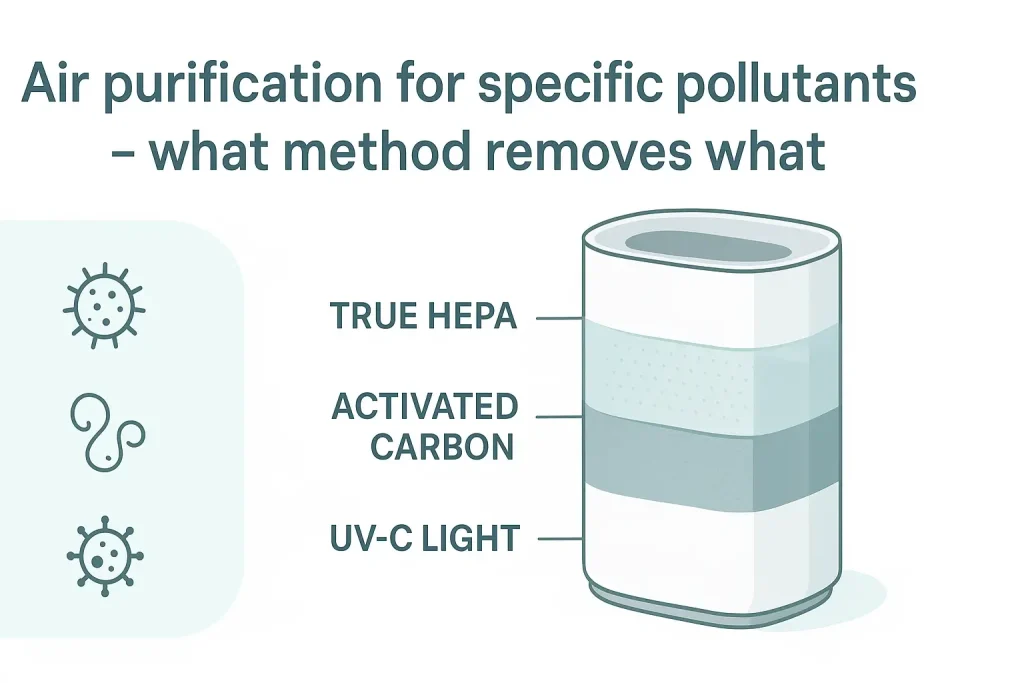
An ozone generator produces ozone gas to oxidize odor molecules and is only safe for use in unoccupied spaces. An air purifier uses mechanical filtration typically True HEPA to capture particles from air circulating in occupied rooms.
They serve completely different purposes. An ozone generator treats a contamination event. An air purifier maintains ongoing air quality in occupied spaces.
True HEPA air purifiers capture 99.97% of particles at 0.3 microns including smoke particles, dust, pollen, pet dander, and mold spores. They do not produce ozone as a byproduct if they are CARB-certified mechanical filtration units.
Some air purifiers include optional ionizers that produce trace amounts of ozone. CARB-certified units keep this output below 0.050 ppm, safe for continuous use in occupied spaces.
An ozone generator at treatment concentrations produces 50-200 times more ozone than even the least CARB-compliant ionizing air purifier. The two device categories are not interchangeable.
Use an ozone generator for one-time odor removal in vacant spaces. Use a True HEPA air purifier for ongoing particle removal in occupied rooms.
Why Does My Rented Ozone Machine Not Eliminate the Odor Completely?
An ozone machine fails to eliminate odor when the contamination source remains present, the treatment duration was too short, or the ozone output was insufficient for the room volume.
The most common cause of treatment failure is an unaddressed contamination source. Ozone treats airborne and surface odors but does not remove the material causing the odor.
If cat urine has soaked through carpet into the subfloor, ozone treats the carpet surface odor but the subfloor continues off-gassing ammonia compounds into the room air within days of treatment ending.
Insufficient treatment time is the second most common failure mode. A 2-hour treatment at 3,000 mg/hr in a 500-square-foot room with heavy smoke exposure treats roughly 40% of the required ozone dose.
The formula for minimum treatment time is: room volume in cubic feet multiplied by 10 mg/hr per cubic foot divided by the unit’s actual ozone output. Undershooting this number leaves residual odor.
High humidity above 70% reduces ozone effectiveness because water vapor competes for oxidation reactions with odor molecules. Ozone reacts with water vapor to form hydroxyl radicals, reducing the available ozone concentration for odor treatment.
Run a dehumidifier in the treatment space for 24 hours before ozone treatment if humidity exceeds 60%. This maximizes the available ozone for odor oxidation.
Porous materials act as odor reservoirs that release captured odor molecules over days or weeks after treatment. Drywall, upholstery, curtains, and carpet padding all hold odor compounds deep within their structure.
Multiple treatment cycles spaced 48 hours apart address this reservoir effect more effectively than a single extended treatment. Each cycle treats the odor molecules that have migrated to the surface since the previous treatment.
What Went Wrong When My Ozone Machine Left a Chemical Smell Behind?
A chemical or chlorine-like smell after ozone treatment is typically caused by the oxidation of certain VOCs or cleaning product residues into new compounds. Ozone reacts with limonene from citrus cleaners and terpenes from pine-based products to form formaldehyde and other aldehydes.
This happens because ozone is a non-selective oxidizer. It reacts with whatever organic compounds are present, including residual cleaning chemicals on surfaces and in the air.
Cleaning the treatment space with only water and a mild detergent before ozone treatment removes the reactive residues that cause post-treatment chemical smells. Avoid scented cleaners, bleach, and ammonia-based products for 48 hours before treatment.
New carpet, fresh paint, and recently installed vinyl flooring off-gas VOCs that react with ozone to form secondary pollutants. Ozone treatment should be performed before new materials are installed, not after.
If you must treat a space with new materials present, ventilate aggressively for 2-3 days before treatment to reduce the VOC load that will react with ozone.
A lingering chemical smell that persists more than 48 hours after treatment with thorough ventilation may indicate that ozone has reacted with building materials to create persistent secondary pollutants.
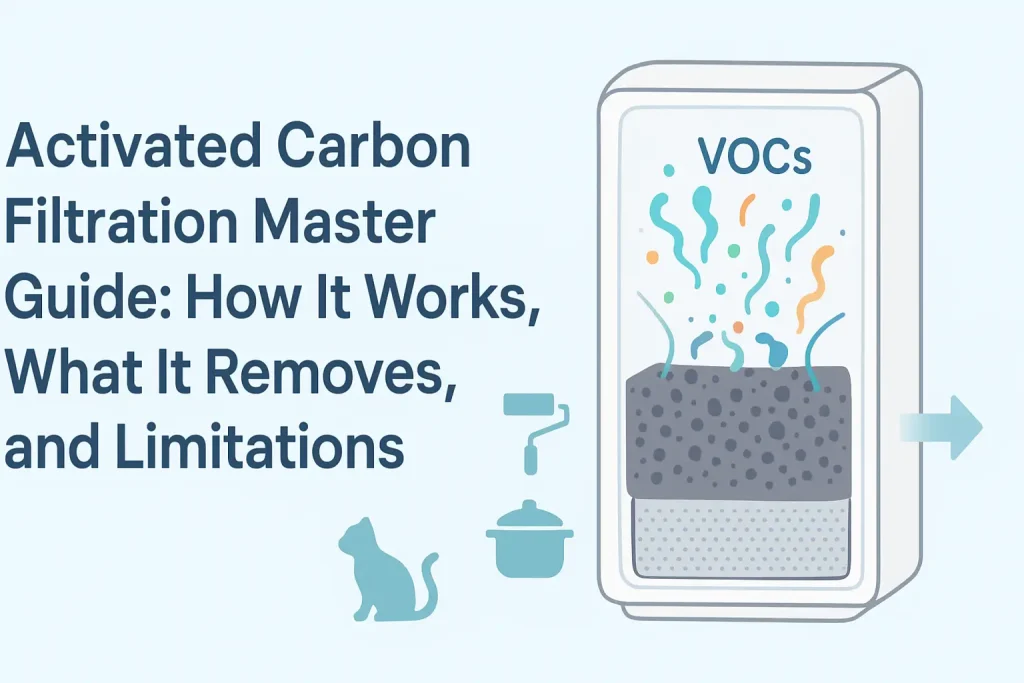
In this case, activated carbon filtration is the recommended follow-up treatment. Carbon adsorbs the secondary aldehyde compounds that ozone created. Run a carbon-filtered air purifier continuously for 72 hours after treatment.
Can Ozone Machine Treatment Remove Cigarette Smoke Residue from Walls and Ceilings?
Ozone oxidizes thirdhand smoke compounds on surfaces including nicotine, tar residues, and the dozens of semi-volatile organic compounds that give cigarette smoke its persistent smell. However, visible yellow-brown staining on walls and ceilings must be physically cleaned before ozone treatment.
The ozone can only oxidize the outermost molecular layers of smoke residue on painted surfaces. A thick accumulation of tar and nicotine prevents ozone from reaching the deeper layers.
Wash walls and ceilings with a trisodium phosphate (TSP) solution before ozone treatment. This removes the bulk contamination and exposes the residual compounds embedded in the paint to the ozone.
After TSP cleaning and ozone treatment, seal the walls with an oil-based or shellac-based primer before repainting. This locks in any residual odor compounds that survived the cleaning and ozone process.
Skipping the sealing step results in odor re-emergence within 6-12 months as the encapsulated compounds slowly migrate through water-based latex paint, which is vapor-permeable.
Is It Safe to Use an Ozone Machine Around Electronics and Appliances?
Ozone accelerates the oxidation of natural rubber and some synthetic elastomers used in appliance gaskets, wire insulation, and electronic component seals. A single short-duration treatment at normal residential concentrations causes negligible damage to most electronics.
Repeated or extended treatments over 8 hours at high concentrations above 10,000 mg/hr can embrittle rubber seals on refrigerators, washing machines, and window gaskets. The effect is cumulative across multiple treatment cycles.
Cover refrigerators and major appliances with plastic sheeting during treatment if you plan to treat the same space repeatedly over months or years. For a single treatment, the risk is minimal.
Vintage electronics with natural rubber components, certain audio equipment with foam speaker surrounds, and latex-containing items should be removed or covered. Modern electronics with synthetic polymer insulation are far more resistant to ozone degradation.
If you are unsure about a specific item, remove it from the treatment space. The precaution costs a few minutes. Replacing a degraded refrigerator door gasket costs $50-$150.
How Long Does Ozone Treatment Last Before Odors Return?
Ozone treatment permanently eliminates the odor molecules it oxidizes. The treatment is permanent for those specific molecules. Odor returns only when new contamination is introduced or when untreated contamination reservoirs release stored odor compounds.
For smoke odors where the source has been removed (a former smoker moved out, a fire was cleaned), ozone treatment results last indefinitely. The oxidized odor molecules do not re-form.
For ongoing contamination sources like active mold growth, pet accidents, or continued smoking, the treatment lasts only until the source introduces new odor compounds. Address the source first, then ozone treat.
Carpet padding and subfloor contamination act as slow-release odor reservoirs. Ozone treats the accessible surface contamination but odor compounds migrate from deep within these materials over weeks.
A second ozone treatment 2-4 weeks after the first addresses the residual odor from deep reservoirs. Property managers commonly budget for two treatments when turning over a heavily smoke-damaged unit.
For most well-prepared residential treatments where the contamination source has been fully removed, a single 4-6 hour ozone session at the correct output for the room size provides permanent odor elimination.
What Is the Difference Between Corona Discharge and UV Ozone Generators for Rental Use?
Corona discharge ozone generators use high-voltage electrical discharge across a dielectric plate to split oxygen molecules and form ozone. They produce higher ozone output per watt of electricity and are the standard type rented for odor treatment.
UV ozone generators use ultraviolet light at 185 nanometers to split oxygen molecules. They produce lower ozone output and are primarily used for water treatment or small-scale air sanitization, not whole-room odor removal.
Corona discharge units produce 5-20 times more ozone per hour than equivalently sized UV units. A 5,000 mg/hr corona discharge unit fits in a shoebox. A UV unit producing the same output would be the size of a small suitcase.
Every rental ozone machine you encounter for residential odor treatment uses corona discharge technology. If a rental company offers a UV unit, confirm the mg/hr output before accepting it.
Corona discharge plates degrade over time and require replacement after 500-2,000 hours of runtime depending on the plate material and quality. A rental unit with a worn plate produces below its rated output.
Ask the rental company for the last plate replacement date. A plate replaced within the last 12 months on a frequently rented unit is acceptable. A plate of unknown age on a unit with visible wear should be a dealbreaker.