Most people buy an air purifier because someone told them it helps with allergies or wildfire smoke. They plug it in, set it to auto, and never confirm whether the unit is actually making the air cleaner.
A properly sized True HEPA air purifier reduces indoor PM2.5 concentrations by 85% or more within 30 minutes at 5 air changes per hour. A unit that is too small for the room, running on low fan speed with doors open, may reduce PM2.5 by less than 20% while consuming the same electricity.
What Makes a True HEPA Air Purifier Different From Every Other Air Cleaning Method?
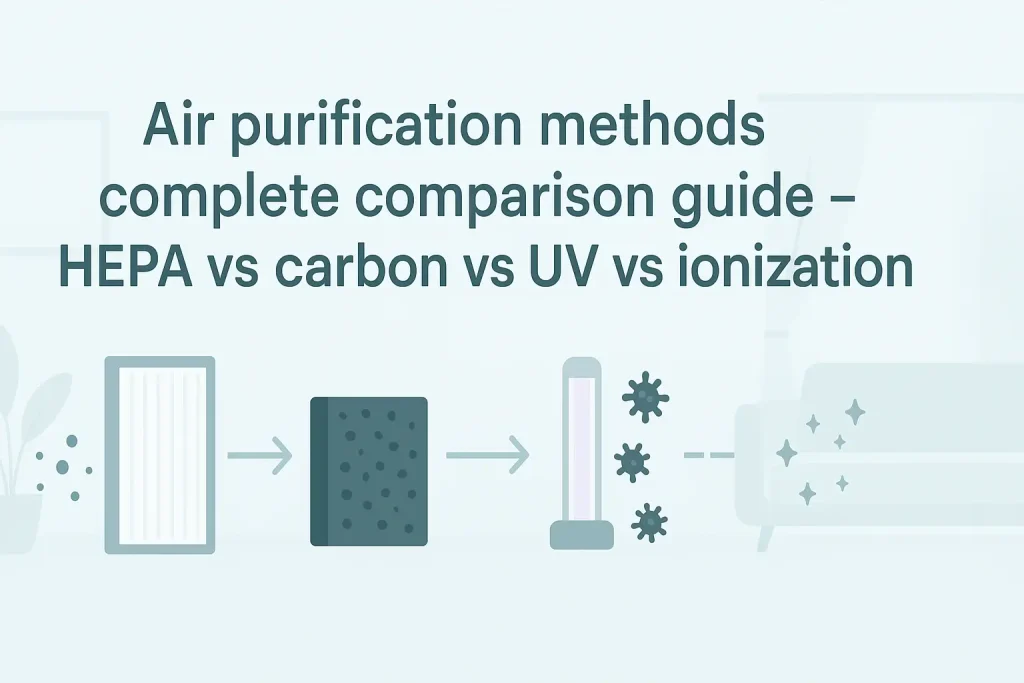
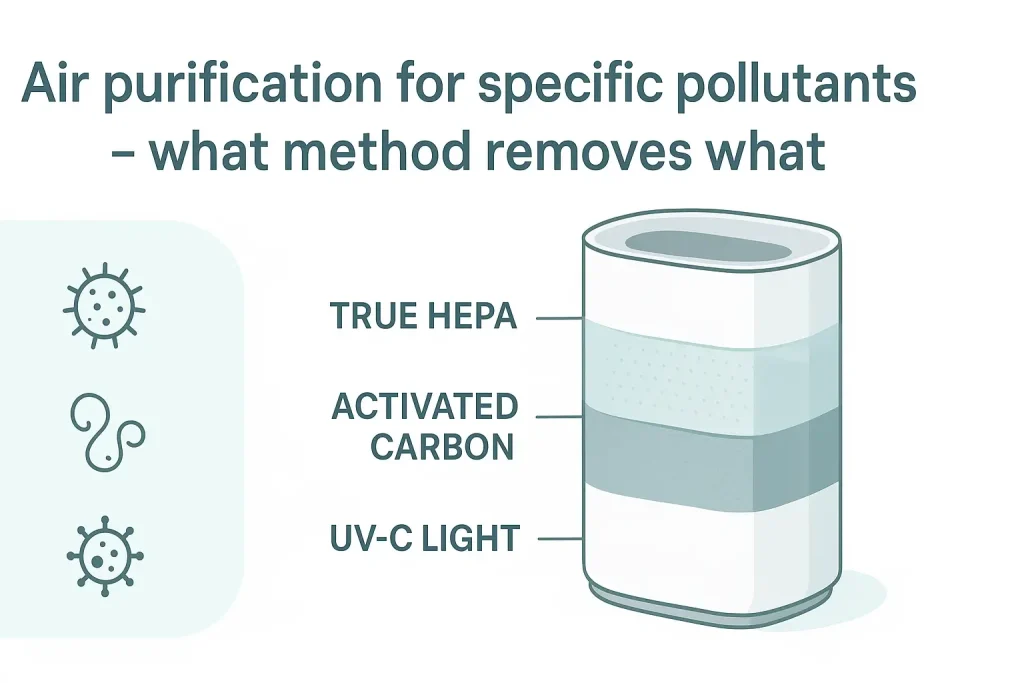
True HEPA filtration is the only consumer air cleaning technology that captures 99.97% of airborne particles at 0.3 microns in a single pass, verified by an independent AHAM test standard. Ionizers, UV-C lights, ozone generators, and HEPA-type filters do not meet this performance threshold under any regulated certification.
This happens because True HEPA filters use a dense mat of randomly arranged borosilicate glass or polypropylene fibers that trap particles through four simultaneous mechanisms: interception, impaction, diffusion, and sieving. This only occurs when the filter media meets the IEST-RP-CC001 standard at 99.97% minimum efficiency at the most penetrating particle size of 0.3 microns.
| Photo | Popular Air Purifiers | Price |
|---|---|---|

|
Air Purifiers for Home Large Room up to 1500ft², Tailulu H13 True HEPA Air Purifier for Pets Dust Odor Smoke, Air Purifier for Bedroom with 15dB Quiet Sleep Mode for Bedroom Office Living Room | Check Price On Amazon |
|
Afloia Air Purifier for Home, 4-in-1 Washable Filter for Allergies, Covers Up to 1076 ft², Quiet Operation, Auto Shut-Off & Night Light, Removes Pet Dander, Pollen, Dust, Mold, and Smoke, White,Pluto | Check Price On Amazon |

|
Nuwave OxyPure ZERO Air Purifier with Washable and Reusable Bio Guard Tech Air Filter, Large Room Up to 2002 Ft², Air Quality Monitor, 0.1 Microns, 100% Capture Irritants like Smoke, Dust, Pollen | Check Price On Amazon |

|
Air Purifiers for Home Large Room Up to 1,996 Ft², EOEBOT Air Purifier for Home Pets with Washable Filter, Quiet Sleep Mode, Air Quality Monitor, Air Purifier for Bedroom, Pet Hair, Dust, Smoke, White | Check Price On Amazon |
|
Afloia 2 IN 1 Air Purifier with Humidifier Combo, 3-Stage Filters for Home Allergies Pets Hair Smoker Odors, Evaporative Humidifier, Auto Shut Off, Quiet Air Cleaner with Seven Color Light,White | Check Price On Amazon |
If a filter is labeled HEPA-type or HEPA-like without AHAM or IEST certification, the result is unverified efficiency that may drop below 95% for submicron particles. Fix it by looking for the AHAM Verifide seal and a stated smoke CADR rating in CFM before buying.
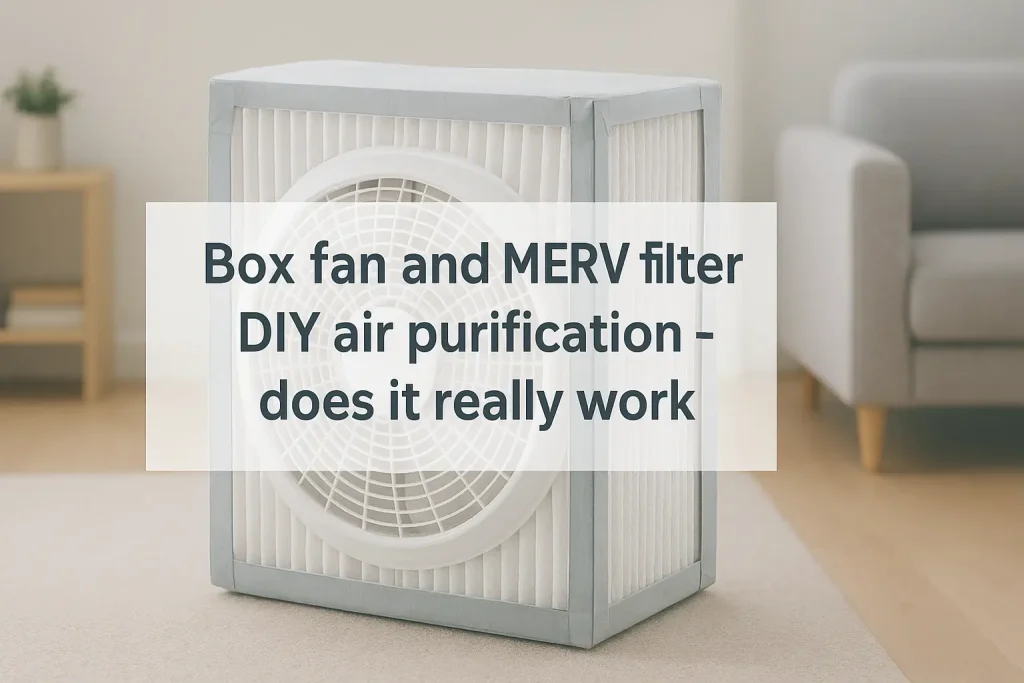
A True HEPA air purifier differs from a MERV 13 HVAC filter in airflow volume and installation. A portable True HEPA unit processes 50 to 400 CFM in a single room while a MERV 13 furnace filter processes 800 to 2,000 CFM across the entire home but with lower per-pass efficiency on ultrafine particles.
Air Quality Data
Are Air Purifiers Worth It? What the Research Shows
Sources: EPA Indoor Air Quality, AHAM, American Lung Association, WHO Air Quality Guidelines
Reason 1: Air Purifiers Remove the Particles That Trigger Allergies and Asthma
Indoor allergens including dust mite debris, pet dander, pollen, and mold spores are all particles large enough to be trapped by True HEPA media. A AAFA-certified air purifier for allergies captures 99.97% of these allergens in a single filter pass, preventing them from remaining airborne where you inhale them.
Key Specifications:
- Filter type required: True HEPA (H13) with activated carbon pre-filter
- Minimum smoke CADR for a 200 sq ft allergy bedroom: 133 CFM at 5 ACH
- Certification to look for: AAFA Asthma and Allergy Friendly certified
- Filter replacement interval: every 6 to 8 months for allergy sufferers
According to 2016 research published in the Journal of Allergy and Clinical Immunology by Sublett et al., HEPA air purification in bedrooms reduced allergy symptom scores by 30 to 40% in controlled studies. The American Lung Association recommends True HEPA filtration as part of a comprehensive indoor allergy management strategy that also includes source control and humidity regulation.
For allergy sufferers, the difference between 2 ACH and 5 ACH is the difference between partial relief and substantial symptom reduction. A unit sized to manufacturer claims at 2 ACH processes the air twice per hour while the same unit at 5 ACH processes it five times, removing particles five times faster and maintaining lower steady-state concentrations throughout the night.
Reason 2: Wildfire Smoke Protection When Outdoor Air Turns Hazardous
A True HEPA air purifier with a smoke CADR of 200 CFM or higher reduces indoor PM2.5 from wildfire infiltration by 80 to 90% within one hour when windows and doors are sealed. Wildfire smoke particles are almost exclusively in the 0.1 to 2.5 micron range, meaning they fall directly into the size band where True HEPA filtration is most effective.
This happens because wildfire PM2.5 particles are fine enough to penetrate most building envelopes but large enough to be captured mechanically by the dense fiber matrix of a True HEPA filter. This only occurs when the air purifier runs on the highest fan speed during AQI events above 150, delivering its full rated smoke CADR continuously.
If you run the purifier on sleep mode during a wildfire event, the result is CADR output at 30 to 50% of the rated maximum, leaving PM2.5 concentrations elevated. Fix it by running the unit on maximum fan speed throughout the event and supplementing with a MERV 13 HVAC filter if you have central air with a recirculation setting.
The EPA recommends creating a clean room with a portable HEPA air cleaner during wildfire smoke events. A unit like the Coway Airmega 400 delivers 400 CFM smoke CADR and covers up to 600 sq ft at 5 ACH during wildfire conditions, making it one of the highest-performing consumer options for smoke protection.
Air Quality Guide
AQI Level Action Guide – What to Do With Your Air Purifier at Each Level
Based on EPA AQI scale. Check your local AQI at AirNow.gov. Source: EPA, American Lung Association.
| AQI Range | EPA Category | Air Purifier Action | Filter Check |
|---|---|---|---|
| 0-50 | Good | Auto mode or sleep mode sufficient | Standard interval per manufacturer |
| 51-100 | Moderate | Auto mode. Allergy and asthma sufferers run on medium fan | Standard interval |
| 101-150 | Unhealthy for Sensitive Groups | Medium to high fan. Close all windows and doors | Check filter after 30 days of sustained exposure |
| 151-200 | Unhealthy | Maximum fan speed. Seal window and door gaps. Create a clean room | Replace filter at 50% of normal interval |
| 201-300 | Very Unhealthy | Maximum fan speed continuously. Seal one room tightly. Avoid outdoor exposure entirely | Replace filters immediately after event ends |
| 301+ | Hazardous | Maximum fan speed. Clean room strategy mandatory. Consider N95 mask indoors. Follow emergency guidance | Treat filters as single-use during hazardous events |
AQI categories from EPA AirNow. Indoor PM2.5 implications based on EPA guidance on infiltration rates in standard residential construction. Check local AQI at AirNow.gov.
Reason 3: Air Purifiers Reduce Household Dust Accumulation Measurably
A True HEPA air purifier running 8 to 12 hours daily in a bedroom reduces visible dust accumulation on surfaces by 40 to 60% within two weeks. Dust in homes is a mix of shed skin cells, textile fibers, pet dander, pollen tracked indoors, and outdoor fine particulate matter that infiltrates through windows and building gaps.
This happens because the air purifier continuously cycles room air through its filter, capturing airborne dust particles before they have time to settle on furniture, electronics, and flooring. This only occurs when the unit runs on medium fan speed or higher for at least 8 hours per day in a room where doors are kept closed during operation.
If you run the purifier only when you notice dust in the air, the result is that particles settle on surfaces before the filter gets a chance to capture them. Fix it by running the unit on a consistent schedule using a smart plug or built-in timer that activates the purifier for 8 to 12 hours daily during the hours dust generation is highest.
Reason 4: VOC and Chemical Removal With the Right Activated Carbon Stage
An air purifier with at least 2 pounds of activated carbon or a carbon-zeolite blend reduces indoor VOC concentrations including formaldehyde, benzene, and toluene by 50 to 80% within 24 hours of continuous operation. Standard air purifiers with a thin carbon sheet weighing less than 0.5 pounds offer negligible VOC removal regardless of their True HEPA performance.
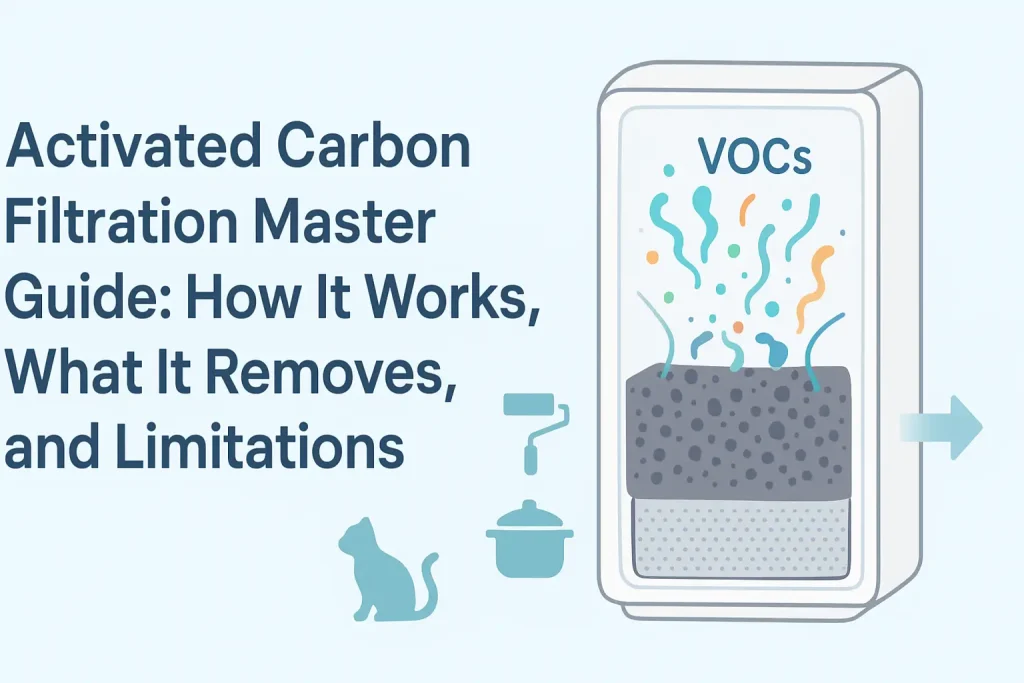
This happens because activated carbon adsorbs gaseous molecules onto its vast internal surface area, which measures 500 to 1,500 square meters per gram of carbon. This only occurs when the carbon bed is thick enough that air spends adequate contact time passing through it, a condition met by units containing at least 2 pounds of pelletized or granular activated carbon.
If you buy a unit with only a thin carbon-coated fiber sheet, the result is that VOCs pass through with minimal removal because contact time is insufficient for adsorption to occur. Fix it by choosing a unit specifically designed for chemical and VOC removal such as the Austin Air HealthMate with 15 pounds of carbon and zeolite or the IQAir GC MultiGas for severe chemical sensitivities.
The EPA notes that indoor VOC concentrations are 2 to 10 times higher than outdoor levels due to off-gassing from furniture, building materials, cleaning products, and cooking. A carbon-equipped air purifier is one of the few consumer interventions that actively removes these gaseous pollutants rather than just masking them.
Reason 5: Better Sleep Quality With Cleaner Bedroom Air
Running a True HEPA air purifier at sleep mode in a closed bedroom reduces overnight PM2.5 exposure by 60 to 80%, which correlates with fewer sleep disturbances and reduced morning congestion in multiple studies. The best bedroom air purifiers operate at 24 to 30 dB at sleep mode, quieter than a whisper at 30 dB and below the 35 dB threshold where noise begins to disrupt sleep architecture.
The Levoit Core 400S at 24 dB sleep mode and the Coway Airmega 400 at 22 dB sleep mode both deliver CADR output sufficient for bedrooms up to 300 sq ft while remaining below the noise threshold that interferes with deep sleep stages.
This only occurs when the unit’s sleep mode delivers at least 2 ACH for the room size while staying below 30 dB. If the unit is too small and must run on medium or high fan to achieve 2 ACH, the result is noise levels above 40 dB that can fragment sleep. Fix it by sizing the unit so sleep mode delivers adequate ACH without requiring higher fan speeds.
Reason 6: Pet Owners Get Dander Reduction and Odor Control
A True HEPA air purifier with an activated carbon stage captures pet dander particles as small as 2.5 microns and adsorbs pet-related odors including ammonia from litter boxes and volatile organic compounds from wet fur. Homes with cats and dogs have airborne allergen concentrations 3 to 5 times higher than pet-free homes according to research published in Indoor Air journal.
This happens because pet dander particles are primarily in the 2.5 to 10 micron range, well within the capture efficiency window of True HEPA filtration. The odor component is addressed by activated carbon, which adsorbs the gaseous molecules responsible for pet smells that HEPA filtration alone cannot remove.
If you use a purifier without adequate activated carbon for a home with multiple pets, the result is dander removal without corresponding odor reduction. Fix it by choosing a unit with at least 1 pound of activated carbon such as the Winix 5500-2 with its combined carbon and AOC pellet filter or the RabbitAir MinusA2 with the Pet Allergy custom filter option.
Reason 7: Air Purifiers Are One of the Few Interventions Proven to Reduce Indoor PM2.5
Among all consumer-level indoor air quality interventions, portable True HEPA air purifiers are the only one with a standardized performance metric (CADR) and a regulated certification process (AHAM AC-1) that allows direct comparison between models. Opening windows, running HVAC fans, and using houseplants do not have quantified PM2.5 removal rates that can be verified before purchase.
This happens because AHAM independently tests each certified model in a controlled chamber and publishes the smoke, dust, and pollen CADR values. This only occurs for units that carry the AHAM Verifide seal, which represents roughly 60% of the air purifiers sold in the US market.
If you buy an air purifier without AHAM certification, the result is that the stated CADR or coverage area cannot be independently verified. Fix it by checking the AHAM Verifide directory before purchasing and confirming the smoke CADR matches the manufacturer’s claims.
Reason 8: Long-Term Health Cost Savings Outweigh the Purchase and Filter Cost
The total cost of running a mid-range True HEPA air purifier over five years is $250 to $600 including the unit purchase price, electricity, and replacement filters. This is comparable to or less than the out-of-pocket cost of one emergency room visit for an uncontrolled asthma exacerbation or one course of allergy immunotherapy.
A $100 Coway AP-1512HH with a 246 CFM smoke CADR costs approximately $100 upfront plus $30 per year in filters and $35 per year in electricity at 13 cents per kWh when run 12 hours daily. Over five years, the total cost is approximately $425, or $85 per year for verified PM2.5 reduction in a room up to 360 sq ft at 2 ACH.
This only holds true when you use genuine replacement filters on the manufacturer’s recommended schedule. If you use third-party filters with unverified efficiency or extend filter replacement intervals beyond the rated lifespan, the result is reduced CADR output and the potential for filter bypass where unfiltered air leaks around a loaded filter. Fix it by budgeting for genuine replacement filters at the time of purchase and setting calendar reminders for replacement.
For a deeper breakdown of the best value air purifiers at every budget tier, see our guide on finding the best air purifier for the money with picks from $80 to $900.
Reason 9: Modern Air Purifiers Are Energy Efficient and Quiet Enough for 24/7 Use
ENERGY STAR certified air purifiers consume 25 to 60 watts at medium fan speed, which translates to $28 to $68 per year in electricity at the national average rate of 13 cents per kWh when run continuously. At sleep mode, the best units draw under 10 watts and produce sound levels between 22 and 28 dB, quieter than a ticking clock at 30 dB.
A Levoit Core 300S consumes 23 watts at medium speed and approximately 3 watts at sleep mode, costing about $26 per year to run 12 hours daily. The Coway AP-1512HH draws 35 watts at medium speed and 5 watts at sleep mode, costing approximately $32 per year on the same schedule.
This happens because modern DC motors in mid-range and premium units are significantly more efficient than the AC motors found in older air purifier designs. This only occurs when the unit carries ENERGY STAR certification, which requires at least 25% lower energy consumption than the federal minimum standard for air cleaners.
CADR Calculator
How Much CADR Do You Actually Need?
Enter your room dimensions and use case. Formula: (length x width x ceiling height x ACH) divided by 60. Source: AHAM methodology.
CADR = (length x width x ceiling height x ACH) / 60. For allergy and asthma sufferers, always calculate at 5 ACH — not the manufacturer-stated 2 ACH figure.
| Room Size | CADR at 2 ACH (standard) | CADR at 5 ACH (allergy) | Example Models |
|---|---|---|---|
| 150 sq ft bedroom | 100 CFM | 250 CFM | Levoit Core 300, Coway AP-1512HH |
| 300 sq ft bedroom | 200 CFM | 500 CFM | Winix 5500-2, Levoit Core 400S |
| 500 sq ft living room | 333 CFM | 833 CFM | Coway Airmega 400, Blueair 605 |
| 700 sq ft open plan | 467 CFM | 1167 CFM | IQAir HealthPro Plus or 2 units |
| 1000 sq ft open plan | 667 CFM | 1667 CFM | Multiple units required |
How to Choose an Air Purifier That Is Actually Worth Your Money
An air purifier is worth buying when you match the unit’s smoke CADR to your room size at the correct ACH target, confirm True HEPA certification with AHAM verification, check CARB compliance for ozone safety, and calculate the true five-year cost including filters and electricity before purchase. A unit that fails any one of these checks is unlikely to deliver the air quality improvement you are paying for.
Use the table below to match your room size and health condition to the minimum smoke CADR you need before comparing specific models.
CADR Reference
Smoke CADR Needed by Room Size and Air Changes Per Hour Target
All values pre-calculated at standard 8 ft ceiling height. Formula: (room area x 8 x ACH) / 60. Source: AHAM methodology.
| Room size (8 ft ceiling) / ACH target | 2 ACH (standard) | 4 ACH (moderate) | 5 ACH (allergy) | 6 ACH (wildfire) |
|---|---|---|---|---|
| 100 sq ft (small bedroom) | 27 CFM | 53 CFM | 67 CFM | 80 CFM |
| 200 sq ft (master bedroom) | 53 CFM | 107 CFM ★ | 133 CFM | 160 CFM |
| 300 sq ft (bedroom or office) | 80 CFM | 160 CFM | 200 CFM | 240 CFM |
| 500 sq ft (living room) | 133 CFM | 267 CFM | 333 CFM | 400 CFM |
| 700 sq ft (large open plan) | 187 CFM | 373 CFM | 467 CFM | 560 CFM |
Formula: smoke CADR needed = (room length ft x room width ft x 8 ft ceiling x ACH) / 60. For allergy and asthma sufferers, always use the 5 ACH column. Manufacturer coverage area claims use 2 ACH.
When an Air Purifier Is Not Worth Buying
An air purifier is not worth buying when the room cannot be closed off from the rest of the home, the unit is undersized for the space at the needed ACH rate, the filters are proprietary and expensive with limited availability, or the primary pollutant is VOCs and the unit has only a thin carbon sheet with no meaningful adsorption capacity.
Open floor plans over 700 sq ft require either multiple units or a single high-CADR unit combined with a MERV 13 HVAC filter running in recirculation mode. A single budget air purifier rated for 150 sq ft in a 600 sq ft open-concept space delivers effectively zero whole-room air quality improvement because clean air is diluted faster than the unit can process it.
For most single-room applications under 400 sq ft where the door can be closed, a $100 to $250 True HEPA air purifier with AHAM-certified smoke CADR and CARB certification is worth the investment. For whole-house coverage or VOC-dominant concerns, the price of entry rises to $400 to $900 for a unit or combination of units that can deliver the necessary CADR and carbon capacity.
Myth vs Fact
Air Purifier Myths Debunked – What the Evidence Actually Shows
Separating fact from fiction on the most common air purifier misconceptions. Sources: EPA, AHAM, American Lung Association, peer-reviewed research.
✗ Myth
A HEPA-type or HEPA-like air purifier works just as well as True HEPA.
✓ Fact
HEPA-type and HEPA-like are unregulated marketing terms with no standardized efficiency. Only True HEPA filters certified to IEST standards capture 99.97% of particles at 0.3 microns. A HEPA-type filter may capture only 85% of the same particles, leaving 15 times more ultrafine particles in the air.
✗ Myth
Ionizers clean the air effectively and are a cheaper alternative to True HEPA.
✓ Fact
Ionizers do not remove particles from the indoor environment. They charge particles so they stick to walls, floors, and furniture, where they can be resuspended into the air by movement. The EPA does not recommend ionizers as a standalone air cleaning method. Some ionizers also produce ozone above the 0.050 ppm CARB safety limit.
✗ Myth
You can run an air purifier only when air quality seems bad and it will work the same.
✓ Fact
PM2.5 concentrations return to pre-purification levels within 30 to 60 minutes after the unit is turned off in an occupied room with air exchange from other spaces. Continuous operation maintains low steady-state concentrations. Intermittent operation creates peaks and valleys that reduce the total clean air benefit by 40 to 60%.
✗ Myth
A more expensive air purifier is always better for all use cases.
✓ Fact
For PM2.5 and allergen removal in rooms under 400 sq ft, a $100 Coway AP-1512HH with 246 CFM smoke CADR performs equivalently to $400+ units on the same particle reduction task. The premium price difference is justified only for VOC removal (large carbon beds), ultrafine particle capture below 0.1 microns, or whole-house coverage requirements.
✗ Myth
Houseplants can replace an air purifier for indoor air quality.
✓ Fact
The often-cited NASA Clean Air Study tested plants in sealed one-cubic-meter chambers, not real rooms. In real residential spaces, you would need approximately 10 to 1,000 plants per square meter of floor space to achieve the VOC removal rates seen in the chamber study. Houseplants are a wonderful addition to a room but they are not a substitute for mechanical air filtration.
Quick Reference
Air Purifier Terms Explained – Searchable Glossary
Definitions for every technical term used in this guide. Type to search.
— A filter standard requiring capture of at least 99.97% of airborne particles at 0.3 microns (the most penetrating particle size). H13 grade. Distinct from HEPA-type or HEPA-like filters, which are unregulated marketing terms with no standardized efficiency.
— A standardized metric developed by AHAM measuring the volume of filtered air an air purifier delivers per minute, in cubic feet per minute (CFM). Certified separately for smoke, dust, and pollen. Smoke CADR is the most relevant value for PM2.5 and wildfire protection.
— The number of times per hour an air purifier processes the entire volume of air in a room. Manufacturer coverage area claims use 2 ACH. Allergy and asthma guidelines recommend 5 ACH, which reduces the effective coverage area to 40% of the manufacturer-stated figure.
— Fine particulate matter with diameter of 2.5 microns or smaller. The primary health-hazardous component of wildfire smoke, traffic pollution, and combustion sources. True HEPA filters capture PM2.5 at 99.97% efficiency. Linked to respiratory and cardiovascular disease at sustained concentrations above 12 micrograms per cubic meter (EPA annual standard).
— Gaseous chemicals emitted from household products including paint, furniture, flooring, cleaning products, and adhesives. Common VOCs include formaldehyde, benzene, and toluene. Removed by activated carbon filtration, not by HEPA mechanical filtration.
— Certification confirming an air cleaner emits no more than 0.050 ppm ozone under standard operating conditions. The strictest consumer air cleaner ozone standard in the US. Required for sale in California.
— EPA program certifying air purifiers that use at least 25% less energy than the federal minimum standard. ENERGY STAR certified units typically consume 40 watts or less at medium fan speed.
— Certification from the Asthma and Allergy Foundation of America confirming a product has been tested and verified to be suitable for people with asthma and allergies. Requires True HEPA filtration, no harmful ozone emission, and validated particle removal performance.
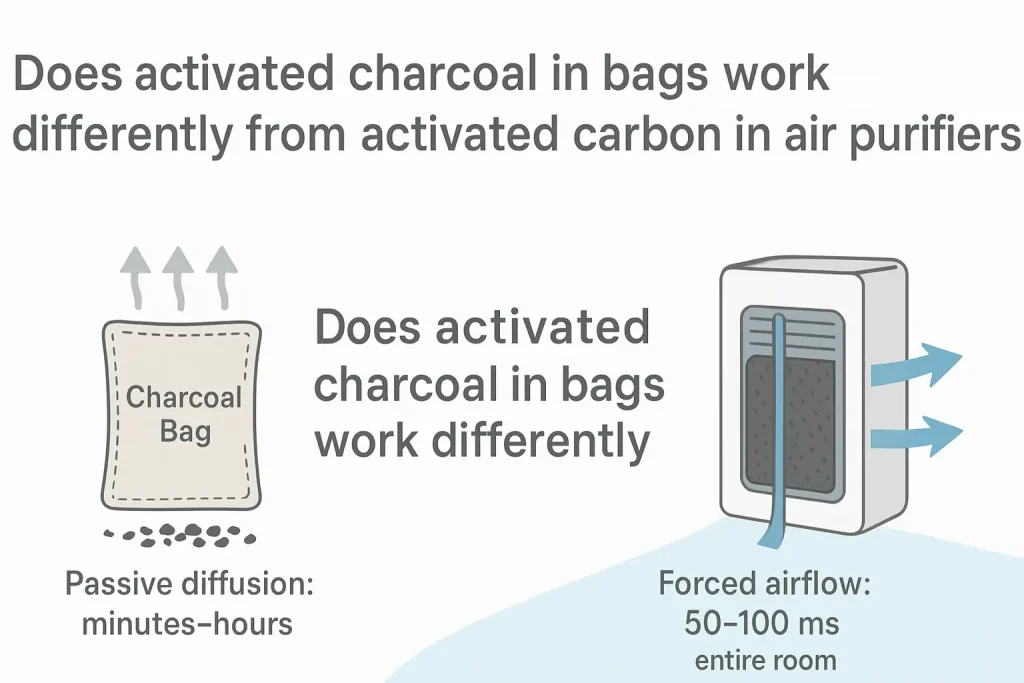
— A filter stage using porous activated carbon (sometimes blended with zeolite) to adsorb gaseous pollutants including VOCs, formaldehyde, odours, and some chemical fumes. Does not remove particles. Capacity is proportional to carbon weight.
— A device that releases negatively charged ions that attach to airborne particles, causing them to cluster and fall to surfaces or stick to a collection plate. Does not remove particles from the room, only from the air temporarily. Some ionizers produce trace ozone.
— Independent certification program by the Association of Home Appliance Manufacturers that validates air purifier CADR performance in a controlled test chamber per the ANSI/AHAM AC-1 standard. Look for the AHAM Verifide seal and published smoke CADR in CFM.
How Does Air Purifier Placement Affect Performance?
Place an air purifier at least 12 inches from walls and furniture with the intake and exhaust facing open room space for maximum CADR delivery. Corner placement reduces effective coverage by 20 to 30% compared to central wall placement because the intake is partially obstructed and the clean air exhaust cannot circulate freely through the room.
This happens because air purifiers rely on unrestricted airflow to pull room air through the filter and push clean air out in a pattern that circulates throughout the entire space. This only occurs when there are at least 18 inches of clearance on all sides of the intake and exhaust vents.
If you place the purifier behind a couch or under a desk, the result is recirculation of a small pocket of air rather than whole-room cleaning. Fix it by positioning the unit on an open wall at mid-room or near the pollution source, with intake facing the open room and no furniture blocking any vent within 18 inches.
Can Air Purifiers Help With Cooking Smoke and Kitchen Odors?
A True HEPA air purifier with an activated carbon stage reduces cooking-related PM2.5 by 70 to 85% within 20 minutes of burner shutoff and adsorbs lingering cooking odors within 2 to 4 hours. Cooking is one of the highest indoor PM2.5 generating activities, producing particle concentrations that can exceed 200 micrograms per cubic meter during frying or broiling.
The best air purifier for kitchen smoke needs at least 200 CFM smoke CADR and a carbon filter with 1 pound or more of activated carbon to handle both the particulate and odor components of cooking pollution. Units with only a thin carbon sheet will capture the smoke particles but leave the cooking odor largely untouched.
Is a Whole-House HVAC Filter a Better Investment Than Portable Air Purifiers?
A portable True HEPA air purifier delivers higher per-pass filtration efficiency (99.97% at 0.3 microns) than a MERV 13 HVAC filter (75%+ at 0.3 to 1 micron per ASHRAE 52.2) but processes far less air per minute. The two approaches complement each other rather than compete: the HVAC filter cleans air across the entire home while the portable unit provides high-efficiency point cleaning in the room where you spend the most time.
This happens because HVAC systems circulate 800 to 2,000 CFM across the whole house while a portable unit processes 50 to 400 CFM in a single room. This only works optimally when the HVAC fan is set to run continuously (on mode rather than auto) and the system uses a MERV 13 or higher filter that is replaced every 90 days.
If you only use the HVAC filter and rely on the furnace blower cycling on and off with heating or cooling calls, the result is that air is filtered only 20 to 30% of the time. Fix it by setting the HVAC fan to on mode during high-pollution periods and supplementing with a portable HEPA unit in the primary living and sleeping spaces.
How Often Do You Really Need to Replace Air Purifier Filters?
True HEPA filters last 6 to 12 months under normal household conditions before CADR output drops measurably. Activated carbon filters lose adsorption capacity after 3 to 6 months and must be replaced more frequently than HEPA media. Pre-filters should be vacuumed every 2 to 4 weeks and washed if washable.
During wildfire season, continuous high-CADR operation loads a HEPA filter at 2 to 3 times the normal rate. A filter rated for 12 months under normal conditions may need replacement after 4 to 6 months during sustained AQI 150+ events. Replace filters at 50% of the normal interval during active wildfire seasons and inspect monthly for visible darkening or odor.
For a detailed review of the Honeywell HPA300 and how its filter costs compare to modern alternatives over a three-year ownership period, see our Honeywell HPA300 review comparing this legacy brand against modern competition.
Buying Guide
Before You Buy an Air Purifier – Complete Checklist
Check off each point before making your decision. Based on AHAM and EPA buying guidance.
What Is the Difference Between HEPA and True HEPA?
True HEPA refers to a filter that meets the IEST-RP-CC001 standard of 99.97% minimum efficiency at 0.3 microns particle size, verified by independent testing. HEPA-type, HEPA-like, and 99% HEPA are marketing terms with no standardized testing protocol and no verified minimum efficiency rating.
A True HEPA filter must capture at least 99.97% of particles at the most penetrating particle size of 0.3 microns. This is the hardest particle size for any mechanical filter to capture because it falls at the transition point between diffusion-dominated capture for smaller particles and impaction-dominated capture for larger particles. HEPA-type filters may capture anywhere from 85% to 99% at 0.3 microns with no way to verify which figure applies to any specific unit.
Always confirm that the unit specification sheet or packaging says True HEPA and that the brand has AHAM Verifide certification with published smoke CADR values. If the product description uses HEPA-type, HEPA-like, or similar phrasing without an AHAM seal, the filtration efficiency is unverified.
Why Does My Air Purifier Smell Like Plastic or Chemicals When New?
A new air purifier may emit a temporary plastic or chemical odor during the first 24 to 48 hours of operation due to off-gassing from the plastic housing, adhesives used in gasket seals, and the activated carbon filter releasing adsorbed manufacturing residuals. This odor is not harmful at the trace levels produced but should dissipate completely within two to three days of continuous operation.
If the odor persists beyond three days or smells like chlorine or electrical burning, unplug the unit and contact the manufacturer. A persistent chemical odor can indicate a defective motor, shorted wiring insulation, or a contaminated carbon filter. Run a new air purifier in a ventilated room on maximum fan speed for the first 48 hours to accelerate the off-gassing period before moving it to a bedroom or nursery.
For Levoit brand air purifiers specifically, our detailed testing covered the break-in period and filter longevity across multiple models. Read our complete guide to Levoit air purifiers including the Core 300S and Core 400S for model-specific break-in behavior and filter replacement costs.
Can I Run an Air Purifier 24/7 Without Damaging the Motor?
Yes, modern air purifiers with DC motors are designed for continuous 24/7 operation and running the unit continuously actually extends motor life compared to frequent start-stop cycling. The electricity cost of continuous operation at medium fan speed is $30 to $60 per year for an ENERGY STAR certified unit at 13 cents per kWh.
Running the purifier continuously maintains steady-state low PM2.5 concentrations rather than creating peaks and valleys that occur with intermittent use. The most common cause of air purifier motor failure is not continuous runtime but dust accumulation on the fan blades and motor bearings, which is prevented by regular vacuuming of the pre-filter and exterior vents.
Do Air Purifiers Produce Ozone and Is It Dangerous?
CARB-certified air purifiers emit less than 0.050 ppm ozone, which is the California Air Resources Board limit and well below levels associated with respiratory irritation. Ionizers, ozone generators, and some UV-C air purifiers without CARB certification can produce ozone at concentrations of 0.080 to 0.200 ppm, which are above the EPA eight-hour outdoor standard of 0.070 ppm and can cause throat irritation, coughing, and reduced lung function in sensitive individuals.
If you have asthma, COPD, or chemical sensitivity, choose a CARB-certified purifier that uses only mechanical filtration (True HEPA plus activated carbon) with no ionizer, UV-C lamp, or electrostatic precipitation stage. The safest air purifier for respiratory conditions is one with zero intentional or incidental ozone output as verified by CARB testing and listed in the CARB certified air cleaner database.
Is It Better to Buy One Large Air Purifier or Two Smaller Units for a Home?
Two smaller units placed in the two rooms where you spend the most time deliver better overall air quality than one large unit placed in a central location. Air purifiers clean the room they are in and have limited effect on adjacent rooms unless there is continuous forced-air circulation connecting the spaces.
A single high-CADR unit in a living room will not meaningfully clean the air in a bedroom 30 feet away with a door that is partially or fully closed. For homes with multiple occupied rooms, allocate your budget across two smaller units with adequate CADR for each individual room rather than one large unit that leaves secondary rooms unfiltered.
For an in-depth look at Coway’s entire air purifier lineup including which models work best in individual rooms versus open floor plans, see our comprehensive Coway air purifier guide covering the Airmega 400, AP-1512HH, and Airmega 250.
What Is the Difference Between CADR and Air Changes Per Hour?
CADR (Clean Air Delivery Rate) measures the volume of filtered air delivered per minute in CFM for a specific pollutant (smoke, dust, or pollen). ACH (Air Changes Per Hour) is a derived value that tells you how many times per hour the purifier processes the entire room air volume based on the CADR and the room’s cubic footage.
You calculate ACH by multiplying the smoke CADR by 60 minutes and dividing by the room volume in cubic feet. A smoke CADR of 200 CFM in a room measuring 12 x 12 x 8 feet (1,152 cubic feet) delivers 10.4 ACH. That same 200 CFM in a 20 x 20 x 8 foot room (3,200 cubic feet) delivers only 3.75 ACH. CADR is fixed for a given unit at a given fan speed. ACH changes with every room size.
This is why buying based on manufacturer-stated coverage area without checking the actual smoke CADR and calculating ACH for your specific room dimensions is the single most common mistake air purifier buyers make.
Does PECO Technology or Photocatalytic Oxidation Work Better Than True HEPA?
PECO (Photo Electrochemical Oxidation) technology as used in Molekule air purifiers remains scientifically unproven to outperform True HEPA filtration at the 99.97% efficiency level for particle removal. Independent testing by Wirecutter and Consumer Reports found the Molekule unit reduced PM2.5 at rates comparable to a small True HEPA unit costing one-third as much.
The claims made for PECO involve destruction of VOCs and microorganisms at the molecular level through a photocatalytic reaction. However, peer-reviewed evidence demonstrating superior real-world performance compared to properly sized True HEPA plus activated carbon filtration has not been published in a major indoor air quality journal as of this writing.
For a detailed independent assessment of Molekule and whether PECO technology delivers on its marketing claims, read our honest Molekule review evaluating PECO performance against AHAM-certified True HEPA competitors.
Are Medical-Grade HEPA Air Purifiers Worth the Extra Cost?
Medical-grade HEPA (H14 or higher) captures 99.995% of particles at 0.3 microns compared to 99.97% for H13 True HEPA. For residential use, the 0.025% difference in filtration efficiency does not meaningfully improve health outcomes for allergy, asthma, or general indoor air quality applications. The added cost of $300 to $600 for medical-grade units is justified only for immunocompromised individuals, cleanroom applications, or environments with specific pathogen control requirements.
For a detailed analysis of Medify’s medical-grade HEPA claims and whether their units deliver residential value that matches their premium pricing, see our Medify Air review testing medical-grade HEPA claims against real-world performance expectations.
What Went Wrong When My Air Purifier Made the Room Dirtier?
A room appearing dirtier after running a new air purifier is usually caused by the unit’s fan re-suspending settled dust that had accumulated on floors and furniture into the air before the filter has had time to capture it. This is a temporary effect lasting 24 to 48 hours and is actually a sign the purifier is working, not malfunctioning.
If the problem persists beyond three days, check that the plastic protective wrap has been removed from the filter element inside the unit. The most common install error is forgetting to remove the clear plastic bag from the HEPA filter before first use. If the filter is still wrapped, no air passes through it and the fan simply blows unfiltered room air around, stirring up dust without capturing any of it.
How Much Electricity Does an Air Purifier Use if Run Continuously?
An ENERGY STAR certified air purifier consumes 25 to 60 watts at medium fan speed and 3 to 10 watts at sleep mode. At the national average electricity rate of 13 cents per kWh, running a 40-watt unit 24 hours a day for a full year costs approximately $46 in electricity. Running the same unit 12 hours daily at medium speed and 12 hours at sleep mode costs approximately $28 per year.
Energy consumption varies dramatically between models. A first-generation Honeywell HPA300 uses approximately 100 watts at high fan speed and costs $114 per year to run continuously. A modern DC-motor unit like the Coway Airmega 400 uses approximately 45 watts at high speed for the same $51 annual cost. Over five years, the electricity cost difference between an efficient and inefficient unit can exceed $300.
Conclusion
An air purifier is worth buying when you match the smoke CADR to your room size at the correct ACH rate for your health needs, confirm True HEPA certification with AHAM verification, check CARB compliance, and calculate the true cost including replacement filters over five years. A properly chosen $100 to $250 unit running in a closed bedroom delivers 60 to 85% PM2.5 reduction within 30 minutes and provides measurable improvement for allergies, asthma, and sleep quality.
The nine reasons to buy a True HEPA air purifier cover allergen removal, wildfire smoke protection, dust reduction, VOC and chemical adsorption, sleep quality improvement, pet dander control, standardized performance verification, long-term health cost value, and energy-efficient 24/7 operation. Every one of these benefits depends on correct sizing and filter maintenance.
Use the CADR calculator and buying checklist in this guide to confirm your selection before purchasing. A properly sized True HEPA air purifier with CARB certification is one of the most cost-effective indoor air quality interventions available to a household, delivering verified performance at a total five-year cost of $250 to $600 for the bedrooms and living spaces where you spend the most time.