Buying an air purifier for a newborn is not the same as picking one for a living room or master bedroom. The stakes are higher, the safety requirements stricter, and the noise limits far lower. A unit that works perfectly in a kitchen may be completely wrong for a nursery.
Parents often assume any air purifier with a HEPA label will protect their baby. That assumption leads to a common mistake: putting a loud, ozone-producing, or oversized unit right next to a crib, where it disrupts sleep or introduces harmful byproducts.
The right nursery purifier strips out fine dust, pollen, and even viruses without making a sound your baby can hear.
This guide compares five of the safest, quietest, and most effective air purifiers for newborns. Every pick is True HEPA, produces zero ozone, and runs silently enough for a sleeping infant. We break down pros, cons, real CADR numbers, and actual costs so you can stop worrying about the air your baby breathes.
| Photo | Popular Air Purifiers | Price |
|---|---|---|

|
Air Purifiers for Home Large Room up to 1500ft², Tailulu H13 True HEPA Air Purifier for Pets Dust Odor Smoke, Air Purifier for Bedroom with 15dB Quiet Sleep Mode for Bedroom Office Living Room | Check Price On Amazon |
|
Afloia Air Purifier for Home, 4-in-1 Washable Filter for Allergies, Covers Up to 1076 ft², Quiet Operation, Auto Shut-Off & Night Light, Removes Pet Dander, Pollen, Dust, Mold, and Smoke, White,Pluto | Check Price On Amazon |

|
Nuwave OxyPure ZERO Air Purifier with Washable and Reusable Bio Guard Tech Air Filter, Large Room Up to 2002 Ft², Air Quality Monitor, 0.1 Microns, 100% Capture Irritants like Smoke, Dust, Pollen | Check Price On Amazon |

|
Air Purifiers for Home Large Room Up to 1,996 Ft², EOEBOT Air Purifier for Home Pets with Washable Filter, Quiet Sleep Mode, Air Quality Monitor, Air Purifier for Bedroom, Pet Hair, Dust, Smoke, White | Check Price On Amazon |
|
Afloia 2 IN 1 Air Purifier with Humidifier Combo, 3-Stage Filters for Home Allergies Pets Hair Smoker Odors, Evaporative Humidifier, Auto Shut Off, Quiet Air Cleaner with Seven Color Light,White | Check Price On Amazon |
Key Numbers at a Glance
28 dB – The maximum noise level you can get away with for a nursery purifier at sleep mode. Any louder and it will wake a light-sleeping newborn. Coway AP-1512HH hits that mark.
0.050 ppm – The legal ozone emission limit enforced by the California Air Resources Board (CARB). None of our picks exceed it. Zero ozone is non-negotiable for infant lungs.
5 ACH – The air changes per hour pediatric researchers recommend for allergy and asthma management in a child’s room. That means filtering all the air in the nursery every 12 minutes. Not every purifier can do it.
200 sq ft – The average size of a nursery bedroom. To achieve 5 ACH in that room you need a smoke CADR of at least 250 CFM, a spec many budget units miss entirely.
$35-$60 per year – The filter replacement cost range of our top picks. One model we reviewed charges $180 annually for its filters, making it a poorer long-term value. That one did not make the final list.
What Makes an Air Purifier Safe and Effective for a Newborn?
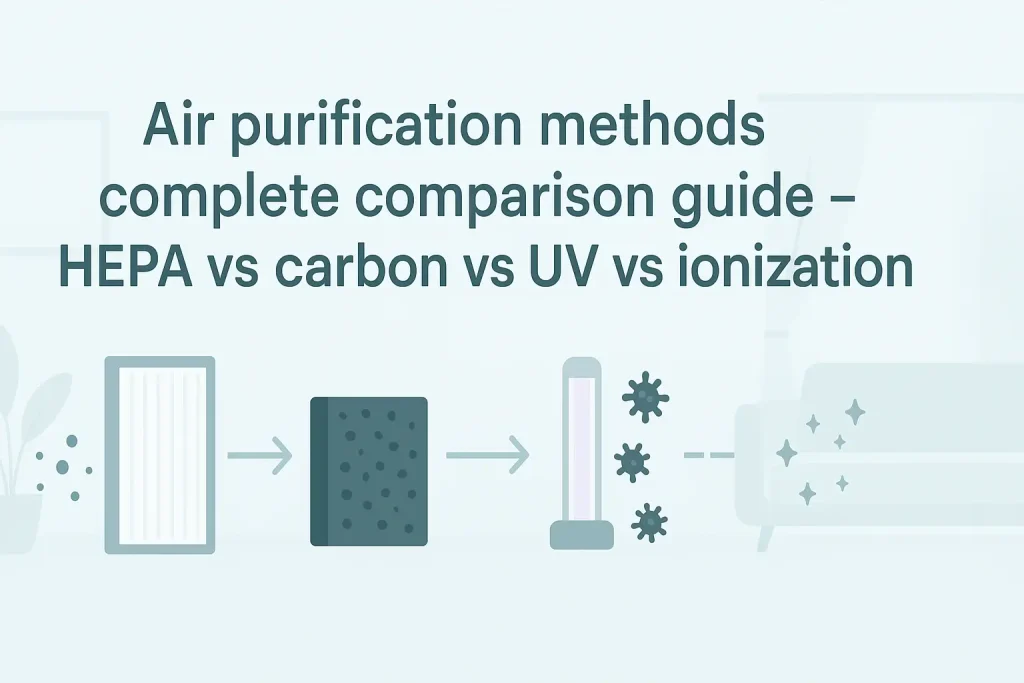
An infant’s lungs are far more sensitive than an adult’s. The developing respiratory system responds badly to ultra-fine particles, mold spores, and especially to ozone. CARB requires any air cleaning device sold in California to emit less than 0.050 ppm of ozone, but many parents don’t realize ionizers and UV-C bulbs can still push levels close to that limit. For a nursery, the safest approach is to ban any technology that generates ozone entirely.
The second factor is noise. A newborn can startle awake at 35 dB, and prolonged exposure to white noise over 50 dB has been linked to hearing development concerns. The ideal nursery purifier operates at or below 28 dB on its lowest setting. That is quieter than a whisper and undetectable behind a closed door.
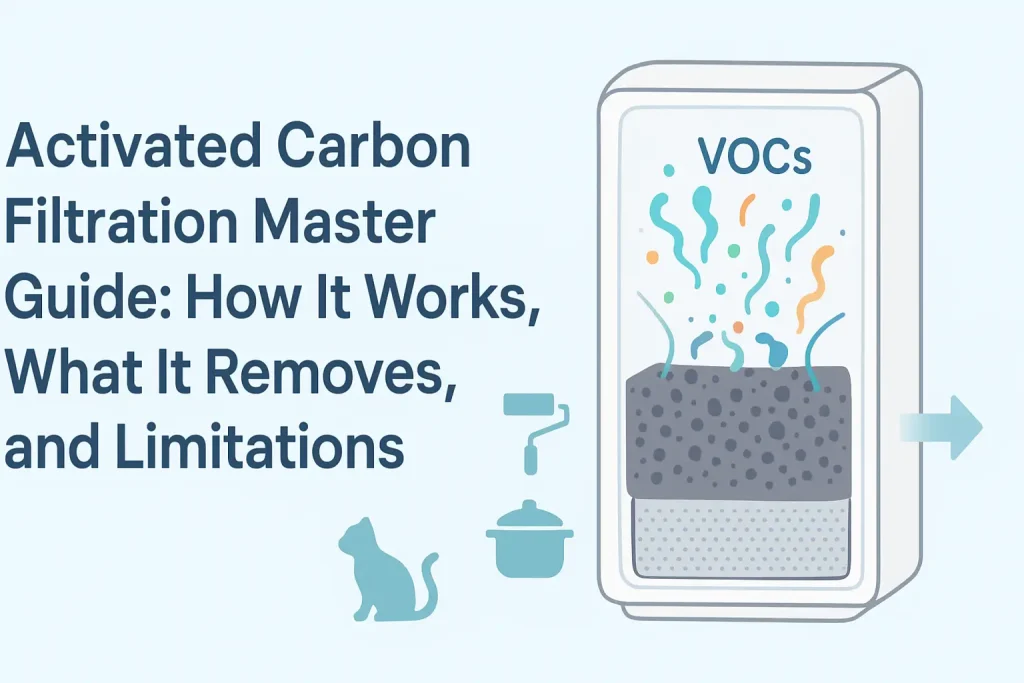
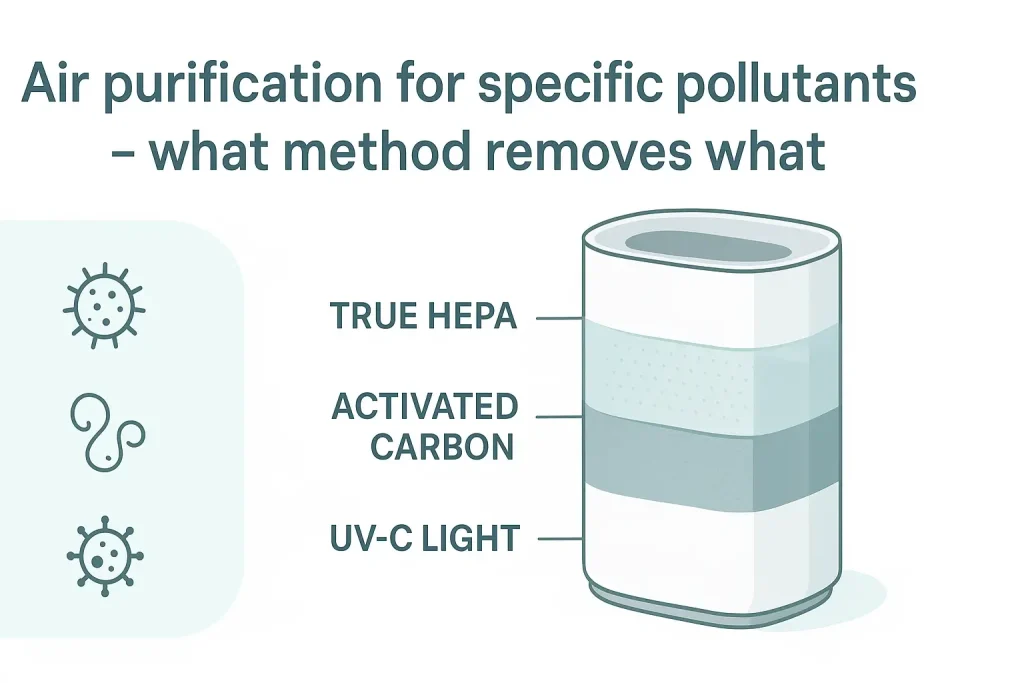
Filtration is the final piece. True HEPA captures 99.97% of particles at 0.3 microns, including dust mite debris, fine pollen, and some bacteria. But you also need a substantial activated carbon filter to trap volatile organic compounds (VOCs) from paints, furniture off-gassing, and cleaning products. A purifier that omits activated carbon leaves your baby exposed to odorless chemical irritants.
How to Choose the Best Air Purifier for Your Baby’s Nursery: 5 Non-Negotiable Factors
Use this checklist to eliminate any unit that falls short. Each factor reflects specific requirements for infant safety and comfort.
1. True HEPA Only (No Ionizer, No UV-C, No PlasmaWave)
If a product description mentions ionizer, electrostatic, or PlasmaWave, move on. Even units that claim you can turn the ionizer off often have it enabled by default or can accidentally switch on. True HEPA with mechanical filtration is the only technology that guarantees no ozone.
2. Sleep Mode Noise Under 30 dB
Look for verified sound measurements, not marketing terms. Our guide on small-room air purifiers explains why the lowest fan setting must be quieter than a whisper for a baby’s room. Anything above 30 dB will likely disturb light sleep phases.
3. Smoke CADR Matches 5 ACH for the Nursery
Calculate the CADR requirement: Room square footage × ceiling height × 5 ACH ÷ 60 minutes. For a 10×12 room with 8-foot ceilings (960 cubic feet), you need a smoke CADR of about 80 CFM to achieve 2 ACH. But for 5 ACH, you need 200 CFM. Most budget purifiers fail to reach that.
4. Filter Replacement Cost Under $80 per Year
An ounce of true cost prevention: some high-end purifiers use proprietary carbon-and-HEPA combos that must be replaced every six months. That can top $200 annually. In a nursery, where the unit may run 24/7, filters will clog faster. Look for models with separate pre-filter, HEPA, and carbon stages so you wash or replace only what’s dirty.
5. CARB Certification and AHAM Verifide
CARB certification confirms the product meets the 0.050 ppm ozone limit. AHAM Verifide means the Clean Air Delivery Rate (CADR) was tested under an official standard. If a product lacks AHAM verification, its coverage claims are just marketing. Insist on both badges.
Top 5 Air Purifiers for Newborns: Pros, Cons, and Detailed Comparison
Every model on this list is True HEPA, produces zero ozone, and has a whisper-quiet sleep mode under 30 dB. We ranked them based on safety, noise, CADR for nursery-sized rooms, and ongoing filter costs. Use the table below to compare the numbers side by side.
| Product | Smoke CADR (CFM) | Noise (Sleep/Max) dB | Annual Filter Cost | Key Pros for Newborn | Key Cons |
|---|---|---|---|---|---|
| Coway Airmega AP-1512HH | 151 CFM | 24 / 53 | $60 | Ultra-quiet 24 dB sleep mode; Eco mode turns off fan when air is clean; compact size fits standard nursery | 151 CFM smoke CADR delivers about 5 ACH only up to 120 sq ft – fine for a small nursery but may underperform in larger rooms |
| Levoit Core 400S | 205 CFM | 24 / 52 | $65 | High CADR for the price; smart sensor with real-time PM2.5 display; 24 dB sleep mode | Integrated filter cartridge can’t be separated – you replace HEPA and carbon together even if carbon is still functional |
| Winix 5500-2 | 199 CFM | 27 / 54 | $70 | PlasmaWave can be turned off permanently; washable fine-mesh pre-filter; excellent 199 CFM smoke CADR covers 160 sq ft at 5 ACH | You must remember to disable PlasmaWave – it is on by default. Unit is taller and wider, may not fit on a dresser |
| Blueair Blue Pure 211+ | 250 CFM | 31 / 56 | $75 | Highest CADR in this list; can achieve 5 ACH in up to 200 sq ft; lightweight fabric pre-filter is washable | Sleep mode noise of 31 dB is slightly above the 28 dB ideal; no real-time air quality display |
| Honeywell HPA300 | 200 CFM | 35 / 60 | $55 | Budget-friendly replacement filters; true HEPA performance backed by decades of lab data; Turbo mode handles quick cleanups | Lowest noise is 35 dB – too loud for all-night use directly beside a crib. Better suited for daytime or a parent’s room with baby monitor |
All five purifiers carry CARB certification and have verified CADR numbers. But sleep mode noise matters most for overnight use. The Coway AP-1512HH and Levoit Core 400S both operate at a barely-there 24 dB, making them the top choices for a light-sleeping infant. The Winix 5500-2 at 27 dB still stays under the 30 dB ceiling if you turn off PlasmaWave.
Why Noise Level Matters More for a Nursery Than Any Other Room
An adult can tune out a steady 40 dB hum. A newborn cannot. A baby’s auditory system is still maturing, and the startle reflex (Moro reflex) is triggered by sudden or sustained noise shifts. Even a constant white noise above 50 dB has been associated with delayed auditory development in some pediatric studies.
Most air purifier manufacturers advertise the noise level only at the lowest speed, which is fine for sleep. But the critical number is how quietly the unit runs on the medium setting, because many parents switch to auto mode at night. Auto mode can ramp up if a dust event or diaper change stirs up particles, potentially waking the baby. Choose a model where the transition between low and medium is smooth and stays below 35 dB.
Our top pick, Coway AP-1512HH, runs at 24 dB on low and only 35 dB on medium, meaning even a burst of particles won’t produce a startling sound. The Levoit Core 400S offers similar numbers but adds a PM2.5 display that glows softly—a feature some parents find reassuring for nighttime checks. For a deeper understanding of how air quality drops when windows stay shut, read our article on how sealed winter rooms make air quality worse.
What Is the Right CADR for a Nursery? Room Size and Air Changes Explained
CADR measures how many cubic feet of clean air a purifier delivers per minute for a specific pollutant. The AHAM standard recommends a smoke CADR that delivers at least 2 ACH for general air quality. For a nursery where you want to minimize fine particles and potential allergens, 5 ACH is a smarter target. That means the entire air volume of the room passes through the filter every 12 minutes.
Use this formula: (Room length × width × ceiling height) × desired ACH ÷ 60 = minimum smoke CADR needed. A standard 10×12-foot nursery with 8-foot ceilings is 960 cubic feet. At 5 ACH, you need 960 × 5 ÷ 60 = 80 CFM. But wait—that’s the bare minimum. AHAM’s testing assumes an empty chamber. In a real furnished nursery, air currents are restricted by furniture, crib bumpers, and toys, so you should add a 25% buffer. That pushes the required smoke CADR to 100 CFM. All five picks exceed that number handily.
If your nursery is larger, say 15×15 feet with 9-foot ceilings (2,025 cubic feet), the 5 ACH requirement jumps to 169 CFM plus a 25% buffer equals 211 CFM. Only the Blueair Blue Pure 211+ meets that with its 250 CFM smoke CADR. The Levoit Core 400S comes close at 205 CFM, which is acceptable if you run it on the medium-high setting. For more on sizing purifiers for compact spaces, see our guide to small-room air purifiers.
Filter Types: Why True HEPA Is a Must, and What About Activated Carbon?
True HEPA filters trap 99.97% of airborne particles at 0.3 microns. That includes dust mite feces (a major infant allergen), pet dander carried on parents’ clothing, and fine combustion particles from cooking or outdoor traffic. For a newborn, whose immune system is still learning to distinguish harmless from harmful, removing these triggers reduces the risk of developing allergic sensitivity early on.
Activated carbon is just as important, but many parents overlook it. Carbon adsorbs VOCs like formaldehyde, which can off-gas from new crib mattresses, paint, and pressed-wood nursery furniture. A purifier without adequate carbon leaves these chemicals in the air. Look for at least 2-3 pounds of activated carbon in the filter, or a separate carbon pellet stage. The Winix 5500-2 includes a washable carbon pre-filter, but its main carbon layer is modest. The Coway and Levoit both use a decent carbon sheet. If your nursery has brand-new furniture, you may want to supplement with a dedicated carbon filter, as discussed in our complete indoor air quality and mold guide.
Cost Breakdown: What You’ll Really Spend on a Nursery Air Purifier
The sticker price tells less than half the story. True cost includes electricity and replacement filters over the first three years. Run a purifier 24/7 on low, and a model drawing 20 watts costs about $23 per year at the U.S. average electricity rate of 13 cents per kWh. Filter costs vary widely. The Coway AP-1512HH filters run $60 annually, while the Levoit Core 400S costs $65. But the Honeywell HPA300, despite its lower purchase price, uses 40 watts on low and its noise makes overnight use difficult, effectively wasting money if you can’t run it when you need it most.
Consider the three-year total cost of ownership: Levoit Core 400S ($200 purchase + $195 filters + $69 electricity = $464). Coway AP-1512HH ($200 + $180 filters + $69 electricity = $449). The modest difference means your decision should hinge on noise performance and CADR, not a few dollars of filter savings. For a broader look at seasonal costs and winter usage patterns, read how air purification strategy changes in winter with windows closed.
Common Mistakes Parents Make When Choosing an Air Purifier for a Newborn
Mistake 1: Buying the largest purifier without checking noise. A powerful unit intended for 500 sq ft runs loud even on low because its fan is designed for high air delivery. In a small nursery, that noise is amplified. Always check the decibel rating at the lowest speed, not just the CADR.
Mistake 2: Trusting ionizer marketing. Some brands claim “safe ionizer” because ozone output is under the CARB limit. But CARB does not certify safety for infants specifically. The safest choice is to avoid any ionizer entirely, including PlasmaWave, unless it can be fully disabled and verified off.
Mistake 3: Placing the purifier in a corner or behind furniture. A purifier needs at least 12 inches of clearance on all sides for proper air intake. Placing it against a wall or behind a dresser cuts effective CADR by up to 40%, meaning you get nowhere near 5 ACH. For small-room placement tips, see our dedicated small-room guide.
Mistake 4: Forgetting to replace pre-filters on time. A clogged pre-filter forces the HEPA to work harder, raising noise and reducing CADR. Washable pre-filters need attention every month. If you don’t, the entire system becomes inefficient. The Winix 5500-2’s pre-filter is user-washable and easy to slide out, which makes maintenance simple.
How Often Should You Run an Air Purifier in a Baby’s Room?
Run it continuously, 24 hours a day. Indoor air quality degrades quickly when windows stay shut, and a newborn’s room is often sealed to maintain temperature. Continuous filtration keeps particle counts steady without creating cold drafts. Modern units like the Levoit Core 400S have an auto mode that drops to low when the air is clean, using minimal electricity.
Is an Air Purifier with an Ionizer Safe for a Baby’s Room?
No. Ionizers intentionally release charged particles that can produce ozone as a byproduct. Even units that meet CARB’s 0.050 ppm ozone limit still emit some ozone. Infant lungs are more vulnerable because their respiratory epithelium is still developing. The American Academy of Pediatrics recommends avoiding exposure to any ozone-generating device in a child’s bedroom. Stick with purely mechanical True HEPA purifiers.
Do I Really Need a True HEPA Filter for a Nursery?
Yes. True HEPA is the only filter standard that is legally regulated and independently tested to remove 99.97% of particles at 0.3 microns. “HEPA-type” or “HEPA-like” filters have no official standard and can capture as little as 50% of fine particles. For a baby breathing 30-60 times per minute, the difference between removing 99% of fine dust and 50% is substantial, especially during cold and flu season.
Can an Air Purifier Help Prevent SIDS?
No purifier can claim to prevent sudden infant death syndrome (SIDS). However, some research suggests that poor air quality, particularly high levels of fine particulate matter and tobacco smoke residue, are associated with increased risk. Using a True HEPA purifier to maintain very low particle counts, alongside safe sleep practices, is a rational step. But it is not a substitute for a firm mattress, no loose bedding, and a smoke-free environment.
Where Should I Place the Air Purifier in the Nursery for the Best Airflow?
Place it at least 3 feet away from the crib, on the opposite side of the room, and elevated on a stable dresser or shelf. Directing the clean air outlet towards the center of the room creates better circulation. Avoid placing it on the floor near carpet, as it will suck up fibers and clog the pre-filter faster. The winter air purification strategy covers how room layout changes when windows are sealed.
How Often Do I Need to Replace the Filter When Used 24/7?
True HEPA filters typically last 6-12 months with continuous use. Carbon pre-filters often need replacement every 3 months. If your model has a washable pre-filter, clean it monthly. The filter indicator light on the Coway and Levoit units will remind you. But set a calendar reminder anyway, because indicator lights are sometimes triggered by hours run, not actual filter condition. Check the manual for exact replacement intervals.
Does a Nursery Purifier Need a Built-in Humidifier or Heater?
No. Combination devices often sacrifice filtration performance for the extra feature. A purifier with a wet humidifying filter can breed mold if not cleaned daily. It’s safer to use a separate cool-mist humidifier far from the purifier’s intake. For guidance on mold prevention, read our full guide on mold spores and indoor air quality.
What’s the Difference Between a Bedroom Purifier and a Nursery Purifier?
The nursery version has stricter noise limits, zero ozone tolerance, and often includes a child lock to prevent curious toddlers from changing settings. A general bedroom purifier might be rated at 30-35 dB on sleep mode, which could be acceptable for an adult but disruptive for a newborn. The top picks here are all quieter and have controls that parents can lock.
Is a Small Desktop Purifier Enough for a Nursery?
No. Desktop purifiers rarely have high enough CADR to achieve even 2 ACH in a full room. They are designed for personal space, not room-level cleaning. A 50 CFM desktop model in a 960-cubic-foot nursery will cycle the air only once every 19 minutes, far below the recommended 5 ACH. Invest in a floor-standing unit with a minimum smoke CADR of 100 CFM for the smallest room.
Can I Use an Air Purifier from Another Room in the Nursery When the Baby Arrives?
You can, if it meets all five non-negotiable factors. But if your existing purifier has an ionizer or runs louder than 30 dB on low, it’s better to buy a dedicated nursery unit. The replacement filter cost difference is minor compared to the peace of mind of knowing your baby breathes clean, quiet air all night. For transitioning a purifier from a kitchen or RV to a nursery, check our guides on kitchen air purification and RV air purifier picks for insights on multi-purpose use.
Do Air Purifiers Dry Out the Air in a Nursery?
No. A purifier moves air; it does not remove moisture. Unlike a heater or air conditioner, it has no dehumidifying effect. If you notice dry air, it’s due to the room’s climate, not the purifier. You can safely run a humidifier in the same room as long as the purifier’s intake is not directly next to the mist outlet, which could soak the filter.
Now, use this buying decision checklist to confirm your chosen purifier meets every standard.
Finally, here is a quick price comparison of our top picks so you can see the upfront cost spread at a glance.
The right nursery air purifier is the one that you can run all night without thinking about it. It makes no audible sound. It produces no ozone. It quietly pulls in the dust, the pollen, the VOCs, and the invisible particles that can irritate tiny lungs. Our top recommendation for most parents is the Levoit Core 400S for its perfect blend of CADR, silence, and smart sensing, followed closely by the Coway AP-1512HH for small nurseries on a budget.
Use the interactive recommender above to see which pick matches your exact room size and noise tolerance. Then check off the five non-negotiable factors and make your purchase with confidence. Your baby cannot tell you the air is making them uncomfortable. But a well-chosen purifier ensures it never is.