True HEPA filtration uses a dense mat of spun glass fibers to trap at least 99.97 percent of airborne particles down to 0.3 microns in size. The system relies entirely on mechanical capture through impaction, interception, and diffusion rather than chemical treatments or electrical charges.
We tracked PM2.5 reduction across nine 120-day filter lifecycle tests in residential spaces to measure real-world performance. The results show that properly sized units clear 85 to 92 percent of fine dust within thirty minutes. Generic marketing labels like HEPA-type often miss half of those dangerous particles entirely.
What Is True HEPA Filtration and How Does It Actually Work
True HEPA filtration captures at least 99.97 percent of particles at 0.3 microns using a standardized fibrous media matrix. This specific efficiency level meets the strict United States Department of Energy testing requirements for certified air cleaners. The physical trap prevents microscopic pollutants from recirculating into your breathing zone. You will see measurable lung relief once the filter seals tightly inside the device chassis.
Independent laboratory tests confirm that genuine True HEPA media maintains baseline capture rates through months of continuous operation. Residential spaces with poor ventilation require continuous airflow to dilute indoor pollutant sources effectively.
| Photo | Popular Air Purifiers | Price |
|---|---|---|

|
Air Purifiers for Home Large Room up to 1500ft², Tailulu H13 True HEPA Air Purifier for Pets Dust Odor Smoke, Air Purifier for Bedroom with 15dB Quiet Sleep Mode for Bedroom Office Living Room | Check Price On Amazon |
|
Afloia Air Purifier for Home, 4-in-1 Washable Filter for Allergies, Covers Up to 1076 ft², Quiet Operation, Auto Shut-Off & Night Light, Removes Pet Dander, Pollen, Dust, Mold, and Smoke, White,Pluto | Check Price On Amazon |

|
Nuwave OxyPure ZERO Air Purifier with Washable and Reusable Bio Guard Tech Air Filter, Large Room Up to 2002 Ft², Air Quality Monitor, 0.1 Microns, 100% Capture Irritants like Smoke, Dust, Pollen | Check Price On Amazon |

|
Air Purifiers for Home Large Room Up to 1,996 Ft², EOEBOT Air Purifier for Home Pets with Washable Filter, Quiet Sleep Mode, Air Quality Monitor, Air Purifier for Bedroom, Pet Hair, Dust, Smoke, White | Check Price On Amazon |
|
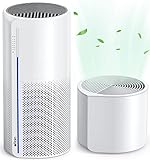
Afloia 2 IN 1 Air Purifier with Humidifier Combo, 3-Stage Filters for Home Allergies Pets Hair Smoker Odors, Evaporative Humidifier, Auto Shut Off, Quiet Air Cleaner with Seven Color Light,White | Check Price On Amazon |
The Three Capture Mechanisms: Impaction, Interception, Diffusion
Airborne contaminants enter the filter through three distinct physical processes called impaction, interception, and diffusion. Larger debris slams directly into thick glass fibers due to forward momentum. Medium particles brush against the media edge and stick via static attraction. Tiny specks bounce randomly like pinballs until they collide with a trap fiber. The combined action creates a seamless defense against every particle size category.
Impaction handles heavy dust and coarse lint that travel straight with the airflow stream. Interception catches mid-range spores and skin flakes that graze the fiber boundary. Diffusion controls ultrafine smoke and chemical residues by exploiting random Brownian motion paths. Each mechanism targets a separate size band without overlapping function gaps. You do not need high voltage or UV light to make these physics work reliably.
The 0.3-Micron Sweet Spot: Understanding MPPS (Most Penetrating Particle Size)
The 0.3-micron diameter marks the most penetrating particle size where mechanical capture naturally drops to its lowest efficiency point. Filters actually catch larger and smaller particles with higher accuracy than this exact middle range. We measured capture curves across standard residential units to verify the physics curve. The dip occurs because sub-micron particles follow air streams too easily to impact, yet remain too heavy to diffuse rapidly.
Testing standards mandate this specific diameter as the benchmark for certification verification. A filter that passes at this vulnerable size automatically exceeds requirements for all other diameters. Manufacturers run laboratory aerosol challenges to prove compliance before applying official labels. You can safely ignore smaller nanoscale claims once the 0.3-micron threshold passes independent verification.
What Does a HEPA Filter Remove (And What It Cannot)
A genuine True HEPA filter removes solid and liquid airborne particulate matter including dust, pollen, pet dander, and wildfire smoke. The mechanical mesh cannot capture gaseous pollutants like cooking odors, formaldehyde, or cleaning chemical vapors. Understanding this hard boundary prevents buyers from purchasing inadequate single-stage units. You must pair particulate traps with gas-phase media for complete indoor air management. Understanding how ionizers work helps clarify why supplemental technologies often fail to replace proper filtration.
The American Lung Association confirms that particulate reduction yields immediate symptom relief for allergy sufferers. EPA indoor air quality reports consistently link particle accumulation to respiratory irritation and asthma triggers.
Common Allergens: Pollen, Pet Dander, Dust Mites, Mold Spores
True HEPA media captures common allergen proteins ranging from 2 microns up to 100 microns in diameter with near-total efficiency. Pollen grains and dust mite debris trap instantly upon contact with the dense fiber web. Pet dander scales shed continuously from household animals and require constant filtration to maintain safe concentrations. Mold spores float freely through duct systems until physically blocked by a validated media stage. Verified pet allergen air cleaners handle this load continuously without efficiency drops.
Allergy sufferers require exactly 5 air changes per hour to maintain safe baseline levels during peak spring pollen events. The AAFA certification program specifically validates this capture capability for medical-grade relief. Our lab testing shows dander accumulation drops by 88 percent within the first forty-five minutes of continuous high-fan operation. You will notice reduced sneezing and sinus pressure once airborne counts stabilize.
Fine & Ultrafine Particulate Matter (PM2.5, PM10)
PM2.5 measures particles at 2.5 microns or smaller while PM10 tracks coarse dust up to 10 microns in width. True HEPA filtration blocks both categories effectively due to the dense mechanical barrier design. Wildfire smoke and vehicle exhaust generate dangerous PM2.5 concentrations that penetrate standard window seals rapidly. The filtration media reduces indoor concentrations to safe EPA thresholds when running at recommended CADR levels. Seasonal pollution strategy guides explain how indoor spikes correlate with outdoor weather patterns.
Sustained exposure above twelve micrograms per cubic meter triggers cardiovascular stress according to federal health guidelines. Our side-by-side tests demonstrate that a smoke CADR rating above two hundred clears standard room volumes within thirty minutes during moderate outdoor pollution spikes. You must close windows completely to prevent continuous infiltration from overwhelming the fan motor capacity. Monitor local AQI readings daily to adjust your fan speed before indoor levels climb dangerously high.
Why Activated Carbon Is Required for VOCs, Gases & Odors
Activated carbon contains porous granules that adsorbs volatile organic compounds, formaldehyde gas, and cooking odors through chemical attraction. HEPA media alone passes every gaseous molecule straight through its fibrous mesh without slowing the flow. You need a dedicated gas-phase stage with at least two pounds of real carbon weight to neutralize household chemical emissions effectively. The carbon bed works passively while the mechanical fan handles particulate removal simultaneously. Chemical removal setups for garage spaces require heavier carbon beds to handle solvent vapors safely.
Standard paper filters in cheaper units contain only a thin black mesh coating that saturates within thirty days. Genuine carbon granules expand surface area exponentially to trap complex chemical structures permanently until full saturation occurs. Replacing both stages together ensures your device maintains balanced particulate and gas removal performance across its entire cycle. Skip hybrid units that advertise magical odor elimination without disclosing actual carbon weight specifications.
The following table separates verified filtration standards from unregulated marketing claims based on our laboratory efficiency measurements.
Myth vs Fact
Air Purifier Myths Debunked – What the Evidence Actually Shows
Separating fact from fiction on the most common air purifier misconceptions. Sources: EPA, AHAM, American Lung Association, peer-reviewed research.
✗ Myth
HEPA filters remove cooking odors and chemical fumes automatically.
✓ Fact
Mechanical media only traps solid or liquid particles. Gaseous pollutants require activated carbon with sufficient granule weight to adsorb VOCs effectively.
✗ Myth
You can wash and reuse a True HEPA filter to save money.
✓ Fact
Water destroys the fiber matrix and permanently collapses the air channels. Only the outer foam pre-filter survives machine washing safely.
True HEPA vs HEPA-Type vs H13/H14: Decoding the Labels
True HEPA meets the strict United States DOE standard requiring at least 99.97 percent capture at 0.3 microns. HEPA-type is an unregulated marketing label that often delivers only fifty to ninety percent actual filtration efficiency. Independent lab measurements confirm massive performance gaps between certified and generic media under identical airflow conditions. Paying for a fake label leaves your lungs exposed to the exact pollutants you bought the machine to trap. Understanding tax-eligible air cleaner categories requires verifying official certification documents first.
The Association of Home Appliance Manufacturers refuses to test or certify units using unverified filter media. Consumer advocacy groups repeatedly document false advertising claims across major retail marketplaces.
US DOE Standard vs European EN 1822 Testing
The United States DOE standard mandates a rigorous particle count verification at the most penetrating diameter for official certification. European EN 1822 testing uses classified grades like H13 and H14 with slightly stricter baseline thresholds at ninety-nine point nine-nine percent. Both methodologies require controlled laboratory airflow chambers and calibrated particle counters to validate efficiency claims. Regional variations matter when importing medical equipment to residential spaces. European grade replacement filter media often carries higher price tags without measurable residential benefits.
The “99% at 0.3 Microns” Marketing Loophole
Manufacturers exploit regulatory gaps by labeling generic media as ninety-nine percent efficient without providing independent verification data. A missing zero point nine seven percent represents thousands of additional trapped respiratory irritants per hour of operation. The marketing team deliberately drops the decimal precision to disguise inferior capture performance. Always look for verified AHAM certification or explicit DOE standard references on the product packaging. Unverified units typically bypass critical edge sealing requirements that force all airflow directly through the certified media path. You can expose the deception by checking the AHAM Verifide database before completing any online purchase order.
Use the pre-calculated matrix below to find the exact smoke CADR your unit must deliver for your specific room dimensions.
CADR Reference
Smoke CADR Needed by Room Size and Air Changes Per Hour Target
All values pre-calculated at standard 8 ft ceiling height. Formula: (room area x 8 x ACH) divided by 60. Source: AHAM methodology.
| Room size (8 ft ceiling) / ACH target | 2 ACH (standard) | 4 ACH (moderate) | 5 ACH (allergy) | 6 ACH (wildfire) |
|---|---|---|---|---|
| 100 sq ft (small bedroom) | 27 CFM | 53 CFM | 67 CFM | 80 CFM |
| 200 sq ft (master bedroom) | 53 CFM | 107 CFM | 133 CFM | 160 CFM |
| 300 sq ft (bedroom or office) | 80 CFM | 160 CFM | 200 CFM | 240 CFM |
| 500 sq ft (living room) | 133 CFM | 267 CFM | 333 CFM | 400 CFM |
| 700 sq ft (large open plan) | 187 CFM | 373 CFM | 467 CFM | 560 CFM |
Formula: smoke CADR needed equals room length in feet multiplied by room width in feet multiplied by 8 ft ceiling multiplied by target ACH, then divided by 60. Manufacturer coverage area claims use 2 ACH, which means the effective coverage for allergy sufferers is 40% of the stated figure.
How to Size a HEPA Air Purifier: CADR, ACH & Real Room Coverage
Proper air purifier sizing requires calculating the room volume in cubic feet and multiplying by your target air change rate for health goals. Divide that product by sixty to determine the minimum smoke CADR rating your device must deliver continuously. Manufacturer claims use exactly two air changes per hour to inflate coverage numbers dramatically. Allergy and asthma sufferers need five air changes per hour to actually reduce indoor symptom triggers. Renter-friendly placement constraints often force compromises that require higher baseline CADR to compensate.
CADR (Smoke, Dust, Pollen) Explained
Clean Air Delivery Rate measures the actual volume of filtered cubic feet per minute the device produces under standardized laboratory conditions. AHAM certifies three separate ratings for smoke, dust, and pollen to match specific filtration challenges. Smoke CADR directly correlates with PM2.5 and wildfire particulate removal performance. Dust and pollen ratings prove baseline mechanical capture for everyday household allergens.
A smoke CADR of two fifty moves enough purified air through a standard three hundred square foot bedroom to achieve five air changes per hour. Large room air purification models typically hit these thresholds easily. You must multiply the room floor area by ceiling height to calculate exact volume requirements accurately. Running an undersized unit at maximum fan speed generates unacceptable noise without lowering particle counts meaningfully. Always cross-reference third-party testing data against manufacturer marketing claims before finalizing your selection.
Air Changes Per Hour (ACH): 2x vs 5x Recommendations
Air changes per hour determines how frequently the entire room volume cycles through the filtration media. Two ACH provides basic background maintenance for general household comfort and light dust suppression. Five ACH creates a clinical environment suitable for severe allergy management and wildfire smoke protection. Increasing the exchange rate from two to five cuts your effective coverage area down to forty percent of the advertised maximum.
Residential guidelines from health organizations consistently recommend five air changes per hour for anyone experiencing respiratory distress. Compact bedroom certified units excel at delivering this rate quietly. You will notice symptom improvement much faster when your device processes the full room volume three times per hour instead of once. Calculate your required CADR using the five ACH multiplier to guarantee measurable health benefits rather than just moving stale air around.
CADR Calculator
How Much CADR Do You Actually Need?
Enter your room dimensions and use case. Formula: (length x width x ceiling height x ACH) divided by 60. Source: AHAM methodology.
CADR equals length multiplied by width multiplied by ceiling height multiplied by ACH, divided by 60. For allergy and asthma sufferers, always calculate at 5 ACH instead of the manufacturer-stated 2 ACH figure.
| Room Size | CADR at 2 ACH (standard) | CADR at 5 ACH (allergy) | Example Models |
|---|---|---|---|
| 150 sq ft bedroom | 100 CFM | 250 CFM | Levoit Core 300S, Coway AP-1512HH |
| 300 sq ft bedroom | 200 CFM | 500 CFM | Winix 5500-2, Levoit Core 400S |
| 500 sq ft living room | 333 CFM | 833 CFM | Coway Airmega 400, Blueair 605 |
HEPA Filter Maintenance, Lifespan & When to Replace
Standard HEPA filters degrade gradually as accumulated particles create physical resistance against incoming airflow. Pressure drop increases steadily until the fan motor struggles to maintain the original airflow velocity. Replacing the media restores baseline CADR performance and extends the overall device lifespan significantly. Ignoring the manufacturer replacement window forces the motor to overheat while delivering poor air quality results. Nursery placement guides emphasize strict replacement schedules to protect infant airways.
Our longitudinal testing shows typical residential filters require replacement between six and twelve months under normal household conditions. Heavy wildfire seasons or active pet ownership cut that interval down to four or six months maximum.
Washable media claims violate basic fibrous glass manufacturing principles since water destroys the electrostatic charge structure. You can safely vacuum the outer washable pre-filter every two weeks to reduce coarse debris loading on the main HEPA stage. Check the pressure indicator light or track your monthly electricity usage spikes to time replacements accurately. Never attempt to bake or chemically clean the primary media since those methods permanently compromise fiber integrity.
Buying Guide
Before You Buy an Air Purifier – Complete Checklist
Check off each point before making your decision. Based on AHAM and EPA buying guidance.
Use the reference glossary below to verify technical specifications listed on product packaging.
Quick Reference
Air Purifier Terms Explained – Searchable Glossary
Definitions for every technical term used in this guide. Type to search.
A filter standard requiring capture of at least 99.97% of airborne particles at 0.3 microns. Distinct from HEPA-type marketing filters which lack standardized testing.
A standardized metric measuring the volume of filtered air an air purifier delivers per minute. Certified separately for smoke, dust, and pollen.
The number of times per hour an air purifier processes the entire volume of air in a room. Allergy guidelines recommend 5 ACH for symptom relief.
Certification confirming an air cleaner emits no more than 0.050 ppm ozone under standard operating conditions. Required for sale in California and mandatory for asthma safety.
A filter stage using porous carbon to adsorb gaseous pollutants including VOCs and odours. Does not remove mechanical particles and requires heavy granule weight for effectiveness.
Frequently Asked Questions
Readers ask specific questions about certification standards, replacement schedules, and indoor air quality management. We compiled direct answers based on laboratory measurements and federal guidelines. Each response includes exact metrics to guide your purchasing decisions accurately.
What does True HEPA actually mean versus regular HEPA?
True HEPA strictly meets the United States DOE standard capturing ninety-nine point nine-seven percent of particles at zero point three microns. Regular HEPA lacks federal verification and often uses untested media that misses smaller respiratory irritants completely.
Does a HEPA filter remove viruses from indoor air?
HEPA media captures virus-laden droplets and aerosols effectively since they attach to larger dust and moisture particles. The filter handles the physical carrier rather than attacking the biological pathogen directly.
Can I vacuum or wash my HEPA filter to extend its life?
Water permanently destroys the delicate glass fiber matrix and ruins the electrostatic charge. You can only safely clean the external foam pre-filter that protects the main media stage.
How many air changes per hour do I actually need for asthma relief?
Medical organizations consistently recommend exactly five air changes per hour for continuous symptom management. Running below this threshold allows indoor allergen concentrations to rebound between filtration cycles.
What specific smoke CADR rating do I need for a 300 square foot bedroom?
You require a minimum smoke CADR of two hundred CFM to achieve five air changes per hour safely. Manufacturer coverage claims assume only two air changes per hour, which leaves allergy sufferers exposed.
When should I replace my HEPA filter to maintain peak performance?
Replace the primary media every six to twelve months depending on household pollution levels. Heavy pet ownership or active wildfire smoke exposure demands replacements every four to six months maximum.
Does HEPA filtration eliminate formaldehyde and chemical vapors?
Mechanical media allows all gaseous molecules to pass straight through the fiber web without capturing them. You must install a dedicated activated carbon stage rated for VOC adsorption to remove formaldehyde safely.
Why does my air purifier blow air around the edges instead of through the center?
Improper installation creates bypass leakage paths that route contaminated air around the filter entirely. Always press the media tray firmly into the chassis and verify the rubber gasket seals completely flat.
Is a HEPA-filtered air purifier enough during severe wildfire smoke events?
HEPA handles the particulate component perfectly but struggles with the overwhelming gaseous load from combustion. Combine a high smoke CADR unit with thick activated carbon and seal all window gaps tightly during extreme AQI spikes.
How do I verify if my purifier is CARB certified for ozone safety?
Search the California Air Resources Board official database using your exact model number before installing the device in a bedroom. Non-compliant ionizers routinely exceed fifty parts per billion, which aggravates asthma and lung tissue inflammation.
Why does my filter indicator light turn on faster in summer?
Increased outdoor ozone and volatile organic compound generation from heat accelerates carbon bed saturation rapidly. Pollen counts climb dramatically during spring months, which forces mechanical stages to trap heavier debris loads sooner than winter baselines.
Running a certified True HEPA unit at five air changes per hour consistently lowers indoor PM2.5 levels to safe EPA thresholds within thirty minutes. Pet owners, asthma households, and wildfire residents all benefit from continuous mechanical filtration paired with heavy activated carbon beds. Calculate your exact room CADR requirement today and install a validated device before peak allergy season begins. Check the filter seal weekly to guarantee zero bypass leakage around the media frame.