An air purifier marketed as “safe” can still pump ozone into a nursery while your baby sleeps. The only purifiers genuinely safe for children and pets carry CARB certification confirming ozone output below 0.050 parts per million and use mechanical filtration with zero ionization by default.
By the Numbers: Child and Pet-Safe Air Purifiers
Maximum ozone output allowed under CARB CCR Title 17 for any air cleaner sold in California — the strictest regulatory ozone limit in the United States.
Minimum particle capture efficiency of True HEPA at the hardest-to-filter 0.3-micron particle size — includes pet dander, pollen, and fine dust.
Recommended air changes per hour for allergy and asthma management in occupied bedrooms — twice the manufacturer’s stated coverage area claim.
Quietest sleep-mode noise level among CARB-certified True HEPA units — quieter than a whisper and safe for uninterrupted infant sleep.
Lowest annual genuine filter replacement cost for a CARB-certified child-safe air purifier with AHAM-verified smoke CADR above 140 CFM.
What Makes an Air Purifier Truly Safe for Children and Pets
A child-safe air purifier must meet three non-negotiable criteria: zero ozone output under CARB CCR Title 17 limits, mechanical filtration only with no ionizer active by default, and physical safety features preventing access to the fan blades and internal components.
| Photo | Popular Air Purifiers | Price |
|---|---|---|

|
Air Purifiers for Home Large Room up to 1500ft², Tailulu H13 True HEPA Air Purifier for Pets Dust Odor Smoke, Air Purifier for Bedroom with 15dB Quiet Sleep Mode for Bedroom Office Living Room | Check Price On Amazon |
|
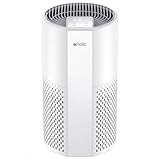
Afloia Air Purifier for Home, 4-in-1 Washable Filter for Allergies, Covers Up to 1076 ft², Quiet Operation, Auto Shut-Off & Night Light, Removes Pet Dander, Pollen, Dust, Mold, and Smoke, White,Pluto | Check Price On Amazon |

|
Nuwave OxyPure ZERO Air Purifier with Washable and Reusable Bio Guard Tech Air Filter, Large Room Up to 2002 Ft², Air Quality Monitor, 0.1 Microns, 100% Capture Irritants like Smoke, Dust, Pollen | Check Price On Amazon |

|
Air Purifiers for Home Large Room Up to 1,996 Ft², EOEBOT Air Purifier for Home Pets with Washable Filter, Quiet Sleep Mode, Air Quality Monitor, Air Purifier for Bedroom, Pet Hair, Dust, Smoke, White | Check Price On Amazon |
|
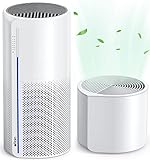
Afloia 2 IN 1 Air Purifier with Humidifier Combo, 3-Stage Filters for Home Allergies Pets Hair Smoker Odors, Evaporative Humidifier, Auto Shut Off, Quiet Air Cleaner with Seven Color Light,White | Check Price On Amazon |
Pet-safe units add a fourth requirement: a pre-filter that captures visible fur and dander before those large particles clog the expensive HEPA stage.
Many popular air purifiers fail at least one of these criteria, often the ozone one. The Winix 5500-2 PlasmaWave ionizer produces trace ozone below the CARB 0.050 ppm limit, but it can be turned off.
A Coway AP-1512HH has no ionizer at all. That is the safer default for a nursery.
This happens because ionizers and electrostatic precipitators use high-voltage corona discharge to charge airborne particles. The electrical discharge splits oxygen molecules (O2) into single oxygen atoms that recombine into ozone (O3).
Ozone is a lung irritant at any measurable level above background. The EPA states there is no safe threshold for ozone exposure in enclosed spaces where children breathe for hours at a time.
This only occurs when a purifier uses ionization, PCO (photocatalytic oxidation), or electrostatic precipitation with the electrical charging stage active. Mechanical filtration with a fan pulling air through a True HEPA or H13 filter produces zero ozone by physical principle.
If an ionizer is present and turned on, the result is measurable ozone in the breathing zone, sometimes exceeding 0.070 ppm in small rooms. Fix it by purchasing only CARB-certified units and disabling any ionizer stage immediately after unboxing.
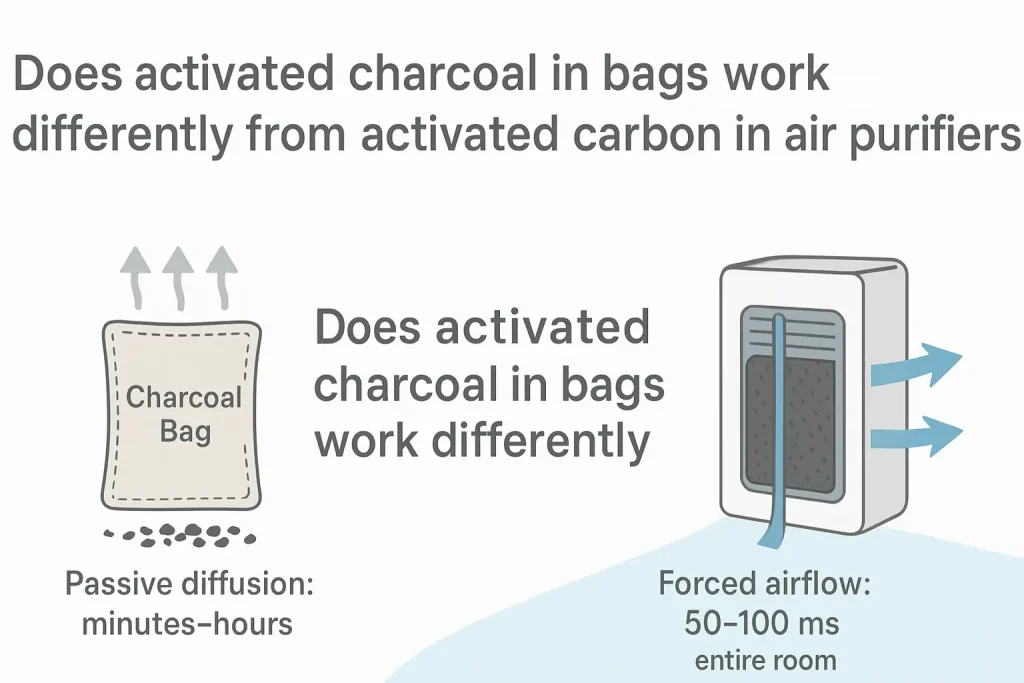
For pet owners seeking relief from litter box odors and wet-dog smell, our guide to managing air quality during deep cleaning and renovation explains how activated carbon stages handle odor molecules that HEPA filters cannot capture.
Why Ozone Is the Single Most Important Safety Factor for Families
Ozone damages the lining of the lungs within minutes of exposure. Children breathe more air per pound of body weight than adults, inhaling proportionally more ozone for the same room concentration.
Pediatric respiratory systems are still developing. The American Academy of Pediatrics identifies ozone as a known asthma trigger and respiratory irritant for children of all ages.
CARB (California Air Resources Board) CCR Title 17 Section 94251 sets the maximum ozone emission at 0.050 parts per million for any air cleaning device sold in California. This is the de facto national safety standard because manufacturers do not build separate SKUs for California and the rest of the country.
Any purifier with an electronic air cleaner label, ionizer, ionic, or electrostatic description uses electrical charging that produces ozone as a byproduct. Some hybrid units combine True HEPA with an optional ionizer, creating a situation where the safer mechanical filtration and the ozone-producing ionization coexist in the same device.
Look for the CARB certification mark on the packaging or product page. If you cannot find it, check the CARB certified air cleaner database online before purchasing.
An ozone test meter can verify your existing unit’s output in real time. Readings above 0.030 ppm in a closed room with the purifier running on high indicate a problem worth addressing immediately.
In plain terms: if the product box or listing uses the words ionizer, ionic, electrostatic, plasma, or activated oxygen, it produces at least some ozone. For a child’s room, only accept mechanical filtration with a CARB certification number printed on the label.
How to Calculate the Right CADR for a Nursery, Playroom, or Family Living Space
CADR (Clean Air Delivery Rate) is the only number that tells you how fast a purifier cleans a specific room. AHAM tests CADR separately for smoke, dust, and pollen in cubic feet per minute at the highest fan speed.
For a nursery or child’s bedroom, always calculate the required smoke CADR at 5 ACH (air changes per hour), not the manufacturer’s stated 2 ACH coverage figure. A 200-square-foot nursery with 8-foot ceilings contains 1,600 cubic feet of air.
At 5 ACH, you need 8,000 cubic feet of air cleaned per hour, or 133 CFM of smoke CADR. The manufacturer’s box may claim 300 square feet of coverage at 2 ACH, which works out to only about 80 CFM for that same 200-square-foot room.
That 80 CFM delivers only 3 ACH in the nursery, not the 5 ACH recommended for allergy and asthma management. The gap between the box claim and the actual need is substantial.
This happens because AHAM and manufacturers rate coverage at 2 ACH, which is adequate for general air quality improvement but insufficient for protecting a child with allergies, asthma, or sensitivity to pet dander.
This only delivers the rated coverage when the unit runs on its highest fan speed in a sealed room with no open doors. In a real home with a hallway door cracked open for child monitoring, effective coverage drops 15 to 25 percent.
If you buy a unit rated for your room size at 2 ACH but need 5 ACH for a child with allergies, the result is PM2.5 concentrations that remain 40 to 60 percent higher than properly sized filtration achieves. Fix it by using the CADR calculator below to size your unit at 5 ACH.
Use the interactive calculator below to determine the minimum smoke CADR your room needs based on its dimensions and your family’s health requirements. Adjust the sliders to match your actual room measurements.
CADR Calculator
How Much CADR Do You Actually Need for Your Child’s Room?
Enter your room dimensions and use case. Formula: (length x width x ceiling height x ACH) divided by 60. Source: AHAM methodology.
CADR = (length x width x ceiling height x ACH) / 60. For children with allergies and asthma, always calculate at 5 ACH, not the manufacturer-stated 2 ACH figure.
| Room Size | CADR at 2 ACH (standard) | CADR at 5 ACH (child/allergy) | Example Safe Models |
|---|---|---|---|
| 150 sq ft nursery | 100 CFM | 250 CFM | Levoit Core 300S, Coway AP-1512HH |
| 300 sq ft playroom | 200 CFM | 500 CFM | Winix 5500-2 (ionizer off), Levoit Core 400S |
| 500 sq ft family room | 333 CFM | 833 CFM | Coway Airmega 400, Blueair 605 |
| 700 sq ft open plan | 467 CFM | 1167 CFM | IQAir HealthPro Plus or 2 units |
Filter Types That Are Safe and Effective for Homes with Kids and Pets
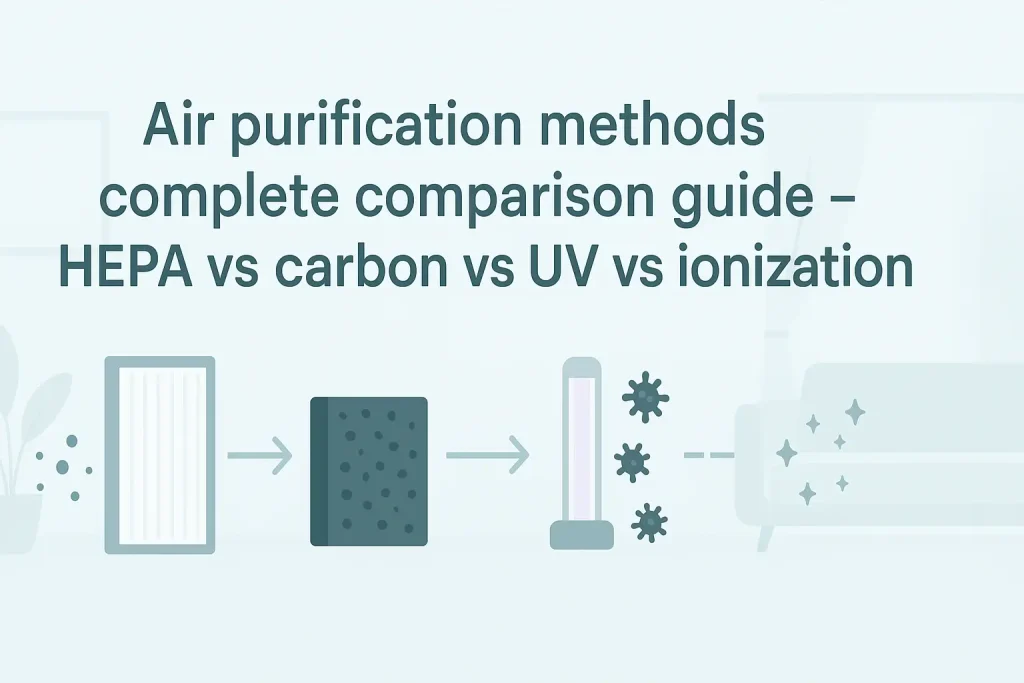
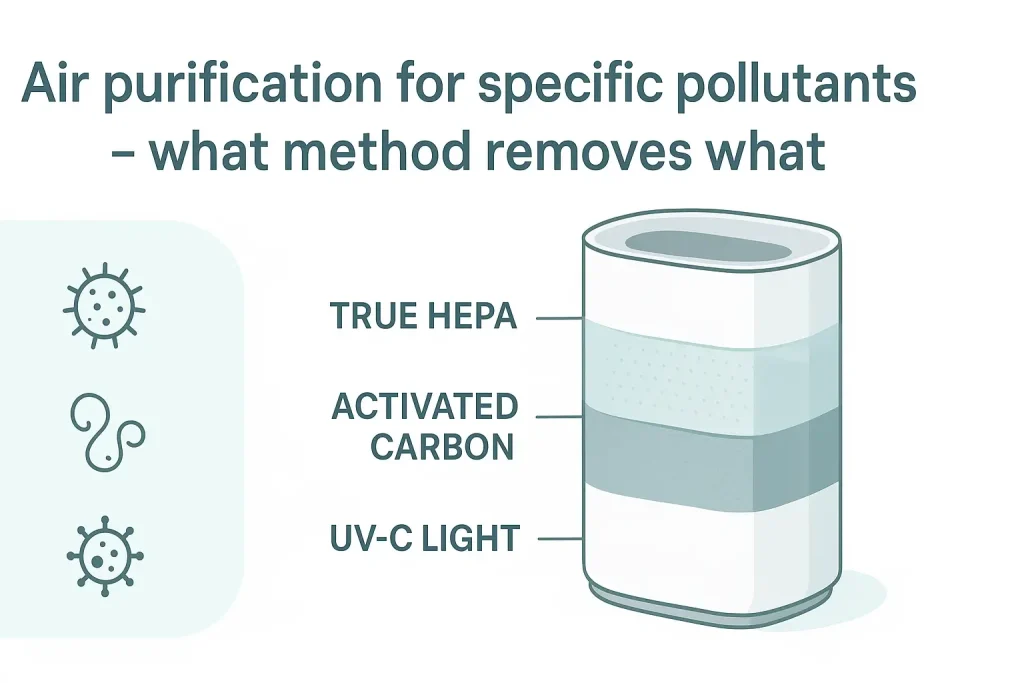
True HEPA is a type of mechanical filtration media that captures 99.97 percent of airborne particles at the hardest-to-capture 0.3-micron size. It works by forcing air through a dense mat of randomly arranged glass or polypropylene fibers that trap particles through impaction, interception, and diffusion.
A typical child-safe air purifier consists of a washable pre-filter, a True HEPA or H13 filtration stage, an activated carbon stage, a fan motor, and a sealed housing with airflow channels that prevent unfiltered air from bypassing the filter media.
True HEPA (H13 or higher):
Key Specifications:
• Particle capture efficiency: 99.97% at 0.3 microns
• Target pollutants: PM2.5, pet dander, pollen, dust mite allergen, mold spores
• Ozone output: Zero (mechanical filtration only)
• Filter lifespan: 6 to 12 months depending on pet load
• Annual replacement cost: $25 to $100 depending on brand
A Levoit Core 300S replacement filter costs about $25 per year. An IQAir HealthPro Plus HyperHEPA replacement runs closer to $250 annually but lasts up to four years in normal conditions.
True HEPA differs from HEPA-type in one critical way: certified True HEPA meets IEST standards verified by laboratory testing at 0.3 microns, while HEPA-type is a marketing term with no standardized test behind it. For a child with asthma, this distinction matters because HEPA-type filters may capture only 85 to 95 percent of particles at 0.3 microns.
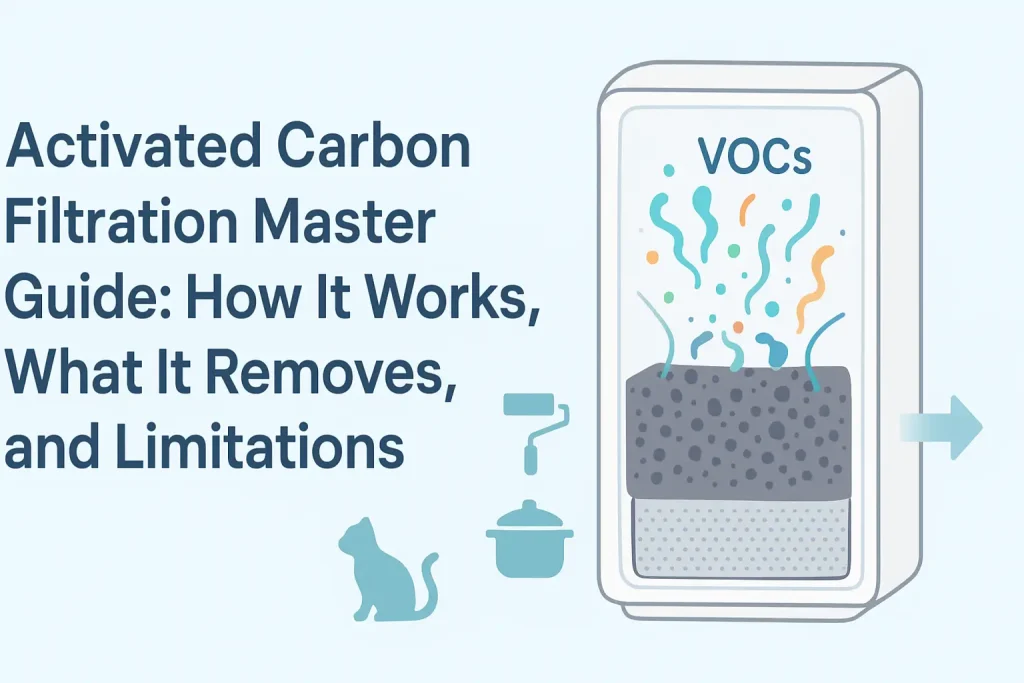
Activated Carbon:
Key Specifications:
• Filtration mechanism: Adsorption (gas molecules stick to carbon pore surfaces)
• Target pollutants: VOCs, formaldehyde, pet odors, cooking smells, off-gassing from furniture
• Ozone output: Zero
• Carbon weight in quality units: 1 to 15 pounds
• Filter lifespan: 3 to 6 months for odor control, up to 5 years for Austin Air HealthMate
Activated carbon works with True HEPA filtration to address both particulate matter and VOC contamination in the same unit pass. A HEPA-only purifier removes pet dander but does nothing for the ammonia smell from a litter box or the wet-dog odor that lingers after a rainy walk.
For homes with multiple pets, an Austin Air HealthMate contains 15 pounds of activated carbon and zeolite, the highest carbon-to-price ratio of any consumer air purifier. The filter lasts up to five years under normal household conditions.
UV-C Light (Germicidal Ultraviolet):
UV-C at 254 nanometers inactivates bacteria and viruses by damaging their DNA and RNA, preventing replication. It works on airborne pathogens that pass through the UV-C chamber but does nothing for particles, VOCs, or odors.
UV-C only achieves meaningful pathogen inactivation when exposure time and intensity are sufficient. In most consumer air purifiers, air moves past the UV-C lamp too quickly for complete inactivation, reducing real-world effectiveness compared to laboratory claims.
If the UV-C lamp is low quality or the airflow is too fast, the result is incomplete pathogen inactivation with a false sense of security. Fix it by treating UV-C as a supplementary stage, not a primary filtration method, and never choosing a UV-C-only purifier over a True HEPA unit.
For parents concerned about viruses during cold and flu season, our guide to selecting an air purifier specifically for cold and flu protection covers the evidence on whether UV-C adds meaningful protection beyond True HEPA for household virus transmission.
Which Air Purifier Technology Is Safest for a Home with Curious Toddlers and Free-Roaming Pets
Mechanical filtration with zero electronic stages is the only technology category with no ozone risk, no UV-C eye hazard, and no sharp-edged internal components that pose a physical danger if a child or pet knocks the unit over. Ionizers and UV-C lamps create hazards that mechanical filters do not.
Use the interactive finder below to narrow down the right purifier based on your primary concern and budget. Answer two questions for a personalized recommendation matched to child and pet-safe requirements.
Interactive Tool
Find the Right Child and Pet-Safe Air Purifier for Your Home
Answer 2 questions for a personalized recommendation. All recommendations are CARB certified with zero ozone output.
The Best Child and Pet-Safe Air Purifiers (No Ozone): Top Picks Compared
Every unit listed below is CARB certified with ozone output below 0.050 ppm and uses True HEPA mechanical filtration as its primary particle removal stage. Ionizer-equipped models are only included if the ionizer can be fully disabled, and the recommendation assumes the ionizer is turned off permanently.
Use the comparison matrix below to scan all top child and pet-safe models across the specifications that matter most: smoke CADR, coverage at 2 ACH and 5 ACH, sleep mode noise, annual filter cost, and certifications.
Product Comparison
Child and Pet-Safe Air Purifiers Compared – CADR, Coverage, Noise, and Filter Cost
All units CARB certified with zero or disableable ionization. CADR from AHAM certified database. Coverage at 5 ACH calculated as smoke CADR x 12 / 5.
| Model | Smoke CADR | Coverage at 2 ACH | Coverage at 5 ACH | Sleep Mode dB | Annual Filter Cost | Best For |
|---|---|---|---|---|---|---|
| Levoit Core 300S | 145 CFM | 219 sq ft | 88 sq ft | 24 dB | $25/yr | Small nursery, budget |
| Coway AP-1512HH | 246 CFM | 360 sq ft | 144 sq ft | 30 dB | $30/yr | Child allergies, best value |
| Winix 5500-2 (ionizer off) | 243 CFM | 360 sq ft | 144 sq ft | 28 dB | $40/yr | Pet dander and fur, washable pre-filter |
| Levoit Core 400S | 260 CFM | 403 sq ft | 161 sq ft | 24 dB | $35/yr | Quiet nursery, medium room |
| Coway Airmega 400 | 400 CFM | 1,560 sq ft | 624 sq ft | 22 dB | $60/yr | Large family room, open plan |
| Blueair Blue Pure 211+ | 350 CFM | 540 sq ft | 216 sq ft | 31 dB | $60/yr | High CADR value, pets |
| RabbitAir MinusA2 | 210 CFM | 815 sq ft | 326 sq ft | 21 dB | $75/yr | Wall-mount nursery, toddler-safe |
| IQAir HealthPro Plus | 300 CFM | 900 sq ft | 360 sq ft | 25 dB | $250/yr | Severe allergies, medical-grade |
CADR data from AHAM certified database. Coverage at 5 ACH calculated as smoke CADR x 12 / 5. All units CARB certified. Prices verified at time of publication. For the Winix 5500-2, turn PlasmaWave ionizer OFF via the button on the control panel for zero ozone operation.
Levoit Core 300S: Best Budget Nursery Purifier
The Levoit Core 300S delivers True HEPA (H13) filtration with 145 CFM smoke CADR at under $100, making it the best entry-level purifier for a small nursery or child’s bedroom. It carries CARB certification, ENERGY STAR certification, and produces zero ozone by using only mechanical filtration with no ionization stage.
Sleep mode at 24 dB is quieter than a whisper and will not disrupt infant sleep cycles, while the auto-dimming display prevents unwanted light in a darkened nursery. The 7.5-pound unit is stable on a dresser and has no sharp edges or accessible fan blades from the top intake grille.
Key Specifications:
• Smoke CADR: 145 CFM (AHAM certified)
• Coverage at 2 ACH: 219 sq ft
• Coverage at 5 ACH: 88 sq ft (nursery-sized)
• Sleep mode noise: 24 dB
• Annual filter cost: approximately $25
The main limitation is coverage at 5 ACH of only 88 square feet, which suits a small nursery but not a master bedroom or playroom. For larger rooms, step up to the Levoit Core 400S with 260 CFM smoke CADR and coverage of 161 square feet at 5 ACH.
For the smallest nursery or a tight budget where a CARB-certified unit with no ozone is the top priority, the Levoit Core 300S is the safest choice under $100.
Coway AP-1512HH: Safest Default Choice for Families
The Coway AP-1512HH is the safest default recommendation for families because it has no ionizer at all, removing any possibility of ozone generation without requiring the user to disable a setting. It carries AAFA asthma and allergy certification alongside CARB and ENERGY STAR certifications.
With 246 CFM smoke CADR, it covers a 200-square-foot nursery at 5 ACH, which is the correct sizing for a child with allergies or asthma. The front panel is securely fastened with tamper-resistant clips, and the intake grille spacing prevents small fingers from reaching the fan.
Key Specifications:
• Smoke CADR: 246 CFM (AHAM certified)
• Coverage at 2 ACH: 360 sq ft
• Coverage at 5 ACH: 144 sq ft
• Sleep mode noise: 30 dB
• Annual filter cost: approximately $30
The ionizer-free design is the unit’s strongest safety feature. Many competitors in the $150 to $200 range include a built-in ionizer that must be manually disabled, creating a risk that a well-meaning family member turns it on without understanding the ozone consequence.
For parents who want the safest possible purifier without needing to explain to a partner, babysitter, or grandparent why a button must stay off, the Coway AP-1512HH removes that variable entirely. It is mechanically incapable of producing ozone.
Winix 5500-2: Best Pet Dander and Fur Management (With Ionizer Off)
The Winix 5500-2 has one standout feature for pet owners: a large washable fine-mesh pre-filter that captures visible pet fur and large dander particles before they reach and clog the True HEPA stage. This pre-filter extends HEPA filter life in high-pet households from 6 months to approximately 9 to 12 months.
The critical safety step is pressing the PlasmaWave button on the control panel to turn the ionizer off. With PlasmaWave disabled, the Winix 5500-2 becomes a pure mechanical filtration unit with 243 CFM smoke CADR, CARB certification, and zero ozone output.
Key Specifications (with ionizer off):
• Smoke CADR: 243 CFM (AHAM certified)
• Coverage at 2 ACH: 360 sq ft
• Coverage at 5 ACH: 144 sq ft
• Sleep mode noise: 28 dB
• Annual filter cost: approximately $40
The washable pre-filter is the pet-owner advantage. In a home with a shedding dog or cat, visible fur accumulates on the pre-filter within days, and being able to vacuum or rinse it extends the life of the $40 HEPA replacement significantly compared to units where fur goes directly into the HEPA stage.
For families with pets where fur management is as important as dander allergen reduction, and where the ionizer-off routine is acceptable, the Winix 5500-2 offers the best pre-filter design in the under-$200 category.
Coway Airmega 400: Best Large Family Room and Open-Plan Living
The Coway Airmega 400 uses dual fans and dual True HEPA filters to deliver 400 CFM smoke CADR, covering large open-plan family rooms up to 1,560 square feet at 2 ACH or 624 square feet at 5 ACH. It is CARB certified, ENERGY STAR certified, and has no ionizer stage.
Sleep mode at 22 dB is the quietest among high-CADR units, making it suitable for a family room that doubles as a sleeping space for guests or for open-plan apartments where noise travels. The washable pre-filter captures pet fur before it reaches the dual HEPA stages.
Key Specifications:
• Smoke CADR: 400 CFM (AHAM certified)
• Coverage at 2 ACH: 1,560 sq ft
• Coverage at 5 ACH: 624 sq ft
• Sleep mode noise: 22 dB
• Annual filter cost: approximately $60
For open-plan homes where the kitchen, living room, and dining area share one large space, the Airmega 400’s dual-fan configuration circulates air more effectively than a single-fan unit of comparable CADR. The smart auto mode adjusts fan speed based on real-time PM2.5 sensor readings, ramping up when cooking particles spike and dropping to near-silent when air quality normalizes.
For families with pets and children in a large shared living space where a single purifier needs to handle both pet dander and kitchen particulates, the Coway Airmega 400 is the most efficient single-unit solution with zero ozone risk.
RabbitAir MinusA2: Wall-Mountable and Completely Out of Toddler Reach
The RabbitAir MinusA2 solves the physical safety problem that floor-standing purifiers cannot: a wall-mounted unit is completely inaccessible to a crawling infant or curious toddler. It also eliminates the tripping hazard of a power cord running across the nursery floor.
With 210 CFM smoke CADR and five-stage filtration including True HEPA, activated carbon, and an optional customized filter for pet allergies or germ defense, the MinusA2 carries both CARB and AAFA certifications with zero ozone output. The unit is ultra-quiet at 21 dB on its lowest setting.
Key Specifications:
• Smoke CADR: 210 CFM
• Coverage at 2 ACH: 815 sq ft
• Coverage at 5 ACH: 326 sq ft
• Sleep mode noise: 21 dB
• Annual filter cost: approximately $75
The wall-mount installation takes about 20 minutes with the included bracket and requires finding a wall stud for secure mounting. Once installed at 4 to 5 feet above the floor, the unit is completely out of reach of children and pets while still effectively circulating air at crib level through its downward-facing intake.
For a nursery that will transition to a toddler’s room, the RabbitAir MinusA2 is the safest placement solution available, combining mechanical filtration with zero-ozone certification and physical inaccessibility.
IQAir HealthPro Plus: Medical-Grade for Severe Childhood Allergies
The IQAir HealthPro Plus uses HyperHEPA filtration that captures particles down to 0.003 microns with 99.5 percent efficiency, compared to the 0.3-micron standard of True HEPA. For a child with severe allergies or asthma triggered by ultrafine particles, this captures particles 100 times smaller than a standard HEPA unit can reliably filter.
It produces zero ozone, carries CARB certification, and is used in hospitals and medical facilities worldwide. The V5-Cell gas and odor filter adds chemisorption media for formaldehyde and VOC removal from new furniture off-gassing in a nursery.
Key Specifications:
• Filtration: HyperHEPA to 0.003 microns
• Smoke CADR: 300 CFM
• Coverage at 2 ACH: 900 sq ft
• Coverage at 5 ACH: 360 sq ft
• Filter lifespan: Up to 4 years (HyperHEPA), 2 years (V5-Cell)
• Annual filter cost: approximately $250
The higher annual filter cost of $250 reflects the medical-grade filtration media and multi-stage gas-phase filter, not a markup for the brand name. The HyperHEPA filter lasts up to four years under normal conditions, bringing the effective annual cost closer to $63 for the particle filter plus $87 for the carbon stage.
For a child with a diagnosed respiratory condition where the pediatrician recommends the highest available level of indoor air filtration, the IQAir HealthPro Plus is the only consumer unit that delivers medical-grade particle capture with zero ozone and a proven hospital track record.
Noise Levels: Why a Quiet Purifier Matters for Nurseries and Anxious Pets
A purifier that runs at 50 dB on its lowest setting will wake a sleeping infant within the first hour. The World Health Organization recommends bedroom noise levels below 30 dB for uninterrupted sleep, and several CARB-certified True HEPA units now achieve 22 to 24 dB at sleep mode, which is quieter than a whisper at 3 feet.
Noise is not just a comfort issue. It is a compliance issue. A noisy purifier gets turned off at night, which is exactly when a child breathing in a closed room for 8 to 10 hours needs filtration the most.
Dogs and cats hear frequencies up to 45,000 to 64,000 Hz, far beyond human hearing, and many are sensitive to the high-frequency whine produced by some purifier motors and ionizer corona discharge circuits. A mechanical filtration purifier with a DC motor running at low RPM produces no high-frequency noise that disturbs pets.
Units with sleep modes below 25 dB include the Levoit Core 300S (24 dB), Levoit Core 400S (24 dB), Coway Airmega 400 (22 dB), and RabbitAir MinusA2 (21 dB). These are all quieter than the 30 dB threshold that the WHO identifies as the boundary for sleep disruption.
If the purifier is too loud and gets turned off at night in a child’s room, the result is 8 to 10 hours of unfiltered air in a closed room, which is when PM2.5 from outdoor infiltration and pet dander from bedding and carpet accumulate most. Fix it by purchasing a unit with a verified sleep mode below 28 dB and placing it at least 3 feet from the head of the crib or bed.
A decibel meter placed at the crib or pillow position with the purifier running on sleep mode will confirm whether your specific unit meets its published noise specification. Manufacturer dB claims are measured at 3 feet in a sound-dampened test chamber, not in a real room with hard surfaces that reflect sound.
Placement and Safety: Where to Put an Air Purifier with Curious Toddlers and Pets
Floor-standing air purifiers within reach of a toddler are a tipping hazard and an electrical curiosity. A unit placed at floor level in a playroom will have toys, snacks, and small fingers pushed into the intake grille within the first week of operation.
The safest placements for a child-safe purifier are elevated surfaces at least 3 feet off the ground, wall-mounted at 4 to 5 feet (RabbitAir MinusA2), or inside a piece of furniture with adequate airflow clearance such as a low shelf with open front and back.
Placing an air purifier in the corner of a room reduces its effective coverage by 20 to 30 percent compared to central placement along a wall. The same unit covers meaningfully more area with better air circulation when positioned centrally along the longest available wall, at least 12 inches from both the wall and any furniture.
For homes with free-roaming pets, positioning the intake side of the purifier at pet height increases fur and dander capture by allowing the natural air currents created by the purifier to pull in particles from the animal’s resting zone. A purifier placed 2 feet from a dog bed or cat tree captures dander before it circulates through the entire room.
If the purifier is placed in a corner with furniture blocking airflow on one or both sides, the result is short-circuiting where cleaned air is immediately pulled back into the intake instead of mixing with room air and reaching all corners. Fix it by maintaining at least 12 inches of clearance on all sides of the unit and positioning it where air can flow freely in a circular pattern around the room.
For renters in apartments or smaller homes where floor space is limited, our guide on choosing an air purifier for rental homes with limited square footage covers compact placement strategies and wall-mountable options that preserve valuable floor area.
For families managing renovation dust alongside everyday pet and child air quality concerns, our guide on air quality management during renovation and deep cleaning explains how to run purifiers during and after construction to capture drywall dust, paint VOCs, and disturbed allergens.
Filter Maintenance with Pets: How Often to Replace Filters in High-Dander Homes
A home with one shedding dog or cat produces roughly 3 to 5 times more airborne particulate load than a pet-free home, measured by PM2.5 and PM10 concentrations. This increased load directly shortens HEPA filter lifespan because the filter media fills with captured particles faster, increasing pressure drop across the filter and reducing airflow.
In a pet-free home, a True HEPA filter typically lasts 12 months before airflow degradation triggers replacement. In a home with one dog or cat, that replacement interval drops to 6 to 9 months under the same operating conditions. With two or more pets, expect to replace the HEPA filter every 4 to 6 months.
The pre-filter is the most cost-effective maintenance step for pet owners. A washable pre-filter that is vacuumed or rinsed every 2 weeks captures fur and large dander before those particles reach the HEPA stage, extending HEPA filter life by 30 to 50 percent in high-pet homes.
Carbon filter replacement frequency in pet homes depends on odor load, not particle load. An activated carbon filter in a home with a litter box or multiple dogs typically saturates within 3 months for effective odor control, even if the HEPA stage still has months of particle capture capacity remaining.
If the pre-filter is not cleaned regularly in a high-pet home, the result is a clogged HEPA filter within 3 to 4 months that reduces airflow by 40 percent or more, cutting the effective CADR of the unit in half. Fix it by setting a recurring calendar reminder to vacuum the pre-filter every 14 days and replacing the HEPA stage when the filter replacement indicator illuminates, not months later.
For homes in shared buildings where pet dander travels between units through shared ventilation, our article on air purifiers for shared apartments and multi-unit buildings covers how to manage neighbor-originated dander and cooking odors that enter your space through hallway air exchange.
Does an Air Purifier Need an Ionizer to Be Effective for Pet Dander?
No. A True HEPA filter captures 99.97 percent of pet dander particles at 0.3 microns without any ionization stage. Dander particles range from 2.5 to 10 microns in size, which is 8 to 30 times larger than the 0.3-micron test particle that True HEPA is certified to capture. Ionizers add zero additional dander capture benefit while introducing ozone risk.
Ionizers work by electrically charging airborne particles so they stick to surfaces, walls, and collection plates. This redistributes pet dander from the air onto surfaces where a crawling infant places their hands and mouth, rather than removing dander from the environment entirely as mechanical filtration does. For a child with pet allergies, dander on surfaces is just as problematic as dander in the air.
According to the EPA’s Residential Air Cleaners guidance, ionizers and electrostatic precipitators are not recommended as the primary filtration method for particulate matter, particularly in homes with children or individuals with respiratory conditions. The EPA specifically notes that mechanical filtration with a fan and filter media is the preferred approach with no ozone byproduct risk.
If your current purifier has an ionizer, locate the button or switch labeled PlasmaWave, Ion, Ionic, or similar, and press it to the off position. Confirm the indicator light for the ionizer is no longer illuminated. The purifier will continue to filter particles through its mechanical HEPA stage with no loss of effectiveness.
Can I Run an Air Purifier 24/7 in a Child’s Bedroom?
Yes. Running a CARB-certified True HEPA purifier continuously in a child’s bedroom provides the best air quality because it maintains steady-state low particle concentrations rather than cycling between high concentrations when the unit is off and low concentrations when it runs. ENERGY STAR certified units like the Coway AP-1512HH and Levoit Core 300S use 4 to 7 watts on sleep mode, costing roughly $5 to $8 per year in electricity at the national average rate of 13 cents per kilowatt-hour when running 24 hours daily.
The unit must be placed where a child cannot reach the controls, power cord, or intake grille. For a toddler’s room, a wall-mounted unit like the RabbitAir MinusA2 is ideal. For a floor unit, place it on a dresser or shelf at least 3 feet high with the power cord secured along the wall using cord clips so it cannot be pulled.
Sleep mode on the units recommended in this guide runs at 22 to 30 dB, which is below the WHO’s 30 dB threshold for sleep disruption. If your child is a particularly light sleeper, choose a unit verified at 24 dB or below and place it at least 6 feet from the crib or bed.
What Is the Difference Between CARB Certified and ENERGY STAR for Air Purifiers?
CARB certification tests and limits ozone output to 0.050 parts per million maximum, with no minimum energy efficiency requirement. ENERGY STAR certification tests and verifies electrical energy efficiency, with no ozone output limit. A child-safe purifier needs both: CARB certification for the ozone safety guarantee and ENERGY STAR certification to confirm low electricity consumption during continuous operation in a child’s room.
CARB certification is mandatory for sale in California and is the regulatory standard for ozone safety. ENERGY STAR is a voluntary efficiency program run by the EPA and Department of Energy. Both certifications are verified by independent laboratory testing, not manufacturer self-declaration.
According to ENERGY STAR program requirements, certified air cleaners must deliver a minimum of 2.0 CADR per watt for smoke. The Coway AP-1512HH delivers approximately 8.2 CADR per watt, exceeding the minimum by more than 4 times and confirming efficient power use for children’s rooms where the unit will run continuously.
Why Does My Air Purifier Smell Like Chemicals After Running for a Few Hours?
A new air purifier that smells like chemicals is off-gassing volatile organic compounds from the manufacturing process, adhesives used in filter construction, or plastic housing materials. This is distinct from ozone smell, which has a sharp, metallic scent similar to the air after a thunderstorm or near a photocopier.
Off-gassing from a new purifier typically dissipates within 48 to 72 hours of continuous operation in a ventilated room. Run the unit on high in an unoccupied room with a window open for the first two days before placing it in a child’s bedroom. Ozone smell from a purifier with an ionizer will not dissipate because it is continuously generated whenever the ionizer is active.
If the smell persists beyond 72 hours or has a metallic, electric-spark character, test the room with an ozone meter. Readings above 0.030 ppm in a closed room with the purifier running indicate an ozone-producing unit or a defective electronic component. Discontinue use in a child’s room immediately and contact the manufacturer.
How Do I Know If My Air Purifier Is Actually Working in a Pet Household?
A PM2.5 air quality monitor placed in the room provides objective verification. Run the purifier on high for 30 minutes and note the PM2.5 concentration before and after. In a 200-square-foot room at 5 ACH, PM2.5 should drop by 80 to 85 percent within 30 minutes if the purifier is properly sized.
Visual indicators of ineffective filtration in a pet home include visible dust accumulating on the purifier’s intake grille while PM2.5 readings remain unchanged, pet fur bypassing the pre-filter and collecting on the HEPA surface, or reduced airflow from the outlet even when the pre-filter appears clean. These indicate a filter that needs replacement or a unit that is undersized for the actual particulate load.
The most common mistake in pet homes is not replacing the pre-filter or cleaning the washable pre-filter frequently enough, causing the HEPA stage to clog prematurely. If your PM2.5 monitor shows elevated readings despite the purifier running on high, remove and inspect the pre-filter first before assuming the HEPA filter has failed.
Are Air Purifiers Safe for Birds and Small Caged Pets?
Birds have highly sensitive respiratory systems and are the pets most vulnerable to air purifier hazards. A purifier with any ionizer or ozone-producing stage can be fatal to a budgie, canary, or parrot within hours because birds have a unidirectional respiratory system that concentrates airborne toxins more efficiently than mammalian lungs.
Only mechanical filtration purifiers with zero ionization and CARB certification should be used in a room with caged birds. The purifier must not contain PTFE (Teflon) coatings on any internal component because PTFE heated above 536 degrees Fahrenheit releases fumes that are acutely toxic to birds, though consumer air purifiers rarely reach these temperatures.
For small mammals like rabbits, guinea pigs, and hamsters, a CARB-certified True HEPA unit placed at least 3 feet from the cage provides safe particulate filtration. The main risk is not the purifier itself but the draft created by the outflow, which can chill a small animal. Position the purifier so the outflow air does not blow directly into the cage.
What Is More Important for a Child’s Room: High CADR or Quiet Operation?
Quiet operation is more important because a purifier that gets turned off at night due to noise provides zero CADR for the 8 to 10 hours a child is sleeping in a closed room. A purifier with 400 CFM that runs only during daytime hours delivers less total daily particle removal than a 150 CFM unit that runs 24 hours continuously, including the critical overnight period when the room is sealed.
Prioritize a unit with sleep mode noise below 28 dB, then select the highest CADR available within that noise constraint and your budget. For a nursery, this typically means a unit in the 145 to 260 CFM smoke CADR range such as the Levoit Core 300S (145 CFM, 24 dB) or Levoit Core 400S (260 CFM, 24 dB).
For a child who is old enough to sleep through moderate white noise, a Coway AP-1512HH at 30 dB sleep mode with 246 CFM smoke CADR provides more filtration capacity while still staying below the WHO’s 30 dB sleep disruption threshold. The trade-off depends on your specific child’s noise sensitivity.
For homes where children sleep in a shared room or where the purifier serves both a nursery and an adjacent parent bedroom, our guide on selecting the right purifier for shared living spaces covers how to balance noise, CADR, and placement when a single unit serves multiple occupants with different noise tolerances.
Can I Use an Air Purifier in a Room Where My Cat’s Litter Box Is Located?
Yes, and a purifier placed near a litter box provides the dual benefit of capturing airborne litter dust particles and adsorbing ammonia odors through its activated carbon stage. Position the purifier 3 to 4 feet from the litter box with the intake facing the litter area so that dust kicked up during digging is pulled directly into the pre-filter before dispersing through the room.
A purifier near a litter box will load its pre-filter and carbon stage significantly faster than a purifier in a pet-free room. Expect to vacuum or wash the pre-filter weekly instead of biweekly, and replace the activated carbon filter every 2 to 3 months instead of 6 months for effective ammonia odor adsorption.
The Winix 5500-2 with its washable pre-filter is the best choice for litter box proximity because the pre-filter can be rinsed under running water to remove caked litter dust, something carbon pre-filters cannot handle. Just ensure the PlasmaWave ionizer is turned off before placing it in a room where a pet spends significant time.
What Safety Certifications Should I Look for Beyond CARB When Buying for a Nursery?
Look for AHAM Verifide certification confirming that the smoke, dust, and pollen CADR ratings have been independently tested and verified, not self-declared by the manufacturer. AAFA asthma and allergy certification indicates the unit has been evaluated by the Asthma and Allergy Foundation of America for effectiveness in reducing allergen levels in a controlled test environment.
ENERGY STAR certification confirms low power consumption for continuous operation, and ETL or UL listing confirms the electrical safety of the unit against fire and shock hazards. For a nursery, these four certifications (CARB, AHAM Verifide, AAFA, ENERGY STAR) plus a UL or ETL safety mark provide comprehensive safety verification across ozone, filtration performance, electrical safety, and operating cost.
Only the Coway AP-1512HH and RabbitAir MinusA2 among the units recommended in this guide carry all of CARB, AHAM, AAFA, and ENERGY STAR certifications without requiring an ionizer to be disabled. The IQAir HealthPro Plus carries CARB and AHAM certification but not AAFA or ENERGY STAR, making the Coway and RabbitAir the most comprehensively certified options for a nursery.
Do Air Purifiers Help with Pet Hair on Furniture and Floors?
Air purifiers capture airborne pet dander and fur that is light enough to remain suspended in air currents, but they do not collect fur that has already settled on furniture, carpets, or hard floors. Pet hair that is visible on surfaces is too heavy to remain airborne long enough to reach a purifier’s intake under normal household air currents.
An air purifier reduces the total dander load in the room by capturing the microscopic allergen particles that adhere to pet hair, not the hair itself. For visible pet hair, a robot vacuum or handheld vacuum with a HEPA exhaust filter complements a room air purifier by removing settled hair and preventing it from becoming re-entrained into the air when disturbed by foot traffic or a child playing on the floor.
A robot vacuum with a HEPA exhaust filter running daily alongside a CARB-certified True HEPA room purifier provides the most complete pet allergen management for homes where a child plays on the floor and is in direct contact with settled fur and dander.
Is a More Expensive Air Purifier Always Safer for Children and Pets?
No. The Coway AP-1512HH at approximately $100 to $150 carries CARB, AHAM, AAFA, and ENERGY STAR certifications with zero ionizer, making it objectively safer than some $400 to $600 units that include built-in ionizers requiring manual disabling. Price correlates with CADR, build quality, and filter longevity, not with ozone safety.
Expensive units from reputable brands such as IQAir justify their price with medical-grade filtration efficiency (0.003 microns vs 0.3 microns for standard True HEPA) and longer filter life (up to 4 years for HyperHEPA), not with superior ozone safety. A $100 Levoit Core 300S and a $900 IQAir HealthPro Plus are equally CARB certified and produce zero ozone.
If a $500 unit includes an ionizer that cannot be fully disabled, it is less safe for a nursery than a $150 mechanical-only unit. Always verify CARB certification and ionizer status rather than using price as a proxy for child safety.
How Often Should I Replace the Air Purifier Itself, Not Just the Filters?
A well-maintained CARB-certified True HEPA purifier should last 5 to 8 years before the fan motor bearings degrade enough to increase noise or reduce airflow. The housing and electronics have no finite lifespan if protected from physical damage and power surges. Replace the unit when the fan motor becomes audibly louder at the same speed setting, indicating bearing wear, or when the CADR at the highest fan speed drops below the minimum required for your room at 5 ACH.
Many manufacturers including Coway offer 1 to 5-year warranties on the motor, and Alen offers a lifetime warranty on the BreatheSmart 75i unit. A filter replacement indicator that illuminates prematurely or fails to reset is typically a sensor issue, not a reason to replace the entire unit, and can often be resolved by cleaning the sensor lens with compressed air.
The most common reason for premature unit replacement in pet homes is fur and dander accumulation inside the fan housing where it cannot be cleaned without disassembly, eventually unbalancing the fan and causing vibration or noise. A purifier with a well-designed pre-filter and regular pre-filter cleaning avoids this by preventing fur from reaching the fan in the first place.
For families who travel with children and need air quality protection beyond the home, our guide to portable and travel-friendly air purifiers covers compact CARB-certified units suitable for hotel rooms, vacation rentals, and visits to homes where air quality is uncertain.
For homes with unusual air quality symptoms such as persistent headaches, fatigue, or respiratory irritation that persist despite running a properly sized purifier, our guide on sick building syndrome causes, symptoms, and remedies explores whether the problem may be systemic to the building rather than solvable by a single room purifier.
For families who use air purifiers in seasonal homes, cabins, or cottages without central HVAC systems, our guide on air purifiers for cabins and seasonal cottages covers unit selection for spaces that may be closed up for months, accumulating mold spores and stale air that need rapid filtration upon arrival.
Finally, for families with combustion appliances such as gas stoves, fireplaces, or attached garages, our article on why air purifiers cannot remove carbon monoxide is required reading. A standard air purifier offers zero protection against CO, and every home with children and any combustion source needs a separate CO detector regardless of how many purifiers are running.
The safest air purifier for a family with children and pets is a CARB-certified True HEPA unit with zero ionization, sized at 5 ACH for the actual room dimensions, running continuously in sleep mode below 28 dB, with a washable pre-filter cleaned every two weeks and a HEPA filter replaced on schedule. The Coway AP-1512HH at $100 to $150 meets all of these criteria with no caveats, no ionizer to disable, and four independent safety and performance certifications. For most families, it is the right place to start and often the right place to stop.