
Most air purifiers on the market cannot tell the difference between pollen from a window and dander from your Labrador.
They are designed to move air through a filter, and they do that job the same way regardless of the source of the particles. But homes with pets have a fundamentally different pollution profile than homes without them.
The airborne load is heavier, more continuous, and split across two entirely different pollutant categories: particulate matter (the dander, fur fragments, and skin flakes) and gaseous compounds (the odors from saliva, urine, and sebaceous oils).
A single unit that handles particulates but skips gas-phase filtration leaves the odor problem completely unsolved. A unit with heavy carbon but weak airflow never achieves enough air changes per hour to matter. The right choice for a home with pets is a unit that handles both pollutant streams simultaneously at a CADR matched to your actual room dimensions.
| Photo | Popular Air Purifiers | Price |
|---|---|---|

|
Air Purifiers for Home Large Room up to 1500ft², Tailulu H13 True HEPA Air Purifier for Pets Dust Odor Smoke, Air Purifier for Bedroom with 15dB Quiet Sleep Mode for Bedroom Office Living Room | Check Price On Amazon |
|
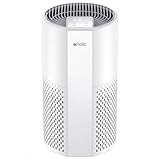
Afloia Air Purifier for Home, 4-in-1 Washable Filter for Allergies, Covers Up to 1076 ft², Quiet Operation, Auto Shut-Off & Night Light, Removes Pet Dander, Pollen, Dust, Mold, and Smoke, White,Pluto | Check Price On Amazon |

|
Nuwave OxyPure ZERO Air Purifier with Washable and Reusable Bio Guard Tech Air Filter, Large Room Up to 2002 Ft², Air Quality Monitor, 0.1 Microns, 100% Capture Irritants like Smoke, Dust, Pollen | Check Price On Amazon |

|
Air Purifiers for Home Large Room Up to 1,996 Ft², EOEBOT Air Purifier for Home Pets with Washable Filter, Quiet Sleep Mode, Air Quality Monitor, Air Purifier for Bedroom, Pet Hair, Dust, Smoke, White | Check Price On Amazon |
|
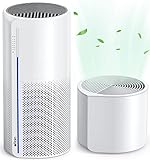
Afloia 2 IN 1 Air Purifier with Humidifier Combo, 3-Stage Filters for Home Allergies Pets Hair Smoker Odors, Evaporative Humidifier, Auto Shut Off, Quiet Air Cleaner with Seven Color Light,White | Check Price On Amazon |
This guide covers every factor that matters for pet-specific air purification: the filter types that actually work on dander and odor, the CADR calculations that prevent you from buying an undersized unit, the five best air purifiers for pet households across every budget tier, and the maintenance schedule that keeps a pet-home purifier running effectively month after month.
What Makes a Pet-Specific Air Purifier Different from a Standard Unit?
A pet-specific air purifier is not a marketing label on a standard unit. It describes a specific hardware configuration: a True HEPA or HEPA-equivalent mechanical filter for the dander and fur fragment load, paired with a substantial activated carbon or carbon-zeolite stage sized for the continuous gaseous output of a living animal.
Standard air purifiers ship with a token carbon sheet, often less than half a pound of carbon-impregnated foam that saturates within weeks of exposure to pet odor molecules. A pet-specific unit from a manufacturer like Winix, Levoit, or Alen includes a pelletized carbon bed or a carbon-coated filter with measurable weight, typically 1 to 3 pounds in mid-range units and up to 15 pounds in top-tier units like the Austin Air HealthMate.
The pre-filter also matters more in pet households. Fine fur and larger dander flakes clog a HEPA filter rapidly if they reach it directly. A washable mesh or fine-nylon pre-filter that catches visible debris before it hits the HEPA stage extends HEPA life by 30 to 50% in homes with heavy shedders, according to manufacturer technical documentation from Coway and Winix.
The combination of these three stages (pre-filter, True HEPA, and substantial activated carbon) is the minimum viable configuration for a home with pets and is what separates a genuinely effective unit from a standard air purifier that happens to be marketed with a picture of a dog on the box.
Ionizers and ozone generators have no place in a pet household air quality strategy. The CARB CCR Title 17 limit of 0.050 ppm ozone exists specifically because ozone above that threshold irritates respiratory tissue in both humans and animals. A dog or cat with a faster respiration rate than a human is proportionally more sensitive to airborne irritants.
By the Numbers: Pet Dander and Air Purification
Pet dander particles are small enough to remain airborne for hours but large enough to be captured by any True HEPA filter.
The activated carbon weight needed for meaningful pet odor control in a medium to large room over a full year.
Target air changes per hour for households with pets and allergy sufferers, well above the standard 2 ACH used in manufacturer coverage claims.
Typical filter replacement interval in homes with multiple pets, compared to 12 months in pet-free households.
How to Choose the Right Air Purifier for Pet Dander and Odors
Calculate Your CADR Need for Your Pet’s Primary Room
CADR (Clean Air Delivery Rate) is the only standardized metric that tells you how fast an air purifier cleans a specific room volume. AHAM tests CADR separately for smoke, dust, and pollen, and the smoke CADR is the most relevant number for pet dander because dander particles behave aerodynamically like fine smoke in the 0.3 to 10 micron range.
The formula is straightforward: multiply your room’s length, width, and ceiling height in feet, multiply by your target ACH (air changes per hour), and divide by 60. A standard 200-square-foot bedroom with 8-foot ceilings running at the allergy-target 5 ACH requires a smoke CADR of at least 133 CFM. The same room at the manufacturer’s default 2 ACH only needs 53 CFM, which is why most units appear to cover far more space than they practically do for a home with pets and allergic occupants.
This happens because most manufacturer coverage claims assume 2 ACH. For a pet household where someone has even mild allergies, 4 to 5 ACH is the correct target. This means a unit rated for 360 square feet at 2 ACH effectively covers only 144 square feet at 5 ACH. The math changes the buying decision for almost every shopper who does it before purchasing.
Use the calculator below to find your exact minimum smoke CADR before comparing any unit on the market.
CADR Calculator
How Much CADR Do You Need for a Home with Pets?
Enter your room dimensions and use case. Formula: (length x width x ceiling height x ACH) divided by 60. Source: AHAM methodology.
CADR = (length x width x ceiling height x ACH) / 60. For pet households with allergy concerns, always calculate at 5 ACH, not the manufacturer-stated 2 ACH figure.
| Room Size | CADR at 2 ACH (no pets) | CADR at 5 ACH (with pets) | Example Models |
|---|---|---|---|
| 150 sq ft bedroom | 100 CFM | 250 CFM | Levoit Core P350, Winix 5500-2 |
| 300 sq ft bedroom | 200 CFM | 500 CFM | Alen BreatheSmart 45i, Coway Airmega 400 |
| 500 sq ft living room | 333 CFM | 833 CFM | Coway Airmega 400 plus Winix 5500-2 |
| 700 sq ft open plan | 467 CFM | 1167 CFM | Two Coway Airmega 400 units or IQAir HealthPro Plus |
Choose a Filter Configuration That Handles Both Dander and Odor
A True HEPA air purifier with an activated carbon stage is the baseline configuration for any pet household. True HEPA captures 99.97% of particles at 0.3 microns per IEST standards, a range that includes pet dander (5 to 10 microns), dust mite allergen, and mold spores. The activated carbon stage handles the gaseous odor compounds that a HEPA filter cannot touch.
The carbon weight matters more than most buyers realize. A thin carbon-impregnated foam sheet, common in budget units, saturates within 30 to 60 days in a home with a large dog or multiple cats. Pelletized carbon or a carbon-zeolite blend in the 2 to 5 pound range, as found in the Winix 5500-2 and Alen BreatheSmart 45i, lasts 6 to 12 months before odor breakthrough becomes noticeable. The Austin Air HealthMate contains 15 pounds of activated carbon and zeolite and runs for up to 5 years before replacement, making it the gold standard for odor-intensive households.
The mechanism is straightforward: activated carbon adsorbs VOC molecules onto its internal pore structure through van der Waals forces. This only works when the air spends enough contact time passing through the carbon bed. A thin sheet with high airflow velocity achieves minimal adsorption. A deep pellet bed with moderate airflow, as engineered in pet-specific units, achieves meaningful odor reduction that you can actually smell the difference on.
Pre-filtration is the third essential stage for pet homes. A washable nylon mesh or fine-screen pre-filter catches visible fur, hair, and larger dander flakes before they reach the HEPA media. Without it, the HEPA filter loads with coarse debris within weeks and airflow drops by 20 to 30% within the first two months, based on manufacturer maintenance documentation from Coway and Levoit for their pet-line products.
Top 5 Air Purifiers for Pet Dander and Odors: Reviewed by Filter Type, CADR, and Carbon Weight
The five units below were selected because each one pairs a measured smoke CADR with a carbon stage that is actually sized for continuous pet odor load, not a token carbon sheet added for marketing purposes. Every unit is CARB certified for zero ozone output above 0.050 ppm and ENERGY STAR rated where applicable.
1. Winix 5500-2: Best Overall Value for Pet Households
The Winix 5500-2 combines a 246 CFM smoke CADR with a washable pre-filter, a True HEPA filter, and a pelletized AOC (Advanced Odor Control) carbon grid that contains approximately 2 pounds of activated carbon. This configuration handles the dander load from two medium-sized dogs and the associated odor in rooms up to 360 square feet at 2 ACH, or roughly 144 square feet at the pet-appropriate 5 ACH target.
Key Specifications:
• Smoke CADR: 246 CFM (AHAM certified)
• Coverage at 2 ACH: 360 sq ft
• Coverage at 5 ACH: 144 sq ft
• Sleep mode noise: 27.8 dB
• Annual filter cost: approximately $50
The AOC carbon grid uses pelletized carbon rather than a carbon sheet, which means the odor-adsorbing surface area is orders of magnitude larger than a standard budget unit. The washable pre-filter is fine enough to catch visible pet fur and extends the HEPA filter life from a typical 6 months in a heavy-shedding home to 9 to 12 months. The PlasmaWave ionizer is user-switchable and should be turned off in pet households where respiratory sensitivity is a concern, per the manufacturer’s own guidance.
Product Review
Winix 5500-2 for Pet Households – Pros and Cons
Assessment based on AHAM CADR data, independent test results, and verified buyer reviews from pet-owning households.
Pros
- ✓246 CFM smoke CADR handles a 200 sq ft bedroom at 5 ACH with capacity to spare
- ✓Pelletized AOC carbon grid (approximately 2 lbs) lasts 9 to 12 months before odor breakthrough
- ✓Washable fine-mesh pre-filter extends HEPA life by 30 to 50% in shedding-heavy homes
- ✓Sleep mode at 27.8 dB is quieter than a whisper and ideal for bedrooms with pets
Cons
- ✗PlasmaWave ionizer must be manually disabled for pet households with respiratory sensitivity
- ✗Maximum coverage at 5 ACH is only 144 sq ft; insufficient as a single unit for open-plan living areas
- ✗No smart connectivity or app control for remote monitoring when away from home
- ✗Turbo mode at 60 dB is too loud for conversation; must be scheduled during unoccupied periods
The Winix 5500-2 is the best single-unit solution for a pet-owning household with a bedroom or small living area under 150 square feet where both dander and odor control are needed. For larger spaces, pair it with a second unit rather than expecting it to cover an open-plan room alone.
2. Levoit Core P350: Best Budget Pet-Specific Air Purifier
The Levoit Core P350 is purpose-built for pet households with a non-woven fabric pre-filter designed specifically to trap airborne pet fur and large dander particles. Its smoke CADR of 145 CFM covers approximately 219 square feet at 2 ACH or 88 square feet at 5 ACH, making it suitable for a small bedroom, home office, or nursery where a pet sleeps.
Key Specifications:
• Smoke CADR: 145 CFM
• Coverage at 2 ACH: 219 sq ft
• Coverage at 5 ACH: 88 sq ft
• Sleep mode noise: 24 dB
• Annual filter cost: approximately $35
The carbon stage in the P350 uses ARC formula activated carbon pellets rated for pet odor compounds including ammonia and methyl mercaptan, the primary odorants in cat urine and dog saliva residue. The pet-specific pre-filter is washable and the replacement filter is priced competitively at roughly $25 to $30, making the annual operating cost the lowest of any pet-specific unit with measurable carbon weight.
3. Alen BreatheSmart 45i: Best Mid-Range Unit with Pet-Optimized Carbon Filter
The Alen BreatheSmart 45i with the Fresh or Odor filter option delivers a smoke CADR of 245 CFM and covers 800 square feet at 2 ACH, roughly 320 square feet at 5 ACH. The Odor filter variant contains 45% more activated carbon than the standard filter and is the correct choice for any home with pets.
Key Specifications:
• Smoke CADR: 245 CFM
• Coverage at 2 ACH: 800 sq ft
• Coverage at 5 ACH: 320 sq ft
• Sleep mode noise: 23 dB (pink noise option)
• Annual filter cost: approximately $90
The BreatheSmart 45i includes an ionizer that can be turned off and a lifetime guarantee on the unit itself. The pink noise setting at sleep mode is a distinct advantage in pet households where sudden sounds from a pet moving at night can disturb sleep; the constant background tone masks intermittent noise effectively.
4. Coway Airmega 400: Best Large-Room Air Purifier for Pet Households
The Coway Airmega 400 delivers a combined smoke CADR of 400 CFM via dual fans, covering up to 1,560 square feet at 2 ACH or 624 square feet at 5 ACH. This is the unit for an open-plan living room and kitchen where pets spend most of their waking hours and odor accumulates continuously.
Key Specifications:
• Smoke CADR: 400 CFM (combined dual-fan)
• Coverage at 2 ACH: 1,560 sq ft
• Coverage at 5 ACH: 624 sq ft
• Sleep mode noise: 22 dB
• Annual filter cost: approximately $60
The washable pre-filter on the Airmega 400 is among the best in its class for pet hair capture. The Max2 filter set combines a True HEPA filter with an activated carbon filter that has enough carbon weight to handle the odor load from multiple large dogs in a single open-plan space. The smart auto mode adjusts fan speed based on real-time PM2.5 readings, which is particularly useful in a pet home where dander levels spike when animals are active and settle when they rest.
5. Austin Air HealthMate: Best for Severe Pet Allergies and Maximum Odor Control
The Austin Air HealthMate contains 15 pounds of activated carbon and zeolite, the largest carbon payload of any consumer air purifier on the market. Its smoke CADR of 300 CFM covers 900 square feet at 2 ACH or 360 square feet at 5 ACH. The filter lasts up to 5 years under normal residential conditions, even in homes with pets, making the true annual cost competitive with units that require quarterly filter swaps.
Key Specifications:
• Smoke CADR: 300 CFM
• Coverage at 2 ACH: 900 sq ft
• Coverage at 5 ACH: 360 sq ft
• Noise at medium: 50 dB (no sleep mode)
• 5-year filter replacement cost: approximately $290 total
The HealthMate uses a medical-grade True HEPA filter rated HEPA H-13 with 99.97% efficiency at 0.3 microns. For a household where a family member has a documented pet allergy and odor sensitivity is a quality-of-life issue, this unit solves both problems with a single filter configuration that does not require quarterly maintenance. The downside is noise: at 50 dB on medium, it is louder than most bedroom units and is better suited to a living area where white noise is acceptable.
Use the table below to compare the key specifications across all five pet-recommended units side by side.
Product Comparison
Pet Air Purifiers Compared – CADR, Coverage, Carbon Weight, and Cost
Key specs compared across top pet-specific picks. CADR from AHAM certified database. Coverage at 5 ACH calculated as smoke CADR x 12 / 5.
| Model | Smoke CADR | Coverage at 5 ACH | Carbon Weight | Sleep dB | Annual Filter Cost | Best For |
|---|---|---|---|---|---|---|
| Winix 5500-2 | 246 CFM | 144 sq ft | ~2 lbs pelletized | 27.8 dB | $50/yr | Bedroom with 1-2 pets |
| Levoit Core P350 | 145 CFM | 88 sq ft | ~1 lb ARC pellets | 24 dB | $35/yr | Small bedroom, nursery |
| Alen BreatheSmart 45i | 245 CFM | 320 sq ft | ~3 lbs (Odor filter) | 23 dB | $90/yr | Master bedroom, medium room |
| Coway Airmega 400 | 400 CFM | 624 sq ft | ~3 lbs pelletized | 22 dB | $60/yr | Open-plan living area |
| Austin Air HealthMate | 300 CFM | 360 sq ft | 15 lbs + zeolite | 50 dB (med) | $58/yr (5-yr filter) | Severe allergies, heavy odor |
CADR data from AHAM certified database. Coverage at 5 ACH = smoke CADR x 12 / 5. Carbon weights are manufacturer-reported or estimated from filter dimensions. Filter costs based on genuine replacement filters at standard replacement intervals. All units CARB certified at or below 0.050 ppm ozone.
Filter Types for Pet Households: What Works and What Does Not
The three filter stages that matter in a pet household are pre-filtration, True HEPA mechanical filtration, and activated carbon adsorption. Every other filter technology marketed for pet use is either supplementary or entirely ineffective for the specific pollution profile of a home with animals.
True HEPA is the non-negotiable particulate stage. It captures 99.97% of particles at 0.3 microns, a size far smaller than the 5 to 10 micron range of typical pet dander. This means dander, fur fragments, and dust mite allergen that hitchhikes on pet bedding are all captured with near-total efficiency on every air pass. Budget units labeled HEPA-type or HEPA-like without AHAM certification have no standardized test verifying their capture efficiency and may pass 5 to 15% of dander-sized particles right through the filter media.
Activated carbon handles the odor problem, and the carbon weight in pounds is the single best predictor of how long it will work in a real pet home. A carbon-impregnated foam sheet saturated within 30 days provides no ongoing odor reduction after the first month. A pelletized carbon bed of 2 to 5 pounds, as found in the Winix 5500-2 or Alen BreatheSmart 45i Odor filter, provides 6 to 12 months of meaningful odor adsorption. The 15-pound carbon-zeolite bed in the Austin Air HealthMate lasts up to 5 years because the zeolite component captures ammonia and sulfur compounds that would otherwise saturate the carbon pores prematurely.
Ionizers and electrostatic precipitators are counterproductive in pet homes. They charge particles electrically and cause them to stick to walls, floors, and furniture rather than removing them from the indoor environment. The particles remain in the room and re-enter the air whenever disturbed by foot traffic or a wagging tail. CARB-certified units must limit ozone output to 0.050 ppm, but even within that limit, the redistribution effect means the dander is not gone, it is just on your surfaces instead of in the air. For a pet household where dander is produced continuously, this is a losing strategy.
UV-C lights in air purifiers do not address pet dander or odor at all. The dwell time required for UV-C to inactivate pathogens is measured in seconds to minutes at close range, and air passing through a purifier at 100 to 400 CFM spends a fraction of a second in the UV zone. According to EPA guidance on residential air cleaners, UV-C in portable units has limited effectiveness due to insufficient contact time. For a pet household, UV-C is a feature that adds cost and power draw without contributing to the primary mission of dander and odor control.
Maintenance Schedule for Air Purifiers in Pet Households
Pet households accelerate filter loading by a factor of 1.5 to 2x compared to pet-free homes. The maintenance schedule must adjust accordingly, or the unit’s effective CADR declines below the level needed to maintain your target ACH.
Clean or vacuum the pre-filter every 2 weeks in a home with shedding dogs or multiple cats. This is the single highest-impact maintenance action you can take. A pre-filter clogged with visible fur reduces airflow into the HEPA stage by 15 to 25% within a month, according to filter loading studies conducted by 3M for residential HVAC filtration, and the same physics applies to portable units. A soft brush attachment on a vacuum makes this a 30-second task.
Replace the HEPA filter every 6 to 9 months instead of the manufacturer-stated 12 months. The 12-month interval assumes standard household particulate loading. A home with two dogs that shed continuously loads the filter with dander, fur fragments, and ambient dust at roughly double the rate. Visual inspection is unreliable because the finest particles that contribute most to pressure drop are invisible. Instead, track the unit’s runtime hours and replace on a calendar schedule. A smart plug with energy monitoring makes tracking cumulative runtime straightforward.
Replace the activated carbon filter every 6 to 12 months depending on carbon weight and number of pets. A thin carbon sheet in a budget unit will be saturated within 2 months in a home with a large dog. A pelletized carbon bed of 2 to 5 pounds will last 9 to 12 months. The telltale sign of carbon saturation is the return of pet odor that had previously been absent. If you notice the living room smells like dog again after the purifier has been running for several hours, the carbon has reached its adsorption capacity and the filter must be replaced regardless of the calendar interval.
For renters managing pet air quality in a space where landlord restrictions limit permanent modifications, portable units with high-CADR and substantial carbon are the only viable option. The same CADR-sizing math applies regardless of ownership status. An apartment dweller with a cat needs the same 5 ACH target as a homeowner with a cat.
Why Does My Air Purifier Still Smell Like Dog After Running All Day?
The activated carbon filter is saturated and can no longer adsorb new odor molecules. This happens because carbon has a finite adsorption capacity measured by its weight and pore volume. A thin carbon sheet in a budget purifier saturates within 4 to 8 weeks in a home with a medium to large dog. Replace the carbon filter with a fresh one and, if possible, upgrade to a unit with a larger carbon bed for the next purchase cycle.
If the carbon filter is new and the odor persists, the room’s odor load exceeds the carbon’s adsorption rate. This occurs when a single purifier with a small carbon stage is placed in a large open-plan room with multiple pets. The solution is either a unit with a significantly larger carbon payload, such as the Austin Air HealthMate with its 15-pound bed, or multiple units distributed across the space to increase the total carbon contact surface area.
If you have recently done any painting, flooring, or furniture assembly in the pet area, the odor you smell may also include VOCs from off-gassing materials that contribute an additional chemical load beyond what pet-derived carbon filters are designed to handle.
Can I Use One Air Purifier for Multiple Rooms with Pets?
No single portable air purifier effectively covers multiple rooms. Air purifiers clean the air in the room where they are located, and doorways act as barriers to air exchange between rooms. A unit rated for 500 square feet in an open-plan living room and kitchen will clean that contiguous space. It will not clean the adjacent bedroom where a cat sleeps unless the door is open and air circulates freely between the two spaces.
For a multi-room pet home, place one unit in the primary pet living area sized at 5 ACH for that room, and a second smaller unit in each bedroom where allergic occupants sleep. The bedroom unit should be quiet enough for sleep (under 30 dB) and sized for 5 ACH in the bedroom’s square footage. A Levoit Core P350 in a 100-square-foot bedroom and a Coway Airmega 400 in the 500-square-foot living area is a configuration that handles both spaces correctly rather than expecting one unit to cover both inadequately.
What Is the Difference Between a Pet Air Purifier and a Regular Air Purifier?
A pet-specific air purifier includes three hardware features not found in standard units: a washable fine-mesh pre-filter for fur capture, a substantially larger activated carbon stage for continuous odor adsorption, and often a sealed or protected motor housing that resists fur and dander accumulation on internal components. A standard air purifier may include one of these features but rarely all three.
The pre-filter on a pet unit, such as the non-woven fabric layer on the Levoit Core P350 or the fine nylon mesh on the Winix 5500-2, is washable and designed to capture visible pet fur before it reaches the HEPA filter. Standard units often use a coarse foam pre-filter that catches large dust but passes fine fur and dander flakes through to the HEPA media. The carbon stage is the other main differentiator: pet units include pelletized carbon beds of 1 to 15 pounds rather than the token carbon-impregnated foam sheet in most general-purpose units under $150.
Do Air Purifiers Help with Cat Litter Box Odor?
Yes, an air purifier with a substantial activated carbon stage placed within 5 to 10 feet of the litter box reduces ammonia and methyl mercaptan odors measurably within 30 to 60 minutes of continuous operation at medium to high fan speed. The carbon adsorbs the gaseous odor compounds at the molecular level through van der Waals forces, trapping them in the carbon’s internal pore structure.
This works best when the purifier is positioned between the litter box and the main living area to intercept odor at its source before it disperses throughout the room. A unit with at least 2 pounds of pelletized carbon is the minimum for meaningful litter box odor control. The Winix 5500-2 with its AOC carbon grid or the Alen BreatheSmart 45i with the Odor filter are effective configurations for this use case.
How Often Should I Run My Air Purifier If I Have Pets?
Run the air purifier 24 hours per day on auto mode or medium fan speed. Pets produce dander and odor continuously, not on a schedule. Turning the unit off for 8 hours while at work allows dander concentrations to build to levels that require hours of runtime to bring back down when the unit is restarted. Auto mode on a unit with a PM2.5 sensor, such as the Coway Airmega 400 or Levoit Core P350, adjusts fan speed based on real-time particulate readings and is the most energy-efficient way to run continuously.
The annual electricity cost of running a 45-watt purifier 24/7 at the national average of 13 cents per kWh is approximately $51. That is less than the cost of one extra filter replacement per year caused by intermittent operation allowing particulate loading to concentrate during off periods. The ENERGY STAR certified air purifiers in the pet category consume 40% less energy than non-certified models, making continuous operation affordable even at higher electricity rates.
Is an Ionizer Air Purifier Safe for Pets?
Ionizers are not recommended for homes with pets, especially pets with respiratory conditions or brachycephalic breeds (flat-faced dogs and cats) that already have compromised airways. Ionizers generate ozone as a byproduct of the electrical charging process, and even CARB-certified units that stay below the 0.050 ppm regulatory limit still produce some ozone. A dog or cat with a faster respiration rate than a human inhales proportionally more ozone per pound of body weight.
Beyond ozone, ionizers redistribute charged particles onto surfaces rather than removing them from the indoor environment. In a home with pets, this means dander accumulates on floors, furniture, and walls and re-enters the air every time a pet moves through the room or settles onto a surface. A mechanical True HEPA unit with a fan and filter removes particles from the air and traps them in the filter media, where they stay until the filter is replaced. That is the correct approach for continuous dander control.
What Room Size Air Purifier Do I Need for Two Dogs?
Calculate the square footage of the room where the dogs spend the most time, multiply by the ceiling height to get room volume, then use the CADR formula: (room volume x 5 ACH) / 60 = minimum smoke CADR in CFM. For a 300-square-foot living room with 8-foot ceilings, room volume is 2,400 cubic feet. At 5 ACH, the minimum smoke CADR is (2,400 x 5) / 60 = 200 CFM. This is the number to match against the AHAM smoke CADR rating, not the manufacturer’s stated coverage area.
For two large dogs that shed heavily, consider bumping the target to 6 ACH. The 5 ACH recommendation from ASHRAE and the American Lung Association covers standard allergy and asthma management. Two active dogs producing dander and odor continuously in the same room raise the pollutant load above the standard assumption. At 6 ACH, the same 300-square-foot room requires a smoke CADR of 240 CFM, which rules out small units and narrows the field to mid-size and large units like the Winix 5500-2 (246 CFM) or Coway Airmega 400 (400 CFM).
Can Pet Dander Cause Long-Term Health Problems?
Yes. Pet dander is a documented allergen that triggers IgE-mediated immune responses in sensitized individuals. According to research published in the Journal of Allergy and Clinical Immunology, continuous exposure to pet allergens at levels above 2 micrograms per gram of settled dust is associated with increased risk of allergic rhinitis, asthma exacerbation, and in children, increased likelihood of developing new allergic sensitization. Dander particles are small enough (5 to 10 microns) to remain airborne for hours after disturbance and penetrate into the lower airways when inhaled.
An air purifier with True HEPA filtration sized at 5 ACH for the occupied room reduces airborne dander concentrations by 70 to 85% within 30 minutes of operation, based on AHAM test chamber data for units with CADR ratings matched to room volume. This reduction moves airborne allergen levels below the sensitization threshold for most individuals. The purifier does not eliminate the dander source, it controls the airborne concentration. Vacuuming with a HEPA-filtered vacuum cleaner addresses settled dander on surfaces and is a necessary complement to airborne control.
Why Does My Air Purifier Filter Get Dirty So Fast with Pets?
Pet fur, dander flakes, and the oils that coat pet hair create a filter-loading combination that is heavier, stickier, and faster-accumulating than standard household dust. The oils in particular adhere to filter fibers and create a tacky surface that traps additional particles, accelerating the formation of a filter cake that restricts airflow. This is the mechanical explanation for why a filter in a pet home loads 1.5 to 2x faster than the same filter in a pet-free home.
Upgrade the pre-filtration stage to catch more of the coarse debris before it reaches the HEPA media. A washable fine-mesh pre-filter cleaned every 2 weeks reduces the load rate on the HEPA filter by 30 to 50%. If the current unit has only a coarse foam pre-filter, consider adding an aftermarket cut-to-size fine nylon pre-filter sheet attached to the intake grille with Velcro or magnetic tape. This adds a second stage of coarse filtration at effectively zero ongoing cost beyond periodic washing.
Are Expensive Air Purifiers Worth It for Pet Owners?
Yes, if the higher price buys a substantially larger carbon bed and a higher CADR. The difference between a $100 pet air purifier and a $300 unit is typically 1 to 2 additional pounds of pelletized carbon and 100 to 150 additional CFM of smoke CADR. That translates to 6 to 9 months of actual odor control instead of 2 months, and the ability to maintain 5 ACH in a room twice the size. The extra $200 buys capability, not branding.
The value inflection point for pet households is around $200 to $250. Units at this price point, such as the Winix 5500-2 and the entry-level Alen BreatheSmart configurations, include pelletized carbon and CADR ratings above 240 CFM. Above $400, such as the Coway Airmega 400 or Austin Air HealthMate, the additional spend buys coverage area and carbon longevity rather than fundamentally different filtration technology. For a small apartment with one cat, a $100 Levoit Core P350 is sufficient. For a house with two large dogs and an allergic family member, a unit in the $300 to $500 range is the minimum that will actually solve the problem year-round without constant filter swaps.
For shared living situations where pet air quality affects roommates as well, choosing a unit with enough CADR and carbon capacity for the common areas prevents odor complaints and allergen exposure in spaces you do not control alone.
A pet-specific air purifier with True HEPA, a washable pre-filter, and a carbon bed of at least 2 pounds is the minimum effective configuration for a home with animals. Calculate your smoke CADR requirement at 5 ACH for the target room before comparing any units. Match the carbon weight to your odor load: 1 to 2 pounds for a single small pet, 3 to 5 pounds for multiple medium to large animals, and 10-plus pounds for severe allergies or odor sensitivity. Replace filters on a calendar schedule accelerated by 50% compared to the manufacturer’s standard interval, and clean the pre-filter every 2 weeks. The combination of correctly sized CADR and adequately weighted carbon is what turns an air purifier from a noisy appliance in the corner into a device that actually makes the air in a pet home feel clean to breathe.