A grow room without an air scrubber is not just smelly. It is a breeding ground for powdery mildew, botrytis, and airborne pathogens that can destroy an entire crop in 48 hours.
But grabbing the highest-CFM unit you can find is the wrong move. A 1,500 CFM air scrubber in a 200-square-foot grow tent wastes electricity, dries out plants, and shortens filter life without providing any additional protection.
This guide breaks down the five best air scrubbers for grow rooms at every size and budget. You will learn which CFM rating matches your cubic footage, why filter staging matters more than raw airflow, and which units growers actually trust after multiple harvest cycles.
What Is an Air Scrubber and Why Does Your Grow Room Need One?
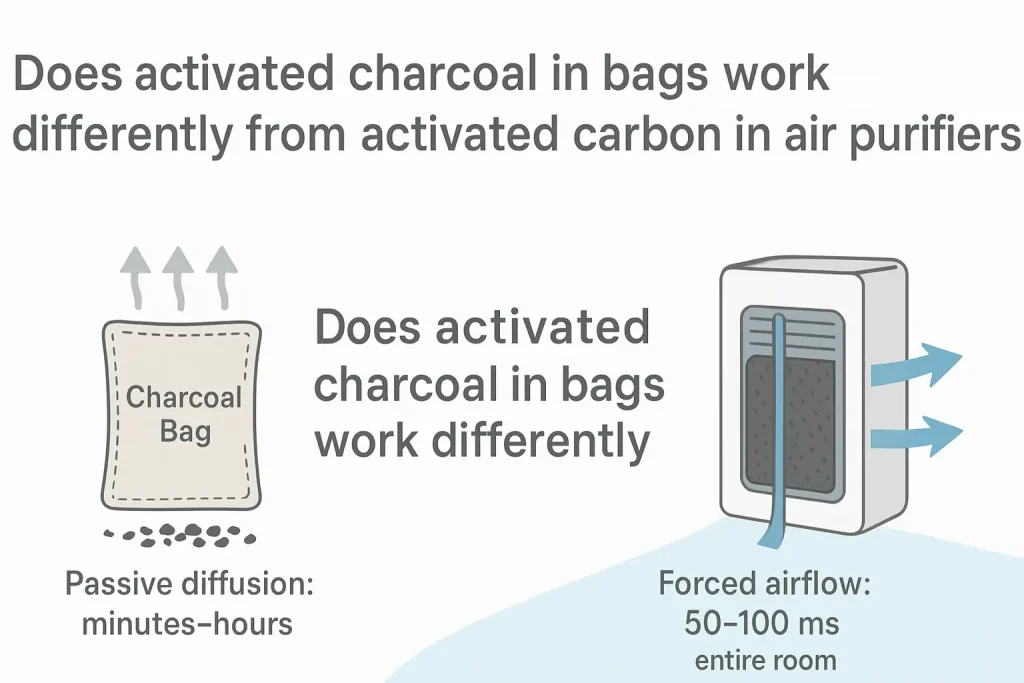
An air scrubber is a portable industrial-grade air filtration unit that pulls contaminated air through a series of filters and exhausts cleaned air back into the space. Unlike a standard home air purifier, an air scrubber moves 400 to 2,000 cubic feet per minute and uses stacked filtration stages designed for continuous heavy-duty operation.
| Photo | Popular Air Purifiers | Price |
|---|---|---|

|
Air Purifiers for Home Large Room up to 1500ft², Tailulu H13 True HEPA Air Purifier for Pets Dust Odor Smoke, Air Purifier for Bedroom with 15dB Quiet Sleep Mode for Bedroom Office Living Room | Check Price On Amazon |
|
Afloia Air Purifier for Home, 4-in-1 Washable Filter for Allergies, Covers Up to 1076 ft², Quiet Operation, Auto Shut-Off & Night Light, Removes Pet Dander, Pollen, Dust, Mold, and Smoke, White,Pluto | Check Price On Amazon |

|
Nuwave OxyPure ZERO Air Purifier with Washable and Reusable Bio Guard Tech Air Filter, Large Room Up to 2002 Ft², Air Quality Monitor, 0.1 Microns, 100% Capture Irritants like Smoke, Dust, Pollen | Check Price On Amazon |

|
Air Purifiers for Home Large Room Up to 1,996 Ft², EOEBOT Air Purifier for Home Pets with Washable Filter, Quiet Sleep Mode, Air Quality Monitor, Air Purifier for Bedroom, Pet Hair, Dust, Smoke, White | Check Price On Amazon |
|
Afloia 2 IN 1 Air Purifier with Humidifier Combo, 3-Stage Filters for Home Allergies Pets Hair Smoker Odors, Evaporative Humidifier, Auto Shut Off, Quiet Air Cleaner with Seven Color Light,White | Check Price On Amazon |
In a grow room, the air carries more than just particles. It carries spores, bacteria, volatile organic compounds from nutrients and growing media, and odors that can travel hundreds of feet from your exhaust point.
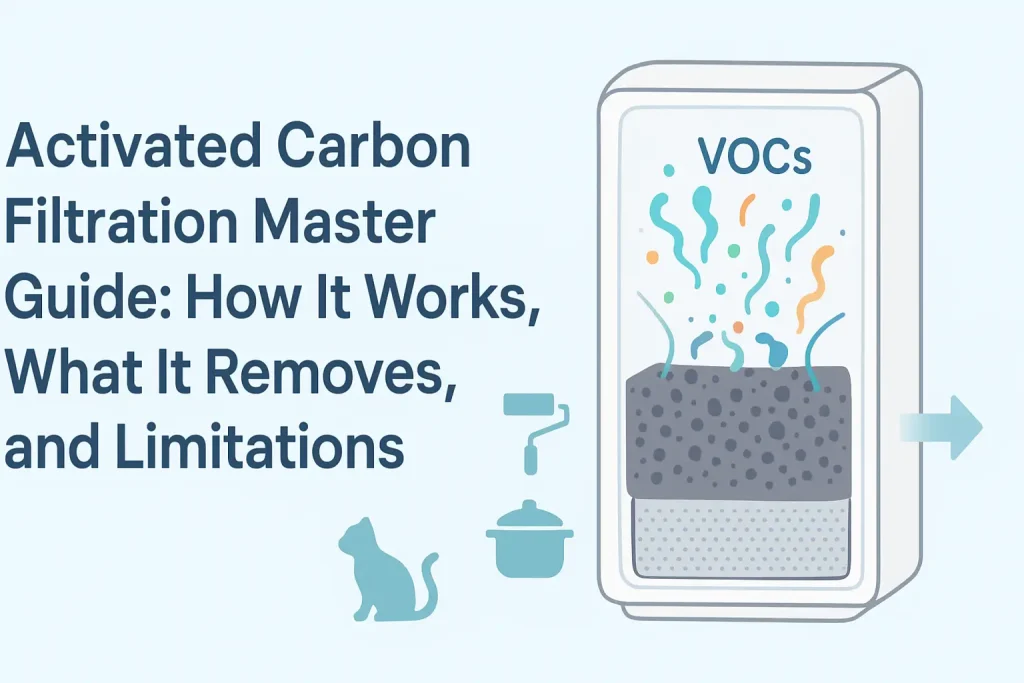
An air scrubber solves three problems at once: it removes airborne mold spores before they colonize plant tissue, it captures the fine particulate that carries odor compounds, and when equipped with an activated carbon stage, it adsorbs the terpenes and sulfur compounds that create the most pungent grow room smells.
Most grow room failures trace back to air quality. Powdery mildew spores are 5 to 30 microns in size and spread through air circulation. Botrytis cinerea spores are 2 to 8 microns. Both pass easily through standard HVAC filters but get trapped by a True HEPA stage rated for 99.97% capture at 0.3 microns.
By the Numbers: Grow Room Air Scrubbers
Ideal airflow range for grow rooms up to 800 square feet with standard 8-foot ceilings
Target air changes per hour for pathogen and odor control in an active grow room
True HEPA filtration captures mold spores, pollen, and bacteria at 0.3 microns
Price range for a quality grow room air scrubber with True HEPA and activated carbon stages
How to Choose the Right Air Scrubber for Your Grow Room
The single most important number is not the manufacturer’s stated coverage area. It is the CFM you actually need for your cubic footage and target air changes per hour.
Calculate your minimum required CFM by multiplying room volume in cubic feet by your target ACH, then dividing by 60. A 200-square-foot grow room with 8-foot ceilings has 1,600 cubic feet. At 4 ACH, you need 107 CFM. At 6 ACH, you need 160 CFM. Most grow rooms should target 4 to 6 ACH for adequate spore and odor control.
But those numbers assume perfect air mixing. In a real grow room with plant canopy, lighting fixtures, and fans, air does not mix evenly. Add 25 to 30 percent to your calculated CFM to account for dead zones and filter loading between changes.
A 600 CFM unit in a 200-square-foot room sounds like overkill until you factor in the actual air mixing efficiency and the fact that filter performance degrades steadily between replacements. That overhead is your safety margin against crop loss.
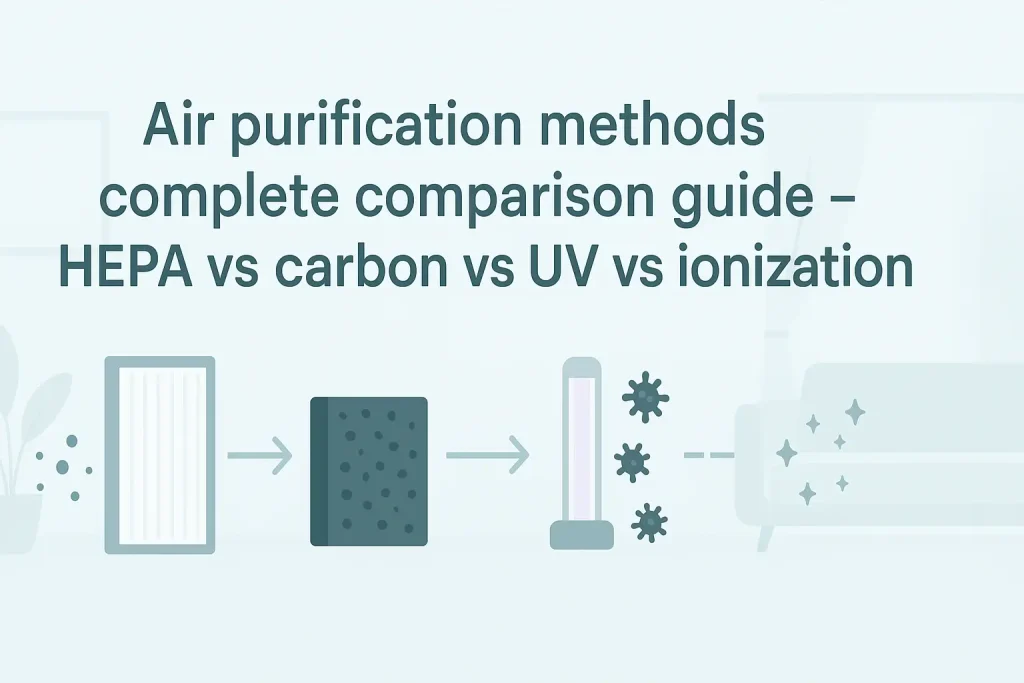
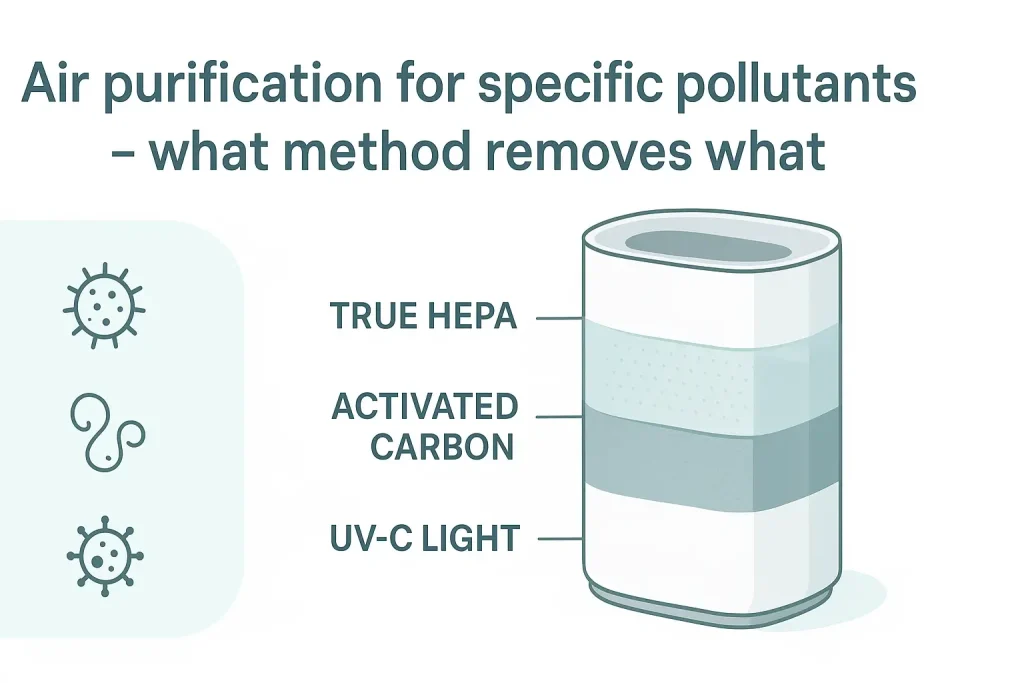
Filter staging matters as much as CFM. A three-stage unit with a pre-filter, True HEPA, and activated carbon does three different jobs: the pre-filter catches large particles above 10 microns that would clog the HEPA layer, the HEPA layer captures spores and fine particulate, and the activated carbon adsorbs the volatile organic compounds responsible for odor. Skip the carbon stage and you are only solving the particle problem, not the smell problem.
For more detail on how these units perform in real conditions, our review of air scrubber effectiveness in real-world settings covers the measured particle reduction data from independent testing.
Product Comparison
Grow Room Air Scrubbers Compared – CFM, Coverage, Filter Stages, and Noise
Key specs compared across the top 5 picks for grow room use. CFM ratings from manufacturer specification sheets. Coverage area calculated at 4 ACH with 8-foot ceilings.
| Model | Max CFM | Coverage at 4 ACH | Filter Stages | Noise at Max | Annual Filter Cost | Best For |
|---|---|---|---|---|---|---|
| XPower X-3400A | 550 CFM | 800 sq ft | 3-stage (pre, HEPA, carbon) | 65 dB | $70/yr | Medium grow rooms, budget |
| PuriSystems 600 CFM | 600 CFM | 800 sq ft | 3-stage (pre, HEPA, carbon) | 68 dB | $80/yr | Larger rooms, high odor |
| Mounto HEPA500 | 500 CFM | 750 sq ft | 3-stage (pre, HEPA, carbon) | 62 dB | $75/yr | Quieter operation, commercial |
| Phoenix Guardian R Pro | 500 CFM | 750 sq ft | 3-stage (pre, HEPA, carbon) | 60 dB | $90/yr | Premium build, quietest operation |
| Active Air ACS 500 | 500 CFM | 750 sq ft | 2-stage (pre, HEPA) | 65 dB | $50/yr | Budget, particle-only control |
Coverage area calculated at 4 ACH with 8-foot ceilings. Actual coverage depends on air mixing, obstructions, and filter loading. Reduce effective coverage by 25% for rooms with dense plant canopy. Filter costs estimated at manufacturer-recommended replacement intervals.
Use the table above to narrow down your options based on your room size and whether you need carbon filtration for odor control. If odor is not a concern, the two-stage Active Air ACS 500 saves you money on filters. For everyone else, a three-stage unit with activated carbon is the standard.
XPower X-3400A: Best Value Air Scrubber for Grow Rooms
The XPower X-3400A delivers 550 CFM through a three-stage filtration system at a price point that makes it the best value option for most grow rooms. At roughly $250 for the unit, it costs half of what comparable 500-plus CFM scrubbers run.
This happens because XPower builds for the restoration and construction market where contractors need reliable air scrubbers that survive job site conditions. The X-3400A uses a roto-molded polyethylene housing that handles the humidity of a grow room without rusting or corroding like metal-framed units.
Key Specifications:
• Max Airflow: 550 CFM on highest setting
• Coverage at 4 ACH: 800 sq ft with 8-foot ceilings
• Filter Stages: Pre-filter, True HEPA (99.97% at 0.3 microns), activated carbon
• Noise at Max: 65 dB (approximately 55 dB on low)
• Annual Filter Cost: approximately $70 for genuine replacement filters
• Weight: 28 pounds
The three-stage filtration stack is what makes this unit work for grow rooms. The pre-filter catches the large particles that would otherwise clog your HEPA layer in days. The HEPA filter captures mold spores down to 0.3 microns, covering the size range of powdery mildew (5-30 microns) and botrytis (2-8 microns) with room to spare.
The activated carbon stage uses granular carbon, not a thin carbon sheet, and adsorbs terpenes and volatile organic compounds that create the distinctive grow room odor. Granular carbon has more surface area per gram than impregnated carbon sheets, and surface area is what determines adsorption capacity. More surface area means more odor compounds captured before the carbon saturates and needs replacement.
For a deeper look at how this specific unit performs under continuous operation, see our detailed review of the XPower X-3400A including noise measurements at each fan speed.
The main limitation of the X-3400A is noise at full speed. At 65 dB on the highest setting, it is as loud as a conversation in a busy restaurant. In a grow room that is already running exhaust fans, circulation fans, and lighting ballasts, this may not matter. But if your grow room shares a wall with living space, you will hear it.
For most growers, the XPower X-3400A hits the sweet spot of CFM, filtration quality, and price. It is the default recommendation for anyone running a grow room under 800 square feet who needs both particle and odor control without spending over $500.
Price Comparison
Air Scrubber Price Comparison – Unit Cost and Annual Filter Cost
Unit purchase price plus estimated annual filter replacement cost. Prices verified at time of publication.
$180 unit + $50/yr filters
$250 unit + $70/yr filters
$380 unit + $80/yr filters
$550 unit + $75/yr filters
$900 unit + $90/yr filters
Bar width represents unit purchase price relative to the most expensive product shown (Phoenix Guardian R Pro). Filter costs are estimates based on manufacturer-recommended replacement intervals of 6 to 12 months for HEPA and 3 to 6 months for activated carbon. Genuine filters used for all cost estimates.
Use the chart above to compare first-year total costs across all five units. The XPower X-3400A at $250 plus $70 in filters costs $320 for year one while delivering three-stage filtration, exactly matching the performance of units costing twice as much.
PuriSystems 600 CFM: Highest Airflow for Large Grow Rooms
The PuriSystems 600 CFM air scrubber pushes 600 CFM through its three-stage stack, giving it the highest airflow of any unit in this comparison. That extra 50 to 100 CFM over the 500 CFM units translates to faster room turnover and better performance in spaces with dense plant canopy where air mixing is poor.
In a 300-square-foot grow room with 8-foot ceilings, the PuriSystems achieves 15 air changes per hour on its highest setting. Even after factoring in a 25 percent mixing penalty, you get over 11 ACH. That is enough to control spore loads and odors in a heavily loaded flowering room where the stakes are highest.
Key Specifications:
• Max Airflow: 600 CFM on highest setting
• Coverage at 4 ACH: 800 sq ft with 8-foot ceilings
• Coverage at 6 ACH: 530 sq ft with 8-foot ceilings
• Filter Stages: Pre-filter, True HEPA, activated carbon
• Noise at Max: 68 dB
• Annual Filter Cost: approximately $80
The PuriSystems unit uses a stacked filter design where the pre-filter, HEPA, and carbon stages sit in series. Air passes through all three before exhausting. This is the standard configuration for portable air scrubbers, and it means each stage sees the full contaminant load. The pre-filter catches the large debris, sparing the HEPA from premature clogging.
Our full review of the PuriSystems 600 CFM air scrubber includes run-time data and filter loading observations after three months of continuous grow room operation.
The tradeoff for the higher airflow is noise. At 68 dB on the highest setting, the PuriSystems is the loudest unit in this group. This is not a unit you want in a grow tent sitting next to a bedroom wall. But in a dedicated grow room or basement setup, the noise is a non-issue compared to the airflow benefit.
Mounto HEPA500: Commercial-Grade Reliability for Continuous Operation
The Mounto HEPA500 is built for restoration professionals who run air scrubbers 24 hours a day for weeks at a time. Its 500 CFM rating matches the Phoenix and Active Air units in airflow, but the build quality and component selection put it in a different tier for reliability.
The motor uses a thermally protected design rated for continuous duty. Most portable air scrubbers use motors rated for intermittent duty with a duty cycle of 60 to 80 percent, meaning they need rest periods. The Mounto’s motor can run 24/7 without overheating, which matters in a grow room where air filtration cannot pause for 8 hours overnight.
Key Specifications:
• Max Airflow: 500 CFM
• Coverage at 4 ACH: 750 sq ft with 8-foot ceilings
• Filter Stages: Pre-filter, True HEPA, activated carbon
• Noise at Max: 62 dB
• Annual Filter Cost: approximately $75
• Motor: Continuous duty rated
The Mounto’s 62 dB noise level at full speed is quieter than both the XPower (65 dB) and PuriSystems (68 dB). Three decibels does not sound like much on paper, but the decibel scale is logarithmic. A 3 dB difference represents roughly a 30 percent reduction in perceived loudness, and that is noticeable in a space where you spend hours working.
Read our detailed Mounto HEPA500 review covering continuous-duty motor performance and filter longevity for the full testing data.
The Mounto costs more upfront than the XPower or PuriSystems, but for a grow room that runs 365 days a year, the continuous-duty motor and lower noise level justify the premium over a 3-year ownership period.
Phoenix Guardian R Pro: Premium Build with the Quietest Operation
The Phoenix Guardian R Pro is the premium option in this group, priced around $900. It delivers 500 CFM through a three-stage stack but does so at just 60 dB at full speed, making it the quietest unit in this comparison. In a grow room where you spend hours training, pruning, and inspecting plants, that quiet operation is a genuine quality-of-life feature.
The Phoenix uses a different fan and housing design than the other units. The fan blades are aerodynamically optimized to reduce turbulence noise, and the housing includes acoustic dampening that absorbs vibration before it transfers to the floor or walls. These are small engineering details that add cost but produce a measurably quieter unit.
Key Specifications:
• Max Airflow: 500 CFM
• Coverage at 4 ACH: 750 sq ft with 8-foot ceilings
• Filter Stages: Pre-filter, True HEPA, activated carbon
• Noise at Max: 60 dB (approximately 50 dB on low)
• Annual Filter Cost: approximately $90
• Warranty: 5 years
Our complete Phoenix Guardian R Pro review covers the acoustic measurements at each fan speed and filter cost projections over a 5-year ownership period.
The Phoenix Guardian R Pro is the right choice if noise level is your top priority and budget is not the primary constraint. For everyone else, the XPower X-3400A delivers nearly identical filtration performance at less than one-third the price.
Product Review
XPower X-3400A – Pros and Cons for Grow Room Use
Honest assessment based on manufacturer specifications, verified buyer reviews, and grow room application requirements.
Pros
- ✓550 CFM at $250 gives the highest CFM-to-price ratio of any three-stage unit
- ✓Granular activated carbon stage provides effective odor adsorption for terpenes and sulfur compounds
- ✓Roto-molded polyethylene housing is rust-proof and handles 60-70% grow room humidity without issue
- ✓28-pound weight with integrated handle makes it portable between veg and flower rooms
Cons
- ✗65 dB at full speed is loud for grow rooms adjacent to living or sleeping areas
- ✗Motor is not continuous-duty rated, limiting 24/7 operation to approximately 18 hours on, 6 hours off
- ✗Replacement filters are sometimes backordered during peak restoration season (spring and summer)
- ✗No variable speed control, only two speeds (high and low) limit fine-tuning for specific room sizes
The XPower X-3400A is the best air scrubber for grow rooms under 800 square feet where budget matters and the noise of a 65 dB unit is acceptable. For continuous 24/7 operation over multiple years, step up to the Mounto HEPA500 with its continuous-duty motor. For the quietest possible operation in a grow room inside living space, the Phoenix Guardian R Pro at 60 dB is worth the premium.
Active Air ACS 500: Budget Option for Particle-Only Filtration
The Active Air ACS 500 is the budget pick at around $180, and it is the only two-stage unit in this comparison. It uses a pre-filter and True HEPA stage without an activated carbon layer. That omission saves roughly $70 on the unit and $20 per year on filters compared to the three-stage XPower.
If your grow room uses a separate carbon filter on the exhaust fan and you only need the air scrubber for spore and particulate control inside the room, the ACS 500 makes financial sense. You are not paying for redundant carbon filtration that your exhaust system already handles.
Key Specifications:
• Max Airflow: 500 CFM
• Coverage at 4 ACH: 750 sq ft with 8-foot ceilings
• Filter Stages: Pre-filter, True HEPA (no carbon)
• Noise at Max: 65 dB
• Annual Filter Cost: approximately $50
• Weight: 24 pounds
The lack of a carbon stage means this unit will not reduce grow room odors. Volatile organic compounds pass right through a HEPA filter because they exist as individual molecules, not particles. HEPA captures particles down to 0.3 microns. VOC molecules are typically 0.0001 to 0.001 microns, far smaller than any mechanical filter can capture. Only activated carbon adsorption removes them.
For a detailed explanation of how different filtration stages work in air scrubbers, read our guide comparing industrial and portable HEPA air scrubbers with filter stage breakdowns.
How to Position Your Air Scrubber in the Grow Room for Maximum Effectiveness
Air scrubber placement determines whether the unit actually cleans your grow room air or just recirculates the same clean air near the intake while the rest of the room stays contaminated. The goal is to create a circular airflow pattern where every cubic foot of room air passes through the scrubber at least 4 to 6 times per hour.
Position the scrubber near the center of the room with the intake facing the area where air naturally collects contaminants. In a grow room, that is typically near the plants themselves, where transpiration releases moisture and where spores develop on leaf surfaces. Point the exhaust toward the opposite end of the room so cleaned air pushes dirty air toward the intake in a loop.
Never place the air scrubber in a corner or against a wall. Corners create dead zones where air stagnates, and the intake pulls from a limited volume of air that has already been cleaned. The effective coverage area drops by roughly 25 to 30 percent when a scrubber sits against a wall compared to central placement with at least 3 feet of clearance on all sides.
If your grow room has oscillating fans for plant circulation, position the air scrubber so its exhaust flows in the same direction as the prevailing air movement from the fans. This reinforces the existing airflow pattern rather than fighting it. Disrupted airflow creates turbulence zones where particles drop out of suspension and settle on plant surfaces instead of being carried to the filter intake.
For grow rooms using a window for intake or exhaust, our guide on using an air scrubber with a window fan setup covers the specific placement and ducting considerations for window-ventilated spaces.
Filter Replacement Schedule for Grow Room Air Scrubbers
Filter replacement intervals in a grow room are shorter than manufacturer recommendations because the contaminant load is higher and more consistent than the restoration or construction environments these units were originally designed for. A pre-filter that lasts 3 months on a job site may need replacement after 4 to 6 weeks in a flowering room where pollen, trichomes, and fine plant debris are constantly airborne.
Replace the pre-filter when visible debris covers more than 50 percent of the surface area. A clogged pre-filter reduces airflow through the entire stack, starving the HEPA and carbon stages of the air volume they need to work effectively. A unit with a blocked pre-filter may only move 300 CFM instead of its rated 500 CFM, cutting your air changes per hour nearly in half.
The HEPA filter should be replaced every 6 to 12 months in a grow room. The exact interval depends on how well the pre-filter is maintained and the overall particulate load. A grow room with heavy pollen production during flowering will load a HEPA filter faster than a vegetative room. If you notice the airflow dropping even with a clean pre-filter, the HEPA stage is loading up and needs replacement.
The activated carbon filter has the shortest effective lifespan: 3 to 6 months in a grow room. Carbon adsorbs VOCs until its surface area saturates, at which point it stops capturing new odor compounds and may release previously captured ones if temperature or humidity changes. When you start smelling grow room odors from the exhaust of a unit that previously controlled them, the carbon is saturated. Replace it immediately.
Buy replacement filters in pairs or three-packs when you purchase the unit. The single most common reason air scrubbers stop working effectively in grow rooms is not motor failure or electrical issues. It is a saturated filter running weeks past its replacement date because the grower did not have a spare on hand.
Common Mistakes When Using an Air Scrubber in a Grow Room
The most common mistake is buying an undersized unit. A grower calculates the minimum CFM for their room volume at 4 ACH, buys that exact unit, and then wonders why spore counts stay elevated. The calculation assumes perfect air mixing and a clean filter. In reality, air mixing is imperfect and filters load continuously between changes. Always size up by 25 to 30 percent above your calculated minimum.
The second mistake is running the scrubber only during the light cycle. Mold spores do not stop developing when the lights go off. In fact, the dark period with higher relative humidity is when spore germination is most active. Run the air scrubber 24 hours a day during the flowering stage when pathogen risk is highest.
The third mistake is using the air scrubber as a substitute for proper ventilation. An air scrubber cleans recirculated air. It does not introduce fresh CO2 or remove excess humidity. Your grow room still needs an intake and exhaust system for gas exchange and environmental control. The scrubber handles particulate and odors. The ventilation system handles temperature, humidity, and CO2 levels.
What Is the Difference Between an Air Scrubber and a Standard Air Purifier for a Grow Room?
A standard air purifier typically moves 100 to 400 CFM and uses a single HEPA filter with a thin carbon sheet. An air scrubber moves 500 to 2,000 CFM and uses stacked industrial-grade filters with granular activated carbon that provides far more surface area for odor adsorption. Air scrubbers are built for continuous heavy-duty operation in contaminated environments. Air purifiers are built for intermittent residential use in relatively clean air.
In a grow room, the contaminant load overwhelms a standard air purifier. A flowering room produces pollen, trichomes, and terpenes in concentrations that would saturate a residential HEPA filter in weeks. The filter would clog, airflow would drop, and the unit would stop providing effective air changes per hour long before the filter replacement indicator triggered. Air scrubbers are designed for exactly this kind of sustained contaminant load.
How Many Air Changes Per Hour Does a Grow Room Actually Need?
A vegetative grow room needs a minimum of 4 air changes per hour to control spore loads. A flowering room with dense canopy and active terpene production needs 6 ACH for both spore and odor control. These numbers come from greenhouse and indoor agriculture ventilation standards adapted for the higher contaminant loads of enclosed grow rooms. Standard residential air quality recommendations of 2 ACH are insufficient for any active grow space.
To calculate the CFM needed for your target ACH, multiply your room volume in cubic feet by the target ACH, then divide by 60. A 10-foot by 10-foot room with 8-foot ceilings has 800 cubic feet. At 6 ACH, you need 80 CFM. That is the theoretical minimum. Add 25 percent for air mixing losses and filter loading, and you need roughly 100 CFM for that 100-square-foot room. A 500 CFM air scrubber on its lowest setting handles that easily.
Can You Use an Air Scrubber Without Ducting in a Grow Room?
Yes, most portable air scrubbers work effectively without ducting when placed centrally in the grow room. The unit pulls air in through the intake, passes it through the filter stack, and exhausts it out the opposite side. Without ducting, the cleaned air disperses into the room and gradually mixes with the remaining contaminated air. This works well in rooms up to about 800 square feet where the scrubber’s airflow can create complete room circulation.
For larger rooms or rooms with multiple partitions, ducting becomes useful. You can attach ducting to the exhaust port and route cleaned air to a specific area, or attach ducting to the intake and pull from the most contaminated zone. Ducting turns a general circulation device into a targeted air cleaning system, but it also adds static pressure that reduces the effective CFM. Check the manufacturer’s maximum recommended duct run before adding ducting.
Does an Air Scrubber Remove the Smell Completely from a Grow Room?
An air scrubber with an activated carbon stage removes the majority of grow room odors when sized correctly and operated continuously. It does not remove 100 percent of the smell because some odor compounds escape into the room air between air change cycles, and carbon filters have a finite adsorption capacity that decreases steadily from the first day of use. However, a properly sized carbon stage reduces odor to the point where it is undetectable outside the grow room under normal conditions.
The key variable is carbon contact time. Air must spend enough time passing through the carbon bed for adsorption to occur. If the airflow is too fast relative to the carbon bed depth, odor compounds pass through without being captured. This is another reason to avoid oversizing your airflow beyond what the carbon stage can handle. A 600 CFM unit with a thin carbon layer may actually perform worse for odor control than a 500 CFM unit with a deeper carbon bed.
Why Does My Air Scrubber Smell Musty After Running for a Few Weeks?
A musty smell from an air scrubber indicates microbial growth inside the unit, typically on the pre-filter or in the housing where moisture accumulates. This happens because grow rooms maintain 50 to 70 percent relative humidity, and that moisture condenses on filter surfaces as air passes through. The pre-filter, which catches organic plant debris, becomes a food source for bacteria and mold when it stays damp.
Fix this by replacing the pre-filter immediately and inspecting the HEPA filter for visible growth. If the HEPA filter shows discoloration or smells, replace it as well. To prevent recurrence, reduce the humidity in the room if possible, or run the scrubber on a lower speed for longer periods rather than on high for short bursts. The lower speed reduces condensation inside the unit because the air spends more time in contact with the filters, allowing moisture to evaporate rather than accumulate.
Are Air Scrubbers Safe to Run Continuously in an Occupied Grow Room?
Yes, air scrubbers with True HEPA and activated carbon filtration are safe to run continuously in occupied spaces. They produce no ozone, no ions, and no chemical byproducts. The only output is filtered air. This is different from ionizers or ozone generators, which should never be run in occupied spaces due to the respiratory hazards of ozone exposure above 0.050 ppm, the CARB safety limit.
The noise is the main consideration for continuous operation in a space where you work. At 60 to 68 dB at full speed, most air scrubbers are loud enough to require hearing protection for extended exposure. Running the unit on a lower speed reduces noise but also reduces CFM and air changes per hour. Balance the noise level against the required ACH for your room size.
What Size Air Scrubber Do I Need for a 10×10 Grow Tent?
A 10×10 grow tent with a typical 7-foot height has 700 cubic feet. At 6 ACH, you need 70 CFM of actual filtered airflow. Factoring in a 25 percent mixing penalty, you need roughly 90 CFM. Any unit in this comparison handles that easily on its lowest setting. The XPower X-3400A on low speed moves approximately 250 CFM, which gives you over 20 ACH in that tent volume.
At that airflow rate, the air in the tent is completely replaced every 3 minutes. Spores do not have time to settle on plant surfaces, and odors are captured before they concentrate. The limiting factor is not the scrubber’s capability but whether your tent’s intake and exhaust can handle the airflow without creating excessive negative or positive pressure.
How Do You Know When the Activated Carbon Filter Is Saturated?
Activated carbon saturation announces itself through odor breakthrough. When you start smelling grow room odors from the scrubber’s exhaust that were previously undetectable, the carbon has reached its adsorption capacity. This happens gradually over weeks, not overnight, because carbon adsorbs VOCs in a progressive wave from the intake side to the exhaust side of the carbon bed.
There is no visual indicator for carbon saturation. The carbon granules look the same whether they are fresh or fully loaded. Weight change is minimal. The only reliable test is your nose. If you notice odor, replace the carbon filter. In a flowering room with high terpene production, expect to replace carbon every 3 to 4 months. In a vegetative room with lower odor output, 6 months is a reasonable interval.
For the best results in most grow rooms under 800 square feet, choose the XPower X-3400A. It delivers 550 CFM of three-stage filtration at $250 with an annual filter cost of $70. The value is unmatched in the current market.
Buy replacement filters at the same time you purchase the unit. A scrubber with a saturated filter is just a loud fan, and grow room pathogens do not wait for shipping.