An ozone machine does not clean the air in the way most people assume. It introduces a lung irritant into the room at concentrations that can exceed the EPA’s 0.070 ppm 8-hour exposure limit, while an air scrubber physically removes particles, gases, and microorganisms through mechanical filtration and continuous air exchange.
This is not a subtle distinction between two similar air quality tools. It is a fundamental difference in mechanism, safety profile, regulatory status, and intended application. Choosing the wrong device for your situation creates a health hazard rather than solving an air quality problem.
What Is an Air Scrubber and How Does It Actually Work?
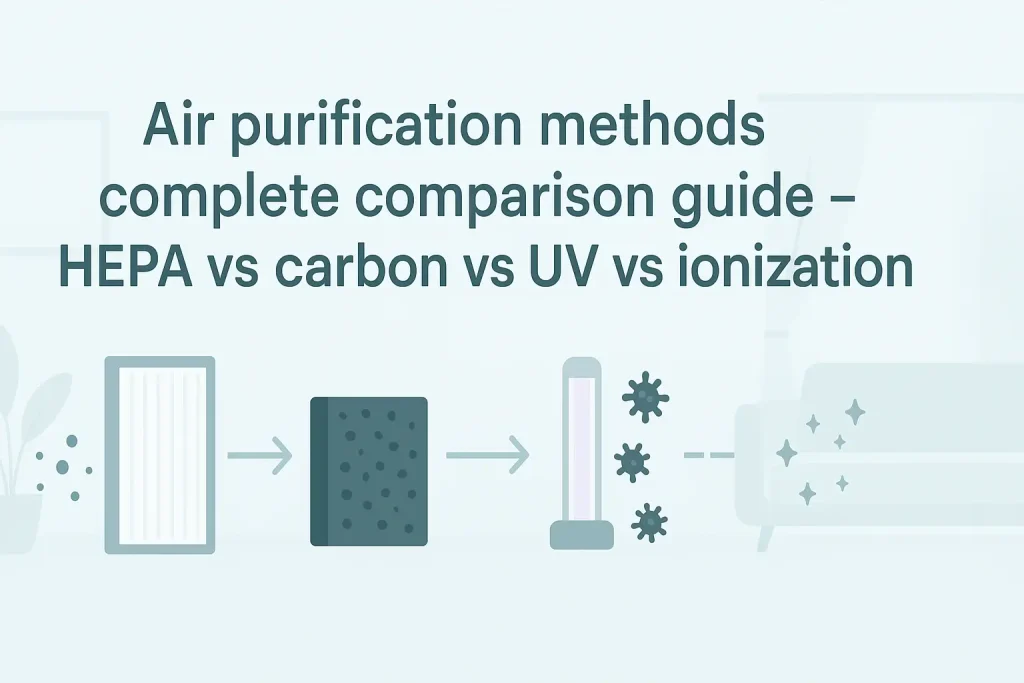
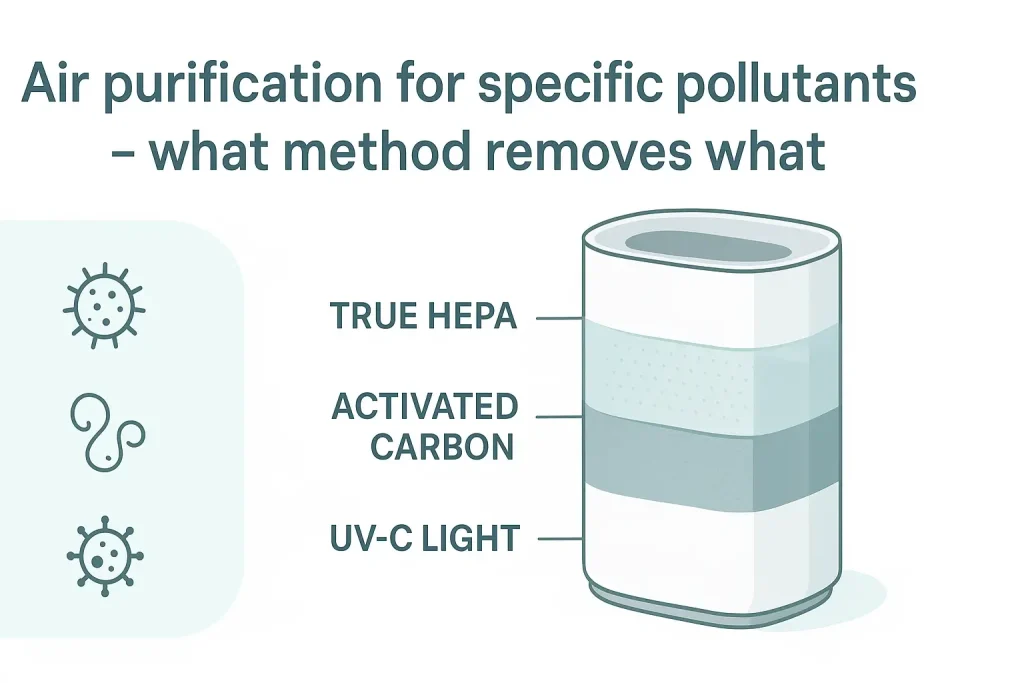
An air scrubber is a high-powered filtration device that pulls contaminated air through multiple filter stages and exhausts cleaned air. This happens because the unit uses a motorized fan to create negative pressure on the intake side, drawing room air through a pre-filter, a True HEPA filter that captures 99.97% of particles at 0.3 microns, and an activated carbon bed that adsorbs volatile organic compounds and odors.
This only works correctly when the scrubber’s airflow in cubic feet per minute is matched to the room volume. A 500 CFM air scrubber sized for a 3,000 cubic foot room delivers approximately 10 air changes per hour, a rate sufficient for construction dust control and mold remediation containment as specified by the IICRC S520 standard for professional mold remediation.
| Photo | Popular Air Purifiers | Price |
|---|---|---|

|
Air Purifiers for Home Large Room up to 1500ft², Tailulu H13 True HEPA Air Purifier for Pets Dust Odor Smoke, Air Purifier for Bedroom with 15dB Quiet Sleep Mode for Bedroom Office Living Room | Check Price On Amazon |
|
Afloia Air Purifier for Home, 4-in-1 Washable Filter for Allergies, Covers Up to 1076 ft², Quiet Operation, Auto Shut-Off & Night Light, Removes Pet Dander, Pollen, Dust, Mold, and Smoke, White,Pluto | Check Price On Amazon |

|
Nuwave OxyPure ZERO Air Purifier with Washable and Reusable Bio Guard Tech Air Filter, Large Room Up to 2002 Ft², Air Quality Monitor, 0.1 Microns, 100% Capture Irritants like Smoke, Dust, Pollen | Check Price On Amazon |

|
Air Purifiers for Home Large Room Up to 1,996 Ft², EOEBOT Air Purifier for Home Pets with Washable Filter, Quiet Sleep Mode, Air Quality Monitor, Air Purifier for Bedroom, Pet Hair, Dust, Smoke, White | Check Price On Amazon |
|
Afloia 2 IN 1 Air Purifier with Humidifier Combo, 3-Stage Filters for Home Allergies Pets Hair Smoker Odors, Evaporative Humidifier, Auto Shut Off, Quiet Air Cleaner with Seven Color Light,White | Check Price On Amazon |
Key Specifications for a typical commercial air scrubber include a multi-stage filtration system with a MERV 8 pre-filter for large particles above 10 microns, a True HEPA H13 filter capturing 99.97% of particles at the 0.3-micron most penetrating particle size, and an activated carbon filter with 2 to 15 pounds of carbon media for VOC and odor adsorption. Airflow typically ranges from 500 CFM on portable units like the XPower X-2580 at 550 CFM to 2,000 CFM on industrial trailer-mounted units. The motor is a 1/3 to 1.5 HP sealed unit rated for continuous operation.
If the filter seals are compromised or the unit is undersized for the space, the result is filter bypass where up to 30% of airflow passes around the HEPA media rather than through it. This produces PM2.5 concentrations that remain elevated despite the unit running. Correct this by verifying gasket integrity at every filter change and sizing the scrubber to deliver at least 4 air changes per hour in the target space per IICRC guidelines.
Air Quality Data
Air Scrubbers vs Ozone Machines – What the Research Shows
Sources: EPA Indoor Air Quality, CARB Air Cleaner Regulation, ASHRAE, NIOSH
What Is an Ozone Machine and What Does It Actually Produce?
An ozone machine intentionally generates ozone gas, a reactive molecule composed of three oxygen atoms (O3), by passing air through either a corona discharge electrical field or an ultraviolet lamp tuned to the 185-nanometer wavelength. This happens because the electrical or UV energy splits oxygen molecules (O2) into individual oxygen atoms that then bond with intact O2 molecules to form O3, a powerful oxidizing agent that reacts with organic compounds, bacteria, and odor molecules on contact.
This oxidation process only occurs when ozone concentrations reach levels between 0.3 and 2.0 parts per million, depending on the target contaminant and exposure duration. According to the EPA’s technical document “Ozone Generators That Are Sold as Air Cleaners” (EPA 402-F-97-002), ozone concentrations required to kill bacteria and mold are 5 to 10 times higher than the 0.070 ppm 8-hour outdoor exposure limit the EPA considers hazardous to human health.
If ozone concentrations are below the threshold needed for effective sterilization, the result is incomplete oxidation where odor molecules and biological contaminants remain active. If concentrations are high enough to be effective, the result is a respiratory hazard where ozone reacts with lung tissue, causing inflammation, reduced lung function, and increased susceptibility to respiratory infection per NIOSH occupational exposure research. There is no concentration at which an ozone machine simultaneously sterilizes effectively and remains safe for occupied spaces.
11 Critical Differences Between Air Scrubbers and Ozone Machines
These two devices operate on fundamentally incompatible principles. One removes contaminants from air through physical capture. The other chemically alters contaminants by introducing a reactive gas. Each difference below matters because it determines whether the device solves or creates a problem for your specific situation.
Product Comparison
Air Scrubber vs Ozone Machine – Side by Side Comparison
11 critical differences across mechanism, safety, application, regulatory status, and cost.
Use the table below to determine which device matches your air quality requirements based on whether the space is occupied and what contaminants you need to address.
| Comparison Factor | Air Scrubber | Ozone Machine |
|---|---|---|
| 1. Mechanism of Action | Physical filtration — particles and gases are captured on filter media and removed from the air stream | Chemical oxidation — O3 gas reacts with contaminants to alter their molecular structure |
| 2. Contaminant Removal | Particles 0.3 microns and larger (99.97% per True HEPA), VOCs (via carbon adsorption), and some microorganisms trapped on filter media | Oxidizes some bacteria, viruses, and mold spores at high concentrations. Does not remove particulate matter. Ineffective against many VOCs at safe concentrations. |
| 3. Occupied Space Safety | Safe for continuous operation in occupied spaces. No harmful emissions. Used in hospitals, schools, and occupied homes. | NOT safe for occupied spaces. EPA, CARB, and the American Lung Association explicitly warn against ozone generator use in occupied rooms. |
| 4. Ozone Emission | Zero ozone emission. CARB-certified air scrubbers are tested and confirmed to produce no detectable ozone. | Ozone IS the output. Units generate 300 to 5,000 mg/hour of ozone by design. This exceeds CARB 0.050 ppm limits by 10x to 100x. |
| 5. Regulatory Status | CARB certified models are legal for sale in all 50 states. Subject to AHAM CADR testing and ENERGY STAR certification. | Banned or restricted in multiple jurisdictions. CARB explicitly prohibits sale of ozone generators above 0.050 ppm output. Many units cannot legally be sold in California. |
| 6. Odor Treatment Approach | Physically removes odor-causing molecules by trapping them in activated carbon media via adsorption | Chemically oxidizes odor molecules, but also creates new odorous reaction byproducts. At unsafe concentrations, ozone itself has a sharp, irritating odor. |
| 7. Particulate Matter | Captures PM2.5, PM10, dust, pollen, mold spores, and pet dander on HEPA media. Verified PM2.5 reduction of 85%+ within 30 minutes at 5 ACH. | Does NOT remove particulate matter from the air. Ozone has no effect on dust, pollen, soot, or smoke particles. Particles remain suspended. |
| 8. Primary Applications | Construction dust containment, mold remediation negative pressure, healthcare infection control, wildfire smoke mitigation, general air purification | Unoccupied space shock treatment for severe odor remediation (fire damage, hoarding cleanup), laboratory sterilization protocols |
| 9. Filter Replacement | Pre-filter every 30-90 days ($10-$25). HEPA filter every 6-24 months ($50-$150). Carbon filter every 3-12 months ($30-$100). | Ozone plates or UV lamps require replacement every 1-3 years ($30-$80). Corona discharge cells degrade with use and humidity exposure. |
| 10. Operating Cost | $180-$600/year including electricity at 13¢/kWh (500 CFM unit at 350 watts continuous) and scheduled filter replacements | $50-$200/year electricity (200-300 watt ozone generator run intermittently). No filter costs, but ozone plate replacement adds $30-$80 every 1-3 years. |
| 11. Evidence Base | Supported by decades of peer-reviewed research, ASHRAE standards, CDC infection control guidelines, and IICRC remediation protocols | EPA, CARB, and American Lung Association all advise against consumer use. Clinical evidence for health benefits in occupied spaces is absent. |
Ozone emission data from CARB CCR Title 17 Section 94251 certification database. Filter cost estimates based on manufacturer MSRP for genuine replacement filters. Electricity costs calculated at US national average residential rate of 13 cents per kilowatt-hour.
Mechanism of Action: Filtration vs Oxidation Explained
The core difference between these two devices is what happens to the contaminant. An air scrubber removes the contaminant from the air entirely by trapping it on filter media. The particle or gas molecule is captured and held.
An ozone machine does not remove anything. It chemically changes the contaminant into a different molecule, a process called oxidation. The original odor molecule becomes a different compound, ozone reacts with organic material and creates secondary pollutants including formaldehyde, ultrafine particles, and other oxidation byproducts according to research published in the journal Indoor Air (Weschler, 2006).
In plain terms: an air scrubber takes the bad stuff out of your air. An ozone machine adds a new chemical to your air and hopes the reaction between that chemical and the contaminant produces something harmless. The EPA’s research on ozone reactions with indoor chemicals found that ozone reacting with common indoor volatile organic compounds can produce formaldehyde concentrations exceeding the California Office of Environmental Health Hazard Assessment’s chronic reference exposure level of 7.3 micrograms per cubic meter.
This is the single most important distinction to understand. For occupants with asthma, COPD, or chemical sensitivity, the secondary pollutants created by ozone reactions represent an additional respiratory burden, not a solution. For particles like dust, pollen, soot, and mold spore fragments, ozone has no removal mechanism whatsoever.
Safety Profile: Why Occupied Space Use Defines the Choice
The safety difference between these two devices is absolute, not a matter of degree. Air scrubbers are safe for continuous operation in occupied spaces including hospital operating rooms, neonatal intensive care units, and residential bedrooms. They emit nothing. They only capture and contain contaminants.
Ozone machines create a respiratory hazard by design. The National Institute for Occupational Safety and Health (NIOSH) classifies ozone as an immediate respiratory hazard at concentrations above 0.20 ppm. Most consumer and commercial ozone generators produce concentrations between 0.30 and 2.0 ppm in the treated space, levels that trigger lung inflammation, airway hyperresponsiveness, and reduced forced expiratory volume in healthy adults within 2 hours of exposure per research in the American Journal of Respiratory and Critical Care Medicine.
The California Air Resources Board (CARB) regulation CCR Title 17 Section 94251 sets the maximum ozone emission for any air cleaning device sold in California at 0.050 parts per million. Most ozone generators marketed for odor removal or air treatment produce output 10 to 100 times higher than this limit. These devices cannot legally be sold as air cleaners in California and several other states with ozone regulations.
If an ozone machine is operated in an occupied space, the result is ozone exposure above the EPA 0.070 ppm 8-hour National Ambient Air Quality Standard. Fix this by never operating an ozone generator in any space where people or pets are present. Even after treatment, the space must be ventilated for 2 to 4 hours with open windows and active exhaust fans before re-entry per manufacturer safety guidelines.
When an Air Scrubber Is the Clear Choice
Air scrubbers are the correct choice whenever the goal is to actively remove airborne contaminants while the space remains occupied or requires continuous air quality management. This includes construction and renovation projects where negative air pressure containment with a 1,000 CFM scrubber prevents dust migration to adjacent occupied areas per IICRC S520 standards.
Water damage and mold remediation projects depend on air scrubbers to capture airborne mold spores during disturbance and maintain negative pressure containment. Healthcare infection control protocols in airborne infection isolation rooms specify HEPA filtration at 12 air changes per hour per CDC guidelines. Wildfire smoke mitigation in occupied homes requires continuous HEPA filtration because ozone provides zero particulate removal and adds respiratory burden during already hazardous air quality events.
For general indoor air quality improvement in homes, offices, and commercial spaces, air scrubbers and HEPA air purifiers are the evidence-based solution. The EPA’s “Guide to Air Cleaners in the Home” recommends mechanical filtration as the primary air cleaning strategy. Ozone generators are explicitly excluded from this recommendation.
The One Legitimate Application for Ozone Machines
Ozone shock treatment in unoccupied, sealed spaces is the single application where an ozone machine is the appropriate tool. This technique addresses severe, persistent odors that cannot be physically removed because the source material is inaccessible or the cost of replacement exceeds the cost of chemical treatment. Examples include fire and smoke damage restoration where odor has penetrated structural materials, hoarding cleanup where biological odors have permeated porous surfaces, and vehicle odor treatment for persistent tobacco or biological contamination.
This application works because at concentrations of 2 to 10 parts per million sustained over 6 to 24 hours, ozone penetrates porous materials and oxidizes odor-causing organic compounds throughout the material depth. The Building Services Research and Information Association (BSRIA) guidance on ozone for odor control notes that efficacy requires concentrations far above safe exposure limits and complete space evacuation during treatment.
The critical safety protocol for this application includes sealing the space to prevent ozone leakage into occupied areas, posting warning signage on all entry points, running the ozone generator on a timer with automatic shutoff, and ventilating the space for a minimum of 2 hours with active exhaust before re-entry. An ozone detection meter must confirm ozone levels have dropped below 0.050 ppm before the space is reoccupied. Never use an ozone machine in a multi-unit building where ozone can migrate through shared ductwork, wall cavities, or floor penetrations into neighboring units.
Regulatory and Certification Landscape
The regulatory status of these two device categories reflects their fundamentally different risk profiles. CARB-certified air scrubbers undergo independent laboratory testing to verify zero ozone emission. They also qualify for AHAM CADR certification that independently verifies the smoke, dust, and pollen removal rates in cubic feet per minute.
Most ozone generators cannot legally be sold as air cleaners in the United States if they emit more than 0.050 ppm ozone. The Federal Trade Commission has taken enforcement action against ozone generator manufacturers for unsubstantiated health claims. The EPA’s official position, stated in “Ozone Generators That Are Sold as Air Cleaners,” is that “ozone is not effective in removing many odors or pollutants, including many of the chemicals that cause most indoor air pollution problems.”
Myth vs Fact
Ozone Machine Myths Debunked – What the Evidence Actually Shows
Separating fact from fiction on the most common ozone machine claims. Sources: EPA, CARB, American Lung Association, peer-reviewed research.
✗ Myth
Ozone machines “shock” a room and the ozone disappears within minutes after the machine turns off
✓ Fact
Research in the journal Indoor Air (Lee et al., 1999) measured ozone half-life in residential settings at 20 to 60 minutes depending on surface reactivity and ventilation rate. After a 2.0 ppm treatment, ozone concentrations can remain above the 0.070 ppm EPA limit for 4 to 8 hours in poorly ventilated spaces. Porous surfaces like carpets, upholstery, and drywall continue to off-gas reaction byproducts including formaldehyde and acetone for days after treatment.
✗ Myth
Ozone is just “activated oxygen” and is a natural way to clean air
✓ Fact
While ozone exists naturally in the stratosphere where it blocks UV radiation, ground-level ozone is a criteria air pollutant regulated by the EPA under the Clean Air Act. The American Lung Association classifies ozone as a powerful respiratory irritant. Calling ozone “activated oxygen” is a marketing term with no scientific meaning. Oxygen is O2, ozone is O3, and the chemical behavior of these two molecules is meaningfully different in biological systems.
✗ Myth
Ozone machines are effective for mold remediation in occupied homes
✓ Fact
The EPA states that ozone concentrations required to kill mold (5 to 10 ppm) are far above safe exposure levels. More importantly, dead mold spores are still allergenic. Mold remediation requires physical removal of the mold source, moisture control, and HEPA filtration to capture airborne spores. Ozone does not remove the mold, it only inactivates surface-level organisms at concentrations that make the space hazardous. IICRC S520 mold remediation standards specify HEPA air scrubbers for containment, not ozone.
✗ Myth
An air scrubber and an ozone machine serve the same purpose with different approaches
✓ Fact
An air scrubber removes contaminants from air by physical capture on filter media. An ozone machine adds a reactive chemical oxidant to air. These are opposite mechanisms with opposite safety profiles. The only legitimate application for ozone machines is unoccupied shock treatment for severe odor remediation. For every other air quality application including particulate removal, VOC control, allergen reduction, and occupied-space purification, an air scrubber with True HEPA and activated carbon filtration is the correct tool. The two devices solve fundamentally different problems.
Air Scrubber Cost Analysis: Purchase, Rental, and Operating Costs
Air scrubber economics depend on whether you purchase or rent, the airflow capacity needed, and the filter replacement schedule. A 500 CFM portable air scrubber like the HomeLabs 500 CFM portable air scrubber costs $400 to $700 to purchase with an annual operating cost of $200 to $400 including electricity at 13 cents per kilowatt-hour for continuous operation and scheduled filter replacements.
Rental rates for a 500 to 1,000 CFM HEPA air scrubber range from $40 to $80 per day or $150 to $350 per week depending on the rental supplier and duration. For a full cost comparison between purchasing and renting air scrubbers, rental becomes the better financial choice for projects lasting less than 14 days. Purchase becomes more cost-effective for projects extending beyond three weeks or for contractors who deploy scrubbers on multiple job sites per year.
Filter replacement represents the largest ongoing operating cost. A pre-filter at $10 to $25 must be replaced every 30 to 90 days depending on particulate load. The True HEPA filter at $50 to $150 is replaced every 6 to 24 months based on pressure drop across the media. The activated carbon filter at $30 to $100 is replaced every 3 to 12 months depending on VOC concentration in the treated air. Annual filter cost for a continuously operated 500 CFM scrubber in moderate dust conditions totals $180 to $400.
Price Comparison
Air Scrubber Price Comparison – Purchase Cost and Annual Operating Cost
Unit purchase price plus estimated annual filter and electricity cost. Operating costs assume 8 hours daily at 13 cents per kilowatt-hour.
$450 unit + $210/yr operating
$550 unit + $230/yr operating
$650 unit + $250/yr operating
$800 unit + $280/yr operating
$1,200 unit + $400/yr operating
Prices verified at time of publication. Operating costs include filter replacements at manufacturer-recommended intervals plus electricity at 13 cents per kilowatt-hour for 8 hours daily operation. Filter costs are estimates based on genuine replacement filter pricing.
Air Scrubber Selection: How to Choose the Right CFM for Your Application
Selecting the correct air scrubber requires matching airflow in cubic feet per minute to the room volume and the required air changes per hour for your application. The formula is CFM needed equals room length in feet times room width in feet times ceiling height in feet times ACH target, divided by 60. For general construction dust control, target 4 ACH. For mold remediation containment per IICRC S520, target 6 ACH. For healthcare airborne infection isolation, target 12 ACH per CDC guidelines.
A 12-foot by 15-foot room with an 8-foot ceiling has a volume of 1,440 cubic feet. At 4 ACH for construction dust control, the required CFM is 96. A 500 CFM scrubber exceeds this requirement. At 6 ACH for mold remediation, the required CFM is 144, still well within a 500 CFM unit’s capability. At 12 ACH for healthcare isolation, the required CFM is 288, which requires a mid-range unit or a unit run at higher speed.
The Purisystems 600 CFM air scrubber delivers 600 CFM on high speed with a 3-stage filtration system: a MERV 8 pre-filter, a True HEPA H13 filter, and an activated carbon filter. At 600 CFM in high speed mode, it provides 12 ACH in a 3,000 cubic foot space, meeting CDC healthcare isolation requirements. The Aerus air scrubber uses a different technology approach with ActivePure hydroxyl generation combined with HEPA filtration for both particulate removal and surface microbial reduction.
For water damage restoration and mold remediation, select a scrubber that delivers a minimum of 6 ACH in the contained area and configure it for negative pressure by ducting exhaust air outside the containment zone. This prevents contaminated air from escaping into adjacent occupied spaces during remediation disturbance activities.
Buying Guide
Before You Buy an Air Scrubber – Complete Checklist
Check off each point before making your decision. Based on IICRC, EPA, and ASHRAE guidelines for air cleaning devices.
Ozone Machine Dangers: Health Effects and Material Damage
Ozone exposure at the concentrations produced by consumer and commercial ozone machines causes measurable health effects in humans. Research published in the Journal of the American Medical Association (JAMA) found that short-term ozone exposure at 0.12 to 0.20 ppm reduces lung function by 10 to 20 percent in healthy adults performing moderate exercise. For individuals with asthma, the same exposure can trigger bronchoconstriction and require rescue inhaler use within 30 minutes.
Ozone also damages materials in the treated space. Natural rubber, latex, and some plastics degrade rapidly when exposed to ozone concentrations above 0.5 ppm. Electrical wire insulation, elastic bands in furniture, and rubber seals on windows and doors can become brittle and crack after repeated ozone treatments. Fabrics, artwork, and electronic components may also experience accelerated degradation. According to research from the Getty Conservation Institute, ozone concentrations as low as 0.10 ppm can cause fading and structural damage to certain pigments, textiles, and paper-based artworks over repeated exposure.
Quick Reference
Air Scrubber and Ozone Machine Terms Explained – Searchable Glossary
Definitions for every technical term used in this guide. Type to search.
A high-powered filtration device using a motorized fan to pull contaminated air through multiple filter stages including a pre-filter, True HEPA filter capturing 99.97% of particles at 0.3 microns, and an activated carbon bed that adsorbs VOCs and odors. Used for construction dust control, mold remediation containment, and general air purification. Emits no ozone or chemical byproducts.
A device that intentionally produces ozone (O3) gas via corona discharge or UV light at 185 nm wavelength. Ozone is a powerful oxidant that reacts with organic compounds. EPA and CARB warn against use in occupied spaces. Only legitimate application is unoccupied shock treatment for severe odor remediation at concentrations of 2 to 10 ppm with strict re-entry protocols.
A filter standard requiring at least 99.97% capture of airborne particles at 0.3 microns, the most penetrating particle size. Standard in air scrubbers and medical-grade air purifiers. Distinct from unregulated marketing terms like HEPA-type or HEPA-like.
The volume of air a scrubber moves per minute. Air scrubbers range from 500 CFM portable units to 2,000 CFM industrial units. Required CFM for a space equals room volume in cubic feet times target air changes per hour divided by 60.
The number of times a filtration device processes the entire air volume of a room per hour. Construction dust control: 4 ACH. Mold remediation (IICRC S520): 6 ACH. Healthcare isolation (CDC): 12 ACH.
California Air Resources Board certification confirming an air cleaning device emits no more than 0.050 ppm ozone. The strictest consumer ozone standard in the United States. Required for legal sale in California. Ozone machines exceeding this limit cannot be sold as air cleaners in regulated states.
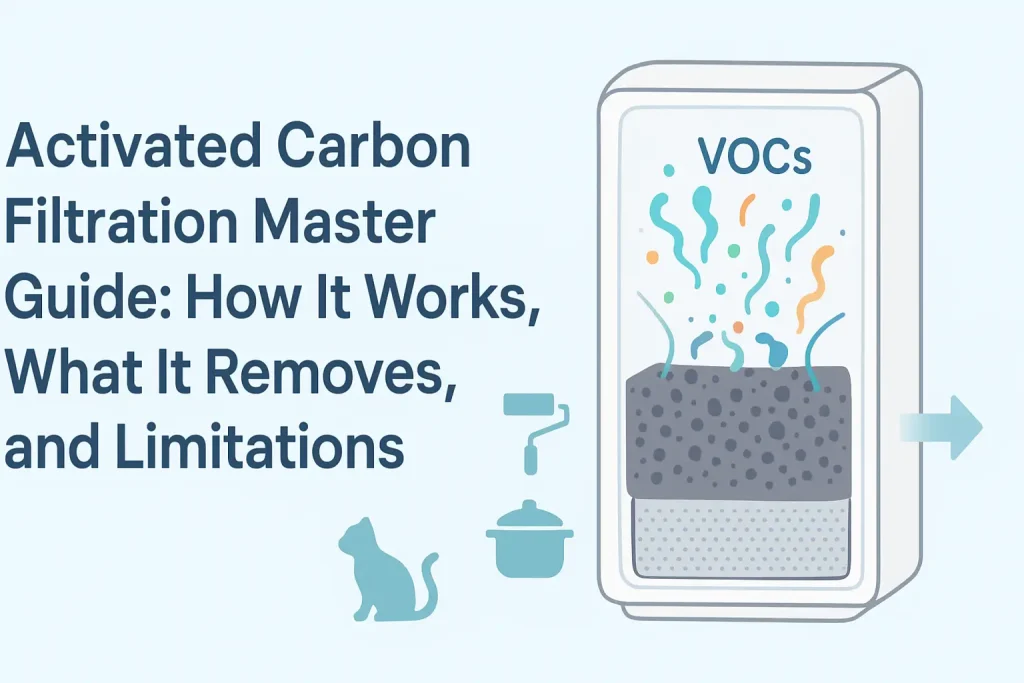
Porous carbon media that adsorbs gaseous pollutants including VOCs, formaldehyde, odors, and some chemical fumes. Capacity measured by carbon weight in pounds. Used as the final filtration stage in most air scrubbers. Does not remove particles.
The most common ozone generation method. An electrical discharge across an air gap splits oxygen molecules. Produces higher ozone concentrations than UV methods but also produces nitrogen oxides as a byproduct in the presence of humidity.
A containment technique where an air scrubber exhausts filtered air outside a sealed work area, creating lower pressure inside the containment than outside. This prevents contaminated air from escaping through gaps and openings. Required for mold remediation and asbestos abatement per IICRC and EPA protocols.
The Institute of Inspection, Cleaning and Restoration Certification standard for professional mold remediation. Specifies HEPA air scrubber use at 6 ACH minimum, negative pressure containment, and physical removal of mold rather than chemical or ozone treatment.
The EPA technical document “Ozone Generators That Are Sold as Air Cleaners” which concludes that ozone at concentrations safe for human exposure is not effective at removing indoor air contaminants, and that ozone concentrations required to kill microorganisms exceed public health standards.
How to Choose Between an Air Scrubber and an Ozone Machine Based on Your Situation
The choice between these two devices is not a preference question. It is determined entirely by your application, occupancy status, and contaminant type. For any situation involving occupied spaces, particulate matter, or ongoing air quality management, an air scrubber with True HEPA and activated carbon filtration is the only correct choice. This covers construction dust control, mold remediation containment, healthcare infection control, wildfire smoke mitigation, allergen reduction, and general indoor air quality improvement.
For the single application of severe odor remediation in a fully unoccupied, sealed space where source removal is not possible, an ozone machine can be the appropriate tool when used with strict safety protocols. This covers fire damage restoration odor treatment, hoarding cleanup odor remediation, and vehicle or confined space odor shock treatment. In every case, the space must be sealed, evacuated, and ventilated with verified ozone decay below 0.050 ppm before re-entry.
If you are unsure which device you need, an air scrubber is the safe default. A misapplied air scrubber is simply less effective than it could be. A misapplied ozone machine creates a respiratory hazard. The burden of proof for choosing an ozone machine over an air scrubber must include confirmation that the space will be fully unoccupied, all alternative physical removal methods have been exhausted, and the operator has a calibrated ozone detection meter and ventilation plan.
Can an Air Scrubber Replace an Ozone Machine for Odor Removal?
Yes, an air scrubber with sufficient activated carbon capacity can handle most odor situations without introducing ozone. Odor molecules are volatile organic compounds that can be physically adsorbed onto activated carbon media. The key variable is carbon weight. An air scrubber with 2 to 5 pounds of carbon provides effective odor reduction for ongoing moderate odor situations including cooking odors, pet odors, and mild smoke odor. An air scrubber with 10 to 15 pounds of carbon addresses severe odors in water damage and fire restoration applications.
For the most extreme odor situations where the source material cannot be physically removed and carbon adsorption is not sufficient due to the depth of contamination in porous materials, ozone shock treatment may be the appropriate escalation. However, this decision should follow attempted physical removal, HEPA vacuuming of all surfaces, carbon adsorption at the highest available carbon weight, and thermal fogging or hydroxyl generation as intermediate alternatives before ozone is deployed.
The advantage of carbon adsorption over ozone is that carbon removes the odor molecule from the air entirely rather than chemically altering it. There are no oxidation byproducts, no ozone exposure risk, and no re-entry delay. For the vast majority of residential and commercial odor situations, sufficient activated carbon filtration eliminates the need for ozone treatment entirely.
Why Does Ozone Output Matter for Indoor Air Quality Devices?
Ozone output matters because even low concentrations of ozone in indoor air produce measurable respiratory effects and generate secondary pollutants through reactions with common indoor chemicals. According to the CARB air cleaner regulation, any device marketed as an air cleaner that emits more than 0.050 ppm ozone cannot be sold in California. Devices that emit ozone below this threshold but above zero still contribute to indoor ozone levels that add to outdoor ozone infiltration, cooking appliance emissions, and office equipment ozone production.
The cumulative indoor ozone load from multiple sources can exceed the EPA 0.070 ppm 8-hour standard even when no single source exceeds the CARB limit. This is particularly relevant in energy-efficient buildings with low ventilation rates where indoor-generated ozone has a longer residence time. A study in the journal Environmental Science and Technology (Waring et al., 2011) modeled indoor ozone chemistry and found that ozone-initiated reactions with terpenes from cleaning products and air fresheners produced secondary organic aerosol concentrations exceeding outdoor levels within 2 hours of an ozone-generating air cleaner being activated in a typical residential bedroom.
For occupants with asthma, COPD, or cardiovascular disease, the EPA and American Lung Association recommend avoiding any device that adds ozone to indoor air. The precautionary principle applies: if a device does not need to produce ozone to function effectively, and ozone is harmful at elevated concentrations, choose a device with zero ozone emission. Air scrubbers with CARB certification meet this standard. Ozone machines by definition do not.
How Do You Measure Ozone Levels to Verify Safety?
Ozone measurement requires a calibrated ozone detector that measures concentrations in parts per million with a resolution of at least 0.01 ppm. Consumer-grade air quality monitors that measure PM2.5, CO2, and total VOCs typically do not include an ozone sensor. Electrochemical ozone sensors are the most common technology for portable ozone detectors suitable for verifying post-treatment ozone decay. These sensors have a typical accuracy of plus or minus 10 percent at concentrations between 0.05 and 1.0 ppm.
The measurement protocol after an ozone shock treatment requires taking readings at multiple points in the treated space, including corners farthest from the ventilation source. Readings must be taken at breathing zone height of 4 to 6 feet above the floor. A reading below 0.050 ppm at all sampling points confirms the space is safe for re-entry per CARB standards. A reading above 0.050 ppm at any point requires continued ventilation and repeated measurement at 30-minute intervals until all readings are below the threshold.
A calibrated electrochemical ozone meter is an essential safety tool for anyone operating an ozone machine. Operating an ozone generator without a calibrated ozone detector is comparable to working with a chemical oxidizer with no way to measure exposure. The device operator is responsible for confirming safe conditions before anyone enters the treated space.
What Causes Ozone Machines to Create a Health Hazard Instead of Clean Air?
Ozone machines create a health hazard because the concentration required to oxidize contaminants effectively is 5 to 100 times higher than the concentration considered safe for human exposure. The EPA has stated that ozone concentrations of 0.05 to 0.10 ppm, which are below the effective range for sterilization, are already associated with decreased lung function and increased respiratory symptoms. The therapeutic window where ozone both works and remains safe simply does not exist for occupied spaces.
This happens because ozone’s mechanism is non-selective oxidation. At the molecular level, ozone reacts with carbon-carbon double bonds in organic compounds. Human lung tissue contains these same bonds in the surfactant layer and epithelial cell membranes. The same chemical reaction that oxidizes a mold spore surface also oxidizes the lung lining of any person breathing that air. Unlike filtration, which selectively captures particles on inert media, oxidation chemistry cannot distinguish between a contaminant and a lung.
If an ozone machine is operated in a space that is later reoccupied without adequate ventilation, the result is residual ozone exposure plus exposure to oxidation byproducts including aldehydes, ketones, and secondary organic aerosol particles. Correct this by treating ozone machines as unoccupied-space tools only, verifying ozone decay below 0.050 ppm with a calibrated meter before re-entry, and exhausting the space with a HEPA air scrubber during the ventilation period to capture any secondary particulate matter generated during the treatment.
Portable Air Scrubber Product Comparison: Key Models by CFM and Application
Product Comparison
Air Scrubbers Compared – CFM, Coverage, Filter Cost, and Best Application
Key specifications across popular portable air scrubber models. Coverage area calculated at 4 ACH for an 8 ft ceiling. Source: Manufacturer specifications.
Use the table below to match scrubber CFM to your room volume and application ACH requirement.
| Model | CFM | Coverage at 4 ACH | Filter Stages | Annual Filter Cost | Best For |
|---|---|---|---|---|---|
| HomeLabs Portable 500 CFM | 500 CFM | 750 sq ft | 3-stage: pre-filter, True HEPA, carbon | $180/yr | Residential construction dust, small water damage jobs |
| XPower X-2580 550 CFM | 550 CFM | 825 sq ft | 3-stage with 1.5 HP motor | $200/yr | Commercial construction, mold remediation containment |
| Mounto HEPA500 Commercial | 500 CFM | 750 sq ft | 3-stage, stackable design | $210/yr | Professional remediation, hospital infection control |
| Purisystems 600 CFM | 600 CFM | 900 sq ft | 3-stage, MERV 8 + H13 + carbon | $230/yr | Healthcare isolation, large water damage jobs |
| Mounto 1000 CFM Industrial | 1,000 CFM | 1,500 sq ft | 3-stage, dual intake, stackable | $350/yr | Large commercial remediation, negative pressure for whole-floor containment |
Coverage area calculated at 4 ACH with 8 ft ceiling height using formula CFM x 60 / 4 ACH / 8 ft. Filter costs based on manufacturer-recommended replacement intervals and genuine filter pricing. Specifications from manufacturer data sheets and product documentation.
Is an Ozone Machine Ever Worth the Risk Compared to an Air Scrubber?
An ozone machine is worth the risk only when three conditions are met simultaneously. First, the odor or contamination source cannot be physically removed or replaced. Second, all alternative treatments including HEPA filtration, activated carbon adsorption, thermal fogging, and hydroxyl generation have been attempted and were insufficient. Third, the operator has the equipment and protocol to confirm the space is sealed, evacuated, treated, and verified ozone-free before reoccupancy.
These three conditions narrow the appropriate use of ozone machines to a very small set of professional restoration scenarios. For a homeowner or business owner asking whether to buy an ozone machine, the answer is almost always no. Rent an air scrubber. Replace the contaminated material. Hire a professional restoration contractor who has the calibration equipment and safety infrastructure to deploy ozone correctly. The margin between effective ozone treatment and a health hazard is narrow and unforgiving.
For every other air quality scenario, from allergy management to wildfire smoke mitigation to construction dust control to general indoor air quality improvement, an air scrubber is the correct tool. It removes contaminants without adding anything to the air. It is safe for continuous use in occupied spaces. It is supported by decades of peer-reviewed research and multiple regulatory standards. An air scrubber is the device you want running in the room you are breathing in. An ozone machine is not.
What Is the Difference Between an Air Scrubber and an Ozone Machine for Mold Remediation?
An air scrubber captures airborne mold spores on HEPA filter media and maintains negative pressure containment to prevent spore migration during remediation disturbance. An ozone machine attempts to kill mold via oxidation but does not remove the dead spores, which remain allergenic after treatment. The IICRC S520 standard for professional mold remediation specifies HEPA air scrubbers and physical removal of mold-contaminated materials. It does not recommend ozone treatment as a primary or standalone remediation method.
Mold remediation requires addressing the moisture source that caused the mold growth, physically removing contaminated porous materials, HEPA vacuuming all surfaces, and maintaining containment with HEPA air scrubbers throughout the disturbance process. Ozone cannot correct a moisture problem. It cannot remove mold physically from drywall, carpet, or wood. It cannot capture airborne spores released during the remediation process. A contractor who proposes ozone treatment instead of physical removal and HEPA containment is not following the IICRC S520 standard of care.
How Does an Air Scrubber Differ from a Standard Air Purifier?
An air scrubber differs from a standard room air purifier primarily in airflow capacity, filter durability, and containment capability. A typical residential HEPA air purifier delivers 100 to 400 CFM and is designed for continuous air cleaning in occupied living spaces. An air scrubber delivers 500 to 2,000 CFM, uses heavier-duty filter media designed for construction dust loads, and can be ducted to create negative pressure containment, a capability no residential air purifier provides.
An air scrubber also typically uses a higher-capacity motor rated for continuous commercial operation, has a larger activated carbon bed for VOC and odor control, and includes daisy-chain electrical outlets for connecting multiple units on a single circuit. The filter change interval on an air scrubber in heavy dust conditions may be 30 to 90 days compared to 6 to 12 months for a residential HEPA purifier in normal household conditions. For a homeowner choosing between the two, a residential air purifier is the correct tool for ongoing air quality management, while an air scrubber is the correct tool for a defined project involving construction, remediation, or high particulate loads.
Why Can’t I Run an Ozone Machine While I Am in the House in a Different Room?
You cannot run an ozone machine in one room while occupying another room because ozone is a gas that distributes throughout connected air spaces. In a typical residential building, air moves between rooms through door undercuts, HVAC return pathways, shared ductwork, wall penetrations for electrical and plumbing, and natural convection currents. Ozone generated in a sealed bedroom will migrate to adjacent rooms within 30 to 60 minutes, even with the door closed and a towel placed at the gap.
The EPA states that ozone concentrations in rooms adjacent to an ozone generator can reach 30 to 70 percent of the concentration in the treated room. If the treated room reaches 2.0 ppm ozone, adjacent rooms may reach 0.6 to 1.4 ppm, concentrations that exceed the NIOSH immediately dangerous to life and health level for ozone and are 8 to 20 times the EPA outdoor exposure limit. The only safe protocol is full evacuation of the entire building during treatment. Multi-unit buildings with shared ventilation pose additional risk because ozone can migrate through ductwork into neighboring apartments. In these buildings, ozone treatment should never be performed by a building occupant or without professional industrial hygiene oversight.
Can I Use an Ozone Machine to Clean the Air in My Car?
Ozone treatment of vehicle interiors for severe odor remediation is one of the few legitimate applications of ozone machines, but it must follow the same safety protocol as building treatment. The vehicle must be unoccupied during treatment. The ozone generator must be placed inside the vehicle with the HVAC system set to recirculate to distribute ozone through the ventilation ductwork. After treatment, all doors and windows must be opened for a minimum of 30 to 60 minutes with active ventilation before the vehicle is occupied.
Vehicle ozone treatment addresses odors that have penetrated upholstery, headliner fabric, and carpet fibers, including tobacco smoke, mildew, and biological odors. It does not address the source of the odor if the source material remains in the vehicle. A detailed cleaning including shampoo extraction of all soft surfaces should precede any ozone treatment. Ozone is the final step for residual odor after physical cleaning, not a substitute for it.
What Happens If You Breathe Ozone from an Ozone Machine?
Breathing ozone at the concentrations produced by consumer ozone machines causes immediate respiratory irritation including coughing, throat irritation, and chest tightness. Within 2 to 6 hours of exposure, individuals may experience reduced lung function measured as a decrease in forced expiratory volume, increased airway responsiveness to allergens and irritants, and increased susceptibility to respiratory infections. According to research published by the New England Journal of Medicine, repeated ozone exposure is associated with increased emergency department visits for asthma exacerbation and increased cardiovascular mortality in epidemiological studies of ambient ozone exposure.
Long-term or repeated exposure to elevated ozone concentrations is associated with the development of chronic respiratory conditions. The California Environmental Protection Agency identifies ozone as a toxic air contaminant with no safe threshold for respiratory effects in sensitive populations. Anyone who experiences respiratory symptoms after ozone exposure should move to fresh air immediately and seek medical evaluation if symptoms persist. People with pre-existing asthma or COPD are at highest risk for serious effects from even brief ozone exposure at the concentrations produced by consumer ozone machines.
What Are the Warning Signs That an Ozone Machine Is Producing Dangerous Levels?
The most immediate warning sign is the sharp, metallic, chlorine-like odor of ozone itself. Ozone has a distinctive smell detectable by most people at concentrations as low as 0.01 to 0.03 ppm, well below the 0.070 ppm EPA exposure limit. If you can smell ozone, you are already breathing it, and the concentration is increasing. Other warning signs include eye and throat irritation, coughing, chest discomfort, and shortness of breath during or immediately after exposure. These symptoms indicate ozone concentrations in the 0.10 to 0.30 ppm range, which exceed the EPA and CARB safety standards.
The presence of an ozone odor in adjacent rooms or common areas of a building where an ozone machine is operating indicates that ozone is migrating beyond the treated space. This is a containment failure that requires immediate shutdown of the ozone generator and ventilation of all affected spaces. An ozone detection meter with 0.01 ppm resolution is the only reliable way to verify safe levels. Olfactory detection is an early warning, not a measurement. Nasal fatigue occurs within 10 to 15 minutes of ozone exposure, reducing the ability to detect increasing concentrations.
For most homeowners and indoor air quality situations, an air scrubber removes airborne contaminants without introducing dangerous gases and oxidation byproducts. The decision between these two tools is a decision between physical removal and chemical treatment, between safe occupied-space operation and hazardous unoccupied-space use, and between a device supported by regulatory standards and one explicitly warned against by the EPA, CARB, and American Lung Association.