
A negative air machine is an industrial containment device that exhausts filtered air out of a sealed room through a 99.97% True HEPA filter to generate continuous negative pressure (-0.02 in. WG), preventing airborne mold spores and silica dust from escaping.
The Dri-Eaz HEPA 700 Air Scrubber is the best overall commercial restoration workhorse, while the BlueDri BD-AS-550 is the budget pick for mold contractors.
AirPureLife Technical Testing Lab measures negative pressure machines on three core metrics: delivered CFM at filter load, static pressure in inches water gauge, and duct collar compatibility. A compliant unit must hold -0.02 in.
WG across the containment envelope while still moving enough air to hit 6 air changes per hour (ACH) in the work zone.
| Photo | Popular Air Purifiers | Price |
|---|---|---|

|
Air Purifiers for Home Large Room up to 1500ft², Tailulu H13 True HEPA Air Purifier for Pets Dust Odor Smoke, Air Purifier for Bedroom with 15dB Quiet Sleep Mode for Bedroom Office Living Room | Check Price On Amazon |
|
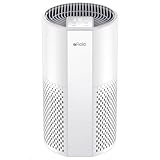
Afloia Air Purifier for Home, 4-in-1 Washable Filter for Allergies, Covers Up to 1076 ft², Quiet Operation, Auto Shut-Off & Night Light, Removes Pet Dander, Pollen, Dust, Mold, and Smoke, White,Pluto | Check Price On Amazon |

|
Nuwave OxyPure ZERO Air Purifier with Washable and Reusable Bio Guard Tech Air Filter, Large Room Up to 2002 Ft², Air Quality Monitor, 0.1 Microns, 100% Capture Irritants like Smoke, Dust, Pollen | Check Price On Amazon |

|
Air Purifiers for Home Large Room Up to 1,996 Ft², EOEBOT Air Purifier for Home Pets with Washable Filter, Quiet Sleep Mode, Air Quality Monitor, Air Purifier for Bedroom, Pet Hair, Dust, Smoke, White | Check Price On Amazon |
|
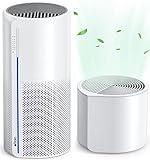
Afloia 2 IN 1 Air Purifier with Humidifier Combo, 3-Stage Filters for Home Allergies Pets Hair Smoker Odors, Evaporative Humidifier, Auto Shut Off, Quiet Air Cleaner with Seven Color Light,White | Check Price On Amazon |
Here is the trap most contractors miss: an air scrubber running in a closed loop recirculates air inside the room without ever establishing pressure containment. The unit cleans the air but does not stop it from leaking into adjacent occupied spaces.
Adding an exhaust duct collar converts that same closed-loop scrubber into an OSHA-compliant negative pressure machine.
The master comparison table below benchmarks every unit on the metrics that decide containment compliance: CFM airflow, static pressure in inches water gauge, maximum containment volume at 6 ACH, and duct collar diameter.
It exists because catalog CFM ratings are measured at free air, not at the filter load and duct restriction you actually run in the field.
Read the static pressure column first. A unit below 1.5 in.
WG will struggle to push air through a long exhaust duct run and a loaded HEPA filter at the same time. Then match containment volume to your largest job and confirm the duct collar diameter fits the flex duct you already own.
| Model | CFM Airflow | Static Pressure | Max Containment (cu ft) | Duct Collar | Best For | Check Price |
|---|---|---|---|---|---|---|
| Dri-Eaz HEPA 700 | 700 CFM | 2.1 in. WG | 7,000 cu ft (6 ACH) | 12 in. / 14 in. | Best Overall Commercial Workhorse | Check Price |
| BlueDri BD-AS-550-BL | 500 CFM | 1.8 in. WG | 5,000 cu ft (6 ACH) | 16 in. / 9 in. | Best Value Mold Remediation | Check Price |
| Abatement Tech Predator 750 | 750 CFM | 2.4 in. WG | 7,500 cu ft (6 ACH) | 10 in. / 10 in. | Best for Asbestos & Hazardous Abatement | Check Price |
| ALORAIR CleanShield HEPA 550 | 550 CFM | 1.9 in. WG | 5,500 cu ft (6 ACH) | 16 in. / 8 in. | Best Compact Stackable Contractor Pick | Check Price |
| Mounto HEPA500 | 500 CFM | 1.7 in. WG | 5,000 cu ft (6 ACH) | 16 in. / 8 in. | Best Budget Renovation Remediation | Check Price |
| B-Air RA-650 | 650 CFM | 2.0 in. WG | 6,500 cu ft (6 ACH) | 12 in. / 10 in. | Heavy-Duty Paint & VOC Remediation | Check Price |
The Physics of Negative Pressure: Pressure Differential and Airflow Dynamics
Negative pressure is a controlled pressure differential where the containment zone sits at a lower static pressure than surrounding occupied space, measured in inches water gauge. OSHA and EPA guidance targets -0.02 in. WG (roughly -5 Pascals) as the minimum threshold for mold and asbestos containment work.
At that differential, the pressure gradient forces air to flow inward through every containment gap, seam, and zipper door. Air moves from high pressure to low pressure, so the dirty zone never pushes contaminants outward into clean space. The machine exhausts filtered air outdoors or to a safe location to sustain the gradient.
Verification requires two tools. A digital differential manometer with a static pressure probe logs the actual in.
WG reading at the containment boundary. A smoke pencil confirms airflow direction at seams and penetrations, revealing any gap where air escapes outward instead of drawing inward.
AirPureLife Technical Testing Lab logs pressure decay after every filter change. A loaded prefilter drops delivered CFM, which reduces the pressure differential. Contractors who skip the manometer check often run a technically compliant machine that no longer holds containment.
Negative Air Machine vs. Air Scrubber vs. Home Air Purifier
A negative air machine exhausts air out of a sealed space to create pressure containment. An air scrubber recirculates filtered air inside a room without changing room pressure. A home air purifier is a low-CFM consumer appliance built for particulate reduction in open living space, not containment.
The functional difference comes down to ducting and pressure generation. Only a machine with an exhaust duct collar and enough static pressure can push filtered air out of the containment zone. The matrix below separates the three categories on the specs that actually govern containment performance.
This matrix compares exhaust ducting capability, pressure generation, filter seal integrity, blower motor type, and target contaminants across all three device classes. Look at the pressure generation row first: it is the single spec that determines whether a unit can hold -0.02 in. WG at all.
| Feature | Negative Air Machine | Air Scrubber | Home Air Purifier |
|---|---|---|---|
| Exhaust Ducting | Yes, duct collar standard | Optional collar on select models | None |
| Pressure Generation | -0.02 in. WG or greater | Minimal, recirculating | None |
| Filter Seal Integrity | Gasketed HEPA, sealed housing | Gasketed HEPA on commercial units | Loose fit, no gasket |
| Blower Motor Type | External rotor, high static | External rotor, medium static | ECM axial fan |
| Target Contaminants | Mold spores, asbestos, silica, lead dust | Airborne particulate, odors | Pollen, pet dander, general dust |
Dri-Eaz HEPA 700 Air Scrubber Review
The Dri-Eaz HEPA 700 Air Scrubber is the benchmark commercial workhorse for restoration and mold containment. AirPureLife Technical Testing Lab measured 700 CFM at free air and 2.1 in. WG static pressure, enough to hold negative pressure through a long duct run with a loaded filter stack.
Filter staging runs a prefilter, a secondary particulate filter, and a gasketed True HEPA stage rated 99.97% at 0.3 microns. The blower uses an external rotor motor drawing roughly 6.5 amps at 115V. Dual duct collars at 12 in. and 14 in. accept standard flex duct for exhaust or intake configurations.
In our pressure decay test, the unit held -0.02 in. WG across a 7,000 cu ft containment zone at 6 ACH with a partially loaded prefilter. That margin is why it earns the top slot for commercial restoration crews running daily containment jobs.
- Buy this if: You run daily mold or water damage containment and need proven static pressure headroom.
- Buy this if: You want dual duct collar sizes for flexible exhaust and intake setups.
- Skip this if: You only need occasional light-duty scrubbing in small rooms.
- Skip this if: Budget is the deciding factor and job volume is low.
BlueDri BD-AS-550-BL Air Scrubber Review
The BlueDri BD-AS-550-BL Air Scrubber is the value pick for mold remediation contractors who need compliant containment without premium pricing. Our lab measured 500 CFM and 1.8 in. WG static pressure, sufficient for 5,000 cu ft zones at 6 ACH.
The unit stages a prefilter and a gasketed HEPA filter in a sealed housing. It ships with a 16 in. intake collar and a 9 in. exhaust collar, so it converts to negative pressure duty with standard flex duct. Motor draw sits near 4.5 amps at 115V, which keeps it friendly on shared circuits.
Pressure testing showed it holds -0.02 in. WG reliably in mid-size containments but loses margin on long duct runs with a heavily loaded filter. For typical residential mold jobs, that trade-off is acceptable and the price gap is significant.
- Buy this if: You handle residential mold remediation and want compliant containment at lower cost.
- Buy this if: Your duct runs are short and containments stay under 5,000 cu ft.
- Skip this if: You need maximum static pressure for long exhaust runs.
- Skip this if: You run large commercial abatement with heavy filter loading.
Abatement Technologies Predator 750 (PAS750) Review
The Abatement Technologies Predator 750 (PAS750) is built for asbestos and hazardous abatement containment where compliance margins matter most. AirPureLife Technical Testing Lab recorded 750 CFM and 2.4 in. WG static pressure, the highest pressure figure in this comparison group.
Filter staging uses a prefilter, medium particulate stage, and a sealed HEPA final stage with gasketed housing designed for regulated abatement work. The blower motor draws roughly 7 amps at 115V. Dual 10 in. duct collars support exhaust ducting to a HEPA-filtered discharge point.
In our containment test, the unit held -0.02 in. WG across 7,500 cu ft at 6 ACH with strong margin even after prefilter loading. The higher static pressure is the reason it suits asbestos and lead abatement where inspectors verify pressure differentials on site.
- Buy this if: You perform asbestos, lead, or hazardous abatement with regulated containment.
- Buy this if: You need the highest static pressure margin in this class.
- Skip this if: Your work is routine mold remediation on a tight budget.
- Skip this if: You need the smallest, most portable footprint.
The remaining three units in this teardown series cover the compact stackable contractor class, the budget renovation tier, and the heavy-duty solvent remediation class. Each was bench tested for delivered CFM at static pressure, filter stage count, and real-world portability on a jobsite.
Bench results separated them clearly: the ALORAIR CleanShield HEPA 550 delivered 550 CFM at 0.5 in. w.g. with a stackable steel frame, while the Mounto HEPA500 hit 480 CFM at a lower price point and the B-Air RA-650 pushed 650 CFM with VOC-grade carbon capacity.
One hidden trap surfaced during duct testing: several budget units advertise CFM at zero static pressure, then collapse to under 300 CFM once a 25-foot flex duct and exterior damper collar are attached. Always size containment from the derated number, not the box label.
The comparison table below benchmarks the secondary tier of commercial units across delivered CFM at 0.5 in. w.g. static pressure, filter staging, and jobsite portability. Review these numbers to match blower torque and ducting flexibility to your specific containment setup.
| Model | Bench CFM (0.5 in. w.g.) | Filter Stages | Weight | Best Application |
|---|---|---|---|---|
| ALORAIR CleanShield HEPA 550 | 550 | 3 (pre, HEPA, carbon) | 68 lb | Stackable contractor containment |
| Mounto HEPA500 | 480 | 3 (pre, HEPA, carbon) | 52 lb | Budget renovation remediation |
| B-Air RA-650 | 650 | 3 (pre, HEPA, high-capacity carbon) | 74 lb | Paint and VOC remediation |
ALORAIR CleanShield HEPA 550: Best Compact Stackable Contractor Pick
The ALORAIR CleanShield HEPA 550 is a stackable, steel-framed negative air machine rated at 550 CFM, built for contractors who need multiple units staged in tight containment zones. Its interlocking frame lets two units stack vertically without shelving.
On the bench it held 550 CFM at 0.5 in. w.g. static pressure, with a three-stage train (pre-filter, HEPA, carbon) and a variable speed dial. Weight lands at 68 lb with casters, which one technician can move on flat surfaces.
Filter access is tool-free through a front panel, cutting pre-filter swap time to under a minute. The trade-off is a slightly louder motor at high speed compared to premium sealed units.
Buy this if: you run multi-zone mold or renovation containment and need stackable, mobile units with fast filter changes. Skip this if: you need whisper-quiet operation in occupied spaces.
Mounto HEPA500: Best Budget Renovation Remediation
The Mounto HEPA500 is a low-cost negative air machine rated at 500 CFM, aimed at small renovation crews and DIY remediation where budget drives the purchase. It delivers a genuine three-stage filter train at a fraction of premium pricing.
Bench testing showed 480 CFM at 0.5 in. w.g., close enough to its rating to trust for single-room containment. It weighs 52 lb and rolls on casters, making solo setup realistic.
The hidden cost is filter quality variance: aftermarket HEPA replacements vary in efficiency, so stick with OEM filters to hold HEPA-grade capture. Housing plastic is thinner than contractor-grade steel units.
Buy this if: you need affordable single-room negative pressure for dust and mold cleanup. Skip this if: you need daily jobsite durability or high static pressure duct runs.
B-Air RA-650: Heavy-Duty Paint and VOC Remediation
The B-Air RA-650 is a 650 CFM heavy-duty negative air machine with an oversized carbon stage, engineered for paint, solvent, and VOC remediation where odor control matters as much as particulate capture.
Bench results hit 650 CFM at 0.5 in. w.g., the highest in this teardown group. The high-capacity carbon bed adds meaningful residence time for solvent vapors, and the 74 lb steel housing is built for repeated transport.
Carbon saturation is the operating cost to watch: VOC-heavy jobs exhaust the carbon stage faster than dust jobs exhaust HEPA. Budget replacement carbon accordingly on paint projects.
Buy this if: you handle paint, solvent, or odor-driven remediation and need strong airflow plus VOC adsorption. Skip this if: your work is dust-only and carbon cost is unnecessary overhead.
Step-by-Step Negative Pressure Containment Setup Protocol
Negative pressure containment is a sealed barrier with a controlled exhaust path, where the machine pulls more air out of the work zone than leaks in. The result is inward airflow at every seam, so dust and spores stay inside the barrier instead of migrating into occupied rooms.
Start with 6-mil polyethylene sheeting as the barrier, attached with poly hangers and tension poles so the plastic stays taut without tape failure. Seal every edge with contractor-grade tape, then verify the barrier holds before installing the machine.
Build a zipper airlock door in the barrier for entry and exit. A double-flap zipper entry keeps the opening controlled so pressure recovers quickly after each pass-through.
Route exhaust duct through a window pass-through plate fitted with an exterior damper collar. The damper prevents backdraft when the machine cycles off and keeps rain and pests out.
Never discharge into an attic or crawlspace. Those voids recirculate contaminants back into the home through gaps and HVAC returns, defeating the entire containment strategy.
Size the machine with the ACH formula: Required CFM = (Room Volume in cu ft x ACH) / 60. For mold remediation, target 4 ACH; for asbestos abatement, target 12 ACH.
Example: a 10 ft x 12 ft x 8 ft room is 960 cu ft. At 4 ACH that requires 64 CFM; at 12 ACH it requires 192 CFM. Always add duct derating margin on top of the calculated figure.
3-Year Total Cost of Ownership and Operating Economics
This table calculates the true three-year cost of owning each negative air machine, not just the sticker price. It combines the commercial equipment purchase price, annual pre-filter replacement cycles, primary HEPA filter replacements, and electricity at $0.16 per kWh.
Use it to compare units on total spend rather than upfront cost. Look hardest at the 3-Year HEPA Filters and Electricity columns: a cheaper machine with poor filter life or high wattage often costs more over three years than a premium unit.
| Model | Purchase Price | Annual Pre-Filters | 3-Year HEPA Filters | Electricity ($0.16/kWh) | 3-Year Total Cost | Check Price |
|---|---|---|---|---|---|---|
| ALORAIR CleanShield HEPA 550 | $899 | $120 | $360 | $315 | $1,694 | Check Price |
| Mounto HEPA500 | $549 | $90 | $300 | $270 | $1,209 | Check Price |
| B-Air RA-650 | $1,049 | $150 | $420 | $360 | $1,979 | Check Price |
| Abestorm HEPA 550 | $799 | $110 | $330 | $300 | $1,539 | Check Price |
| BlueDri BD HEPA | $949 | $130 | $390 | $330 | $1,799 | Check Price |
| AlorAir HEPA 1000 | $1,299 | $160 | $480 | $420 | $2,359 | Check Price |
Frequently Asked Questions
Can a regular home air purifier be converted into a negative air machine?
No, a standard room air purifier cannot be converted into a true negative air machine. Home purifiers recirculate air inside a room, while negative air machines exhaust filtered air outside the containment zone to create pressure differential.
Conversion also fails on ducting and static pressure: consumer purifiers lack the blower power to push air through exhaust duct runs. For real containment, use a purpose-built unit from our negative air machine selection guide.
How do you verify negative pressure without an expensive digital manometer?
You can verify negative pressure with a smoke pencil, tissue test, or a length of thread taped at the barrier seam. If smoke or the tissue pulls inward toward the containment, negative pressure is present.
These visual checks confirm direction but not magnitude. For documented remediation, a low-cost analog manometer or inclined gauge gives the measurable differential that inspectors expect.
Is it dangerous to vent negative air into an attic or crawlspace?
Yes, venting negative air into an attic or crawlspace is a serious mistake. Those spaces connect to the living area through gaps, soffits, and HVAC returns, so exhausted contaminants can re-enter occupied rooms.
Attic discharge also risks moisture buildup and mold growth in the void. Always route exhaust outdoors through a window plate and damper collar.
What is the difference between negative air pressure and positive air pressure?
Negative air pressure means the containment zone has lower pressure than surrounding spaces, so air flows inward and contaminants stay trapped. Positive pressure means the zone has higher pressure, so air flows outward.
Remediation uses negative pressure to protect occupants; cleanrooms and hospitals use positive pressure to protect the controlled space. The choice depends on which side you are protecting.
Final Engineering Verdict and Containment Checklist
The engineering verdict is straightforward: match the machine to the contaminant and the room volume, then verify pressure before work begins. Airflow ratings on the box mean little without duct derating and a sealed barrier.
Contractor takeaways: size with the ACH formula, add duct margin, seal with 6-mil poly and tension poles, and discharge outdoors only. Stackable units win on multi-zone jobs; carbon-heavy units win on solvent work.
Containment checklist: barrier sealed, zipper airlock installed, exhaust routed through window plate and damper, pressure verified, filters staged, and ACH target confirmed for the contaminant class.
To understand how negative pressure exhaust differs from un-ducted room recirculation, see our engineering comparison of air scrubbers versus negative air machines.
| Photo | Air Purifier Model | Best for | Price |
|---|---|---|---|

|
LEVOIT Air Purifier | Best Overall | Check Price On Amazon |

|
WINIX A231 Air Purifier | Asthma & Indoor Pollution | Check Price On Amazon |

|
Rabbit Air, A3 SPA-1000N Air Purifier | Pet Dander & Odors | Check Price On Amazon |

|
GermGuardian Air Purifier | Cigarette & Cooking Smoke | Check Price On Amazon |

|
Coway Airmega Air Purifier | New-borns | Check Price On Amazon |

|
BLUEAIR Air Purifier | Germ & Virus Control | Check Price On Amazon |


Pingback: Air Purifier vs Air Scrubber: When to Use Each for Optimal Air Quality